Opinion | Why Is India Cooler As The World Burns? A Heatwave 'Mystery'
Europe, which is warming at more than twice the global average, is now bracing for even worse climate impacts. But something strange and unexpected is happening in India, keeping it cooler.
Europe has experienced its worst heatwave on record this year. Summer 2026 is on course to be the UK's hottest since records began, according to Britain's Met Office. Neighbouring France was the most "abnormally" hot country in the world between May and July, according to Finnish climate scientist Mika Rantanen. There was an unprecedented agricultural collapse. Nuclear reactors had to be shut down, the Eiffel Tower and the Louvre Museum closed early, and hundreds of schools closed or shortened their hours because of the unbearable heat. Several European countries recorded their highest-ever temperatures. In June, Spain recorded 45.1 degrees (Celsius), France 44.3 degrees, and Germany 41.7 degrees. In Western Europe, more than 32,000 excess deaths have been reported up to last week. Half of these excess deaths occurred during a heatwave in just one week in June. Death tolls from heatwaves are always revised upwards for months afterwards, once excess-mortality data is analysed. Even worse figures are expected.
Europe, which is warming at more than twice the global average, is now bracing for even worse climate impacts from the coming El Nino, predicted to be the strongest in living memory. Heat has killed an estimated 200,000 people across Europe over the past four years, according to the World Health Organisation, which has described the situation as a "health emergency." Europe's three-trillion-dollar tourism industry has taken a big hit, with many people cancelling their holidays to the continent this summer. Most scientists agree that the frequency, duration, and severity of heatwaves are driven by climate change.
A 'Miracle'?
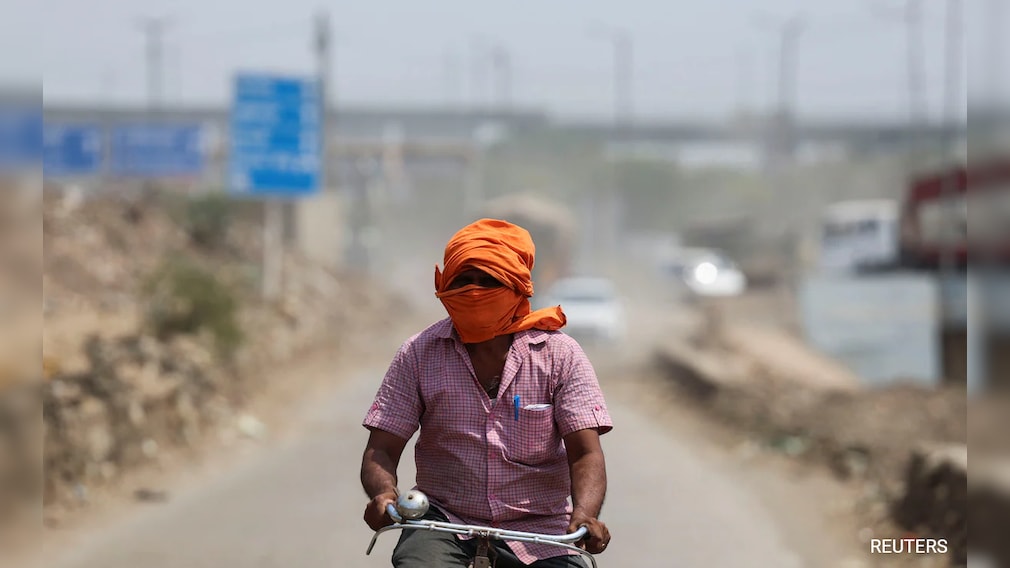
India is not immune to heatwaves; we have just been more accustomed to them. Two years ago, Delhi recorded India's highest-ever temperature: 52.3 degrees. On April 27 this year, all 50 of the world's hottest cities were in India. But if Europe is this hot, India's situation should be much worse. But the fact is, India didn't even reach 50 degrees this summer. This has baffled climate scientists. India's climate trend is not following the same path as the rest of the world, according to Harvard Professor Daniel Schrag, a world authority on climate change and environmental science. He was the keynote speaker at last year's international climate conference in Delhi.
"It is true that India is warming more slowly than most other continental regions," Professor Schrag told this author. "There are two explanations - and I expect the truth to be some combination of these. One is the extensive irrigation, which has increased evaporation, kept the land temperatures cooler, and also increased relative humidity. The other is air pollution, which has reflected some sunlight and cooled the region. Both are probably important - the irrigation for sure, and the pollution seems a likely co-contributor. But I don't think we know how much is due to each mechanism," he added.
But Schrag warned that neither factor will help India in the future. "Irrigation cannot be sustained because of groundwater shortages. And pollution needs to decrease because of health concerns. So if I had to bet, I would expect India to warm over the next two decades slightly faster than the rest of the world. And that is bad news for heat waves," he said.
Bizarre Factors
Recent research confirms that India is warming more slowly than the rest of the world. A study published in the journal PLOS Climate in November 2025 found that India warmed by 0.89 degrees between 1901 and 2024, while the global figure for the same period was 1.42 degrees. This research supports Prof Schrag's explanation for India's peculiar situation. Another study by Chinese scientists, published in Nature in March this year, also confirms that India has been warming more slowly. "Despite the increasing frequency and severity of such extreme heat events, long-term surface temperature trends over India feature a warming hole, with in-situ warming roughly half of the global average," say the researchers.
But the Chinese scientists offer an unlikely candidate for India's condition: CO2, which is normally blamed for global warming. They say that due to the peculiarities of India's geography, CO2 indirectly drives a cascade of effects resulting in "intense cloud formation". And clouds, like pollution, reflect sunlight. They suggest that because of the peculiarities of India's geography, CO2 indirectly drives a number of effects, resulting in "intense cloud formation". Clouds, like pollution, reflect sunlight. Warming does happen, but the net effect is cooling, they argue.
Some researchers have said India's monsoons are an important factor in slower warming. But the Chinese researchers say other Asian countries, particularly in East Asia, which are also monsoon-dominated regions, don't exhibit CO2-induced surface cooling. The Himalayas and the Hindu Kush Mountains, situated north of the Indian subcontinent, act as a barrier that enhances low-level moisture convergence when southwesterly winds intensify under CO2 forcing. East Asia lacks that advantage, they say.
The Future
The slower warming so far is no consolation, though, because the future looks bleak. The scientists who found that India has warmed more slowly since the 20th century now project warming of 1.1 degrees to 1.6 degrees over the next 50 years and 1.5 degrees to 4.1 degrees for the rest of the 21st century. A white paper published by Harvard University in April warns that historical temperature records should not be taken at face value as a planning baseline. "The processes that have partially suppressed warming in parts of India are not guaranteed to persist," it adds.
As Professor Schrag has also pointed out, both air pollution and irrigation - the two most quantified contributors - are expected to change. India's clean air policy will reduce aerosol loading, which is important for public health. A 2022 study by Indian scientists estimated that in 2019, around 1.7 million deaths in India were due to air pollution, of which almost a million were linked to particulate matter or atmospheric aerosol pollution. They also found that this pollution was responsible for a 115% increase in the death rate over the past 30 years. The groundwater crisis will affect irrigation, another major factor in India's slower warming. The Indo-Gangetic Plain sits above one of the most rapidly depleting aquifer systems on Earth. "Evidence from California and other irrigated regions suggests that as irrigation growth stabilises or reverses, the cooling trend it once sustained slows or stops," according to the white paper.
Rising Humidity
There is also growing concern about an alarming surge in humidity in recent years. Humidity prevents the body from cooling through sweat evaporation. India's average relative humidity rose from 67.1% between 2015 and 2019 to 71.2% between 2020 and 2024, according to a recent study by Climate Trends, a research-based consultancy in India.
If India warms as projected, it will align more closely with global trends. But that means a devastating period ahead for a majority of Indians who do not have the kind of protection available to people in developed countries, such as in Europe. An estimated three-fourths of the country's workforce, roughly 38 crore people, are engaged in heat-exposed labour, spanning agriculture, construction, and a wide range of informal occupations. Climate scientist Satchit Balsari has warned that the scale of exposure is set to intensify in the near future: up to 20 crore people in the country could face lethal heat conditions as early as 2030.
Already, many people die from heat in cities across India, though we don't have a definitive figure because India lacks a centralised system to monitor such deaths. Authorities have also been accused of suppressing mortality figures. Unlike in Europe, we don't register excess deaths during heatwaves. A recent study by America's Berkeley University found that a single day of extreme heat causes approximately 3,400 excess deaths nationally; a five-day heatwave causes nearly 30,000. "Uttar Pradesh alone accounts for approximately 8,100 excess deaths during a five-day heatwave," the study found.
The El Nino Threat
Britain's Met Office has warned that 2027 is "very likely" to be the hottest year on record, driven by the coming El Nino. There is no clear evidence that climate change has made El Nino events more likely. However, weather patterns around the world are already being affected, with below-average monsoon rains in India and suppressed hurricane activity in the Atlantic Ocean. Latest forecasts from the Met Office suggest that this warming could exceed 3 degrees later this year as El Nino nears its peak.
Historically, El Nino has an Indian connection. After the deaths of millions of people in the 1877-1978 famines fuelled by El Nino, the British Meteorological Department and an officer, Gilbert Walker, began work on predicting monsoons. But the relationship between El Nino and the Indian monsoon has changed over many decades. El Nino affects weather all over the world, but those impacts are generally more predictable when you are closer to the Pacific and the equator, says Schrag. "India is far from the Pacific and is affected by El Nino, but I am not sure it is very predictable," he added. However, as Schrag and other scientists have already predicted, India is going to warm faster, reversing the earlier trend. We need to plan ahead with effective measures to deal with its consequences.
(Naresh Kaushik is a former editor at the BBC and Associated Press. He is based in London)
Disclaimer: These are the personal opinions of the author
-
Analysis | BJP's Mother Of All Resets: An Overhaul To Fix Its Perception Problem

The battle this time is to regain credibility as BJP has entered a phase which is going to be the launch pad for a national face after a political force called Narendra Modi.
-
Tukaram Mundhe: The IAS Officer Restaurants Fear Most In Maharashtra
As FDA commissioner, Tukaram Mundhe has his eyes on Maharashtra's plate. Food adulterators, storied restaurants and clubs, dark stores of quick commerce platforms, school and government canteens, surrogate advertisers of banned products - no one is out of bounds.
-
3 Minutes, 6 Stanzas, Century-Old Debate: The Many Turns In Vande Mataram's Journey
PM Narendra Modi launched a year-long commemoration of the song's 150th anniversary on November 7, 2025. In December, both Houses held special discussions on it, during which the 1937 Congress decision was scrutinised.
-
Opinion | Sajjan Kumar, Congress, And How To Keep Messing Up An 'Apology'
A sitting Congress MP has termed Sajjan Kumar's death an "irreparable loss", calling him a man whose bond with the people of Delhi was "an example". This was a tribute, delivered in full sentences, to a convicted killer of Sikhs.
-
Explained: Why Tamil Nadu Dropped Second Airport Near Chennai
While the government stands firm with the protesting residents, Chief Minister Vijay assured that Chennai's aviation needs will not be ignored. The state will soon announce a detailed plan for a new airport at an alternative site, he said.
-
Opinion | A 'Snub' Gone Too Far? The Story Of Bangladesh PM's Stalled India Visit
The abrupt cancellation of Prime Minister Tarique Rahman's scheduled visit to New Delhi this month raises many questions.
-
Inside Pak's New Law That Has One Man Written All Over It: Asim Munir
With a new act, Munir has truly reached the apex. At least most politicians in Pakistan will hope so.
-
Behind Sugar Shock: Not Ethanol, But Over-Estimation Led To 16% Price Rise
In November 2025, the government allowed sugar mills to export 15 lakh tonnes. Now, India has allowed 10 lakh tonnes of raw sugar to enter duty-free.
-
Indian Family Wipeout Over iPhone: The Dangerous Lure Of Consumer Tech Debt
Young buyers walk into physical retail stores, hand over basic identity documents and walk out with a consumer electronic device that costs more than their entire family's monthly take-home income
-
China Outspends India In Space, But New Delhi Holds The Trust Card
The US remains the undisputed leader in the global space race. But it's realistic for India to aim for the third place, says Bellatrix Aerospace COO.