Opinion | Why Britain Is Finding It So Hard To Deport A Pakistani 'Grooming Gang' Leader
Shabir Ahmed, a UK-Pakistan dual national, lost his British citizenship after his conviction more than two decades ago. Now, Pakistan is refusing to take him back.
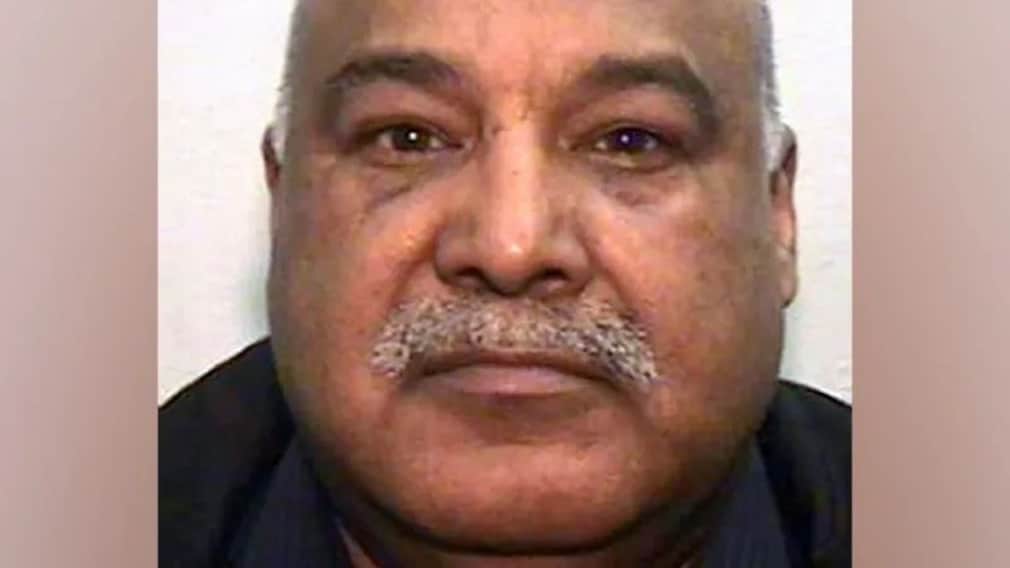
This could almost be the plot of a political thriller. Britain's home secretary, herself of Pakistani origin, wants one of the country's most notorious grooming gang ringleaders deported after he completed a 22-year prison sentence recently. But Pakistan, his country of origin, is refusing to take him back.
Britain is in a bit of a fix. A legal loophole has so far prevented Shabir Ahmed's deportation. The government now wants to change the law. But even if Parliament closes that loophole, what if Pakistan still refuses to accept him?
Now the plot thickens. What happens when a country decides that a convicted foreign criminal should no longer remain within its borders, but the country of origin refuses to take one of its own nationals back? You might say Britain can change its own laws. That's easy and it's being proposed. But changing another country's mind is much harder. The British parliament may discover that rewriting legislation is the easy part. Persuading Pakistan to cooperate could prove far more difficult.
For now, Britain has been left looking after a man nobody wants. The justice system has punished him. The government wants to deport him. Society abhors him. Yet the country Britain wants to send him to is refusing to take him back.
A String Of Lapses
A quick word about the background. Popularly known here in the media as the Rochdale case, of which Shabir Ahmed's case is a part, is one of the darkest chapters in Britain's grooming gangs scandal. Over the past two decades, investigations in towns including Rochdale, Rotherham, Oxford, Telford, and Newcastle uncovered organised groups that sexually exploited and trafficked vulnerable girls, often over many years.
Successive inquiries exposed shocking failures by police, councils, and social services. Time and again, authorities were accused of ignoring victims or failing to intervene despite repeated warning signs. While the majority of the most notorious gangs involved men of Pakistani heritage, the government has cautioned against treating child sexual exploitation as a crime linked to any one ethnic group. The Home Office found offenders came from a range of ethnic backgrounds, including local White folks. At the same time, the organised nature of many of the Pakistani-origin gangs has fuelled a continuing political debate over whether fears of being labelled racist prevented the authorities from acting sooner.
The Shabir Ahmed Story
Whatever the official figures may say, perception matters in politics. Today, many people associate Britain's grooming gangs primarily with offenders of Pakistani origin. Whether that perception is entirely fair or not is almost beside the point. It has shaped public opinion and political debate. Earlier this year, even Elon Musk entered the controversy, accusing the British establishment of going soft on the grooming gangs because of the ethnic background of some of those involved.
Shabir Ahmed was identified as one of the ringleaders of the Rochdale network and was convicted for his role in the abuse. He walked out of prison recently after serving 22 years. That, dear readers, is the background of the case
Shabir Ahmed, a UK-Pakistan dual national, lost his British citizenship after his conviction more than two decades ago. His case has become the latest test of a problem confronting many democracies. What happens when a country decides that a convicted foreign criminal should no longer remain within its borders, but the country of origin refuses to take him back?
The government is right to close any loophole that allows dangerous offenders to avoid deportation simply because of an outdated legal provision. Few would argue that a convicted child sex offender should benefit from a technicality created more than half a century ago. If Parliament believes the law no longer serves the public interest, Parliament has every right to amend it.
But legislation cannot compel another country to act, can it? What options does Britain have now then?
Options Before The British Government
One idea already being discussed is to hit Pakistan where it hurts - visas. Shadow Home Secretary Chris Philp, the Conservative Party's spokesman on home affairs, says Britain should simply stop or sharply restrict visas if Pakistan refuses to take Ahmed back. It's not a completely new idea. Britain has used visa restrictions before against countries that refuse to cooperate over deportations. Some European countries have done the same. The logic is, if you want the benefits of close ties, easier travel, and cooperation, you must also accept your own nationals back when requested.
Could Britain go further? Why not? Could it impose diplomatic or even economic sanctions? Again, why not? But sanctions sound easier than they are. Pakistan is not just another country on Britain's map. The two cooperate on security, intelligence, and counterterrorism. There is trade. Then there is the human angle. Millions of British Pakistanis have families, businesses, and emotional ties across both countries. Any punitive action would hit far more people than one convicted criminal.
Which brings us to an uncomfortable question. Should thousands of ordinary Pakistanis (students, tourists, businessmen, and families) pay the price because their government refuses to cooperate over one convicted criminal? There are no easy answers. But there is another question too. What message does Britain send if it simply shrugs its shoulders and says, "Well, there is nothing we can do"?
The Labour government must not only genuinely do something, but it must also be seen to be taking out-of-the-box steps to get rid of the man no one wants on this soil. If the state decides someone no longer has the right to remain in the country but cannot actually remove him, sooner or later, people begin asking whether the system really works. That is why the Shabir Ahmed case has become much bigger than Shabir Ahmed. It is turning into a test of whether a modern democratic state can enforce its own decisions when another sovereign country refuses to cooperate.
A Shouting Match
There is another trap Britain should avoid. The deportation debate should not become another political shouting match over the grooming gangs themselves. That debate has already become deeply polarised.
The crimes were horrific. Nobody disputes that. Successive inquiries have exposed shocking failures by police, councils, and social services to protect vulnerable girls. Those institutional failures are now part of Britain's recent history and should never be forgotten. Understanding how those crimes happened remains important. But today Britain faces a difficult question. What happens after justice has run its course, but deportation becomes impossible?
The issue has inevitably become politically charged. Ignoring organised criminal gangs because of political sensitivities is unacceptable. If public officials knowingly looked the other way because they feared accusations of racism, that in itself deserves serious scrutiny. But Britain must also be careful not to swing to the opposite extreme.
Shabir Ahmed is not facing deportation because he is of Pakistani origin. He is simply facing deportation because he is a convicted criminal whom the British state no longer believes should remain in the country after being stripped of his British citizenship. This fact must be emphasised. The moment a debate about the rule of law becomes a debate about ethnicity, both sides stop listening, and the real issue gets buried under politics, as it often happens on Indian TV news channels.
The Thing About Immigration Laws
Changing the law, however, is one thing. Enforcing it is quite another. The legal amendment should not be presented as though it solves the problem. It doesn't. It merely removes one obstacle. The bigger obstacle may still remain.
Suppose Parliament changes the law. Suppose the courts agree. Suppose every legal hurdle inside Britain is crossed. Then what? If Pakistan still refuses to accept Ahmed, Britain is back where it started.
So I return to the question again: what are the options? Keep talking to Islamabad? Tighten visa rules? Use diplomatic pressure? Consider targeted sanctions? Or quietly admit that, despite changing the law, Britain still cannot carry out its own deportation order?
These are uncomfortable questions. But they are no longer Britain's questions alone. Governments across Europe and elsewhere are increasingly finding that immigration law does not end at the border. It depends on cooperation from another sovereign country. Unless, of course, you are talking about the United States under President Trump. The Trump administration has not hesitated to lean on countries that drag their feet over accepting deportees. Visa restrictions. Trade pressure. Public arm-twisting. It isn't subtle, and it isn't always popular, but Washington's message is clear: take your citizens back. Britain has traditionally relied more on diplomacy than coercion.
The grooming ringleader's case may force it to ask whether that approach still works.
(Syed Zubair Ahmed is a London-based senior Indian journalist with three decades of experience with the Western media)
Disclaimer: These are the personal opinions of the author
-
Opinion | The Last Bet? What Trump's 'Mother Of All Bombs' Could Actually Do To Iran

Can an MOAB deliver a decisive blow to Iran that may force it to surrender immediately, as Japan did after Hiroshima and Nagasaki in World War 2?
-
Hit Songs, Empty Pockets: The Hidden Math Behind India's Viral Music Boom
Over 80,000 brands and five lakh creators in India make branded content. The opportunity is worth around Rs 1,500 crore.
-
Opinion | Great 'Exceptions': How The Oil India Was Attacked For Is The Oil Trump Now Seeks
A law written to punish the buyers of Russian oil was suspended by the US to protect a purchase of Russian oil. India spent fourteen months being lectured for less.
-
Opinion | Louis Vuitton Loot, Torched Cars: France Protests Have An Unlikely Beneficiary
It's an unbelievable moment. Crowds looting the most exclusive stores in Paris, including the famed Luis Vuitton. But what's behind this meltdown?
-
Blog: Kolkata Didn't Learn From 2015. Eleven Years Later, It Proved To Be Fatal
The City of Joy isn't a stranger to crowd control. Be it during Pujo or Christmas at Park Street, Eden Gardens cricket matches, or Derbies between Mohun Bagan and East Bengal. But during Pujo, the entire city is on alert.
-
Opinion | Slurs, Threats, Now A Temple Attack Plot: When Did America Become So Hostile To Indians?
The rising tide of anti-India, anti-Hindu, and racist attacks serves as a stark reminder that economic prosperity does not automatically guarantee social immunity from bigotry.
-
A Step Behind Neha Bora: What Rahul Gandhi's Gesture Says About Congress' Gen-Z Pitch
At INDIA bloc's march to Supreme Court, Rahul Gandhi placed himself a step behind two women, hands resting on their shoulders. One was his sister Priyanka. The one on his right was Neha Bora. Here's what the image means for the protest wave now, and for Rahul's politics in general.
-
Opinion | Imran Khan, And The Perils Of Having An 'Opinion' In Bollywood
The reality of the industry is quite grimy. More often than not, its inhabitants have been fairweather friends, happy to sing the praises of whoever is in a position of authority.
-
Exclusive: India's Food Safety Problem Goes Beyond Just Dirty Kitchens - By Tukaram Mundhe
On World Food Day, Maharashtra's Commissioner of Food Safety explains why instead of taking stopgap measures, the entire supply chain in India needs to be held accountable and made transparent.
-
Opinion | India Has Enough Coal. So Why Are Power Plants Running Short? A 76 Million 'Crunch'
As of October 5, as many as 82 of the 191 thermal plants monitored by the Central Electricity Authority were in the 'critical' category