Opinion | Why Are Some Of India's Sharpest Pakistan Critics Calling For 'Talks'?
In the past, almost every such initiative has been met with a terror attack.
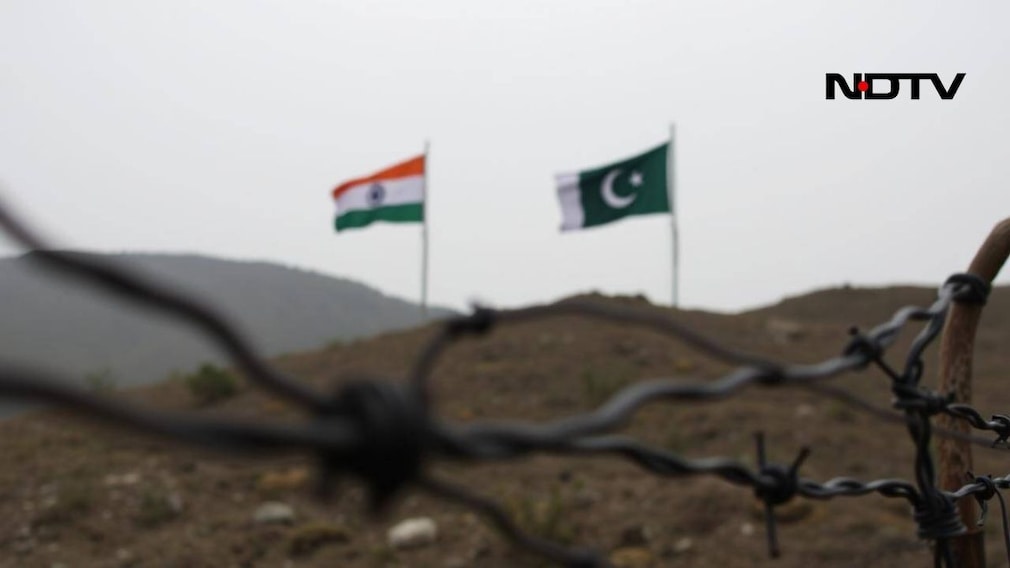
To talk or not to talk, that is the question. At least, that would be it for most of those misquoting Hamlet. But for the general populace, talking to Pakistan is a disaster, and even the supposedly learned see little point in it. All that was till the unexpected happened. In a recent interview, Dattareya Hosabale, General Secretary of the RSS (Rashtriya Swayamsevak Sangh), unexpectedly said that people-to-people contact was key to breaking the deadlock with Pakistan. This was after a visit to the United States. The point is that the main organisation that is the backbone of the ruling party has given the green signal to talk.
The Urge To 'Talk'
Most were too astonished to say much. But the support by former Army Chief Gen MM Naravane, where he said that "the path to peace was and is, through negotiations to arrive at a just settlement that meets the aspirations of the people", raised heckles, since the language was straight out of the Pakistani playbook. Scribes described the Track-2 process as a 'dangerous illusion', leading to complacency, till the next terrorist attack brought some reality back literally with a bang. True, also, that all governments - much to the exasperation of security experts - usually opened their innings with friendly reach-outs, from former Prime Minister AB Vajpayee's trip to Lahore to Manmohan Singh's restarting of the Composite Dialogue, and an invite to the then Pakistani Prime Minister, Yousaf Raza Gillani, to India for a cricket match. Most recently, PM Modi dropped by to greet Sharif on his birthday.
Each and every one of these initiatives was met with a return to a terror attack. In fact, the more successful the reach-out, the worse the terrorist retaliation. For instance, Modi's visit was on December 25, 2015. The Pathankot attack was barely a week later, on January 2, 2016.
Civilian Leadership
Consider, however, that Pakistani Prime Ministers have also reached out - and suffered for it. In this instance, Sharif asked his commanders why violence occurred immediately after an outreach to India. There was no answer. In 1999, the Kargil War was launched after the Lahore bus journey, and prior to this, Prime Minister Zardari's suggestion to ISI Chief Ahmed Shuja Pasha to go to India and provide full cooperation on the Mumbai attacks led to his removal. The Benazir Bhutto-Rajiv Gandhi meetings led to the former proposing oil pipelines and an opening of trade. Imran Khan came to power promising peace with India, but was soon removed before anything could come of this.
All were civilian leaders. True, General Musharraf came to India waving a peace flag, but in reality, his famed peace plan involved ceding a large slice of territory to Pakistan in the so-called 'Chenab Formula' and division along communal lines, with the additional advantage that it would also have given Pakistan control over its waters. True, also, that army Chiefs like Gen. Bajwa did advocate an entirely new 'doctrine' of making the country an economic and strategic corridor, and leaving the past behind. Imran Khan quietly backed it, but it so transpired that Bajwa had told Khan that the army was in no state to fight India.
In short, civilian leaders have sought peace quite simply because it leads directly to improving the economy, transborder trade, employment generation, etc. The army backed it for its own institutional reasons. That, however, is also the core of the problem. It's not the people one is talking to. It's an institution, with a vested interest in keeping tensions alive.
Track 2 And Its Solid History
Even so, it is also true that such militarist regimes have been successfully brought into talks. After all, the whole issue of 'talking to the enemy' was embedded in the Cold War exchanges between the US and the Soviets. Those talks began out of fears of a nuclear attack breaking out due to misinterpretation - like radars picking up flying geese and assuming they are incoming aircraft, or misreading a political situation that would lead to open war. The concept of Track-2 - essentially think-tanks talking to each other - or Track-1.5, which was demi-official, later spread outwards to several different lines of communication, leading to some successes, such as the Limited Test Ban Treaty and the Dartmouth Conferences, which eventually led to the breakthrough at Reykjavik, and the first firm arms control treaty. In other words, it was meant to be a free-wheeling exercise and exchange of ideas, pumped up at a time of heightened stress.
In the case of India and Pakistan, unofficial talks have been going on for years. Some claim that these contributed directly to defusing tensions after the Kargil crisis, while others claim credit for the ceasefire on the Line of Control. A paper from a Pakistani think tank also talks of Track -3, which comprised musicians, poets and others who have absolutely no stake in 'positioning' on any subject, and, therefore, tend to lead to a positive fallout, however limited. The logic here is that a series of these will change entrenched mindsets. A series of recent Track 2 dialogues held with the backing of international think tanks have brought together retired diplomats, academics and some serving government officials at locations abroad, which have usually led to accusations of foreign 'junkets' by those persons not included; nonetheless, some of them have been fruitful. Usually, in the case of the Pakistanis, initial statements follow a clear 'read-out', with the line rarely crossed, particularly since there is usually an 'establishment' figure overseeing the whole. Indians tend to be more open, and, therefore, more discursive. But despite this, there is usually some quiet sense of what each side can legitimately expect in the future, which is then fed to each government to take forward if they wish. The institutions involved also present their own 'findings' to each country, and most probably to their own. Utility, yes. Breakthrough, unclear. Overall, a limited intelligence-gathering exercise, which, in most cases, the agencies could do much better. But the point is that an exercise like this should be free-wheeling, out-of-the-box, and courageous. That, it very rarely is.
Going Forward
Now here's the reality. There is a clear line of escalation since the first Balakot attacks to Operation Sindoor, even if tightly controlled from the Indian side, and not so much from the Pakistan side. That escalation is dangerous for both. Some framework, therefore, needs to be considered, learning from the past. For instance, it has often been seen that the presence of US or UK officials leads Pakistani officials - not the academics - to adopt positions designed to send a message to these countries. On at least one occasion, the primary aim of the exercise was less to do with India than to get US attention. This when a US president refused to even call Islamabad. Indian participants also tend to be cautious, but here's the point: the whole thing might just work better if there are no foreigners present at all. It might just lead to that required imaginative and fearless exchange of views. That is one possibility.
Second, it might be wise to separate the civilians from the retired armed forces. The latter tend to have a better idea of what is going on, especially on the Pakistani side, and they may actually be heard by the 'establishment'. On the Indian side, the military comes with less political baggage.
Third, and most important, there is a vital need to talk about issues that are not prone to any posturing. Climate change management in terms of environmental solutions, crop management for farmers, forest preservation, and the like. All of these are specific issues, with professionals involved, not just vague declarations on climate disaster. Water is probably going to be the most immediate reason for the next war. Understanding and managing this is vital. Waste management and severe air pollution in both countries are other points. There are various more, but the reality is that the Pakistani army will allow only those subjects it is 'comfortable' with, and that needs to be kept in mind.
Fourth, it is well to remember that both sides have shown a remarkable ability to step back from the brink on occasion. Unlike the West, meetings on exchanging data on nuclear facilities under the 1988 Non-Nuclear Aggression Agreement have taken place every year, rain or shine. That treaty emerged from the near crisis of Operation Brasstacks and the recognised need to avoid escalation. More recently, a quiet back channel was reportedly held in the UAE, which led to the ceasefire agreement in 2021. There have been other occasions when both sides preferred to scale back quietly, as in 2022, when a missile was fired by accident into Pakistan. The Pakistan army reacted with restraint. But that was General Bajwa. Don't expect the same from the current incumbent.
Which brings this author to the final point. At all times, existing realities have to be recognised, not wished away in an attempt to report 'success'. Recall that US academics and others held a series of talks with China starting sometime in 2000. That, in turn, was pushed by the belief that the US could craft Beijing into a democratic society. It didn't. Free exchange of technology actually led China to become a hugely aggressive competitor. Engagement has to be towards a definite end based on permanent realities. That end is what the politicians and strategists need to decide on (no, you cannot "destroy" Pakistan, it's there to stay, in one form or another).
In talks, as in war - and as also in its close cousin, politics - selection and maintenance of aim is everything.
(Tara Kartha is a former Director, National Security Council Secretariat)
Disclaimer: These are the personal opinions of the author
-
Analysis: The 'Good Girl' Trap That Killed Twisha Sharma

In the Twisha Sharma death case - the latest focal point of national media - there were "indications" from the very start that she was in a toxic marriage.
-
How Urban India's Weekend Obsession Became A $50 Million Market
Industry estimates peg India's pickleball market at nearly Rs 750 crore by 2030. Just two years ago, the sport barely existed outside niche circles.
-
After 113 Years Of Power, Privilege, Eviction Notice For Delhi Gymkhana Club
Delhi Gymkhana Club has always been more than just a sports or recreation club. Its membership defined people's status in the Delhi high society.
-
Opinion | Rubio Is In India, But Trump's America Just Launched Its Sharpest Attack On Indian Immigrants
Thousands of Indians who spent years following American laws and paying taxes in the US may now face the prospect of leaving the country during processing with no certainty of return timelines.
-
Opinion | Degrees, SUVs, Gold: Why India's Most 'Qualified' Men Often Demand The Steepest Dowries
Education, ironically, is more of an enabler of the practice than a hindrance, per a 2023 study quoted by the BBC
-
Strait Of Hormuz Shutdown, Oil Supply Crisis Triggers 'Red Zone' Warning
The IEA has already issued warnings about 'the most severe disruption' ever; in April agency chief Fatih Birol told CNBC: "We are facing the biggest energy security threat in history."
-
Opinion | India's Oil Reserves: How Long Can They Last As Iran War Continues?
It may be recalled that at the start of the war, India had around 74 days of oil reserves. On May 13, after completion of 74 days, India still had 60 days of oil reserves.
-
Opinion: TVK Dismantles Dravidian Stereotypes Without Disturbing Tamil Political Positions
A young Brahmin man, with or without any political background, winning a seat in Tamil Nadu and subsequently becoming a minister, does not fit the established template of Dravidian politics.
-
Opinion | Twisha Sharma And India's Deadly Culture Of 'Adjusting A Little More'
A daughter's desperate cry for help is responded to with "adjust", "compromise", or "save the marriage". Her parents even promise to give more dowry, but refuse to bring her back. Girls are repeatedly sent back into abusive homes till one fine day, they are dead.
-
Opinion | Why India's 'Cockroach' Rebellion Should Terrify The Opposition
The Opposition will make the mistake of thinking that this 'cockroach' moment is about anti-BJP hate. It's not. It's about its own failings.