Opinion | Why A Post By A Senior US Defence Official About 'Allies' Should Worry India
Colby's post frames what could become a thorny question in India-US relations.
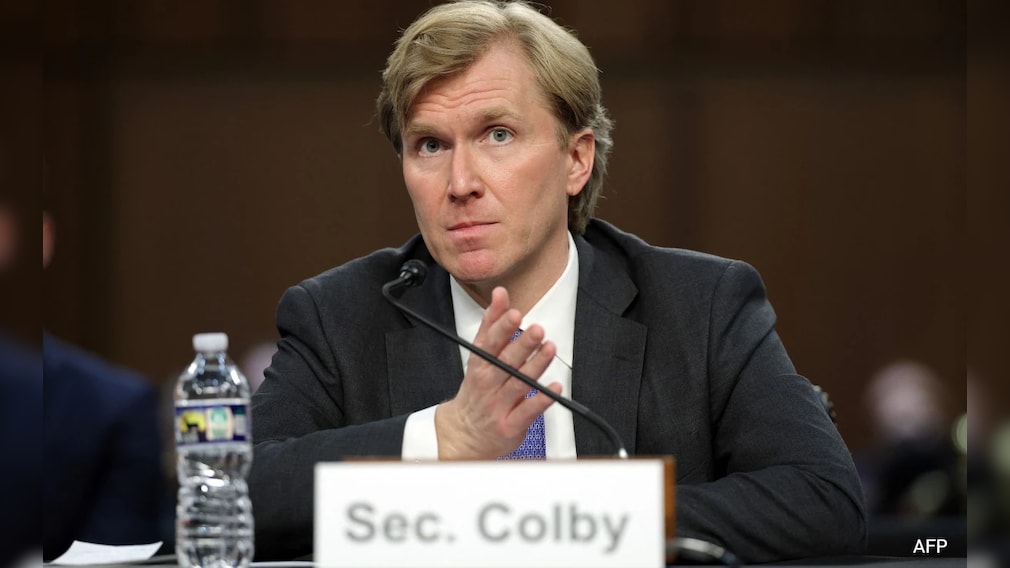
"There is a great deal of hubbub about a collective 'middle powers' strategy these days ... we are more concerned that a few allies and partners will think it is and waste valuable time, money and political capital on a distraction."
Elbridge Colby, the United States Under Secretary of War for Policy, posted these words on July 14, a week after the NATO Summit in Turkey. His immediate target was Canada. Prime Minister Mark Carney has made collective middle-power action the bedrock of Canadian foreign policy, telling a recent forum that the countries in between must combine to create a third path or find themselves on the menu. Colby's reply dismissed the entire approach as detached from the realities of power.
The exchange deserves attention in India as it has structural implications. Colby's response to Ottawa is relevant to every state that is building networks of capable partners, including New Delhi. His post frames what could become the next major strategic question in India-US relations.
India has embraced the idea that a network of capable middle powers can shoulder a larger share of Indo-Pacific stability. Washington, in Colby's words, will support stronger partners while remaining deeply sceptical of any framework that diminishes American centrality. Today, the difference is theoretical. Over time, it has the potential to become a structural source of friction between two otherwise converging partners.
A Blunt Exposition About Power
Colby's argument rests on a straightforward realist proposition. Countries align because they face common threats, possess complementary capabilities, and pursue shared interests. Geography, economics, military strength, and threat perception determine alignments. Labels matter little.
From that perspective, a coherent middle-power bloc is unviable. India worries about China and Pakistan. Australia watches the Western Pacific. Saudi Arabia's principal concern remains Iran. Canada's anxieties centre on its southern neighbour. These countries share only a notion and a label, nothing that matters.
Colby's second argument is more important. The United States remains the indispensable military and technological hub of the democratic world. Its defence industrial base, intelligence and military machine and capacity to undertake large-scale operations independently are unmatched. He rejected the suggestion that frustrated partners will buy their weapons elsewhere, calling the idea neither feasible nor accurate. He further revealed increased demands for American engagement. Allies, he concluded, should build their own defence industries in ways that are collaborative with America.
That final phrase summarises his argument. Washington welcomes stronger partners. Washington expects those partners to strengthen the existing American-led system. Capability is encouraged. Alternative centres of strategic gravity are unwelcome.
India's Networked Approach
India is moving on a different trajectory. Over the past decade, New Delhi has expanded its partnerships in the Indo-Pacific and beyond. The Quad has matured into a platform for maritime cooperation and critical technologies. The India-France partnership now encompasses defence production, space, artificial intelligence, and the Indian Ocean. The India-France-UAE trilateral has introduced a new model of mini-lateral cooperation, and engagement with ASEAN, the Gulf, Europe and Africa have deepened simultaneously.
Together, these initiatives reflect a coherent philosophy: India is constructing a networked regional order. In this system, several capable powers contribute to stability, free of formal alliances and hierarchical leadership. The purpose is to expand India's options: diversified partnerships, stronger indigenous capability, and insurance against dependence on any single external power, no matter how close.
This philosophy has deep roots. Non-alignment faded as a slogan while its central objective endured. Successive governments have sought maximum freedom of action while engaging every major centre of power. Today's minilaterals are the latest evolution of that tradition.
Colby's realism is valid in one aspect that must be acknowledged. Middle-power networks currently lack the hard-power depth to function without the American hub. Remove the United States from the Indo-Pacific equation, and the calculation against China collapses. India's planners know this. Their networks are hedges tacked onto the American relationship and designed as insurance rather than substitution. Dangerously, for the middle powers, Colby's post suggests Washington may come to read insurance itself as disloyalty.
Two Organising Principles
Therein lies the emerging tension. American policymakers want partners who spend more, build more, and shoulder greater regional responsibility. Colby's condition is that greater capability is welcome, while greater autonomy, expressed through alternative architectures, invites suspicion. Capable partners are expected to reinforce American leadership and remain within its orbit.
New Delhi begins from the opposite premise. Overlapping partnerships create resilience and choice. They complement close ties with the United States while ensuring the relationship revolves around mutual interest instead of dependence.
These are different organising principles, and the difference is structural rather than transactional. Disagreements over Russia, trade, and sanctions concerned specific policies and were open to negotiation. The question Colby's post raises concerns the future architecture of the Indo-Pacific itself. Should the region continue to revolve around a single strategic hub supported by increasingly capable partners? Or should it evolve into a denser network in which several powers hold greater agency while working closely with the United States? India's diplomacy shows it is quietly preparing for the second possibility.
India is one instance of a wider pattern. Fareed Zakaria observed after the Turkey summit that American pressure has driven European defence spending to its highest level in decades. He said that a Europe that spends more will grow less dependent on Washington and less deferential to it. Canada has drawn its own conclusions under Carney. The Gulf states, unsettled by the war on Iran, are hedging in their own fashion. American coercion is producing precisely the autonomy Colby wishes to prevent. His warning to the middle powers reads, in this light, as an attempt to arrest a chain reaction Washington itself set off.
Colby's own evolution illuminates the debate. Before entering government, he argued that alliances were America's greatest advantage against China, and advocated for prioritisation and concentration of effort in the Indo-Pacific. In office, his consistency lies in one conviction: American leadership is indispensable. What has intensified is his determination to preserve that centrality even as partners grow stronger. History suggests the objective will prove difficult to sustain. Capability and autonomy grow together. Countries that build defence industries, technology partnerships and dense strategic networks acquire freedom of action. India will follow the pattern.
What Delhi Should Do
The prudent response combines diplomatic discipline with strategic persistence. In Washington-facing messaging, New Delhi should frame its minilaterals as burden-sharing that lightens American loads in the Indian Ocean and beyond, echoing Colby's own language of collaboration. The diversification itself should continue quietly and without apology, because it serves Indian interests under any American administration.
The deeper question remains open. Can Washington encourage India to become a stronger strategic actor while accepting the autonomy that strength inevitably brings? The answer will shape the next phase of the India-United States partnership. Colby has given early warning of where his department, the Department of War, stands.
(The author is a Research Fellow in the Geostrategy Program at the Takshashila Institution)
Disclaimer: These are the personal opinions of the author
-
Opinion | Slurs, Threats, Now A Temple Attack Plot: When Did America Become So Hostile To Indians?

The rising tide of anti-India, anti-Hindu, and racist attacks serves as a stark reminder that economic prosperity does not automatically guarantee social immunity from bigotry.
-
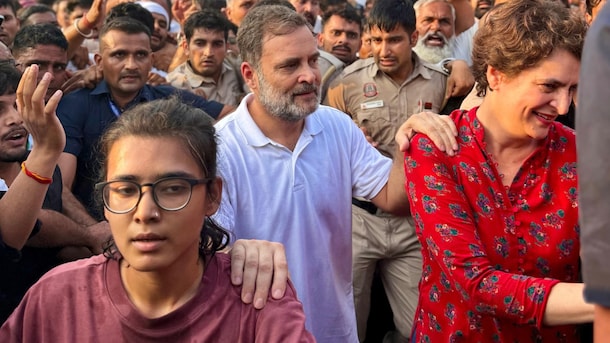
A Step Behind Neha Bora: What Rahul Gandhi's Gesture Says About Congress' Gen-Z Pitch
At INDIA bloc's march to Supreme Court, Rahul Gandhi placed himself a step behind two women, hands resting on their shoulders. One was his sister Priyanka. The one on his right was Neha Bora. Here's what the image means for the protest wave now, and for Rahul's politics in general.
-
Opinion | Imran Khan, And The Perils Of Having An 'Opinion' In Bollywood
The reality of the industry is quite grimy. More often than not, its inhabitants have been fairweather friends, happy to sing the praises of whoever is in a position of authority.
-
Exclusive: India's Food Safety Problem Goes Beyond Just Dirty Kitchens - By Tukaram Mundhe
On World Food Day, Maharashtra's Commissioner of Food Safety explains why instead of taking stopgap measures, the entire supply chain in India needs to be held accountable and made transparent.
-
Opinion | India Has Enough Coal. So Why Are Power Plants Running Short? A 76 Million 'Crunch'
As of October 5, as many as 82 of the 191 thermal plants monitored by the Central Electricity Authority were in the 'critical' category
-
Opinion | Starlink, India, And Why Elon Musk Must Know His Billionaire Tantrums Won't Work
India should neither be intimidated by Musk's global influence nor distracted by his theatrics.
-
Blog | 'Baap Da Brat': Kerala Mini Cooper Crash, And Why 'Daddy' Can't Keep Saving You
There are three things you should never underestimate in India: the power of 'jugaad', the elasticity of the law, and the confidence of a 'Baap da Brat' who believes his Papa Posh can fix absolutely anything.
-
Opinion | 'Say Our Name': Why A Tiny Island Nation Wants The World To Get Its Name Right
Standing before the UN hall of nations, Naoero President David Adeang asked the world to unlearn its comfortable habits and speak a restored truth.
-
TVS Succession Row Explained: Why Venu Srinivasan's Family Is Divided Over Wealth
TVS Family Dispute: TVS Holdings is a key entity because it owns a controlling stake in TVS Motor Company. It owns 50.26% of TVS Motor.
-
Opinion | The US Is Showing India Just How Cheap Its 'Friendship' Is
Can local talent fully replace Indian contribution? Why is the US leading in setting up Global Capability Centres in India - over 60% - and pocketing the IP?