Opinion | Iran's Game Of Thrones: Inside The 'Group' That Wants Ghalibaf Gone, And No Deal
A section of the IRGC is firmly opposed to any negotiations and wants the key negotiator, Ghalibaf, gone. Here's why
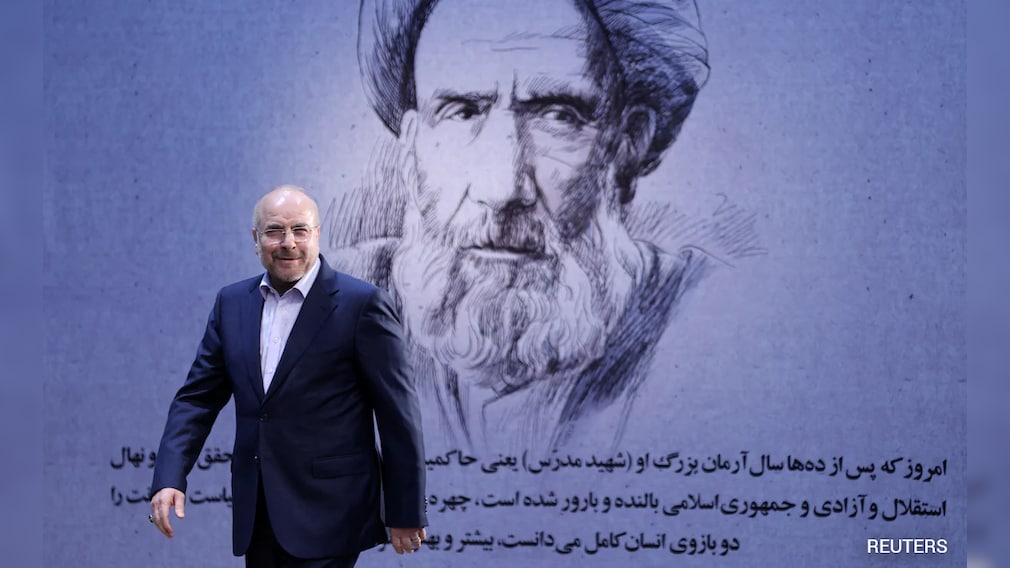
Iran's hardliners have won once again, and US President Donald Trump has had to back down. The American president has unilaterally extended the ceasefire after the Iranians refused to travel to Islamabad for the second round of talks. The signs were clear when Pakistan's de facto leader and Trump's favourite, Field Marshal Asim Munir, failed to persuade Tehran to agree to talks with Washington, even after camping in Iran's capital for three days last week. The uncompromising stance of hardliners, led by Ahmad Vahadi, the chief commander of the Iranian Revolutionary Guards Corps (IRGC), has further weakened the position of the country's chief negotiator, Mohammad Bagher Ghalibaf, and other pragmatists.
Amid uncertainty over the second round of talks between Tehran and Washington, Iran's President, Masoud Pezeshkian, made a comment on Monday morning in support of negotiations. "War benefits no one, and while standing firm against threats, every rational and diplomatic route should be used to reduce tensions," said Pezeshkian. His comment came shortly after Iran's Foreign Ministry spokesman, Esmail Baghaei, told reporters in Tehran: "We have no plan for the next round of negotiations."
Hours later, Tasnim News Agency, which is close to the IRGC, insisted that Iran had not "altered its decision to abstain" from the talks in Islamabad. It wasn't long before Pezeshkian issued a social media statement questioning the usefulness of any dialogue with the US, accusing it of seeking Iran's surrender. "Iranians do not submit to force," he added in the post on X. His first comment was ignored by Iran's semi-official media, but they all reported his post on X.
Monday's developments showed how helpless the Iranian president is. They also echoed a dispute last Friday over a social media post by the country's Foreign Minister, Abbas Aragchi, in which he declared the Strait of Hormuz "completely open". President Trump quoted the post, distorting and exaggerating it to suggest Tehran was ready to compromise. A furious IRGC attacked Araghchi through its loyal news agencies. Later, Tehran's military and the IRGC reinforced the blockade of the waterways with even greater determination. On Monday, speculation grew that Araghchi could soon be replaced by the Islamic regime.
Who Is Running Iran?
These two developments suggest that some factional fighting, if not a full-fledged power struggle, is underway within the current Iranian regime. The IRGC Chief, Ahmad Vahidi, along with other hardliners, on the one hand, and moderate civilian politicians, on the other, disagree on the terms and conditions of negotiations with the US, if not on the conduct of the war itself. Araghchi, a career diplomat with limited decision-making authority, is the weakest of the three internationally known public faces of Iran. The other two are President Masoud Pezeshkian and the speaker of Iran's parliament, Mohammad Bagher Ghalibaf.
Pezeshkian, a reformist, was elected in 2024 following the death of hardline President Ebrahim Raisi. He is widely regarded as the weakest president in Iran's history. Last month, he was rebuked by hardliners for apologising to Iran's Gulf neighbours for retaliatory attacks on their energy and civilian infrastructure. Ghalibaf, on the other hand, is certainly more powerful than the President, as he also serves as Secretary of the National Security Council, a post he was appointed to after the killing of Ali Larijani by Israel.
Why Doubts Are Brewing About Ghalibaf
Although Ghalibaf, Iran's chief negotiator in the talks, has taken a hard line against the United States in his public statements, he is not trusted by hardliners. He is ambitious and opportunistic. Despite holding positions in the past as a commander in the IRGC, the head of the police, and the mayor of Tehran, he was never a close confidant of the assassinated Supreme Leader, Ayatollah Khamenei.
In a state TV interview on Sunday, Ghalibaf reportedly branded Saeed Jalili, a member of Iran's National Security Council, and hardline Iranian MP Amirhossein Sabeti as extremist, militia-like actors who would destroy Iran. This follows posts on a domestic media platform linked to Jalili that accused Ghalibaf of betrayal, or even of attempting a coup, during the Islamabad talks, according to anti-regime media reports. In the interview, the parliament's speaker strongly defended the talks.
Ghalibaf is concerned he could be sacked as speaker because of his support for a negotiated settlement to the conflict. Internal disagreements within the regime are said to have disrupted the first round of talks, prompting more senior Iranian officials, including the IRGC, to order Ghalibaf and his team to return home. Different factions within the Iranian regime are reported to hold markedly different positions on how to deal with the US.
A section of the IRGC is firmly opposed to any negotiations and would like the war to continue in the hope of a total victory. Another faction would like negotiations, but with maximalist demands on the US. Neither of these two factions is in favour of making any compromises on Iran's nuclear enrichment and would like to keep the option of making a weapon open. Ghalibaf heads the more pragmatic group, which favours trading concessions with the US and using the current opportunity to strike a deal.
When Khamenei Was The 'Arbiter'
In the past, the late Supreme Leader Ali Khamenei served as an arbiter between hardliners and moderates. His ruling was the final word on any dispute. But his death has left Iran without an overall arbiter. Khamenei's son Mojtaba is the new Supreme Leader. He is closer to the IRGC and more hardliner than his late father. Along with his father, several other members of his family were killed in the US and Israeli strikes on the first day of the war, making him vengeful and less inclined to offer concessions to the United States.
Interestingly, the pragmatic group's position appears similar to that of the late Supreme Leader, Ayatollah Khamenei. He had declared that Iran would not build a nuclear bomb and allowed his government to negotiate with the Obama administration, resulting in the 2015 Joint Comprehensive Plan of Action, or the JCPOA. Trump abandoned the deal during his first term, even though Tehran was complying with its terms.
Even after that, Khamenei allowed Iran to hold talks with the Trump administration twice in less than one year, but as we know, the US and Israel attacked the nation while the talks were ongoing. This has made the United States untrustworthy for Iran in any talks.
Weakening Of The Moderates
Trump joined Israel's war on Iran after he was led to believe by the Israeli Prime Minister, Benjamin Netanyahu, that the Islamic regime was the weakest in its 47-year history. The killing of the Supreme Leader and dozens of other senior officials and military commanders on the first day of the war was celebrated by Trump and Netanyahu in the hope that the regime would collapse. Trump was expecting a pliant leadership to replace the Islamic regime, as he managed to do in Venezuela.
But the decapitation didn't dismantle the system. It made it even more dangerous for Israel, the US and the Gulf states. Among the dead in the February 28 attack were several moderate or less fundamentalist members of the regime. Israel's targeted attacks in the subsequent days also killed other such leaders, including Ali Larijani, the head of the country's Security Council. In the early days of the war, Larijani was mentioned in the American media as a potential future leader, more willing to negotiate with the US, despite his hardline stance on dissent within Iran.
Trump's repeated threats to destroy Iran's energy infrastructure and bridges, even threatening to kill its civilisation and bomb Iranians back to the Stone Age, have also weakened moderates and strengthened hardliners. Throughout this war, large crowds across the country have been protesting against the United States with slogans such as "no capitulation, no compromise, fight with America".
Is The Past Any Guide?
In the past, several reformist leaders sought to improve relations with the United States, aiming for sanctions relief to help the country's economy and to bring it out of isolation. But their attempts were always thwarted by hardline clerics or by maximalist demands from the United States that they could not meet. Akbar Hashemi Rafsanjani, who became President in 1989, soon after the death of Ayatollah Khomeini, the founder of Iran's Islamic Revolution, was the first to attempt this.
Rafsanjani helped Khamenei become the Supreme Leader, hoping that, as President, he would be the man in charge of the country. But Khamenei proved him wrong, building his own power base by making the IRGC a loyal force and an integral part of Iran's political and economic system. Under Khamenei's watch, the IRGC also helped and trained Iran's shadow groups overseas, such as Hamas, Hezbollah and the Houthis, to fight Israel and Iran's other potential enemies.
That also weakened the moderates' position and made it harder for the US to offer any compromise. Hardliners in Iran also tried to prevent other reformist presidents, such as Mohammad Khatami and Hasan Rouhani, from succeeding in their bids to improve relations with the United States, though the Supreme Leader permitted Rouhani to seek a negotiated settlement on the nuclear issue and to sign the 2015 JCPOA.
What Can Mojtaba Do?
The appointment of Mojtaba doesn't appear to be good news for the moderates and reformists. In Iran, executions of dissidents have continued throughout the war. There have also been strict restrictions on the internet. Reports from Iran suggest that under Mojtaba, Iran is becoming like a country under martial law. The war imposed by Israel and the US is also responsible for that, but the new leader has not so far given the impression of being an inclusive leader.
Mojtaba faces the most difficult challenge of his life in his new role. He must arbitrate between hardliners and moderates to prevent his country from descending into anarchy. Will he back his negotiators in securing a deal with the US to end the war that Trump is so desperately seeking? Iran's conduct of the war and its leverage over the Strait of Hormuz have given Iran the upper hand.
This could be a golden opportunity to secure major concessions from the United States. Or will he let hardliners win, allowing the conflict to continue and causing further deaths and destruction? Many in Iran and around the world would agree with President Pezeshkian that war benefits no one. Sadly, the other president in the conflict, who sits in the White House, hasn't made it any easier for such voices to prevail. If Trump really wants a deal, he should first try to win Iran's trust. He can start by lifting the US Blockade of the Strait of Hormuz, which will help improve the position of moderates in Tehran.
(Naresh Kaushik is a former editor at the BBC and Associated Press. He is based in London.)
Disclaimer: These are the personal opinions of the author
-
Ground Report | Sunlight Is A Luxury In Delhi Students' Hub Where Building Collapse Killed 7

The civic infrastructure in Delhi's Satya Niketan hasn't caught up with the pace of development and appears to be crumbling under the weight of the influx of tenants and the greed of landlords.
-
Mayawati's Tough Love: Nephew Akash Anand Benched Again. What It Means For BSP
Akash Anand, the 31-year-old foreign-educated nephew of BSP boss Mayawati, finds himself out of favour, for at least the third time in three years, with the latest turn coming in Lucknow on September 3.
-
Blog | Why You Should Care Whether Schrodinger's Cat Is Dead Or Alive
Imagine going on a romantic Alpine getaway and returning with the equation that runs the modern world. The only snag: nobody can quite agree on what it says about reality.
-
Promote, Punish, Repeat: Decoding Mayawati's Akash Anand Puzzle
The development in the BSP is unprecedented. Never before has any Indian party elevated a family member and dumped him or her unceremoniously thrice within a span of three years.
-
Opinion | Nepal Needs $5 Billion To Rebuild. World's Climate Fund Doesn't Have Even 10% Of It
The fund caps support at USD 20 million per project; Nepal needs two hundred times that. And the board is not scheduled to sit until December.
-
Opinion | The Rise Of Indians In US Is Making Some Americans Very, Very Angry
A new report released yesterday shows how Indians are now among the biggest targets of racist attacks in America.
-
Opinion | China, Pak, A Stalled India Visit: How Signals From Bangladesh Are Getting Louder
A fighter jet deal with China, interest in Pakistan's military bloc, and a 'stalled' visit to India - all in a month. Bangladesh's drift is getting harder to ignore.
-
Opinion | Indus Treaty, Hague, And Pakistan's Endless Search For Leverage Over India
If the IWT survived all the trials in the past, it is because India's threshold of tolerance had been unusually high. But Pakistan must know that it can't arm-twist India through international pressure.
-
Opinion | Nepal's 'Climate Compensation' Pitch Is Valid, But Its Demand From India Isn't
Nepal's vulnerability gives it a claim on multilateral climate finance. It does not follow that India bears responsibility for this.
-
Opinion | India Wants A 6th-Generation Fighter. But A Lot Could Go Wrong
India might just be building too many fighter jets to focus on any one of them well. A recalculcation is needed.