Opinion | Rs 1 Lakh Crore Gone, And Counting: Worse May Be Coming For India's Oil Shock
Cuts in central excise on petrol and diesel cost the Centre roughly $1.18 billion a month in revenue. And the Indian Rupee is now Asia's worst-performing currency.
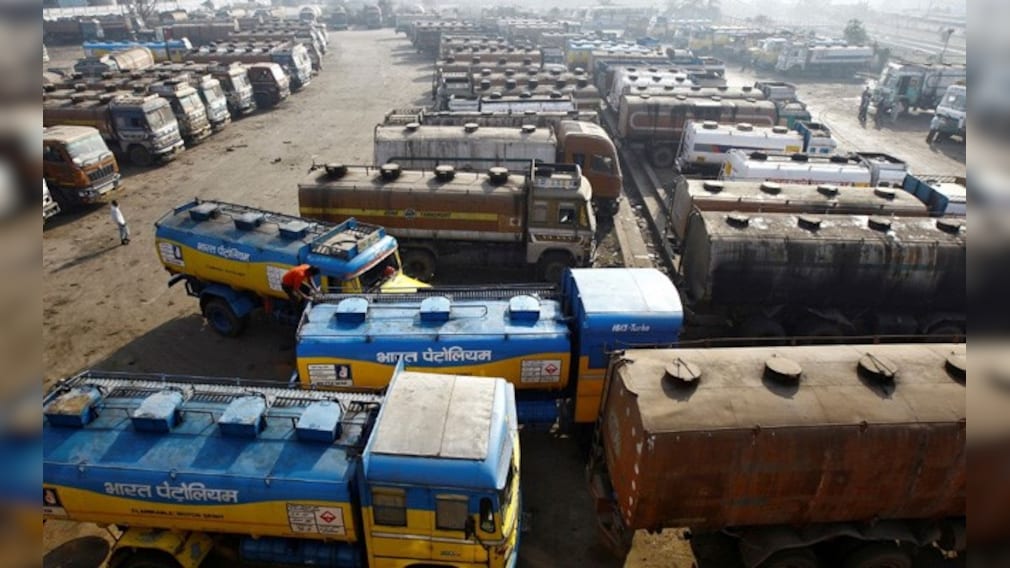
The Al Hamra, a liquefied natural gas tanker operated by ADNOC Logistics, slipped out of the Strait of Hormuz late last month, bound for western India. The vessel had switched off its tracking signal on April 19, idling near the eastern entrance of the strait, and was loaded quietly at Abu Dhabi National Oil Company's Das Island export terminal during the silence. Its reappearance on Kpler's ship-tracking data was the first confirmed LNG shipment to India through Hormuz since the Iran war began three months ago. India received over half its LNG from Qatar and the UAE before the war. Those flows had essentially halted. And one tanker does not undo three months of disruption.
The economic toll of the disruption has accumulated, meanwhile, in places that do not appear on news tickers. The Finance Minister, speaking at a SIDBI event in Mumbai on May 25, said the Centre is set to absorb over Rs 1 lakh crore in revenue forgone from the cut in central excise on petrol and diesel. The figure, however large, is only part of the bill.
Brent crude futures traded near $98 a barrel on May 26, having touched $114 earlier in the month and peaked at $126 in early March after the US-Israel strikes on Iran. The Indian basket has surged some 57% from below $70 a barrel in early January. India imports about 85% of its crude requirement, and the pass-through is visible at every joint of the economy.
Inflation Is Coming For Common Households
Wholesale price inflation reached 8.3% in April, a forty-two-month high, against 3.88% in March. The fuel and power component rose 24.71% on the year, with petrol WPI at 32.40%, diesel at 25.19%, and LPG at 10.92%. Retail inflation, by contrast, stood at a deceptive 3.48%, fuel and electricity carrying a much smaller weight in the consumer basket. The divergence is the story. The wholesale number records what the economy has actually absorbed. The retail number records what households have so far been allowed to see. The gap closes over time.
The pump price has, since May 15, begun to move. Four hikes in two weeks have lifted diesel in Delhi from ₹87.67 to ₹95.20, an aggregate increase of ₹7.53 a litre. A Business Standard survey on May 25 found that one in two respondents reported a rise in transport, product or service costs in consequence. Petrol crossed ₹100 in Delhi on May 25 and was at ₹102.12 by May 26. In Andhra Pradesh, it is above ₹115 across the state, touching ₹118 in Chittoor. The Prime Minister appealed for travel restraint and a preference for the metro.
The exchequer has paid in several currencies. Cuts in central excise on petrol and diesel cost the Centre roughly $1.18 billion a month in forgone revenue. The fertiliser subsidy, budgeted at ₹1.71 lakh crore for FY27, is now expected to swell by about 20% as urea and phosphatic inputs grow scarce and pricier. The Union Cabinet has already approved a ₹41,534 crore non-urea fertiliser subsidy for this year's kharif season, 12% above last year's. The Strait of Hormuz disruption hit, at once, 40% of India's crude imports, over 50% of its urea, and 90% of its LPG. The fiscal deficit target for FY27 is 4.3% of GDP. ICRA has flagged "sizeable upside risks" to that number.
The Ever-Falling Rupee
The rupee has carried the rest. It fell to ₹96.34 against the dollar on May 19, a record low, taking its decline this year to 7.04%, more than the full-year falls in 2025 (4.9%) and 2024 (2.9%) individually. About five percentage points of the depreciation have come since early March, when the Iran war began. The currency is now Asia's worst-performing, year to date. Each $10 increase in crude widens the current account deficit by 40 to 50 basis points; on plausible price paths, the CAD will move from 0.8% of GDP in FY26 to above 2% in FY27. The rupee, an old hand will say, is the price at which India settles what it has not yet acknowledged.
Strikes On The Cards
The pain is not evenly distributed. At Munambam harbour in Kerala, about 60% of fishing boats have stopped venturing out, owners reporting that costs per trip have doubled. Subsidised kerosene has climbed from ₹103 to ₹155.37 a litre. The state's increase in the boat-fuel subsidy, from ₹25 to ₹50 a litre, has not closed the gap, and a statewide strike is on the cards. Truckers, small manufacturers and dhaba owners pay what households, for now, have not. The commercial 19-kg LPG cylinder was raised by ₹214.50 on April 1. The domestic one was left at ₹965.
The cushion is real but partial. India's oil intensity has fallen from 8.8% of GDP in 2013 to 4.8% today. Russian crude flows reached close to 1.9 million barrels a day in May, a record share of the import mix, partially insulating against the Gulf disruption. The IMF still projects 6.5% GDP growth in FY27. History, however, is not kind. In the years before 2014, with the Indian basket above $100, real growth oscillated between 5% and 6%. The Modi government's first decade saw crude touch $100 only this April.
The Al Hamra docked, eventually, in western India. The queue behind it is long. ADNOC's chief, Sultan al-Jaber, has said full Hormuz normalisation is unlikely before the first half of 2027. In the meantime, the bill is being paid in several places at once. By the bond, by the rupee, by the fertiliser, by the diesel pump, by the kharif acreage that will not be sown, and by the boat that has not left Munambam for a month. A shock that arrives at sea travels inland in many languages.
(The author was with the Economic Advisory Council to the Prime Minister)
Disclaimer: These are the personal opinions of the author
-
Opinion | The Most Accurate Prediction About Trinamool? An MS Aiyar 'Joke', From 1997

Towards the end of 1997, Mani Shankar Aiyar briefly tried the Trinamool experiment. He did not stay long. But while leaving, he offered a diagnosis that explains the party's current meltdown.
-
Opinion | America Has Never, Ever Looked This Humiliated: The Story Of A Superpower's Fall
America was not this weak until recently; in fact, it was riding high. Then it chose to make all the wrong choices, and turned into a superpower no one takes seriously anymore.
-
Same Demands, New Wrapper: India's Dowry Paradox
India's Rs 10 lakh crore wedding industry is seen as running on a hidden truth - dowry - and families spend an average of Rs 39.5 lakh per wedding and 'gifts' mask demands.
-
Opinion | The Many Meanings Of A 'Banana Republic'
A Banana Republic was where institutions went to die, where narrative-building often became a government's most effective tool of governance.
-
Opinion | The Chinese Are Using LinkedIn 'Jobs' To Spy On Countries. Is India Prepared?
A recent report throws light on how Chinese operatives frequently disguise themselves as representatives of private consultancies, research institutions, or human resource firms, posting seemingly legitimate job opportunities for foreign policy, defence, and strategic affairs experts.
-
Opinion | Why Trump's Attention Is Quickly Becoming Pak's Biggest Headache
Pakistan's real challenge may not be winning Trump's attention - that it has certainly been successful at. It may be surviving the consequences of that.
-
Just Joking? Naah. Muslim Comedians Are Doing Something Serious
Amid all sorts of 'jihads' invented by the right-wing to demonise Muslims, these Muslim comedians are waging a laugh riot of their own
-
Opinion | Ignored By Rahul, Haunted By Pilot: Inside Ashok Gehlot's Grand Meltdown
Many in the grand old party are wondering why Gehlot, who stuck with the Congress all through Indira, Sanjay, Rajiv, Narasimha Rao, Sitaram Kesri, Sonia and Rahul years, would go astray at the fag end of his career. "Ashok Gehlot ko gussa kyun aata hai?" they ask.
-
Opinion | How A Photograph in Delhi Says Something Important About Trump's America
During her visit to New Delhi this week, Venezuela's Delcy Rodrguez, met US Ambassador Sergio Gor. Had the meeting taken place in Washington or Caracas, it would have attracted little attention. In Delhi, however, it carried a different significance.
-
Opinion | The Kashmir Nobody Mentions - And How Pakistan Is Quietly Profiting From That
Recent elections in Gilgit Baltistan - and the protest note India had to issue against them and a slew of fake news reports - lay bare a concerning reality.