Opinion | Iran Scorecard: A List Of Winners, Losers, And Those Who Rigged The Game
Iran is the clearest winner. America absorbed a lasting blow. Trump got what he wanted. Netanyahu is exposed. The Gulf is vulnerable. All these realities are true, and that is the paradox of this war 'of choice'.
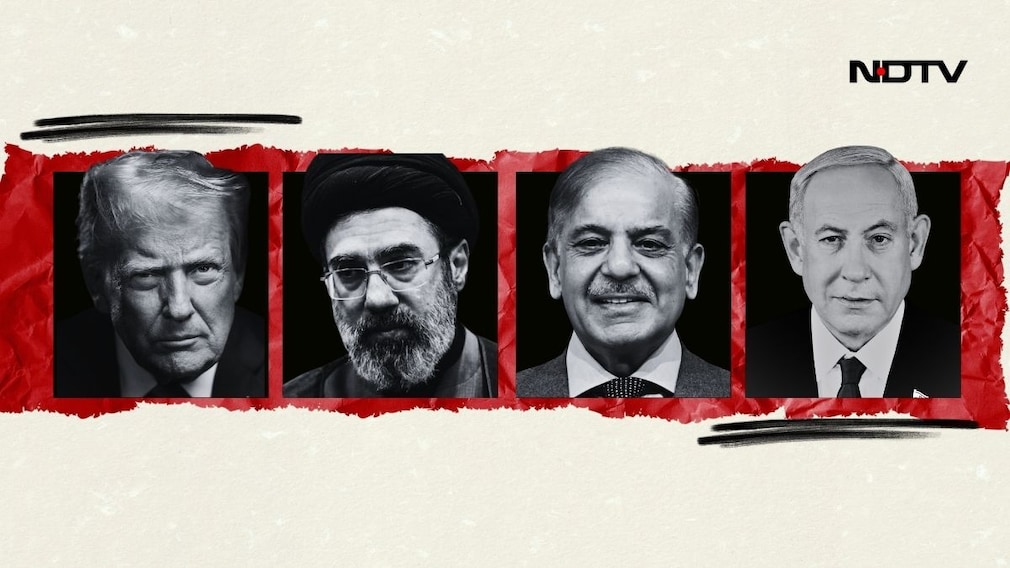
The ceasefire in West Asia does not end the conflict. It reveals who was fighting it, and who was winning around it.
This scorecard starts with a simple observation: the fighting involved three principals, the United States, Iran, and Israel, but the ceasefire was shaped by others. Who fought and who mediated tells you almost everything about who won.
Iran: Victor by Any Meaningful Measure
Iran is the clearest winner of this conflict. The military outcome was a stalemate, and against the world's most powerful military, a stalemate is a victory. Its missile forces remain functional, its A2/AD architecture was tested and held, and the Strait of Hormuz stayed under effective Iranian control throughout. Every day the strait remained contested, oil prices spiked and global shipping paid a premium, transferring real economic leverage to Tehran. Hormuz control is both a military and a financial instrument, and Iran has now proved it can wield both simultaneously.
Above all, the Axis of Resistance survives intact. Hezbollah, the Houthis, the Iraqi factions, the network Iran has spent decades building, emerged functional and emboldened. Tehran can point to a battle-tested proxy network and a demonstrated deterrence capability against two nuclear-armed adversaries. That is regional primacy.
The United States and Trump: Two Different Ledgers
The United States, as a strategic actor, absorbed a serious and potentially lasting blow. Washington's inability to achieve its objectives against a sanctioned, regionally isolated middle power will reverberate. Partners in the Gulf, in East Asia, in Eastern Europe will recalibrate. The arms-for-security model that has underpinned American regional influence, the implicit bargain of "buy our weapons, host our bases and we will guarantee your survival", is harder to sell after a ceasefire in which the guarantor accepted terms brokered by others. And a financially rejuvenated Iran will be even more difficult in the months and years ahead.
Donald Trump is a different accounting entity entirely. He is not invested in long-term American influence architecture. He is invested in his domestic political position as a peacemaker and ender of wars. On that narrow measure, the ceasefire is defensible. No flag-draped coffins. No open-ended commitment. A deal he can brand and a base that reads ending wars as strength rather than retreat. Trump extracted the outcome his political coalition rewarded him for, and the long-term costs, the credibility erosion, the alliance fraying, the emboldened adversaries, will accrue to institutions and successors he has no interest in protecting. The president and the presidency point in different directions. That divergence is itself a strategic vulnerability.
Netanyahu: A Personal Reckoning
Israel as a state endures. Benjamin Netanyahu as a political figure does not obviously survive this outcome. The war was partly a mechanism for his political survival; the total victory promise that kept his coalition intact and his legal troubles at bay. The ceasefire without victory removes that cover. The hostage families are furious. Coalition partners are sensing blood. The ICC exposure remains unresolved. A highly personal vendetta against Hamas and Iran, pursued with a ferocity that alienated Israel's closest ally at critical moments, has produced a pause rather than a conclusion. Netanyahu is domestically weakened, judicially vulnerable, and increasingly likely to be removed before the next phase of this conflict begins.
The Gulf: Exposed and Divided
The implications for the Gulf are severe and poorly understood outside the region. The GCC is not a monolith, and the ceasefire has made that abundantly clear.
Saudi Arabia is the most exposed. Iranian strikes on Saudi infrastructure during the conflict were pointedly strategic and a demonstration. Riyadh's oil facilities, its air defence architecture, its economic lifelines were shown to be within Iran's effective reach. The ceasefire ends the bombardment. It does not end the vulnerability. Saudi Arabia now lives permanently adjacent to a battle-hardened, narratively victorious, regionally hegemonic Iran, with the American security guarantee visibly diminished and no credible tripwire between them.
The UAE paid a different kind of price. Abu Dhabi aligned itself openly with the US war effort, betting that the world's most powerful military would deliver a decisive outcome. It did not. Iran does not forget who cheered from the sidelines, and the UAE's financial and trade hub ambitions depend on a regional environment that Tehran can now complicate at will. The ceasefire preserves the UAE's immediate position; it does not repair its strategic exposure.
Qatar fares better, protected by its studied neutrality and its gas interdependence with Iran, which created mutual incentives for restraint. But even Doha cannot escape the fundamental reality now visible to every Gulf capital: the American security umbrella has limits, and Iran has just demonstrated where those limits are.
The Brokers and the Quiet Gainers
Pakistan's role deserves acknowledgement precisely because it was unexpected. The Islamabad Accord represents Pakistan's most consequential diplomatic moment in a decade, a return to global relevance that Islamabad will press hard to consolidate. Some Gulf capitals may view Pakistan's brokerage dimly, reading it as a tilt toward Tehran. That displeasure is real but limited: Pakistan's nuclear deterrence, its labour exports, and its Islamic solidarity credentials give it equities in the Gulf that limit any lasting rupture.
China's gains are quieter, more durable and systemic. Beijing leveraged its economic relationship with Tehran to ensure the ceasefire was accepted, secured its energy flows, and emerged with its responsible great power narrative substantially reinforced. It policed nothing and gained structurally.
India benefits economically, with lower oil volatility, restored shipping lanes and fiscal targets intact, while preserving its strategic autonomy. The unwelcome development for New Delhi is a diplomatically emboldened Pakistan pressing its newfound relevance on India's western flank. This is a manageable irritant, not an existential shift, but it is real.
The Palestinians: Both Vectors Are Live
The Palestinian position is genuinely ambiguous. Iran's elevation as a regional hegemon means its most powerful sponsor just got considerably stronger, which is potentially convertible into future leverage. But Israel exits this ceasefire frustrated, humiliated, and domestically cornered, and that fury must land somewhere. Gaza remains the most available target. A stronger Iran is a stronger patron; a cornered Israel is a more dangerous neighbour. Both vectors are live simultaneously, and which one dominates will define the next phase.
The Bottom Line
The ceasefire does not resolve the underlying contest between the United States and Iran, between Israel and Hezbollah, between the regional order Washington built and the one China and Russia have been quietly constructing. What it has done is clarify the distribution of power.
Iran demonstrated hegemony. Saudi Arabia discovered vulnerability. The United States revealed limits. Trump declared victory.
All four statements can simultaneously be true. That is the world the pause - or the end, if it really is one - has produced.
(The author is a Research Fellow in the Geostrategy Program at the Takshashila Institution)
Disclaimer: These are the personal opinions of the author
-
Opinion | The Last Bet? What Trump's 'Mother Of All Bombs' Could Actually Do To Iran

Can an MOAB deliver a decisive blow to Iran that may force it to surrender immediately, as Japan did after Hiroshima and Nagasaki in World War 2?
-
Hit Songs, Empty Pockets: The Hidden Math Behind India's Viral Music Boom
Over 80,000 brands and five lakh creators in India make branded content. The opportunity is worth around Rs 1,500 crore.
-
Opinion | Great 'Exceptions': How The Oil India Was Attacked For Is The Oil Trump Now Seeks
A law written to punish the buyers of Russian oil was suspended by the US to protect a purchase of Russian oil. India spent fourteen months being lectured for less.
-
Opinion | Louis Vuitton Loot, Torched Cars: France Protests Have An Unlikely Beneficiary
It's an unbelievable moment. Crowds looting the most exclusive stores in Paris, including the famed Luis Vuitton. But what's behind this meltdown?
-
Blog: Kolkata Didn't Learn From 2015. Eleven Years Later, It Proved To Be Fatal
The City of Joy isn't a stranger to crowd control. Be it during Pujo or Christmas at Park Street, Eden Gardens cricket matches, or Derbies between Mohun Bagan and East Bengal. But during Pujo, the entire city is on alert.
-
Opinion | Slurs, Threats, Now A Temple Attack Plot: When Did America Become So Hostile To Indians?
The rising tide of anti-India, anti-Hindu, and racist attacks serves as a stark reminder that economic prosperity does not automatically guarantee social immunity from bigotry.
-
A Step Behind Neha Bora: What Rahul Gandhi's Gesture Says About Congress' Gen-Z Pitch
At INDIA bloc's march to Supreme Court, Rahul Gandhi placed himself a step behind two women, hands resting on their shoulders. One was his sister Priyanka. The one on his right was Neha Bora. Here's what the image means for the protest wave now, and for Rahul's politics in general.
-
Opinion | Imran Khan, And The Perils Of Having An 'Opinion' In Bollywood
The reality of the industry is quite grimy. More often than not, its inhabitants have been fairweather friends, happy to sing the praises of whoever is in a position of authority.
-
Exclusive: India's Food Safety Problem Goes Beyond Just Dirty Kitchens - By Tukaram Mundhe
On World Food Day, Maharashtra's Commissioner of Food Safety explains why instead of taking stopgap measures, the entire supply chain in India needs to be held accountable and made transparent.
-
Opinion | India Has Enough Coal. So Why Are Power Plants Running Short? A 76 Million 'Crunch'
As of October 5, as many as 82 of the 191 thermal plants monitored by the Central Electricity Authority were in the 'critical' category