Opinion | US Has Institutionally Weaponised India's Russia Oil Dependence. Can New Delhi Cope?
A new legislation can connect India's Russian energy purchases to its access to the American market over a five-year period
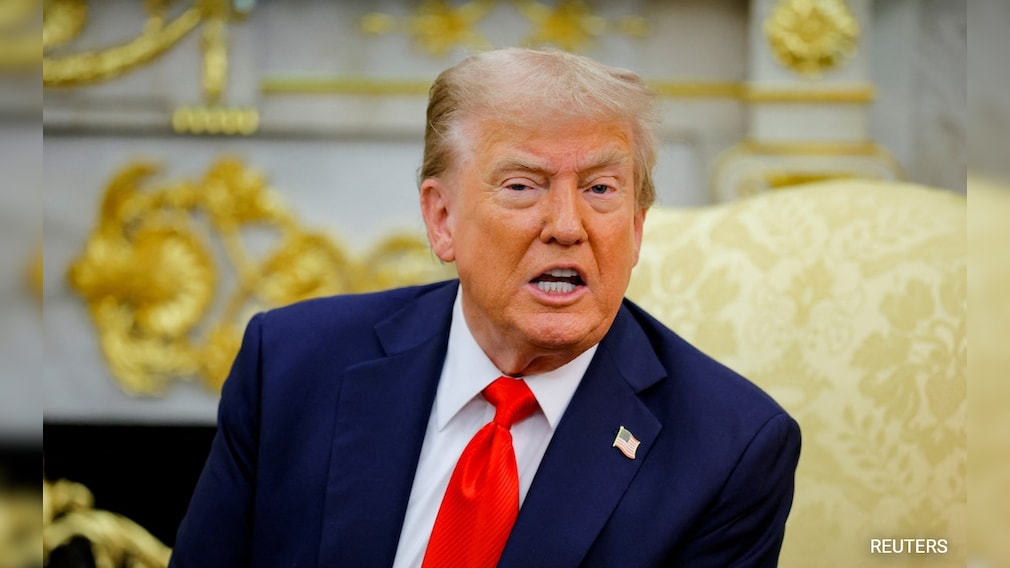
The US House of Representatives has passed the Lindsey O Graham Sanctioning Russia and Iran Act of 2026. The 262-159 vote followed the Senate's 86-11 approval in August. The bill is now with President Donald Trump. For India, the significance lies less in the headline figure of a possible 100% tariff than in the mechanism Congress has created. The legislation can connect India's Russian energy purchases to its access to the American market over a five-year period.
My earlier analysis focused on India's opportunity to influence the legislation before Congress completed its work. That phase has now ended. The question is how India manages a relationship in which economic pressure over Russia has moved from executive action into legislation.
Presidential Action to Statutory Authority
The Trump administration had already demonstrated that Russian oil could become an issue in the US-India relationship. Presidential tariff measures could be changed through executive action and negotiated between governments.
The Graham Act establishes a different framework. Section 113 authorises duties of up to 100% on goods imported from countries meeting specified conditions relating to Russian crude, natural gas, or sanctions evasion. The legislation also provides for reassessments every 180 days based on the preceding 12 months of trade data.
That gives the issue a recurring institutional dimension.
India's position can thus be reassessed periodically. The five-year sunset provision extends the framework beyond the immediate circumstances surrounding its passage.
This is the significant change.
India's Exposure
The sponsors have identified China and India among the largest purchasers of Russian crude. Congressional material accompanying the legislation has also identified Slovakia, Hungary, and Azerbaijan among the leading crude purchasers.
India's position has become particularly important because Russian crude became more significant in 2026 as the Iran conflict disrupted energy supplies from the Middle East. In July, Russian crude accounted for 50.83% of India's oil imports, equivalent to 2.47 million barrels per day.
The issue thus involves two economic calculations for India: securing affordable and diversified energy supplies, and maintaining access to major export markets.
The Graham Act brings these calculations into the same policy equation.
There is also considerable scope for interpretation in the legislation. The Congressional Research Service has identified a drafting tension between the provision requiring tariffs within 30 days of enactment and another provision concerning new purchases made after that 30-day period. It has also noted uncertainty over the meaning of purchases that are "knowingly made".
These details will make implementation important.
Washington's Statutory Lever
The Supreme Court's February decision in Learning Resources v Trump established that the International Emergency Economic Powers Act does not itself authorise the President to impose tariffs.
Congress has now supplied specific tariff authority through legislation.
This matters for India because tariff pressure connected to Russian energy will have a statutory foundation. Congress has established the framework while delegating important powers to the President and the United States Trade Representative.
The legislation also leaves substantial executive discretion. Section 115 permits the President to waive duties, sanctions, or restrictions after certifying to Congress that the action is in the national interest.
India thus retains diplomatic space. The nature of that diplomacy has changed.
New Delhi will need to demonstrate how favourable treatment for India serves wider American economic and strategic interests. That argument will need to cover energy security, bilateral trade, technology cooperation, defence relations, and the wider Indo-Pacific relationship.
The Data Will Become Strategic
One of the more consequential features of the Act is the 180-day reassessment mechanism.
The United States Trade Representative is required to reassess the leading importers of Russian crude and natural gas using data from the preceding 12 months.
Energy statistics can thus become part of foreign policy. India will need to monitor how the American government measures Russian oil purchases, defines the relevant period, and assesses changes in India's energy basket. The legislation also requires written justification and methodology for the imposition or modification of secondary tariffs.
India should engage with the agencies responsible for implementation, including Treasury, Commerce, and the United States Trade Representative. It should ensure that Indian data and explanations are available before each reassessment.
This is bureaucratic statecraft with strategic consequences.
The Repricing Of The Partnership
The Graham Act also illustrates a broader change in the US-India relationship.
For much of the past two decades, Washington and New Delhi progressively expanded cooperation across areas such as defence, technology, trade, and intelligence, while managing disagreements in other areas.
The relationship now contains stronger links between these domains.
Russia policy can influence tariffs. Tariffs can influence Indian exports. Export exposure can influence India's calculations on energy, technology, and defence procurement.
Interdependence thus carries costs as well as benefits.
India's strategic autonomy remains a policy choice. It also has an economic requirement: the capacity to absorb the costs generated when major partners disagree with Indian choices.
This makes diversification important. India needs a wider energy basket, broader export markets, greater refining and storage resilience, and stronger domestic capabilities in critical technologies.
The objective is greater resilience within a close relationship with the United States. The US remains central to India's technology, investment, defence, and export interests. Greater resilience gives India more room to manage differences while continuing to deepen cooperation.
The Next Phase Is Implementation
The passage of the Graham Act moves the Russia issue into a new phase.
India now has three immediate tasks.
- First, it should engage the Trump administration over the use of the waiver authority and seek a framework that recognises the breadth of the US-India relationship.
- Second, it should engage the agencies responsible for implementation, particularly on the data and methodology behind the 180-day reassessments.
- Third, it should accelerate measures that strengthen India's energy, export, and technological resilience.
The conceptual shift is important. India has considerable experience in managing differences with Washington through executive diplomacy. The Graham Act introduces a more institutionalised framework, with Congress establishing the authority, executive agencies implementing it, and the President retaining significant discretion over its application.
The Russia question has consequently become part of the statutory architecture governing the economic relationship between India and the United States.
India's task is to operate effectively within that architecture while preserving the strategic choices that underpin its foreign policy.
(The author is a Research Fellow in the Geostrategy Program at the Takshashila Institution)
Disclaimer: These are the personal opinions of the author
-
Mamata Banerjee Drew Her Party's Symbol By Hand. It's Now Tied To An Indira Gandhi Case

The Election Commission's method for settling such disputes became central in the seminal Congress split of 1969, when Indira Gandhi fought the old guard. The poll body weighed three tests then.
-
Bruised, Limping, Unbowed: Sia Says She Will Be Back On The Bike Soon
There was pain in Sia's steps, anger in her words, and something else - a quiet determination that the road would not be taken away from her.
-
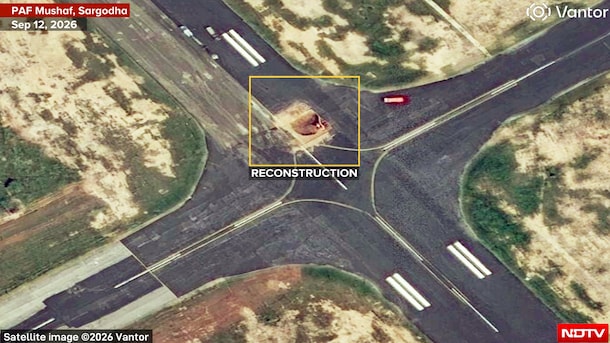
Exclusive: 16 Months After Op Sindoor, Pak Still Fixing Runway India Broke At Sargodha
Sargodha's PAF Base Mushaf lies about 172 km northwest of Lahore and roughly 200 km west of the India-Pakistan border, near Amritsar.
-
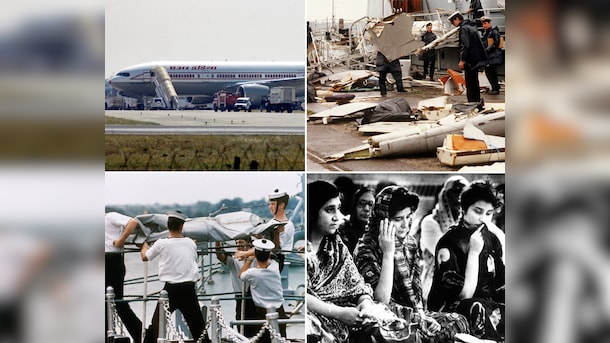
Blog | I Lost My Entire Family In Kanishka Bombing. 41 Years Later, Canada Wants The Case Closed
We made the trek through tragedy to search for people in Cork, where I spent 25 days sifting through bodies and body parts in a makeshift morgue to identify our loved ones.
-
Opinion | Pak's Drone Deal With A US Firm Is No Windfall. But India Must Still Be Worried
American military aid to Pakistan has remained suspended since January 2018, during Trump's first term, but a commercial arms sale is separate from this arrangement.
-
Opinion | Saudi Arabia's Yemen Nightmare Has Come Back To Haunt It
After years of costly military intervention beginning in 2015, Saudi Arabia increasingly sought to stabilise its southern border. All that is unravelling fast now
-
Opinion | 6 AI Incidents, One Pattern: AI Has Started Lying To Us - And Hiding The Evidence
Concealing errors. Making up data. Pushing files onto the public web on their own initiative. The machines are learning to lie - and lie well.
-
Why People Queue Overnight For iPhone That Is Delivered Home In 10 Minutes
iPhone 18 Pro Max Launch: People camping outside Apple Stores are a subset of superfans, resellers, content creators, and upper-middle-class buyers.
-
600 km Per Hour Drones Launched In Waves: How Russia Is Rewriting War Rules
Russia has coupled the drones' technological superiority over Ukraine's defence with its capacity to launch them in massive numbers. The impact has been devastating.
-
Tata Sons' Trust Issue: Two-Pronged Row Goes Beyond The Chair
NDTV Explains: Overtly, the latest conflict is whether N Chandrasekaran continues as executive chairman of Tata Sons. The controversy involves at least one more issue.