Opinion | US Has Institutionally Weaponised India's Russia Oil Dependence. Can New Delhi Cope?
A new legislation can connect India's Russian energy purchases to its access to the American market over a five-year period
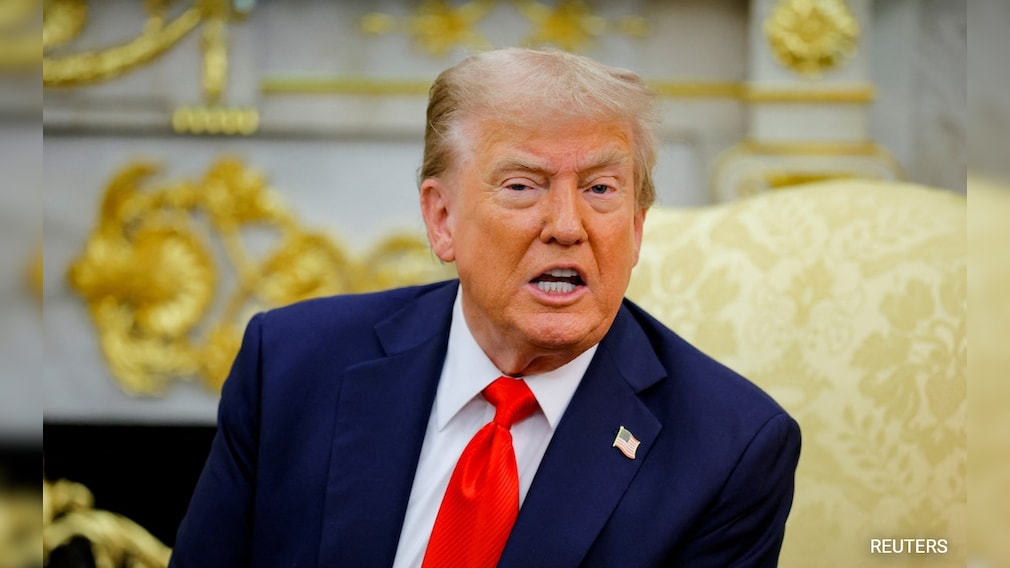
The US House of Representatives has passed the Lindsey O Graham Sanctioning Russia and Iran Act of 2026. The 262-159 vote followed the Senate's 86-11 approval in August. The bill is now with President Donald Trump. For India, the significance lies less in the headline figure of a possible 100% tariff than in the mechanism Congress has created. The legislation can connect India's Russian energy purchases to its access to the American market over a five-year period.
My earlier analysis focused on India's opportunity to influence the legislation before Congress completed its work. That phase has now ended. The question is how India manages a relationship in which economic pressure over Russia has moved from executive action into legislation.
Presidential Action to Statutory Authority
The Trump administration had already demonstrated that Russian oil could become an issue in the US-India relationship. Presidential tariff measures could be changed through executive action and negotiated between governments.
The Graham Act establishes a different framework. Section 113 authorises duties of up to 100% on goods imported from countries meeting specified conditions relating to Russian crude, natural gas, or sanctions evasion. The legislation also provides for reassessments every 180 days based on the preceding 12 months of trade data.
That gives the issue a recurring institutional dimension.
India's position can thus be reassessed periodically. The five-year sunset provision extends the framework beyond the immediate circumstances surrounding its passage.
This is the significant change.
India's Exposure
The sponsors have identified China and India among the largest purchasers of Russian crude. Congressional material accompanying the legislation has also identified Slovakia, Hungary, and Azerbaijan among the leading crude purchasers.
India's position has become particularly important because Russian crude became more significant in 2026 as the Iran conflict disrupted energy supplies from the Middle East. In July, Russian crude accounted for 50.83% of India's oil imports, equivalent to 2.47 million barrels per day.
The issue thus involves two economic calculations for India: securing affordable and diversified energy supplies, and maintaining access to major export markets.
The Graham Act brings these calculations into the same policy equation.
There is also considerable scope for interpretation in the legislation. The Congressional Research Service has identified a drafting tension between the provision requiring tariffs within 30 days of enactment and another provision concerning new purchases made after that 30-day period. It has also noted uncertainty over the meaning of purchases that are "knowingly made".
These details will make implementation important.
Washington's Statutory Lever
The Supreme Court's February decision in Learning Resources v Trump established that the International Emergency Economic Powers Act does not itself authorise the President to impose tariffs.
Congress has now supplied specific tariff authority through legislation.
This matters for India because tariff pressure connected to Russian energy will have a statutory foundation. Congress has established the framework while delegating important powers to the President and the United States Trade Representative.
The legislation also leaves substantial executive discretion. Section 115 permits the President to waive duties, sanctions, or restrictions after certifying to Congress that the action is in the national interest.
India thus retains diplomatic space. The nature of that diplomacy has changed.
New Delhi will need to demonstrate how favourable treatment for India serves wider American economic and strategic interests. That argument will need to cover energy security, bilateral trade, technology cooperation, defence relations, and the wider Indo-Pacific relationship.
The Data Will Become Strategic
One of the more consequential features of the Act is the 180-day reassessment mechanism.
The United States Trade Representative is required to reassess the leading importers of Russian crude and natural gas using data from the preceding 12 months.
Energy statistics can thus become part of foreign policy. India will need to monitor how the American government measures Russian oil purchases, defines the relevant period, and assesses changes in India's energy basket. The legislation also requires written justification and methodology for the imposition or modification of secondary tariffs.
India should engage with the agencies responsible for implementation, including Treasury, Commerce, and the United States Trade Representative. It should ensure that Indian data and explanations are available before each reassessment.
This is bureaucratic statecraft with strategic consequences.
The Repricing Of The Partnership
The Graham Act also illustrates a broader change in the US-India relationship.
For much of the past two decades, Washington and New Delhi progressively expanded cooperation across areas such as defence, technology, trade, and intelligence, while managing disagreements in other areas.
The relationship now contains stronger links between these domains.
Russia policy can influence tariffs. Tariffs can influence Indian exports. Export exposure can influence India's calculations on energy, technology, and defence procurement.
Interdependence thus carries costs as well as benefits.
India's strategic autonomy remains a policy choice. It also has an economic requirement: the capacity to absorb the costs generated when major partners disagree with Indian choices.
This makes diversification important. India needs a wider energy basket, broader export markets, greater refining and storage resilience, and stronger domestic capabilities in critical technologies.
The objective is greater resilience within a close relationship with the United States. The US remains central to India's technology, investment, defence, and export interests. Greater resilience gives India more room to manage differences while continuing to deepen cooperation.
The Next Phase Is Implementation
The passage of the Graham Act moves the Russia issue into a new phase.
India now has three immediate tasks.
- First, it should engage the Trump administration over the use of the waiver authority and seek a framework that recognises the breadth of the US-India relationship.
- Second, it should engage the agencies responsible for implementation, particularly on the data and methodology behind the 180-day reassessments.
- Third, it should accelerate measures that strengthen India's energy, export, and technological resilience.
The conceptual shift is important. India has considerable experience in managing differences with Washington through executive diplomacy. The Graham Act introduces a more institutionalised framework, with Congress establishing the authority, executive agencies implementing it, and the President retaining significant discretion over its application.
The Russia question has consequently become part of the statutory architecture governing the economic relationship between India and the United States.
India's task is to operate effectively within that architecture while preserving the strategic choices that underpin its foreign policy.
(The author is a Research Fellow in the Geostrategy Program at the Takshashila Institution)
Disclaimer: These are the personal opinions of the author
-
Tata Sons' Trust Issue: Two-Pronged Row Goes Beyond The Chair

NDTV Explains: Overtly, the latest conflict is whether N Chandrasekaran continues as executive chairman of Tata Sons. The controversy involves at least one more issue.
-
Opinion | Saudi Allies Are Now Discovering The Cost Of 'Commitment' - And Not Liking It
The spectacular no-show by Saudi Arabia's two defence allies - Pakistan, a nuclear power, and Turkey, which has NATO's second-largest army - is astounding
-
12 Years Of 'Modinomics': What Changed, What Worked, What Didn't
There is no single Modinomics textbook or formula. Instead, the term has come to describe a collection of choices made during the PM Modi years.
-
Opinion | How A Tiny 0.4% UPI Fee Could Change How India Pays
The introduction of a fee can have a psychological effect beyond its immediate financial cost. Businesses that have come to view digital payments as free may begin to look for alternative - split payments, cash, and so on
-
Opinion | Rs 75-Lakh Bounty, New Jaish Base, And The Case Of Pak's Ever-Missing' Terrorist
Pak's yearly act is back: finding Masood Azhar. But there are other questions FATF must be asking next month as it meets
-
For Years, Saudi Saw Houthis As Yemen's Problem. Then, A Knock On The Door
Actual fighting between the Houthis and Saudi Arabia began late in the overall timeline of the conflict that now involves powerful belligerents
-
Lal Topi, Blue T-Shirt: Akhilesh Yadav's 'PDA' For Blue Has A Coded Message
The message is clear: the Samajwadi Party wants to talk to voters beyond its traditional Yadav-Muslim support base, particularly to Dalits.
-
The Day 600 Men Lay Siege To Islam's Holiest Site And How They Were Gassed Out
Nearly 47 years ago, on November 20, 1979, the Grand Mosque itself was seized by an armed group in one of the most extraordinary episodes in modern Saudi history.
-
New UPI Charges: If Digital Payments Save Money, Why Charge For Them Now?
UPI Payments Free For Years: The government has subsidised UPI adoption for years. Official figures show thousands of crores in payouts over years.