Trump's Iran War: Was It Worth It?

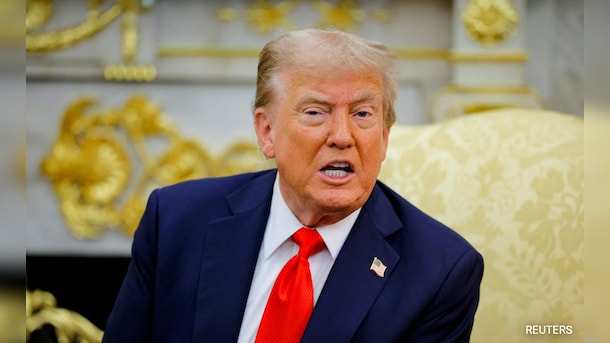
President Donald Trump attacked Iran to weaken the Islamic Republic, crush its ambitions and neuter it as a regional threat. But he leaves the battlefield with his adversary strategically stronger and forcing compromises.
There's been no regime change and a new version of the old rules still. Also, no descent into oblivion and no abject surrender by Tehran's theocrats. If anything, it was Trump who was keen to end the war, ready to give concessions he would have laughed at when he came into the avatar of the "war president".
The US and Israel declared war to "obliterate" (this time for real) Iran's nuclear programme, exhaust its missiles, decimate its proxies in the region and "liberate" the people by sending armed Kurds and installing a man of their liking on top. None of it materialised in full measure.
Embarrassing and expensive, Trump decided to cut his losses -- a wise move in the eyes of most of the world but capitulation if you listen to the hawks. His most ardent Republican supporters are having a meltdown while the Democrats are asking why wage war only to reward the adversary?
Israel, America's partner and instigator, stands bereft, abandoned by Trump and under pressure to play along with the US-Iran Memorandum of Understanding (MoU). Prime Minister Benjamin Netanyahu might be the loneliest politician with his future dark and plans to dominate West Asia in pieces.
Instead, it is Iran that is emerging as the new regional anchor ready to set the table with Gulf countries whose faith in American power and protection might be the second major casualty of the war after Netanyahu's desolation. It wasn't meant to be this way but after 108 days, Trump was staring at strategic defeat for the United States. The thousands of (successful) bombing raids, a naval blockade and bombastic threats were tactical victories not definitive triumphs.
Iran "won" simply by not losing. It used the Strait of Hormuz as the ultimate weapon of choice, hurting not only US allies but the entire world by turning the crucial waterway into a cemetery of zombie ships, neither dead nor moving. It absorbed the attacks, used asymmetric warfare and inflicted enough pain on its neighbours to shatter their reputation as classy oases. Cheap drones proved more effective against the expensive stockpiles of the world's two most powerful militaries than anticipated.
Not only did Iran's regime not change, let alone collapse, it emerged as a negotiating partner for the US and regional allies. Gulf states are busy opening channels to Tehran, trying to find space in a new regional order with Iran as a central player. It only proves that Iran's international relevance is greater and its sway over the Strait of Hormuz established.
Hormuz may become a permanent Damocles' sword hanging over the global economy, something it wasn't before the US-Israel war. In the past Iran had only speculated about blocking the strait but never actually done so. Now it has tasted the power it can exercise whenever needed.
Did Trump meet any of his goals after an expensive - it cost US taxpayers $100 billion - and high-risk war? In his defence, Trump and his advisors point to the damage the US and Israeli militaries inflicted on Iran, leaving the country and the regime considerably weakened. It's true that Iran lost most of its navy, a good amount of its missiles and suffered serious damage to its civilian and military infrastructure. But nothing it can't rebuild, especially after the unfreezing of its assets.
Now to the much-awaited MoU as revealed by US officials on Wednesday. The document promises to end military operations on all fronts, including in Lebanon, achieve a final deal in 60 days, end the US naval blockade within 30 days, remove US forces from Iran's vicinity 30 days after the final agreement, allow free passage for commercial ships for 60 days after which Oman and Iran will define the "future administration" of the Strait of Hormuz, organise a $300-billion rebuilding fund for Iran and end "all types of sanctions" against Iran.
Iran will reaffirm its commitment not to procure or develop nuclear weapons and the two sides will negotiate the future of the enriched uranium still lying under the rubble from the 12-day war Trump launched last year to "obliterate" the nuclear programme. Interestingly, US obligations are front-loaded and Iranian actions dependent on the conclusion of the final deal.
The MoU reads like an Iranian wish list and no wonder critics are fuming. Israel sees it as deliberate humiliation by Trump. As pro-Netanyahu analysts have loudly noted there is no mention of Iran's ballistic missiles or its army of proxies which Tehran calls the Axis of Resistance in the agreement. They see the MoU as a lifeline to the regime they consider an existential threat, especially leaving Iran's missiles off the agenda.
Trump dropped a bombshell in France after the G-7 summit when he said it was "a little bit unfair" for Iran not to have ballistic missiles when others in the region have them. Reality is that Iran absolutely refuses to discuss its missile programme - for Tehran it remains the most important vehicle of deterrence against Israel and other adversaries equipped with western weapon systems. As an Iranian official said, the missiles are only for firing, not negotiating.
Netanyahu supporters are also stunned by Trump's public criticism of the Israeli leader even though many Israelis realise he oversold the war and undersold the level of difficulty in forcing regime change. Former prime minister Ehud Barak put it plainly when he blamed Netanyahu on television for his "hubris and blindness" and now Israel is paying the price for his attempts to manipulate Trump.
Trump caught on and made a break, a break with enormous foreign policy implications for the US and by implication for other countries. He didn't want a global recession to be his legacy. Achieving the goals initially broadcast would have taken a longer war with no guarantee of success and potentially sent the world economy into a tailspin.
The big question the war raises: was it worth it? The long and short answer: No. But it is better to realise the strategic reality of failure late than never.
(Seema Sirohi is a Washington, DC-based columnist and the author of 'Friends With Benefits: The India-US Story', a book about the past 30 years of the relationship)
Disclaimer: These are the personal opinions of the author
-
Opinion | Pak's Drone Deal With A US Firm Is No Windfall. But India Must Still Be Worried

American military aid to Pakistan has remained suspended since January 2018, during Trump's first term, but a commercial arms sale is separate from this arrangement.
-
Opinion | Saudi Arabia's Yemen Nightmare Has Come Back To Haunt It
After years of costly military intervention beginning in 2015, Saudi Arabia increasingly sought to stabilise its southern border. All that is unravelling fast now
-
Opinion | 6 AI Incidents, One Pattern: AI Has Started Lying To Us - And Hiding The Evidence
Concealing errors. Making up data. Pushing files onto the public web on their own initiative. The machines are learning to lie - and lie well.
-
Why People Queue Overnight For iPhone That Is Delivered Home In 10 Minutes
iPhone 18 Pro Max Launch: People camping outside Apple Stores are a subset of superfans, resellers, content creators, and upper-middle-class buyers.
-
600 km Per Hour Drones Launched In Waves: How Russia Is Rewriting War Rules
Russia has coupled the drones' technological superiority over Ukraine's defence with its capacity to launch them in massive numbers. The impact has been devastating.
-
Tata Sons' Trust Issue: Two-Pronged Row Goes Beyond The Chair
NDTV Explains: Overtly, the latest conflict is whether N Chandrasekaran continues as executive chairman of Tata Sons. The controversy involves at least one more issue.
-
Opinion | US Has Institutionally Weaponised India's Russia Oil Dependence. Can New Delhi Cope?
A new legislation can connect India's Russian energy purchases to its access to the American market over a five-year period
-
Opinion | Saudi Allies Are Now Discovering The Cost Of 'Commitment' - And Not Liking It
The spectacular no-show by Saudi Arabia's two defence allies - Pakistan, a nuclear power, and Turkey, which has NATO's second-largest army - is astounding
-
12 Years Of 'Modinomics': What Changed, What Worked, What Didn't
There is no single Modinomics textbook or formula. Instead, the term has come to describe a collection of choices made during the PM Modi years.
-
Opinion | How A Tiny 0.4% UPI Fee Could Change How India Pays
The introduction of a fee can have a psychological effect beyond its immediate financial cost. Businesses that have come to view digital payments as free may begin to look for alternative - split payments, cash, and so on