Opinion | Trump Has New Plans For How America Deals With China
China remains the pacing challenge for the US military, but America no longer seems interested in a direct confrontation.
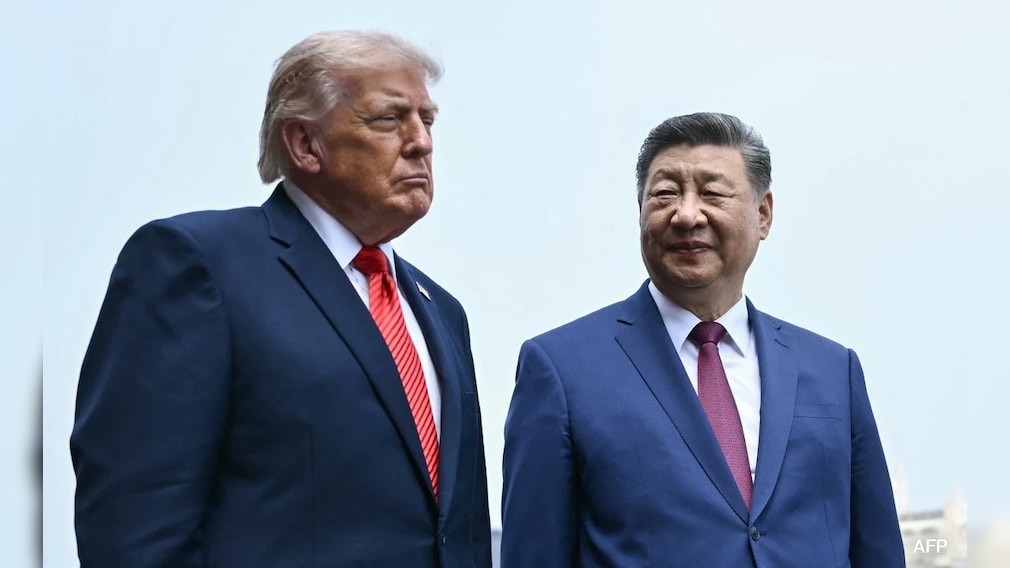
At last week's Shangri-La Dialogue, US Secretary of War Pete Hegseth articulated a vision of the Indo-Pacific that reflects the emerging contours of the Trump administration's strategic approach: a combination of hard-edged realism, burden-sharing, and sustained competition with China under the rubric of "peace through strength". While much of the speech reaffirmed longstanding American concerns about the regional balance of power, its emphasis on transactional partnerships and allied responsibility offered important clues about the future direction of US defence policy.
On China, Hegseth's remarks underscored Washington's growing alarm over Beijing's rapid military modernisation and expanding regional footprint. Characterising China's buildup as unprecedented in scale, he reiterated the American objective of preserving a favourable balance of power in the Indo-Pacific - one in which no single state can establish regional hegemony. Significantly, however, the speech also reflected a degree of strategic pragmatism. While reaffirming deterrence by denial, particularly along the first island chain, Hegseth acknowledged recent improvements in US-China relations and emphasised the importance of engagement mechanisms designed to reduce the risks of miscalculation. The message was clear: competition with China remains the organising principle of American strategy, but it need not preclude dialogue or crisis management.
India's Role
Perhaps the most consequential aspect of the speech was its treatment of India. Hegseth described India as a "critical anchor" in maintaining strategic equilibrium in South Asia, framing New Delhi's rise as a positive development for regional stability. By highlighting India's military modernisation, expanding industrial base, and growing logistical capabilities in the Indian Ocean, Washington signalled its desire to move the bilateral relationship beyond political symbolism toward greater operational relevance. References to defence co-production, industrial collaboration, and joint exercises such as 'TIGER TRIUMPH' suggest that the United States increasingly views India as a pivotal contributor to regional security rather than merely a diplomatic partner.
More broadly, the speech reaffirmed that the Indo-Pacific remains central to American strategic thinking. Hegseth repeatedly emphasised that the United States is a Pacific power with enduring interests in the region. Yet, this commitment was accompanied by a clear expectation that allies and partners must shoulder a larger share of the burden. The recurring theme that "we need partners, not protectorates" reflects a distinctly Trumpian approach to alliance management. Security partnerships, in this conception, are expected to be reciprocal rather than open-ended commitments. States that invest more in their own defence and contribute meaningfully to collective security can expect greater access to American military technology, intelligence sharing, and defence cooperation.
More Military
The speech also reflected an impatience with declaratory policy unaccompanied by military capability. Hegseth's call for "more ships, more submarines, and more combat power" underscored a broader shift towards tangible military preparedness as the foundation of deterrence. This focus on capability over rhetoric aligns closely with the strategic priorities likely to shape the forthcoming National Defence Strategy.
Taken together, these themes point toward several emerging trends in US defence policy.
Three Shifts In Policy
First, alliance relationships are becoming increasingly conditional and performance-based. The expectation that countries such as Japan, South Korea, and Australia expand defence spending reflects Washington's growing concern about the sustainability of traditional security arrangements in an era of intensifying great-power competition.
Second, China remains the pacing challenge for the US military, but American strategy appears increasingly calibrated to avoid unnecessary escalation. The combination of robust deterrence measures and selective diplomatic engagement suggests an effort to manage competition without allowing it to spiral into direct confrontation. In this sense, the administration appears to be pursuing a strategy of strategic firmness coupled with tactical flexibility.
Third, Hegseth's remarks reinforced the importance of networked security architectures such as the Quad, AUKUS, and a range of bilateral partnerships. Rather than serving as substitutes for American power, these arrangements are intended to multiply its effectiveness and enhance its sustainability. Integrated deterrence is thus increasingly dependent on the capabilities and contributions of regional partners.
For India, the implications are particularly significant. Few statements from Trump 2.0 have so explicitly positioned India as a central pillar of the regional balance against China. The emphasis on India's role in the Indian Ocean and its growing logistical and industrial capacities suggests that Washington sees New Delhi as an indispensable contributor to Indo-Pacific stability. Importantly, this evolving partnership remains compatible with India's preference for strategic autonomy, allowing it to deepen cooperation with the United States without entering into a formal alliance framework.
Shared Responsiblity
At a broader level, the speech reflects an American recognition that sustaining regional primacy will require greater burden-sharing and more efficient allocation of resources. The challenge for Washington will be to ensure that transactionalism strengthens rather than weakens alliance cohesion. If allies respond positively by expanding capabilities and assuming greater responsibilities, deterrence could be enhanced. If not, tensions over expectations and commitments may emerge.
For Beijing, the message was equally nuanced. The reaffirmation of deterrence and concerns about military expansion conveyed continued American resolve, while the emphasis on improved relations and the rejection of regime-change ambitions signalled a willingness to maintain channels for cooperation where possible. Competition, in other words, remains the defining feature of the relationship, but not necessarily confrontation.
Ultimately, Hegseth's address outlined a more hard-nosed and less ideological vision of American strategy in the Indo-Pacific. The objectives remain largely consistent with previous administrations: preventing Chinese hegemony, preserving a favourable balance of power, and sustaining US influence in the region. What distinguishes this approach is its emphasis on reciprocity, burden-sharing, and measurable outcomes. It is strategic continuity in terms of ends, but a distinctly Trumpian departure in terms of means.
Yet, there are also potential limitations to this approach. An excessive emphasis on transactionalism risks underestimating the less tangible but equally important foundations of alliance politics-strategic reassurance, long-term credibility, and the normative influence that has traditionally underpinned American leadership. While burden-sharing is a legitimate objective, successful alliances ultimately depend not only on capabilities but also on confidence in sustained commitments.
A Thin Line
The effectiveness of this strategy will, therefore, hinge on implementation. Washington will need to demonstrate that it can revitalise its defence-industrial base, sustain a credible forward military presence in the Indo-Pacific, and deepen strategic cooperation with India without allowing expectations to outpace realities. In a more contested strategic environment, such an approach could strengthen deterrence if regional partners respond by investing greater resources in their own security and contributing more actively to the regional balance of power. However, should allies prove unwilling or unable to meet these expectations - or should Beijing interpret signs of American fatigue as evidence of declining resolve - the strategy could produce outcomes contrary to its intended objectives. The risk is that efforts designed to preserve a favourable balance of power may inadvertently create new opportunities for Chinese influence and assertiveness.
Hegseth's speech reflects an administration seeking to reconcile competing imperatives: maintaining strategic competition with China while avoiding overextension, and demanding greater contributions from partners without undermining the confidence on which those partnerships rest. Whether this balance can be sustained remains an open question. The challenge is formidable, and history suggests that managing great-power competition while preserving alliance cohesion has rarely been an easy undertaking.
(Harsh V Pant is Vice President for Studies at Observer Research Foundation, New Delhi)
Disclaimer: These are the personal opinions of the author
-
DK Shivakumar Comes With Mastery Of Delhi Networks And Karnataka Grassroots

DK Shivakumar is a politician who mastered the art of networking in Delhi's high-power circuits just as effortlessly as he managed the grassroots electoral math in his home constituency, where he has won eight straight terms
-
Ringside View | It's Vinesh Phogat vs The Will Of The Universe
Before leaving the mat, however, the big V made a declaration: "I will return to this very mat again."
-
Opinion | The China Shock 2.0 May Already Be Here
According to the IMF, China's total non-financial sector debt has climbed to roughly 313% of GDP and is projected to reach 323% by 2026.
-
Opinion | Can India Find A Way To Shape US-Iran War, Without Actually Playing Mediator?
India's quandary is not one of surrendering its policy of strategic autonomy but rather in understanding that while autonomy is important, what makes it more effective is action.
-
'Singam' K Annamalai: BJP's Tamil Nadu Star Rose Fast, Fell Faster
K Annamalai flew down to Delhi, met party chief Nitin Nabin on Tuesday and said he wants to end the partnership on "cordial terms".
-
Opinion | There Is A 'Shadow' Route Keeping Iran Alive, And America Can't Touch It
If the Strait of Hormuz is Iran's Trump card, then the Caspian Sea in its north is the 'war machine' helping Iran play its cards well.
-
Opinion | Why Pete Hegseth's Unusual 'Shangri-La' Speech Should Worry India
Usually, the forum is not the stuff of headlines. This year, though, almost every country seemed uneasy, thanks to Hegseth.
-
Mango The Sweet Diplomat, From Mughals To Modern India
We are in that season. The season of mangoes. The king of fruit has inspired some of the most prominent writers, poets and philosophers. Khusro to Ghalib to Tagore, all have written mouth-watering odes to the pulpy fruit.
-
Blog | 'I Lost 10 Kilos': Indian Student On Falling Rupee And The Reality Of Life Abroad
In October 2025, I paid the first instalment of my tuition fee. It was 15,800 pounds, and the conversion rate was Rs 118 for a pound. By January, it further slipped to Rs 125 as I paid the second instalment.
-
A Quiet Lifestyle Shift In Urban India Is Powering A $12 Billion Market
The organised sector accounts for just 15-20% of the interior design and home decor market. The remaining 80-85% still belongs to the fragmented ecosystem.