Opinion | How Trump Is Doing More For BRICS Than Its Critics Ever Could
By trying to bully BRICS countries into submission, Trump may be giving the grouping the very relevance he is trying to deny
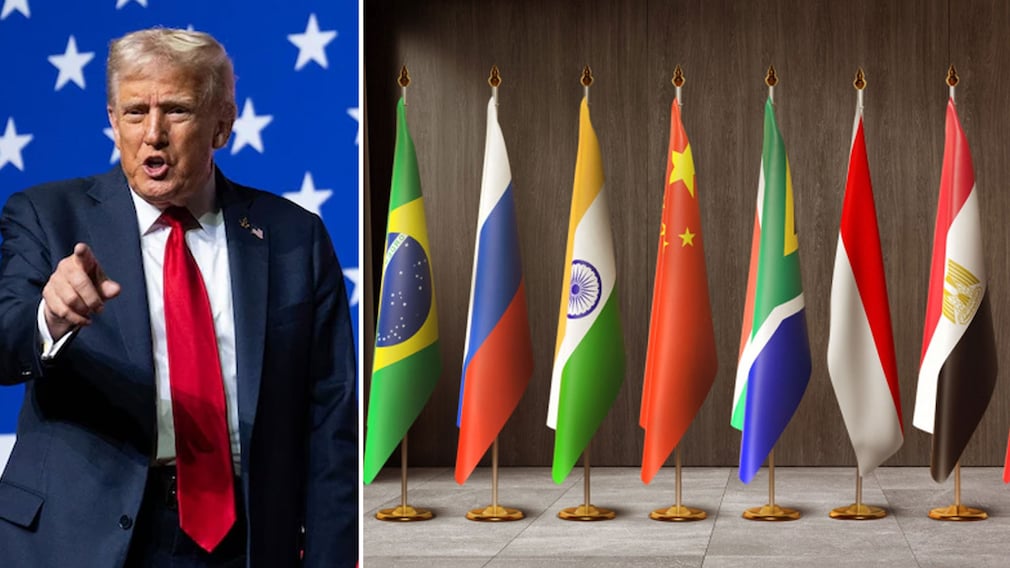
India is chairing the BRICS summit in a most challenging international environment. A lot of burden lies on India's shoulders to ensure the summit's success, just as in the case of the G20 summit earlier presided over by India. If the G20 summit could have been derailed by the confrontation between its western members and Russia over the Ukraine conflict, the BRICS summit has to forge a consensus on the conflict raging in the Gulf, with this time Iran and the UAE pitted against each other.
The BRICS Foreign Ministers meeting failed to issue a joint statement because, despite efforts made by India, Russia, China, and others, the positions of Iran and the UAE could not be reconciled. The stakes this time are much higher for the credibility of BRICS as a group if this summit also fails to issue a joint declaration. Both Iran and the UAE would normally want to avoid being seen as responsible for this failure and should be prepared for a minimally acceptable compromise language. A lot of pressure will be brought upon them by other members to accept a consensus language.
In the SCO summit declaration, Iran received unequivocal support from the members for the war unleashed against it. At the BRICS summit, the text will have to be heavily moderated, keeping in mind the UAE's position. China, which will hold the next summit, would prefer to preside over a BRICS that can show that it can handle its internal divisions through a pragmatic compromise in the larger interest of the group and its rising international role.
India's Challenge
The consequences of the conflict in West Asia has most serious international ramifications on several fronts. The opening of the Strait of Hormuz is critical for the Gulf region, including the UAE, and the international community as a whole. India's diverse interests in the region are being especially hit hard. India will no doubt work overtime to have a clean Delhi Declaration with a consensus on all paragraphs and no reservations appended to the text by any member.
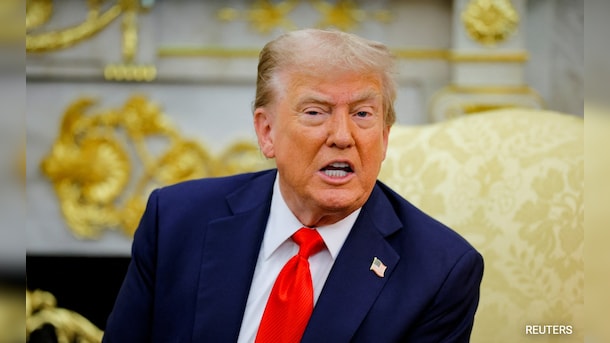
President Trump has upended the global order that the West itself created after 1945. The American unilateralism that the world saw after the collapse of the Soviet Union has resurfaced again dramatically. Trump has wrecked the global trading order by using tariffs and US trade legislation as a weapon. He seeks to control the global oil market. Kidnapping a serving head of state, as in Venezuela's case, initiating a war against Iran, and seeking regime change are acts that spurn the UN Charter and international law. He is alienating his closest allies, including Canada, the UK, and the European Union. This indirectly gives more salience to BRICS in the eyes of those who want to hedge against the domineering policies of the US.
The De-Dollarisation Question
Trump sees BRICS as an anti-US grouping. He has threatened BRICS countries with 100% tariffs if they moved towards de-dollarisation. BRICS has no de-dollarisation agenda as such, but seeks to promote trade in national currencies between member states. The logic is clear - if the US uses the dollar and its control of the global financial system as a weapon to bend other countries to its will, there will inevitably be moves to reduce dependence on the dollar and build alternative payment systems.
The progress in this direction will be slow, as BRICS countries, barring Russia and Iran, which have little or no trade with the US, the other countries, including India, have close economic investment ties with the US, and in the case of some BRICS members, even security ties. Nevertheless, even those who currently have a close relationship with the US realise the need to develop political ties with BRICS-plus countries, as well as promote alternative financial and payment mechanisms to escape the arbitrary grip of the US-controlled global financial system that allows the US to use sanctions as a coercive tool.
BRICS Is Ready - Even Now
To assume that to be taken seriously, BRICS should have a readymade, effective answer to the challenges that the non-West faces would be wrong. BRICS is still operating in a largely West-influenced international system. The New Delhi summit will be the 18th one, and while the level of interaction between a whole array of institutions within BRICS countries is impressive, it would be an exaggeration to say that it has bonded the BRICS countries together solidly against western domination. BRICS is a work in progress.
In the absence of any radical success of BRICS in shaping a new, more cooperative and equal world order, its critics dwell on its deficiencies and question its credibility. Pro-US elements, including many in India, want to diminish the importance and relevance of BRICS. They point to its lack of internal cohesion, the increasing Chinese domination of the group, India-China differences that undermine its agenda, India's close ties with the US being at odds with the group's perceived anti-West orientation, etc. That India belongs to this group riles many in the US because a nightmare scenario for them is one of India, Russia, and China coming together to challenge the West. Even when the leaders of these three countries are seen together informally on the margins of an international conference, it creates a stir.
The fact that President Xi Jinping will be attending the summit, which will be his first visit to India after seven years, and this in the background of a border conflict between India and his country, will impart a major international interest to the summit. Bilateral talks between Prime Minister Modi and President Xi Jinping in New Delhi should set the pace of improved ties between the two countries. President Putin's participation will strengthen the political messaging emanating from the summit. A trilateral Modi-Putin-Xi interaction, even if informal, will bolster that messaging further. On top of all this, the participation of the Iranian president in New Delhi will have its own meaning.
To The Naysayers...
It is interesting that those who do not favour India's BRICS membership because it hampers its relationship with the West present a new line of argument, namely, that both Russia and China are seeking accommodation with the US, and a Trump-Putin-Xi trilateral meeting could well happen at the next APEC summit, in which case a G3 could well emerge, and BRICS, with India, will be marginalised. This argument presumes that both Putin and Xi have great faith in Trump's steadiness and reliability as a partner and would be willing to put their eggs in his basket.
Those who ask what India has gained from BRICS membership are actually questioning the logic of India's strategic autonomy. BRICS gives us more manoeuvrability on the international stage. We can have close ties with the West, but there is a risk in putting all one's eggs in one basket. Moreover, we as part of the Global South have a deep interest in the reform of the international political and financial system, which will not be possible unless pressure for change is built up. India alone cannot do it; it needs a bigger platform of like-minded countries to do so. This does not mean that India's interests are identical with those of other BRICS members, but each member sees virtue in reform of the international system, greater equality between countries, more attention to the priorities and concerns of developing countries in international governance, strengthened multilateralism, multipolarity, etc.
BRICS countries now have tangible opportunities to cooperate with each other as their economies and markets have grown and they seek diversification. They want to build technology partnerships, and the possibilities of establishing new supply chains and promoting new connectivity projects to enhance regional cooperation. India wants to promote, in particular, cooperation in digital public infrastructure. The New Development Bank would need more capitalisation.
The importance of BRICS lies in what it can build over time, as many interests are shared, even if all of them are not.
(Kanwal Sibal was Foreign Secretary and Ambassador to Turkey, Egypt, France, and Russia, and Deputy Chief Of Mission in Washington)
Disclaimer: These are the personal opinions of the author
-
Opinion | Slurs, Threats, Now A Temple Attack Plot: When Did America Become So Hostile Indians?

The rising tide of anti-India, anti-Hindu, and racist attacks serves as a stark reminder that economic prosperity does not automatically guarantee social immunity from bigotry.
-
Opinion | Imran Khan, And The Perils Of Having An 'Opinion' In Bollywood
The reality of the industry is quite grimy. More often than not, its inhabitants have been fairweather friends, happy to sing the praises of whoever is in a position of authority.
-
Exclusive: India's Food Safety Problem Goes Beyond Just Dirty Kitchens - By Tukaram Mundhe
On World Food Day, Maharashtra's Commissioner of Food Safety explains why instead of taking stopgap measures, the entire supply chain in India needs to be held accountable and made transparent.
-
Opinion | India Has Enough Coal. So Why Are Power Plants Running Short? A 76 Million 'Crunch'
As of October 5, as many as 82 of the 191 thermal plants monitored by the Central Electricity Authority were in the 'critical' category
-
A Step Behind Neha Bora: What Rahul Gandhi's Gesture Says About Congress' Gen-Z Pitch
At INDIA bloc's march to Supreme Court, Rahul Gandhi placed himself a step behind two women, hands resting on their shoulders. One was his sister Priyanka. The one on his right was Neha Bora. Here's what the image means for the protest wave now, and for Rahul's politics in general.
-
Opinion | Starlink, India, And Why Elon Musk Must Know His Billionaire Tantrums Won't Work
India should neither be intimidated by Musk's global influence nor distracted by his theatrics.
-
Blog | 'Baap Da Brat': Kerala Mini Cooper Crash, And Why 'Daddy' Can't Keep Saving You
There are three things you should never underestimate in India: the power of 'jugaad', the elasticity of the law, and the confidence of a 'Baap da Brat' who believes his Papa Posh can fix absolutely anything.
-
Opinion | 'Say Our Name': Why A Tiny Island Nation Wants The World To Get Its Name Right
Standing before the UN hall of nations, Naoero President David Adeang asked the world to unlearn its comfortable habits and speak a restored truth.
-
TVS Succession Row Explained: Why Venu Srinivasan's Family Is Divided Over Wealth
TVS Family Dispute: TVS Holdings is a key entity because it owns a controlling stake in TVS Motor Company. It owns 50.26% of TVS Motor.
-
Opinion | The US Is Showing India Just How Cheap Its 'Friendship' Is
Can local talent fully replace Indian contribution? Why is the US leading in setting up Global Capability Centres in India - over 60% - and pocketing the IP?