Opinion | The Quad Is Slowly Going Quiet - But For A Reason
Questions have grown with Trump's renewed contacts with Xi Jinping and ongoing uncertainty about US commitments in Asia.
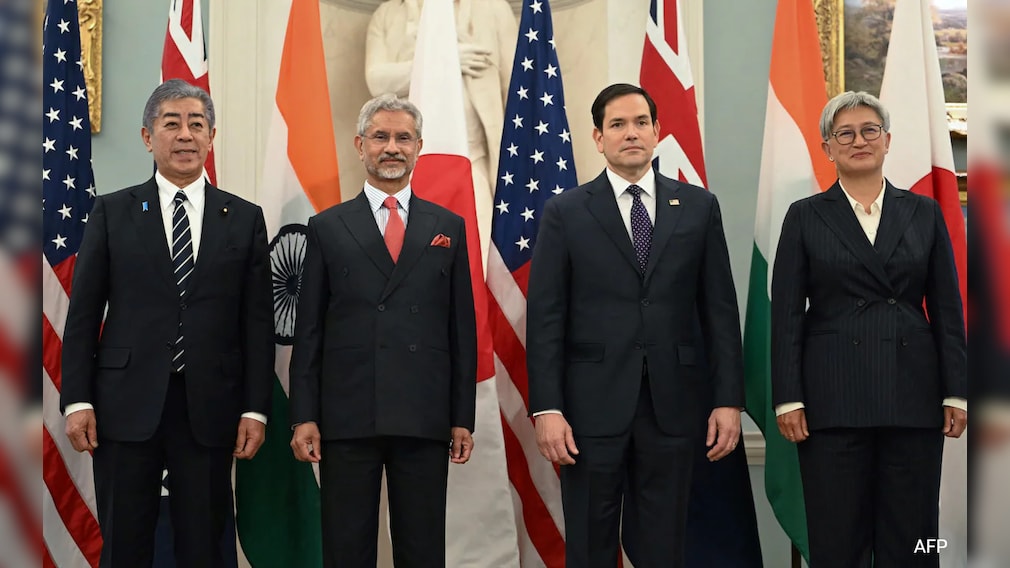
The Quad is now diminished politically but, more importantly, strategically. The New Delhi foreign ministers' meeting reflected uncertainty over Indo-Pacific geopolitics. There was no leaders' summit, presidential theatre, or expansive rhetoric about democratic coalitions reshaping Asia. Compared to the Biden-era Delaware summit of 2024, which had political symbolism and visible presidential ownership, the 2026 meeting's optics appeared restrained.
This has fuelled commentary that the Quad is losing momentum. The move from leaders' summits to foreign minister meetings is widely seen as a sign of reduced American political engagement, especially under Donald Trump's more transactional approach. Questions have grown with Trump's renewed contacts with Xi Jinping and ongoing uncertainty about US commitments in Asia.
Focusing only on political appearances hides a key shift. Three developments matter most: China's changing strategy toward the US, America's dual-level policy approach, and shifting from mere talk to action on burden-sharing. Key takeaway: Structural changes, not just optics, define the Quad's transformation.
China's Strategy of Managed Equilibrium
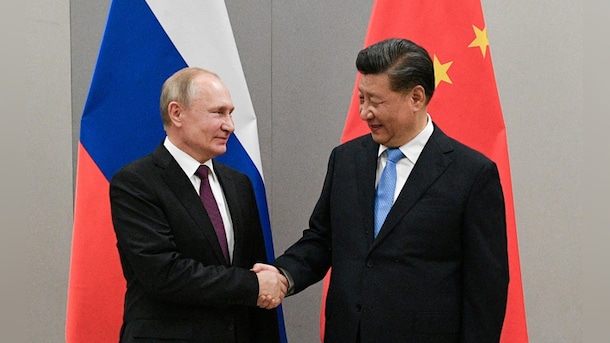
The most important shift is China's. Beijing is moving away from ideological confrontation toward managed great-power accommodation with Washington. Chinese discourse now emphasises stability, predictability, and crisis management. Strategists increasingly describe this approach as a "stable equilibrium between two great powers." Importantly, China's posture is calibrated rather than conciliatory. The objective is not to eliminate competition altogether but to reduce the urgency of active balancing coalitions.
China does not need to dismantle the Quad outright; a gradual reduction in American strategic urgency may suffice. Beijing seeks to weaken Quad cohesion, lower its political profile, and encourage accommodation in Washington. If the United States moves from balancing to merely managing China, the political foundations of Indo-Pacific coalitions weaken. China's goal increasingly appears to be hollowing out balancing structures through great-power stabilisation.
This is precisely why the reduction of Quad summitry matters symbolically. The shift from leaders' engagement toward a foreign ministers' process reflects declining presidential emphasis on coalition management and alliance theatre. However, the same period has simultaneously witnessed the continued expansion of operational coordination beneath the political layer.
This operational growth highlights the second transformation: a shift in how American foreign policy works in the region. Key takeaway: US policy now operates on two distinct levels, separating political signals from strategic actions.
America's Two Foreign Policies
The United States increasingly operates through two partially distinct foreign policy systems simultaneously. At the bureaucratic and institutional level, a relatively stable strategic consensus continues functioning. The State Department, the Pentagon, the Indo-Pacific Command, the intelligence community, congressional China hawks, and the wider defence-industrial ecosystem continue to regard China as the central long-term challenge confronting the United States. For this institutional layer, the Indo-Pacific remains the primary theatre of twenty-first-century geopolitics, and the Quad remains essential balancing infrastructure.
This continuity was visible throughout the New Delhi meeting and the parallel India-US discussions surrounding it. Cooperation on critical minerals, supply-chain resilience, maritime security, strategic technologies, and energy security continued to deepen. Most significantly, the India-US bilateral engagement publicly referenced an "underwater domain awareness roadmap".
This phrase received relatively little public attention despite carrying substantial strategic significance. Underwater domain awareness extends far beyond conventional maritime coordination. It refers to the undersea battlespace itself, including submarine tracking, seabed surveillance, acoustic monitoring, underwater infrastructure security, and anti-submarine warfare coordination. At a time of expanding Chinese submarine activity across the Indian Ocean, the public articulation of such cooperation signals a considerable deepening of operational maritime coordination between India and the United States.
Simultaneously, the Quad announced initiatives on critical minerals coordination, maritime surveillance cooperation, energy security, and infrastructure development, including the Fiji port initiative in the Pacific. These are not symbolic diplomatic exercises. They represent the gradual construction of a distributed strategic architecture linking industrial resilience, maritime coordination, technological ecosystems, and infrastructure security.
At the upper level of presidential summitry, however, the worldview appears considerably more transactional. Alliances increasingly serve as leverage instruments. Trade deficits, tariffs, bilateral bargaining, and leader-to-leader relationships dominate the framework. Summit diplomacy is increasingly viewed as expensive and strategically constraining. Trump's recent pause on arms sales to Taiwan, opposed by large sections of the American strategic establishment, demonstrated that presidential will, when sufficiently assertive, can cut across the institutional layer entirely.
A clear paradox has thus emerged: politically, the Quad appears sidelined; institutionally, strategic coordination advances. Working-level cooperation on maritime security, critical minerals, strategic technologies, supply-chain resilience, surveillance coordination, and Indo-Pacific strategy continues to deepen even as leadership visibility declines.
The third and perhaps most consequential transformation is the elevation of burden-sharing from rhetorical pressure into strategic doctrine.
From Alliance Optics to Distributed Balancing
Burden-sharing is a persistent theme in US foreign policy, but the structural nature of the shift is changing. The United States now faces mounting fiscal pressures, industrial constraints, military overstretch, domestic polarisation, and simultaneous geopolitical demands across Europe, the Middle East, and Asia. Accordingly, Washington increasingly seeks a model of distributed balancing, in which regional powers shoulder greater responsibility for local security architectures.
The old assumption that the United States would indefinitely sustain Asian security through overwhelming forward military dominance is steadily weakening. Partners are increasingly expected to generate capacity independently while integrating into broader American-led balancing networks. Japan is accelerating military normalisation and defence expansion at levels that would have been politically difficult a decade ago. Australia is deepening force integration, Pacific engagement, and operational coordination.
For India, these three forces converge clearly. India's strategic value to Washington grows, as no viable Indo-Pacific framework excludes India; geography guarantees this. As the United States embraces burden-sharing and distributed balancing, India becomes increasingly central to American strategy.
Meanwhile, India faces a more demanding environment. The burden-sharing era demands greater indigenous capability, stronger maritime capacity, technological resilience, and faster national power accumulation. Indian policymakers thus must manage China's rise while navigating the growing unpredictability in the American strategic system.
This transition weakens alliance optics but deepens strategic interdependence. While reduced presidential rhetoric and lower summit visibility give the impression of declining relevance, the structural reality is different: The Quad's increased distribution, operational integration, and strategic necessity reflect a shift away from U.S. unilateral dominance as the sole guarantor of Asian security. Key takeaway: The Quad's significance is rising even as visible leadership recedes.
The New Delhi meeting clearly reflected this transition. The most important outcome was the emergence of critical minerals and supply-chain resilience as central pillars of Quad cooperation. Although official statements avoided naming China directly, the underlying concern was unmistakable. Chinese dominance across critical mineral processing ecosystems has become one of the principal structural vulnerabilities confronting Indo-Pacific economies.
The key is not just the issues themselves but what they signal: economic and strategic security are now closely linked. Core areas such as supply chains, technology, resources, maritime coordination, and infrastructure are merging into a single framework. Key takeaway: The Quad now addresses security as an integrated challenge rather than in separate domains.
Managing Convergence Without Uniformity
The differences among the Quad members nevertheless remain important.
The United States remains the most strategically expansive actor. Secretary of State Marco Rubio repeatedly referred to a "strategic alliance" between India and the United States, and described both as "two countries that have global influence and the ability to influence global events". This language moved substantially beyond traditional partnership rhetoric and reflected the extent to which sections of the American strategic establishment increasingly view India as indispensable to long-term Indo-Pacific balancing.
India, however, continues to maintain political caution even as operational convergence deepens. External Affairs Minister S. Jaishankar carefully avoided alliance terminology and preserved India's longstanding emphasis on strategic autonomy and multi-alignment. New Delhi supports functional cooperation, maritime coordination, technology partnerships, and supply-chain resilience while remaining reluctant to adopt a formal bloc identity or treaty-style alignment.
Japan continues to place strong emphasis on the rules-based order, maritime security, and economic resilience. Australia increasingly functions as a continuity actor focused on Pacific engagement, institutionalisation, and operational coordination.
These differences are not necessarily signs of weakness. In fact, they help explain the Quad's durability. The grouping does not demand ideological uniformity or formal alliance identity. It accommodates differing strategic cultures while building practical coordination around shared structural concerns.
India's Way
At present, there is also visible scepticism within sections of Indian strategic discourse regarding the reliability of the United States and the long-term credibility of partnership mechanisms. Concerns have expanded due to tariff disputes, outreach to Pakistan, uncertainty surrounding future American political transitions, and ambiguity regarding future US-China relations. However, the New Delhi meeting demonstrated that key functional agendas continue advancing through institutional continuity within the strategic establishments of all four countries. Maritime coordination, surveillance cooperation, critical minerals frameworks, supply-chain resilience, and technological coordination continue to deepen because the underlying structural logic driving cooperation remains durable even when political personalities and tactical priorities shift.
The pressures that originally drove the revival of the Quad have intensified significantly. China's naval expansion continues. Maritime contestation across the Indo-Pacific is growing sharper. Supply-chain vulnerabilities remain unresolved. Economic coercion capabilities continue to expand. The need for balancing mechanisms is therefore stronger now than when the Quad was revived in 2017.
The New Delhi meeting revealed a larger transformation underway in Indo-Pacific geopolitics. The Quad is gradually moving away from high-profile summitry toward a quieter, more embedded form of strategic coordination. Political symbolism may fluctuate across administrations. Leadership rhetoric may vary. Yet, beneath the changing optics, the operational foundations of Indo-Pacific balancing continue to deepen.
The future of the Quad may, therefore, lie less in declaratory rhetoric and more in the gradual construction of a shared maritime, technological, industrial, and economic security architecture capable of sustaining balance in an increasingly contested Indo-Pacific.
(The author is a Research Fellow in the Geostrategy Program at the Takshashila Institution)
Disclaimer: These are the personal opinions of the author
-
Exclusive: World's Newest Country Is Without Medicine. And It's Getting Worse

For the people of South Sudan, the destruction of an MSF-run hospital meant the disappearance of the only secondary healthcare facility serving nearly 250,000 people across the region.
-
Opinion | Degrees, SUVs, Gold: Why India's Most 'Qualified' Men Often Demand The Steepest Dowries
Education, ironically, is more of an enabler of the practice than a hindrance, per a 2023 study quoted by the BBC
-
Trump Pushes Middle East Reset, Pak Faces Saudi, Abraham Accords Dilemma
Pakistan faces a dilemma over the Abraham Accords, needing to recognise Israel for economic gains but opposing it without Palestinian statehood.
-
Opinion | A New Sunni Bloc Is Taking Shape, And Pak May Be Its Biggest Winner
The war between Israel-US and Iran has led to the ascendancy of two of India's major adversaries - Pakistan and Turkiye. Already locked in a close embrace militarily, they are now ideologically pushing for an 'Islamic NATO'.
-
"Kids As Experimental Rats?" CBSE's 3-Language Policy Triggers Debate
The new CBSE policy for Class 9 mandates that students must study three languages (R1, R2, and R3), with at least two being native Indian languages.
-
Blog | My First Lesson In Delhi Came On The Lawns Of Gymkhana: Kiran Bedi Writes
During the years that followed my first visit, I returned often to Delhi for tournaments, playing competitive tennis and steadily improving my national ranking. I played gruelling matches on those courts - won some, lost some, learned from all.
-
Opinion | All Roads Lead To China? Why Xi Hosted Trump And Putin Back-To-Back
China was projecting itself not merely as another great power, but as the indispensable balancing force.
-
Analysis: The 'Good Girl' Trap That Killed Twisha Sharma
In the Twisha Sharma death case - the latest focal point of national media - there were "indications" from the very start that she was in a toxic marriage.