Opinion | The Panic In Rawalpindi: Why Pakistani Generals Suddenly Sound So Afraid
Lectures on governance and usual accusations against India aside, the truth is that Pakistani generals are fast losing their grip on the country.
Some really curious events are taking place in Pakistan, unusual even for that volatile country. First, there was Interior Minister Mohsin Naqvi's lecture on the virtual collapse of government and references to the dangers of 'cockroach' protests. Then came the formidable Director-General of Inter Services Public Relations (DG-ISPR), who delivered a two-hour briefing, most of it in English and with figures galore. That was clearly also aimed at foreign audiences, even as his own country virtually collapsed in an orgy of violence. All of this was echoed by others, including prominent journalists, with dire warnings about the dangers from frustrations among the youth. Apparently, a certain insect emerging next door had come to epitomise the fears of the elite in Pakistan.
The Interior Minister's Advice
First, the unusual - and probably unworkable - suggestions from an Interior Minister who apparently wants to 'reform' the country bottom-up, so as to improve governance and appease the youth. That's odd, coming from a former Punjab Chief Minister who led the 2024 midnight crackdown on protesters from the Pakistan Tehreek-e-Insaaf (PTI). The incident left four dead and more than 90 injured. There are also allegations of serious corruption, to the tune of millions. Whatever the truth, he hardly has a reputation for model governance. Referring to the 'Cockroach Janata Party' protests in Delhi, he warned, quite rightly as it happens, that Pakistani youth were no longer to be pacified with free laptops and the like, but wanted structural change. His solution was to create more administrative units for better governance. For instance, the Muttahida Qaumi Movement-Pakistan (MQM-P) has long been demanding that Karachi be designated a province separate from Sindh.
This is strongly opposed by the PPP, which rules Sindh. Both are also allies of the PML-N government at the Centre. Similarly, the PPP and the PTI have also long called for a South Punjab province, which was opposed by the PML-N. Naqvi also knows well that such a move for new administrative units requires constitutional changes, which can only be done through a two-thirds majority in the House, which the PML-N doesn't have. But it could, if the army says so. Nothing on that yet, but Naqvi was criticised heavily. Interestingly, Naqvi was addressing a group of top businesspersons at the Pakistan Economic Summit 2026, and he quipped that it was, after all, they who were running the country, with their funding worth millions for political parties. He should know. He has been there, done that.
DG ISPR Hits A Poor Six
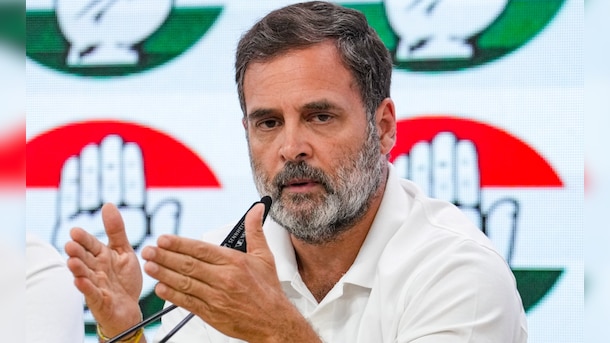
Then there was the far more controversial and potentially dangerous marathon briefing by Lt Gen Ahmed Sharif Choudhry, the DG-ISPR. The objective of his lecture was to blame everyone else - primarily India - for the violence in Balochistan. That blame-game included very obviously lip-synced videos of girls alleging abduction and threats to become suicide bombers, and a clip of a local alleging that all those involved were "Fitna al Hindustan" terrorists. Another set of allegations was against the Taliban, who are accused, ironically, of being entirely different from Pakistanis in their culture. Pity they didn't remember the three decades that they armed the Afghans.
Locals also came in for censure, particularly the Sardars of Balochistan, who apparently only care for their own profit. The state government also comes in for blame for not providing equipment for their own paramilitary forces, such as the Levies and Baloch Scouts.
But the general should have known that under the seventh National Finance Commission, Balochistan gets a paltry 9% of the total national pie of the resource pool, compared to about 52% for Punjab, which accounts for 44% of Pakistani territory. Those figures remained out of the narrative. Moreover, the Chief Minister, Mir Sarfaraz Bugti, also a Sardar, is a man after the army's own heart. He once declared that genocide was the only option to "solve" the Baloch problem.
After proving to everyone that given a whopping 200 "intelligence-based operations" a day - a puzzling phrase since all counter-terrorism operations are based on intelligence - the crux of the General's recommendations was that good governance was necessary. Quoting his boss, the Chief of Defence Staff, General Asim Munir, he observed that one should not talk only of rights but also of 'obligations'. The ball went out of the park there. If the army is not responsible for governance, given its supreme position, who is? Certainly not the crippled politicians, or a local administration that also has army formations in the area breathing down their necks.
Yes, there was not one word on the popular revolt in Pakistan-occupied Kashmir (PoK).
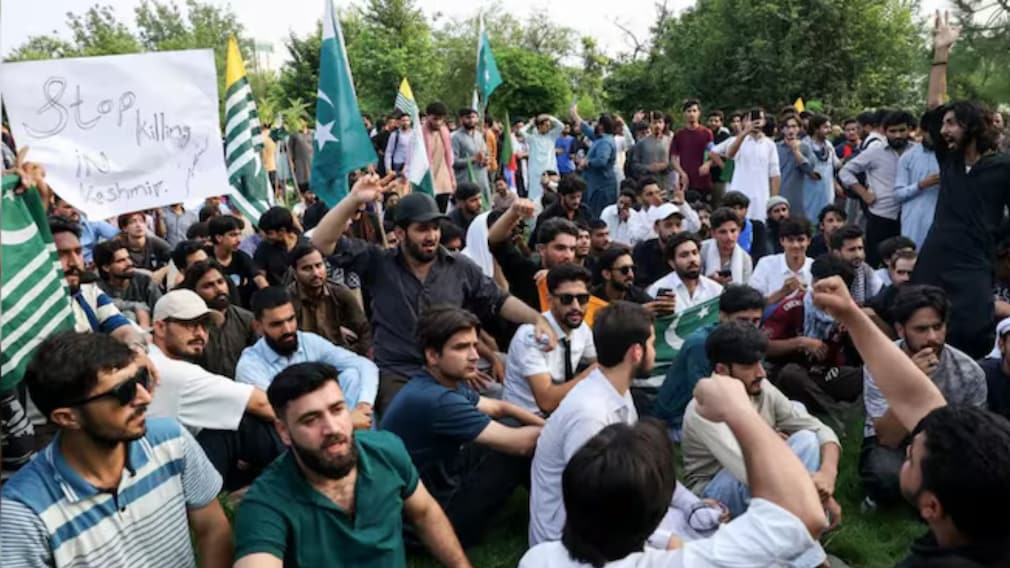
The reason for all this alarm is two-fold. One, the Delhi protests caught the imagination of the Pakistani public, leading to much admiration of Indian students' courage in taking on the authorities. The fact that protests in support of PoK took place in Islamabad and Rawalpindi thereafter may be a coincidence, but remember that such protests come in waves across the world, most apparent in the 2010s, when they spread across some 25 countries, sometimes quietly assisted by outside hands, sometimes not. Pakistan was largely spared from that wave, barring the army-controlled demonstrations that dethroned Nawaz Sharif. But protests climbed significantly in the 2020s, particularly after Imran Khan was jailed, spread thereafter to other provinces, and now seem to have reached the heart of the country. That's a red line for Rawalpindi. Things have definitely gotten out of hand.
For India, the concern is that the Kulgam attack in Jammu & Kashmir happened the very same day when the DG-ISPR was spitting fire. Claimed by The Resistance Front (TRF), a Lashkar-e-Taiba offshoot, the attack killed two non-local workers at a brick kiln. This was the first such attack in four years. The fact that the terrorists, in a clear and deliberate repeat of Pahalgam, first identified Hindus and then shot them, shows that Pakistan is sending a message that it can launch operations at will. That it was not on the scale of Pahalgam seems to point to an intention to keep the pot boiling without getting into a war. Days earlier, a policeman was also shot in the head as the attacker melted into the crowd. Expect more such small attacks against hapless civilians and the police, in particular, which, if nothing, will at least boost the morale of many Pakistanis.
The key point is also this: a full-fledged war will probably be avoided, given the huge unpopularity of the Pakistani army on the streets and, as its officials are now witnessing, the very potent anger of the youth. The result could very well be a heaving out of the army itself. Besides, 200 operations a day are a bit much for any army.
Counter-Terrorism Is, After All, Cause And Effect
Meanwhile, it is well to remember the principle of cause and effect. The more operations are launched, intelligence-based or otherwise, the more the disaffection within the targeted populations. That could have been true for Indian forces deployed in Kashmir, too, except that the army, notably, has been extremely sensitive in its operations. Operation Sadbhavana (meaning "goodwill"), which involved sports, education, and health initiatives, was launched in 2008 and continued till about 2013. That's not soft-heartedness, but operational sense. Eventually, it won the Indian Army that elusive and ultimate reward in counter-terrorism: local support, and, thereby, intelligence. Time to revive that with a huge boost.
Lieutenant-Governor Manoj Saxena has already launched a number of initiatives targeted specifically for the youth, including a 'design your own degree' programme, followed by a project to curb drug abuse. India's strategy should now be aimed at showing the stark difference between a frightened and oppressed Pakistan and PoK, and the Indian system. Pakistan's planners, being no fools, already know that that's going to be the plan. Naturally then, going forward, their strategy across the board will be to divide Indians on religious lines and push security forces into retaliating against local populations or crowds, and milk disaffection and corruption.
Time for Delhi to launch its own 'Operation SHIELD' (Safeguarding Honesty, Integrity, Ethics, Law and Discipline) - far better than those uneasy 'intelligence-based operations' that Rawalpindi extols. That's army-think. But India, unlike Pakistan, has a state. With trouble ahead, there's no time to lose.
(Tara Kartha is a former Director, National Security Council Secretariat)
Disclaimer: These are the personal opinions of the author
-
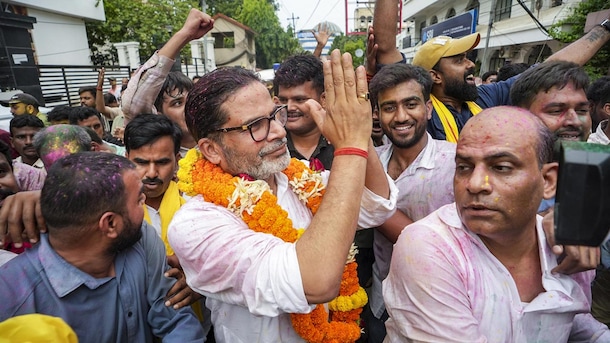
Opinion | Bankipur Is Prashant Kishor's Stinging Comeback. But It Is Also The End Of His 'Excuse'

Kishor's ideological flexibility helped make him a successful strategist, but it remains a political vulnerability.
-
As AI Takes Jobs, Could It Also Create A New Generation Of Entrepreneurs?
The job market has already begun feeling the impact of AI as companies automate more tasks and rethink hiring. However, India Inc and global industry captains believe the AI disruption could mean spawning a new wave of entrepreneurs.
-
Ahmedabad 2030 Isn't Just About Commonwealth Games, It's India's Olympic Audition
Ahmedabad will host the 2030 Commonwealth Games, exactly a century after the event first began in Hamilton, Canada. India hosted once before, in Delhi in 2010
-
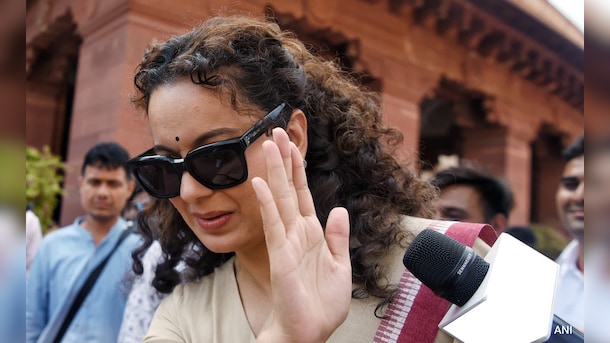
Opinion | Kangana Ranaut Is Fast Running Out Of Enemies To Pick On
Kangana spent years cultivating the image of the 'lupa', the lone she-wolf who survived without a pack. But rebellion, once rewarded, can quickly become an addiction.
-
Opinion | 17 Dead, 166 Trapped: How Indian Seafarers Became 'Collateral' In Others' Wars
India is now the second-largest supplier of seafarers in the world, contributing 311,936 personnel. But that also means that they are among the easiest targets during war.
-
Demography Awaits Dividend: BRIC By Brick, India Built Growth But Not Jobs
Twenty-five years, five governments and several hundred investment summits later, demography is waiting for politics to propel the promise.
-
The $20 Billion Secret: How Hygiene Became India's Next Big Bet
India's annual 25 million births fuels demand for baby-care products. Meanwhile, increasing elderly population is demanding adult-care products.
-
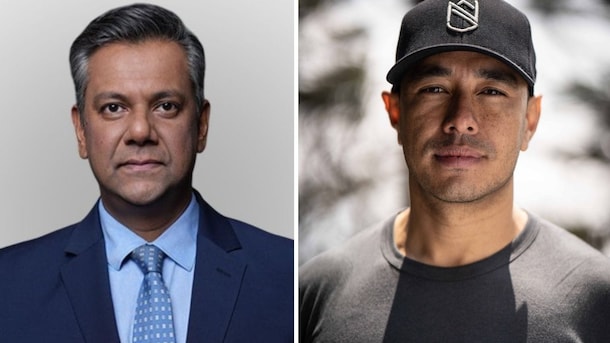
Legendary Mountaineer's Voice Message To NDTV's Vishnu Som Hours Before He Vanished
"Hope you guys are well and it's great to be connected. Thank you guys and greetings from Camp 2 on Broad Peak. Ciao Ciao," Nirmal 'Nims' Purja told NDTV's Vishnu Som
-
They Left The City For The Hills. Nature Tested If They Meant It
They chose to be there. They also chose to stay put every year when rain turns livelihoods and Instagram algorithms upside down, and visuals of flash floods and landslides take over news headlines, almost cutting them off from tourists and, for some, from the rest of the country.