The Most Dangerous Thing About Vaibhav Sooryavanshi Isn't Really His Age
The ball leaves the bowler's hand at the same speed it does for everyone else, yet Sooryavanshi appears to inhabit a different zone. There is an extra fraction of a second before the bat comes down - an extra layer of information being processed.
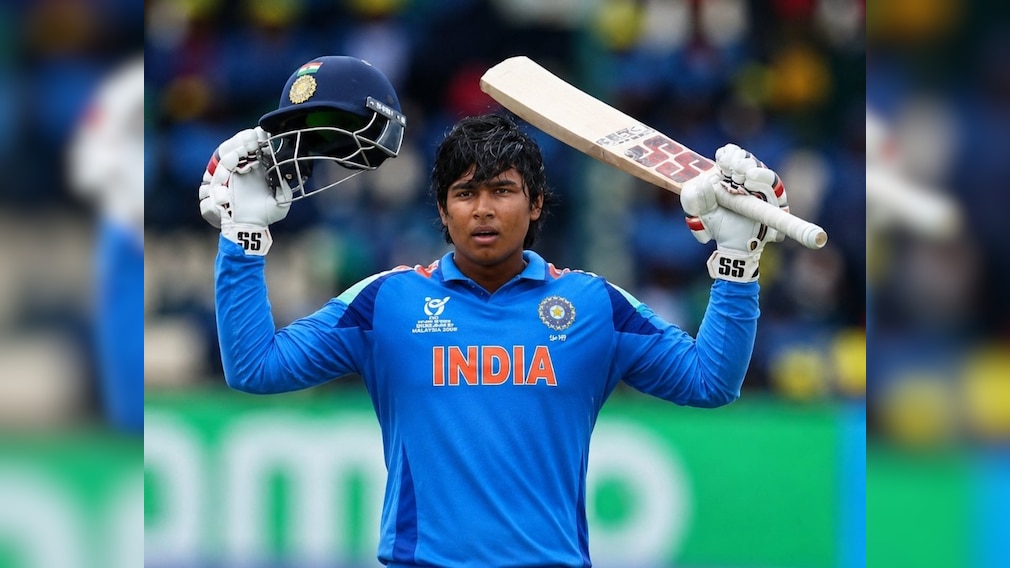
Some batters have great technique; others have extraordinary power. Vaibhav Sooryavanshi sits in the intersection of technique and power because he seems to have more time than everyone else to play a ball.
By the time the ball leaves the bowler's hand, it almost feels like he already knows what he's going to do. While everyone else is still reacting, he's locked onto the ball, perfectly balanced, and his hands seem to find the right position without any hesitation. Every movement unfolds with the natural progression of Beethoven's symphony.
The best batters in the world are often defined by this tiny ability to pick up tiny clues before anyone else does, process information faster and turn them into a decisive advantage. It's a rare combination of vision, anticipation, timing, and instinct-traits that defy simple explanation. Beyond all the runs, records, and accolades, what separates him is an almost uncanny understanding of the game as it unfolds. The kind of instinct that suggests he is not merely playing the game, but reading the bowler like a mentalist.
His efforts and his approach have earned him a ticket to UK this summer for T20s against England, Irelanad, as well as in the Asian Games Team. Sooryavanshi thereby becomes the youngest Indian, even younger than Sachin Tendulkar, to be inducted into the Indian Cricket Team.
The USP Of IPL Is No More King Khan
In 2008, somewhere in the middle of the first season of IPL, Shah Rukh Khan, the celebrated owner of Kolkata Knight Riders and Bollywood Badshah, had told NDTV," I am the USP of IPL." Enter the next-generation software-instilled humanoid called Vaibhav Sooryavanshi, the Bollywood superstar would perhaps agree that the USP of IPL has now shifted. Jos Buttler, in fact, said, "Sooryavanshi was the IPL this year". Nineteen seasons later the baton changed hands and now it is well and truly with the Bihari boy.
Sooryavanshi is perhaps the single biggest brand to emerge out of Bihar.
The most revealing thing about him is his unhurried approach.
The Boy Who Has Extra Time
The ball leaves the bowler's hand at the same speed it does for everyone else, yet Sooryavanshi often appears to inhabit a different zone. There is an extra beat before he commits. An extra fraction of a second before the bat comes down. An extra layer of information being processed.
Remember when he took down Pat Cummins for three successive sixes? The best batters do not simply react, they read the situation. And Vaibhav Sooryavanshi appears to read cricket in a language few others can speak.
His father, Sanjeev Sooryavanshi, says," Whenever he played, older boys would call him a kid. If I told him a particular bowler was the opposition's biggest bowler, he would target that bowler. Vaibhav would say, "Papa, if I hit him for a six, the other bowlers won't dominate me." That has always been his strategy. He wants people to know him for his cricket, not judge him by his age."
That is why many international coaches who have watched him closely rarely begin with his age - they begin with perception. One international coach who observed him during his developmental years described elite batting as existing at the intersection of vision, timing, balance and instinct. Great players, he argued, seem to receive information from the ball that others do not.
In that framework, Sooryavanshi is not merely a talented batter. He is the point of intersection.
The easiest mistake to make with a player this young is to focus entirely on the extraordinary acceleration of his career. A Ranji Trophy debut at 12. India Under-19 selection at 13. A hundred against Australia Under-19 in Chennai that left franchise scouts scrambling for reports and phone numbers. An IPL auction became a bidding war.
The chronology of events that had unfolded up until this point made experienced coaches, scouts and talent evaluators speak about him with unusual conviction.
That Boy From Tajpur
Former Bihar cricketer and Rajasthan Royals scout Samar Qadri remembers hearing whispers about a boy from Tajpur in Samastipur long before the wider cricketing world discovered him. In a local match in Patna, Qadri, who is a leg spinner bowled to him and watched the teenager dismantle attacks with a confidence that felt entirely disproportionate to his age. "He told me I don't play bowlers, I play balls," Qadri recalled while speaking to NDTV. The clue to understanding this teenager is embedded in that sentence. Most young players become overwhelmed by reputation. They see international bowlers, senior professionals, established names and historical achievements.
Sooryavanshi sees a cricket ball and nothing else.
Pressure in elite sport is often created by narrative. And the narrative is created by the crowd, the television, social media. Players frequently spend energy battling stories rather than solving cricketing problems. Sooryavanshi's mental framework appears remarkably resistant to that noise. 'His thinking is task-oriented rather than personality-oriented', points out Qadri A ball in his zone remains a ball in his zone, whether it is delivered by an Under-19 seamer or an international fast bowler. The mechanics of decision-making do not change. This is much live Virender Sehwag.
Simplicity As A Skill
That psychological simplicity is one reason those around him consistently describe him as unusually mature. There are stories about his memory that sound almost exaggerated until enough people repeat them. A coach recalls how he remembers dismissals in forensic detail. He remembers practice sessions, sequences, what a bowler attempted against him months earlier. This talent scout-cum-coach described his recall as "elephantine". And this is where comparisons with the like of Sachin and McGrath begin.
Memory, in cricket, is not merely recollection. It is pattern recognition. The sport rewards players who can identify trends before others notice them. The great ones like Sachin, McGrath, Ashwin built internal databases. Sooryavanshi seems to be constructing one at remarkable speed.
That ability becomes even more fascinating when viewed through the lens of his batting. Because what appears instinctive on television is actually underpinned by highly sophisticated mechanics.
The Geometry Behind His Hits
Perhaps the most misunderstood aspect of modern batting is power. Spectators often assume power originates in strength, but it originates in positioning. Sooryavanshi's power is not created through brute force. It is generated through geometry. A coach who worked closely with him in the Franchise described a batting setup unlike most conventional models. At the top of his movement, his upper body coils deeply. His torso bends significantly. His head moves outside the line of the ball. The effect is profound. Deliveries outside off stump enter his visual corridor differently from how they appear to most batters. His weight, meanwhile, remains heavily loaded onto the back leg. Traditional batting instruction has spent generations teaching players to transfer weight forward. Sooryavanshi frequently resists that instinct. By keeping the hips from sliding aggressively toward the ball, he preserves optionality. He delays commitment. And in elite batting, delayed commitment is a sure sign of a matured player. They remain adaptable deeper into the ball's journey.
And this is what makes Sooryavanshi so disruptive. He is not simply attacking length balls. Bowlers say that is redefining what length means.
Data from his second IPL season revealed a startling trend. While most batters operated at strike rates around the 140 range against conventional lengths, Sooryavanshi was scoring at over 240. His setup allows him to convert deliveries traditionally considered "safe" for bowlers into scoring opportunities.
Perhaps the most impressive aspect of his technique is not its uniqueness but its adaptability. The exaggerated backlift that has become one of his visual signatures today. As bowling quality improved, so did his method. At one developmental trial, he did not even possess the fastest bat speed among his peers. Coaches identified the limitation and worked relentlessly to improve it. Within months, significant gains had been made.
That willingness to evolve may ultimately matter more than any technical detail.
Vaibhav has revealed how it is easy to satisfy his mother by just wearing the India shirt but father always sets standards very high. Sanjeev Sooryavanshi tells NDTV," No matter how well a son does, a father always feels he can achieve a little more. If he scores runs, we think he could score a few more. The most important thing is that the team wins. If the team wins, the runs will come anyway."
Cricket history is littered with gifted youngsters whose methods remained static while the game moved forward. Those who know Sooryavanshi say he belongs to the opposite category. They talk about awareness, empathy, curiosity. About a player who constantly observes. All signs of a good leader.
A Boy Too Fast For His Age
I have spoken to Suryavanshi's teammates who speak about encouragement rather than insecurity. Coaches mention how quickly he absorbs information. Several observers have noted that he processes match situations unusually fast for his age. He seems to understand momentum shifts almost instinctively. The comparison that surfaces repeatedly is not stylistic but psychological. A young Sachin Tendulkar.
The comparison is not limited to his batting alone but also about cricketing understanding. His father says that the comparisons are too soon and may not be accurate. India has produced batting prodigies before. What it has produced less frequently are batting prodigies who eventually become architects of teams. The qualities associated with leadership - memory, emotional intelligence, tactical awareness, communication and learning velocity - already seem embedded within his profile.
But great careers are not defined by one 700 plus season in IPL. Every great career is ultimately defined by the quality of its second and third adaptations. Something is compelling about the foundation beneath the hype around Sooryavanshi. The mind appears unusually advanced. The technique appears unusually original. The leadership instincts appear unusually natural. Most importantly, all three seem connected.
The future of Indian batting will not be shaped solely by power or numbers or highlight reels. It will belong to players capable of processing the game faster, seeing it more clearly and understanding it more deeply than everyone else around them. Vaibhav Sooryavanshi is just beginning his journey. But watching him already feels less like observing the dawn of a new batting era. He has great ambitions- not just to shine in white ball cricket but red ball too. Mastery in red ball will determine his stature in the coming days.
His father put him in cricket at the age of four, his coaches found him at 10, BCCI at 13. At 15 after becoming the MVP of IPL, Sooryavanshi is ready to show the world the true picture of Gen Z in Indian cricket. England, beware, the Bihar blaster is on the way.
(Rica Roy is a Sports Editor and Anchor with NDTV)
Disclaimer: These are the personal opinions of the author
-
Mayawati's Tough Love: Nephew Akash Anand Benched Again. What It Means For BSP

Akash Anand, the 31-year-old foreign-educated nephew of BSP boss Mayawati, finds himself out of favour, for at least the third time in three years, with the latest turn coming in Lucknow on September 3.
-
Blog | Why You Should Care Whether Schrodinger's Cat Is Dead Or Alive
Imagine going on a romantic Alpine getaway and returning with the equation that runs the modern world. The only snag: nobody can quite agree on what it says about reality.
-
Promote, Punish, Repeat: Decoding Mayawati's Akash Anand Puzzle
The development in the BSP is unprecedented. Never before has any Indian party elevated a family member and dumped him or her unceremoniously thrice within a span of three years.
-
Opinion | Nepal Needs $5 Billion To Rebuild. World's Climate Fund Doesn't Have Even 10% Of It
The fund caps support at USD 20 million per project; Nepal needs two hundred times that. And the board is not scheduled to sit until December.
-
Opinion | The Rise Of Indians In US Is Making Some Americans Very, Very Angry
A new report released yesterday shows how Indians are now among the biggest targets of racist attacks in America.
-
Opinion | China, Pak, A Stalled India Visit: How Signals From Bangladesh Are Getting Louder
A fighter jet deal with China, interest in Pakistan's military bloc, and a 'stalled' visit to India - all in a month. Bangladesh's drift is getting harder to ignore.
-
Opinion | Indus Treaty, Hague, And Pakistan's Endless Search For Leverage Over India
If the IWT survived all the trials in the past, it is because India's threshold of tolerance had been unusually high. But Pakistan must know that it can't arm-twist India through international pressure.
-
Opinion | Nepal's 'Climate Compensation' Pitch Is Valid, But Its Demand From India Isn't
Nepal's vulnerability gives it a claim on multilateral climate finance. It does not follow that India bears responsibility for this.
-
Opinion | India Wants A 6th-Generation Fighter. But A Lot Could Go Wrong
India might just be building too many fighter jets to focus on any one of them well. A recalculcation is needed.
-
Reporter's Diary | Worse Than War: An Aerial View Of Nepal's Trishuli River Valley Tragedy
In many ways, reporting on natural disasters is far more harrowing than covering modern war