Opinion | Why Pete Hegseth's Unusual 'Shangri-La' Speech Should Worry India
Usually, the forum is not the stuff of headlines. This year, though, almost every country seemed uneasy, thanks to Hegseth.
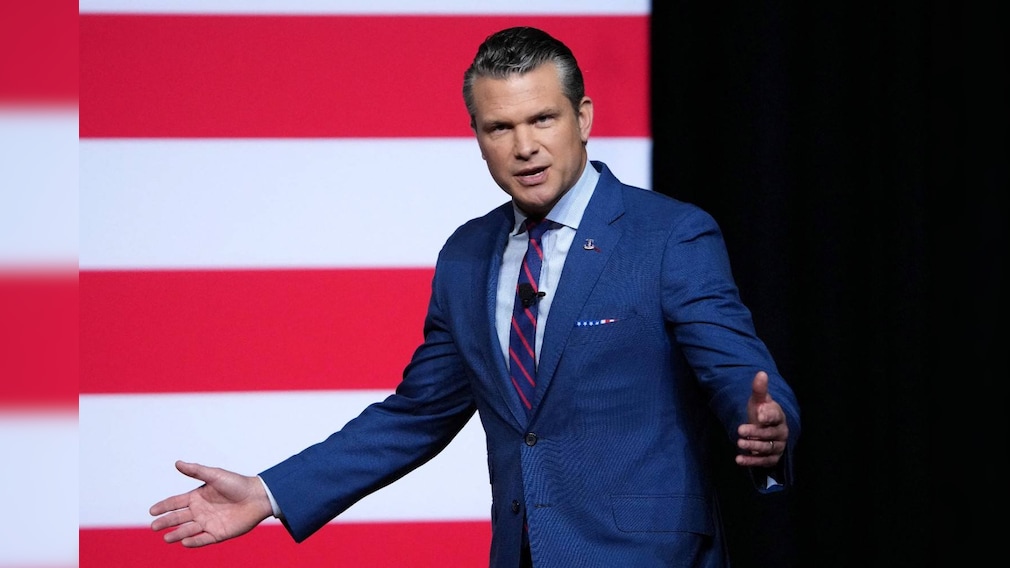
If anyone has doubts about US intentions in the region, a recent speech by Pete Hegseth, heading the Department of War - the aptly renamed Defence Department - was illuminating. Time for considerable Indo-Pacific musing, and suitable action. US policy changes are already having a domino effect on the Indo-Pacific. Defence budgets are rapidly rising as neighbours confront a highly belligerent China, and greyzone warfare has come to stay. The Defence Secretary, however, went according to a script that might have been very well written for his European allies. The same phrasing, the same expectations, and possibly, therefore, the same results.
The 'Pay More' Debate
Hegseth made his intervention at the Shangri-la Dialogue, hosted annually in Singapore, which brought together some 40-plus Chiefs of Defence, among other officials. Usually, the forum, while offering some interesting insights, is not the stuff of headlines. This year, though, almost every country seemed uneasy, and much of that could be attributed to the 'new' US posture, well in evidence as the US President visited Beijing just a short while ago. Now add to that the provocative speech of his Defence secretary, and you have a real pot- boiler.
Hegseth, who is no stranger to controversy given his resignation from the Army and accusations of 'white nationalism', began his speech in the first few seconds by rejecting "wishful thinking or utopian idealism" for a "future that will be defined by our collective efforts to safeguard and secure our most vital national interests". The rest of the speech stressed 'collective' entirely. He declared, "The era of the United States subsidising the defence of wealthy nations is over. We need partners, not protectorates. We seek alliances built on shared responsibility, not dependency." That's hard talking. In other words, you want defence, you pay for it yourself. Add to that this quote, "Allies who refuse to step up and carry their own weight for our collective defence will face a clear shift in how we do business." That's primarily aimed at Japan and South Korea, but expect pressure on India as well to raise its defence budget.
The Main Threat
That main threat was sitting in the room, though in the form of a markedly lower rank. China didn't send its defence minister to the forum - for the second time in a row - but Major General Meng Xiangqing, from the People's Liberation Army National Defence University, who is more of a strategic scholar than anyone with political weight. Nonetheless, the impact of Hegseth mentioning "rightful alarm regarding China's historic military buildup and the expansion of its military activities in the region and beyond" would have resonated with an audience that is now one in recognising the multifaceted Chinese threat.
Hegseth's promise to preserve the "equilibrium" would have raised eyebrows, since, ironically, what is evident, by and large, is its complete absence. Nothing much to 'preserve' here unless it's an attempt to soothe nervousness in Beijing. The Chinese use not just their navy, air force, or coast guard but even massive fishing fleets to threaten neighbours. Japanese sources note how thousands of Chinese fishing vessels have repeatedly formed lengthy "walls" in the East China Sea close to Japan's EEZ (Exclusive Economic Zone). These "maritime militia" obstruct shipping routes, forcing international shipping as well to zigzag around them. These "greyzone operations" have been used on at least four occasions since October 2024, with the last in January this year.
No, no equilibrium here at all.
The Big Bite
Then came the bite. While observing that Asian allies "do not seek constant escalation, rhetorical theatrics, or a region defined by public confrontation" - he is right there - he promised a "strong denial defence". That is a core concept in America's defence strategy, focused on resisting aggression by making an adversary's objectives difficult to achieve. It relies on a defensive posture rather than an offensive one. Hegseth's comment in the current context, thus, essentially indicates that the US will not really initiate any change in the present situation and would offer its support just as a 'quiet power'. Ironically, though, that is an aspect entirely missing in the war against Iran, in which America has become as noisy as it gets.
Then is the core of this 'strategy', which is that America could not be expected to carry the burden alone, but required "capable allies with real military strength and industrial capacity, and political resolve". Why? Because it is a bad deal for the American taxpayer. To keep that section happy must naturally be the first aim of political leaders in the region, now struggling under massive energy costs and petroleum prices in the wake of an entirely senseless war.
With China In The Room
Meanwhile, anxiety is apparent among major Pacific countries. Australia's defence minister baldly stated that his country faced its "most complex and threatening strategic landscape since the end of the Second World War", pointing to increased cutting of undersea cables, and again, a clear security threat from the 'systematic plunder' by illegal fishing vessels. Australia has increased its defence budget to 3% of GDP by 2033, with a major part of it earmarked for the maritime domain.
Japan's Koizumi was even more resolute, given that his country is the most affected by the escalating threats along its shores and has now virtually turned its pacifist constitution around to allow defence cooperation across the board. It has set aside a record defence budget of some $58 billion - the twelfth year that this has increased. As the minister noted, Japan faces troubling realities. Participants across the board backed an increase in defence spending, with all acknowledging the threat, but, equally, all calling for dialogue and transparency in Chinese actions. China's national defence ministry spokesman Jiang Bin had warned just days ago that "the grey rhino of a remilitarised Japan is gathering speed". Nobody is buying that.
The New 'Gold Standard'
Acknowledging that all these countries had made rapid hikes in their defence spending, Hegseth referred to 3.5% of GDP as the 'new' global standard for defence spending and praised all those like South Korea who are on the front line. "We demand 3.5% from our allies and partners ... We expect every single ally and partner to match that kind of resolve."
Last year, Hegseth indicated that America's 28,500 soldiers stationed in South Korea might be used against other threats - not just North Korea - making Seoul even more uncomfortable than it already is in handling its neighbour.
India also came in for praise as "a critical anchor to hold the line", though most commentators are still wondering what this meant. Our 'line', after all, lies primarily in the Himalayas, and it's a very hot one indeed.
Finally, Hegseth said the US will produce weapons on a scale and price that was unbeatable. This is sales talk that passes for diplomacy.
All this is being said as the world faces the financial (and political) fallout of the Iran war, and less so the Ukraine war. Japan recently asked for a $20 billion supplemental budget to cope with rising energy import costs. South Korea is similarly import-dependent, and the government has asked people to conserve 'every drop of fuel', just like India has.
Also consider how every country on the block now knows that not only did the US start a war it cannot end, but it now also expects 'regional allies and partners' to chip in to finish - and pay - for a conflict that they did not start. If there are any lessons to be learnt from Iran, it is this: Washington is great at starting wars, but it has not ended one on favourable terms for itself or others in the region in the last few decades.
At Shangri-La, India was represented by Defence Secretary Rajesh Kumar. There is no official read-out of his talk, and it does not seem to have been quoted heavily anywhere. In other words, Delhi kept a low profile. That might have been by design or default, but it's a good thing. As India's Reserve Bank points to lowering foreign exchange reserves and a continuing and worrying contraction in Foreign Direct Investments, this is no time to up the ante on anything other than stabilising the economy, even while we pursue self-reliance in defence. Nonetheless, Delhi is reaching out quietly to every other Indo-Pacific nation for a range of issues, from trade to supply chain resilience and maritime domain intelligence. The challenge is to translate that into action. There's no light at the end of that particular tunnel yet, Hegseth's claims of 'quiet power' notwithstanding. Therefore, a little quietude might be a good thing, at least till the Department of War decides to finally end its warmaking adventures, and, more importantly, mend its seriously depleted war stocks and equipment.
Hegseth is right. For peace, you need strength. But that is certainly not what the US is projecting right now.
(Tara Kartha is a former Director, National Security Council Secretariat)
Disclaimer: These are the personal opinions of the author
-
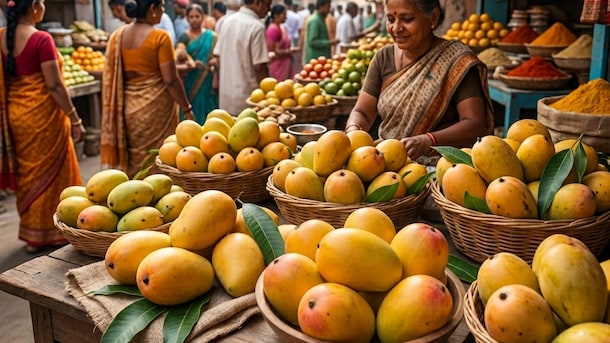
Mango The Sweet Diplomat, From Mughals To Modern India

We are in that season. The season of mangoes. The king of fruit has inspired some of the most prominent writers, poets and philosophers. Khusro to Ghalib to Tagore, all have written mouth-watering odes to the pulpy fruit.
-
Blog | 'I Lost 10 Kilos': Indian Student On Falling Rupee And The Reality Of Life Abroad
In October 2025, I paid the first instalment of my tuition fee. It was 15,800 pounds, and the conversion rate was Rs 118 for a pound. By January, it further slipped to Rs 125 as I paid the second instalment.
-
A Quiet Lifestyle Shift In Urban India Is Powering A $12 Billion Market
The organised sector accounts for just 15-20% of the interior design and home decor market. The remaining 80-85% still belongs to the fragmented ecosystem.
-
A New Ebola Strain Is Threatening Fresh Outbreak. What Are Doctors Doing
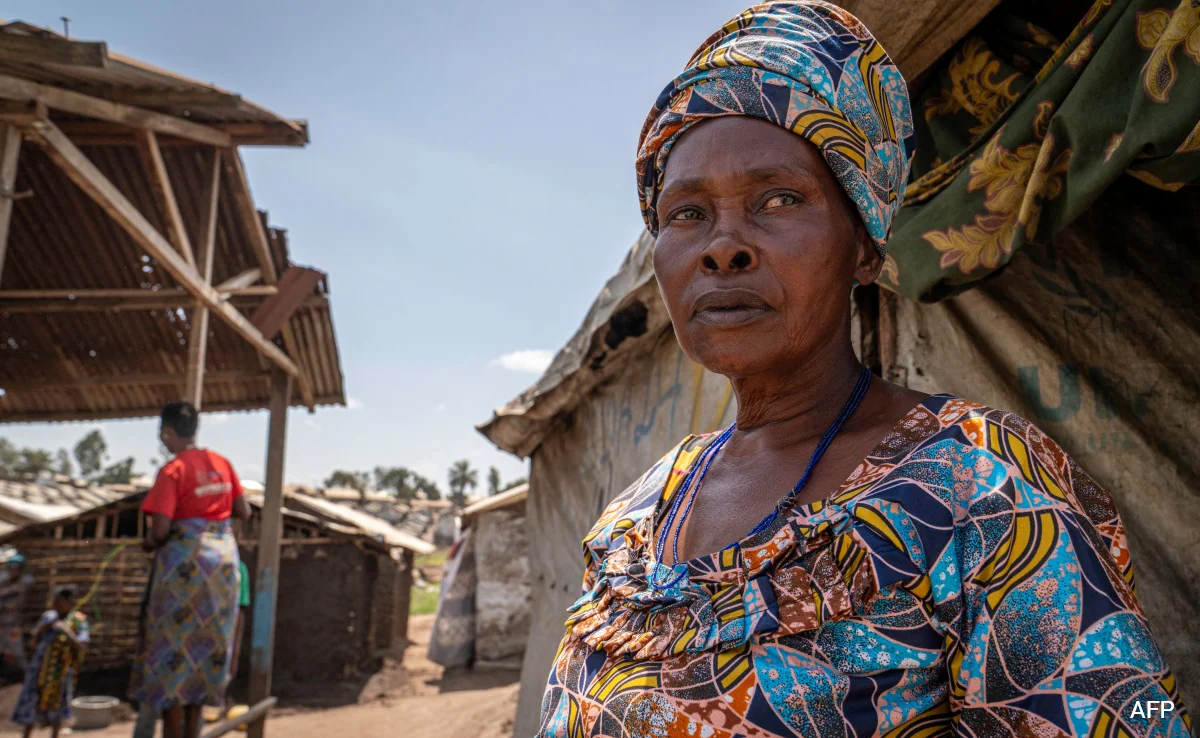
This is where the Democratic Republic of Congo's latest Ebola outbreak has erupted in the middle of a grinding conflict that has hollowed out public services and displaced millions.
-
DK Shivakumar Comes With Mastery Of Delhi Networks And Karnataka Grassroots
DK Shivakumar is a politician who mastered the art of networking in Delhi's high-power circuits just as effortlessly as he managed the grassroots electoral math in his home constituency, where he has won eight straight terms
-
Opinion | Siddaramaiah: The Man Who Has Never Believed In Bowing Out Quietly
Old habits die hard. Siddaramaiah is a grassroots socialist, an anarchist who has always thrived in chaos. Don't expect him to retire to a life of a quiet, elderly statesman - not yet, at least.
-
Opinion | Karnataka Tussle: Is This Where Congress Finally Understands The Value Of 'Timing'?
For years, Rahul Gandhi's critics have accused him of being a moral commentator rather than a commander. Karnataka may be where this changes.
-
Opinion | A 'Bangarappa' Redux? How Another Karnataka Chief Minister Was Asked To Resign In 1992
The images flashing on the TV screens on Tuesday reminded this author of a similar scenario in 1992, when S Bangarappa, Karnataka's first OBC Chief Minister, was asked to resign by PV Narasimha Rao.
-
Opinion | How Pak And Bangladeshi Vote Blocs Are Becoming UK's New 'Kingmakers'
Tower Hamlets, a London town that once was predominantly White, just re-elected Lutfur Rahman as mayor for the third time. But this is just part of a bigger shift.