Opinion | The Kashmir Nobody Mentions - And How Pakistan Is Quietly Profiting From That
Recent elections in Gilgit Baltistan - and the protest note India had to issue against them and a slew of fake news reports - lay bare a concerning reality.
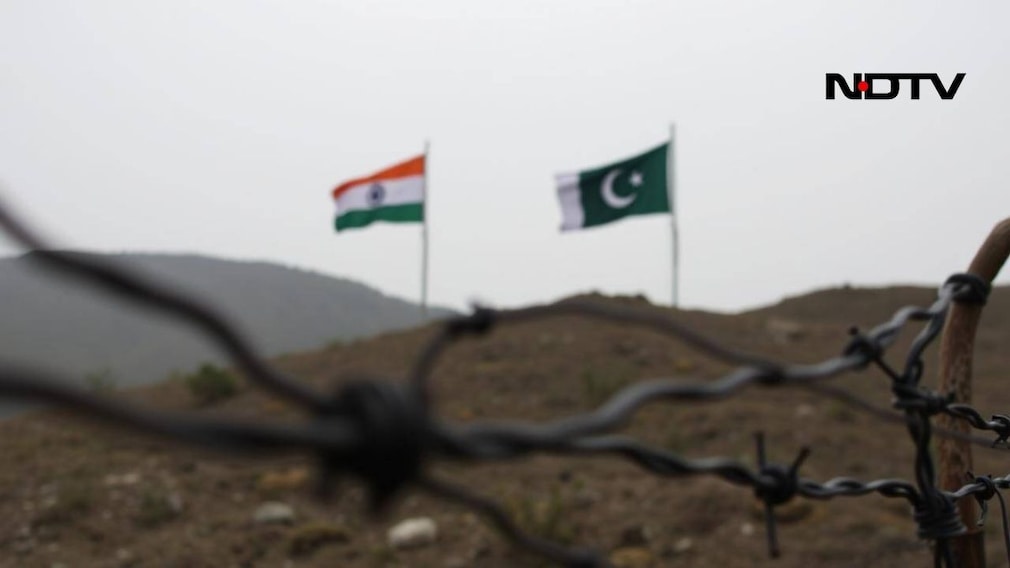
India's Ministry of External Affairs is seriously annoyed. Not only did it have to issue the expected 'protest' note on the holding of the June 7 general elections in Gilgit-Baltistan - an integral part of the erstwhile state of Jammu and Kashmir - but it also had to call out fake posts and sophisticated deepfake videos that claimed that Foreign Minister S Jaishankar had backed the strong protests in that region, and apparent declarations that Delhi would "capture" the area. This fakery is not surprising. It is a calculated attempt to undermine and discredit civil action groups that have recently been at the forefront of the demands for basic rights and constitutional changes in the region.
The Last Colony On Earth
But first, a little about the region. Unfortunately, there are few in India who know or care about Gilgit-Baltistan, or the fact that it is one of the last colonies on earth. In the 1940s, Pakistan, quite simply, ignored United Nations resolutions asking it to withdraw its troops from the region and allow a referendum, and sat itself down on the highly strategic piece of territory that borders China and Afghanistan. Then it went one step ahead. In 1949, it secretly hived away a large slice of territory of more than 70,000 sq km under the 'Karachi agreement' supposedly signed by Gurmani Singh, Pakistan's Minister for Kashmir Affairs and Northern Areas (KANA), and Sardar Mohammad Ibrahim Khan, the 'President' of PoK, with the Chairman of the Muslim Conference almost as an aside. There was no representative of the Gilgit-Baltistan region. This was a complete violation of UN resolutions, which called for a plebiscite to decide the legality of any changes to the area.
In later years, Sardar Ibrahim Khan claimed that he did not sign the document at all. Nobody ever saw the document itself, until the whole issue was debated in a PoK court in 1993, where it emerged that vital portfolios, including defence, UN-related matters on the plebiscite, foreign policy, and, by default, almost everything else, were alloted to give an appearance of self-rule (the bureaucracy was almost entirely headed by the Pakistanis, which remained the case even after several makeovers). In effect, the 'Emperor' of Gilgit-Baltistan was a Joint Secretary who led the division.
It is in this region that 'general elections' are being held, only the third so far since it was cut away. Kashmir valley, from 1951, had 12, even before Article 370 was set aside. Also note that the remaining 'Azad Kashmir' is a mere slice of some 13,000 sq km. In other words, almost a footnote to keep alive the theory of Kashmir self-determination. The only one doing any 'determination' here are the Pakistanis sitting in Islamabad.
An Irate People
And that is what has led to repeated protests, the most recent ones being led by the Awami Action Committee (AAC), a civil society group made up of traders, transporters, students and lawyers. These are middle-class people who are tired of the incessant political instability, a severe power crisis, and an overbearing elite culture that sees locals as merely incidental to the ambitions of Islamabad. Which is why the recent elections revolved around the constitutional status of the state, along with a list of demands that includes ending taxes - imposed without any representation of the people - allocation of financial resources, providing electricity to the people from its own resources (now being given out to the mainland), and a royalty for all of this exploitation. The main demand is 'Gilgit-Baltistan First', which, in turn, has led to the rise of ethnic groups such as Ladakhis in Baltistan, and the Balwaristan National Front (BNF-Naji), led by Nawaz Khan Naji, all asking that their rights be safeguarded.
In other words, for the first time, the locals are giving the mainland parties a run for their money. That is assuming that electoral fairness is maintained. With AAC leader Ehsan Ali Advocate in jail and other nationalist party leaders like Karakoram National Movement (KNM) leader Taaruf Abbas, Hasnain Ramal and others, incarcerated, Pakistan has again 'managed' elections well before the polling dates. Naturally, then, all are also accused by Pakistan of being 'Indian agents'.
All in all, standard Pakistani tactics.
The Elections
Results for the 26 direct-election seats of a total of 33 - nine of those are in the reserved category - indicate that the Pakistan People's Party (PPP) seems to have gone past the hustings with a win in at least 10 seats. That bucks a pattern, where the 'ruling party' usually wins. Instead, the Pakistan Muslim League (Nawaz) has come in second, while the Pakistan Tehreek-e-Insaaf, harassed and denied an election symbol, has won two seats with Independents, including one in Skardu. Overall, independents have seven seats, which makes them a power to reckon with.
But the key issue is highlighted by a former senior police officer from the region. He notes that mainland parties use the seats won for their national power status, rather than providing for those who voted for them. Indeed, it is difficult to imagine any national party backing the demand for constitutional change, for that would effectively mean curtailing their own power and pelf. True, the PPP did implement an order that gave Gilgit-Baltistan some political rights, while the Nawaz Sharif party did some tinkering. But all of that was nowhere near the recommendations of the Sartaj Aziz Committee report of 2018, which advocated for considerable autonomy for the region. That was never accepted. And though the Supreme Court of Pakistan in 2019 granted fundamental rights to the region on par with Pakistan, it also quietly increased bureaucratic control by increasing the quota for Pakistani civil servants in the top five scales listed.
In effect, the legal position is that no matter what political leaders like Bilawal Bhutto promise, granting the people of Gilgit-Baltistan their rights and privileges as citizens will happen only when the 'Kashmir dispute' ends. That has been Pakistan's legal position, and it seems stuck with it, willingly or otherwise.
There are also some other interesting demands by the people. They include letting locals have the ownership of uncultivated and barren land through the Gilgit-Baltistan Reforms Bill. Remember that a massive Special Economic Zone for China has been delayed repeatedly due to issues of land ownership. Another demand is to cancel all mining leases given to non-locals and award the leases to the locals of Gilgit-Baltistan. That targets the Chinese takeover of gemstone mining in the region. There's another, more controversial demand: opening up ancient trade routes. That means a trail that once connected Gilgit to Kargil and the Kashmir valley. That demand has been on for years. But Pakistan will never agree. It was, after all, no accident that during the days of the 'composite dialogue', Pakistan never once agreed to talk about Gilgit-Baltistan, despite repeated requests from the Indian side.
In sum, elections are not going to make an inch of a difference to the status of the people of Gilgit-Baltistan. Neither are they likely to get a genuine voice in their own governance. Much will depend on whether local ethnic groups are able to work together to pressure mainland political parties. But then, as is usually the case, any strong opposition winds up in prison. And the irony? The world neither knows nor wants to know anything about this rampant injustice. The 'Kashmir issue' gets headline space at the United Nations, and even in joint statements with Kaja Kallas, the Vice-President of the European Union. That UN resolutions for Gilgit-Baltistan were violated entirely in 1949 itself has been forgotten.
It's time India's opinion-makers and social media influencers brought this issue to the forefront. A little effort could go a long way to help the embattled people of Gilgit-Baltistan.
(Tara Kartha is a former Director, National Security Council Secretariat)
Disclaimer: These are the personal opinions of the author
-
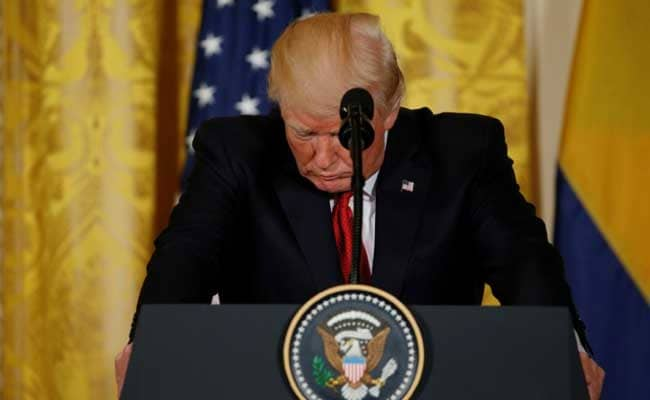
Opinion | A Jolt For Trump? How The US May Be Staring At A 'Blue' Wave

Evidence now points firmly to a Democratic majority in the House. The only real surprise is the Senate
-
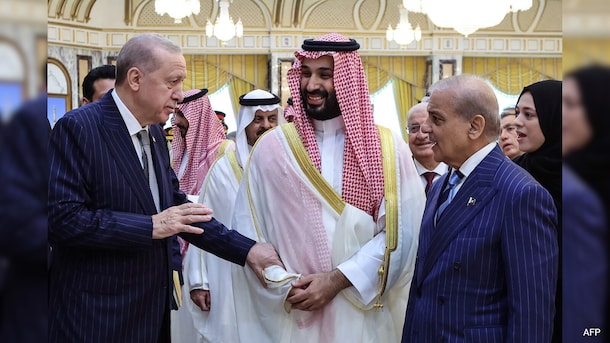
Opinion | Why The Saudi-Pak-Turkey Defence Pact May Actually Be An 'Intel' Network
Rather than a NATO-like construct, the Mecca pact may evolve to become something like the West's Five Eyes alliance.
-
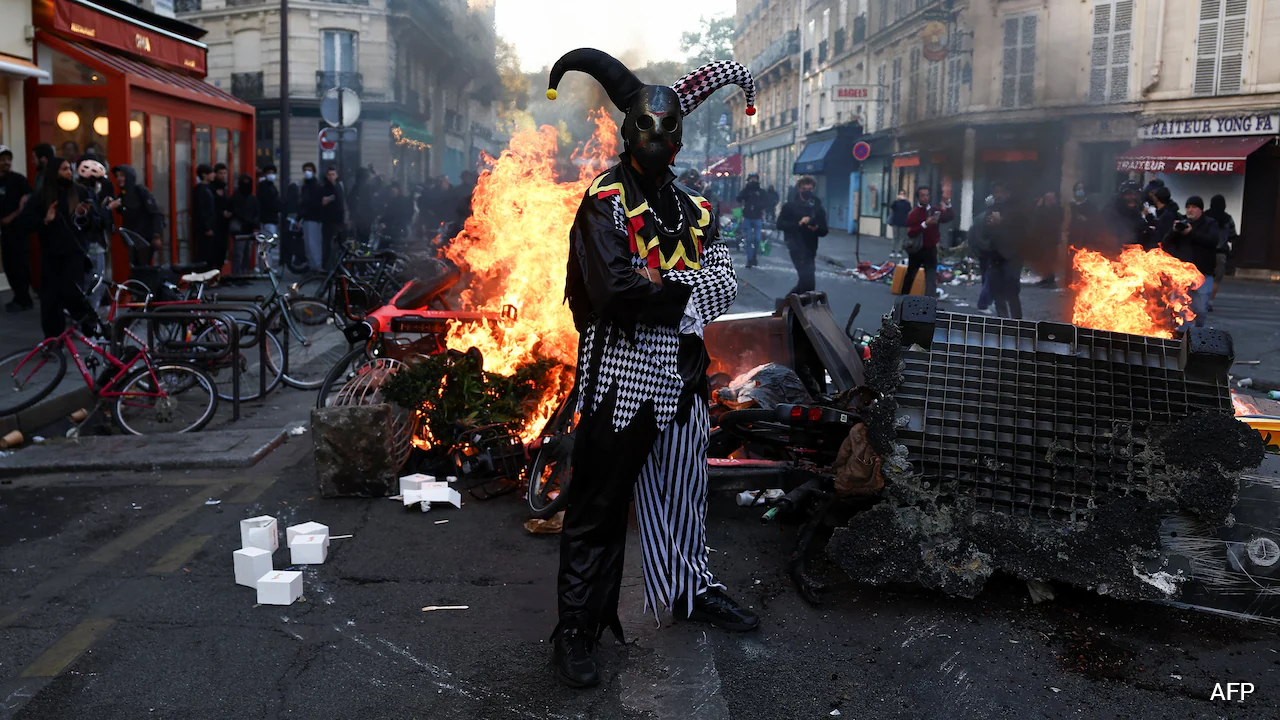
The Real Story Of France's Unrest Is Getting Lost In A Storm Of Online Lies
A man cosplaying Napoleon on the streets, looting at luxury fashion stores like Dior, France is currently confronting one of its most serious episodes of civil unrest in years.
-
Opinion | The Last Bet? What Trump's 'Mother Of All Bombs' Could Actually Do To Iran
Can an MOAB deliver a decisive blow to Iran that may force it to surrender immediately, as Japan did after Hiroshima and Nagasaki in World War 2?
-
Hit Songs, Empty Pockets: The Hidden Math Behind India's Viral Music Boom
Over 80,000 brands and five lakh creators in India make branded content. The opportunity is worth around Rs 1,500 crore.
-
Opinion | Great 'Exceptions': How The Oil India Was Attacked For Is The Oil Trump Now Seeks
A law written to punish the buyers of Russian oil was suspended by the US to protect a purchase of Russian oil. India spent fourteen months being lectured for less.
-
Opinion | Louis Vuitton Loot, Torched Cars: France Protests Have An Unlikely Beneficiary
It's an unbelievable moment. Crowds looting the most exclusive stores in Paris, including the famed Luis Vuitton. But what's behind this meltdown?
-
Blog: Kolkata Didn't Learn From 2015. Eleven Years Later, It Proved To Be Fatal
The City of Joy isn't a stranger to crowd control. Be it during Pujo or Christmas at Park Street, Eden Gardens cricket matches, or Derbies between Mohun Bagan and East Bengal. But during Pujo, the entire city is on alert.
-
Opinion | Slurs, Threats, Now A Temple Attack Plot: When Did America Become So Hostile To Indians?
The rising tide of anti-India, anti-Hindu, and racist attacks serves as a stark reminder that economic prosperity does not automatically guarantee social immunity from bigotry.