Opinion | The Iran Paradox: 2 Things That Can Derail The Peace Process
The possibility of talks extending for months and years on two crucial issues may turn this 'roadmap' into a never-ending saga.
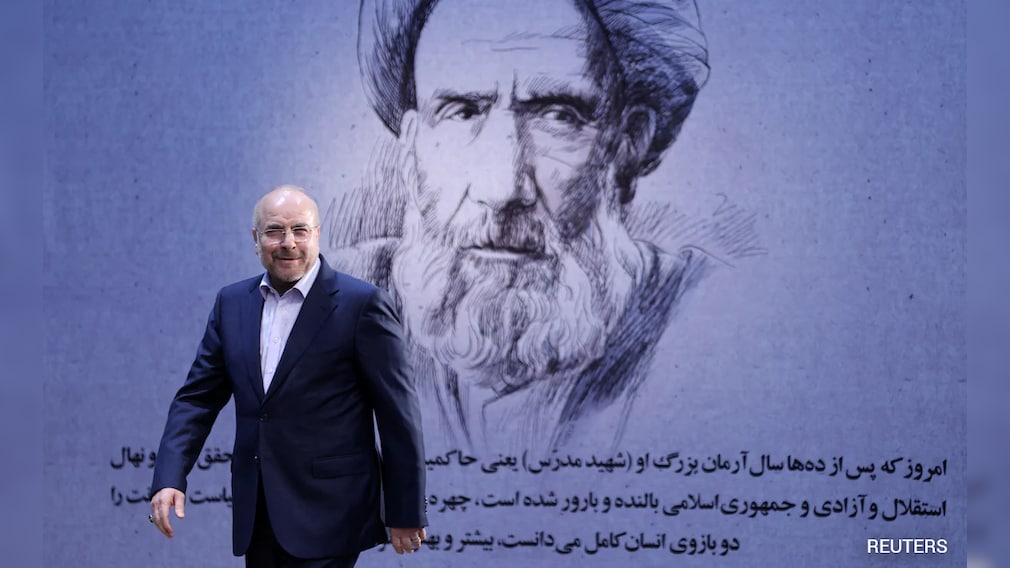
The US-Iran peace process is well and truly on. In accordance with the provisions of the 14-Point MoU that was signed on June 16, the first round of talks were held in Burgenstock, Switzerland, on June 22. It resulted in the agreement for a roadmap of 60 days, which involves many confidence-building measures before the really tricky issues are discussed and agreed upon. Coming in the backdrop of many doubts and apprehensions if and when the talks will take place, mainly due to the continuing ceasefire violations in Southern Lebanon and the occasional threat from President Trump of restarting the war and bombing Iran, this roadmap is indeed a welcome step. However, the bigger question is not the the roadmap itself but whether it can finally lead to an acceptable deal that can ensure lasting peace in the region, battered by war and instability for almost three years since the outbreak of Gaza war in October 2023.
The Roadmap
The roadmap is a follow-up of the 14-Point MoU, which was digitally signed by President Trump and President Pezeshkian on June 16. It calls for the formation of a high-level committee for political oversight, technical working groups on nuclear and sanctions issues, and a dispute resolution mechanism. It provides for a communication line to be established between parties, especially Iran and the US, to ensure safe passage for commercial vessels through the Strait of Hormuz - a key provision of the 14-Point MoU. Some of the other key provisions of the roadmap are:
- A de-escalation and monitoring unit will also be created to ensure compliance of the ceasefire and the cessation of military operations in Lebanon.
- Iran to receive sanctions waiver from the US Treasury Department to sell crude oil, gas, and petrochemical products freely for a period of 60 days, up to August 21, 2026.
- An agreement with Qatar regarding the release of Iran's frozen assets.
- A working group on nuclear file, which will commence talks on the future of Iran's nuclear programme. It also involves Iran permitting IAEA inspectors to return to the country provided that other critical conditions as per clauses 1 (Lebanon ceasefire), 4 and 5 (Strait of Hormuz), 10 (removal of sanctions on oil sales) and 11(unfreezing of Iranian funds and assets) of the MoU have been implemented.
Why A Deal Is Still Elusive
The MoU and the roadmap are already facing severe criticism both in the US as well as Israel. Many are terming it as America's abject surrender to Iran, while most are questioning the whole purpose of the war if at the end of it, Iran had to be awarded with revocations of sanctions and unfreezing of funds and assets. More importantly, the MoU terms clearly indicate that none of the two primary objectives of the war in Iran, ie., complete destruction of its nuclear programme or its ballistic missiles programme, has been achieved. On the third implied (or desired) objective of regime change in Iran, the outcome of the war has been contrary to the intentions. Not only has the regime survived but the war has cemented the hold of the regime in Iran, with an added factor of the Revolutionary Guards having tighter control over critical issues, as well as an elusive Supreme Leader who may well turn out to be more hardline than the previous one.
Precedents of previous deals and MoU do not inspire confidence either. Most recent is the 'Board of Peace' in Gaza. Established under the chairmanship of President Trump himself, it may have ended the war in Gaza formally. But little has moved beyond it. Despite the '20-Point Plan' that laid out the charter for peace and was formally endorsed by the UN Security Council on November 17, 2025 (UNSC Resolution 2803 of 2025), not much has moved.
Even though Phase-1 of the Gaza ceasefire was largely successful in returning all hostages back to Israel and pulling back Israeli forces to the 'Yellow Line', it is the Phase-2 that was more critical to the future of Gaza. That had three vital components. The first is the establishment and positioning of the International Stabilisation Force (ISF), second is the disarming of Hamas and demilitarisation of Gaza, and third is the governance of Gaza by a technocratic, apolitical Palestinian committee, with oversight and supervision by the "Board of Peace". However, all that remains on paper.
Israel continues its operations in the Gaza strip with impunity, Netanyahu has called for expansion of territory in Gaza under Israeli control from the current 53% to 70%, and the officially reported toll of people killed in Gaza since October 10, 2025 (the day ceasefire came into effect) has crossed 1,000. Also, there is neither any clarity nor consensus on the provision of troops by partner countries for the International Stabilisation Force (ISF) in Gaza, which is to be led by Major General Jasper Jeffers from the US. Plus, of the estimated USD 20 billion required for reconstruction of Gaza, there is hardly any money in the kitty yet. The war in Gaza thus remains an unending saga of despair, frustration and human tragedy.
There is, therefore, the fear that the Iran peace process may face a similar fate. While it is clear that neither Iran or the US have any appetite for more war, the possibility of talks extending for months and years on two crucial issues - the nuclear and the ballistic missile programmes - may turn this roadmap into an unending saga.
The fear of the US and/or Israel reneging on a deal in the future also poses questions about the prospects of lasting peace. The previous two instances, of June 2025 - when Israel launched strikes into Iran just when US-Iran nuclear talks were progressing well - or February 2026, when Oman announced an agreement on key issues of nuclear programme between the US and Iran, do not inspire confidence. Also, the previous nuclear deal with Iran, signed in July 2015 and ratified by the UN Security Council, was unilaterally revoked by the US in May 2018 under President Trump's first term. All these precedents put into question not only the success of the roadmap but also the guarantees that a deal, if agreed upon, will actually endure.
The implementation of the roadmap has started in earnest, from both ends. The steady movement of ships across the Strait of Hormuz, the removal of sanctions on sale of Iranian crude oil and gas and the commencement of defreezing of Iranian money, offer hope. Iran's commitment to permit IAEA inspectors back into Iran along with reports of the Israel-Lebanon ceasefire holding for the past 48 hours, offers hope. However, the road ahead is anything but easy. The real test of the process will come about when the technical details on the nuclear file commence. The ballistic missile programme may not be part of the 14-Point MoU, but it is likely to crop up in the discussions later.
A war that started with the aim of bringing down the Iranian regime on its knees within days and weeks has finally ended in a stalemate, with Iran, ironically, emerging stronger than ever. Most of its demands have been incorporated into the 14-Point MoU, and, if implemented, it could result in the end of Iran's global isolation and the punitive western sanctions that it has endured for over three decades. Whether Iran uses this opportunity to build confidence and trust with its regional partners to ensure lasting peace and prosperity or ends up posing a greater threat to regional peace is perhaps the most vital factor that will define the success of the roadmap in the coming weeks and months.
(The author is a retired Army officer and a senior research consultant at Chintan Research Foundation)
Disclaimer: These are the personal opinions of the author
-
Opinion | Why Pakistan Is Becoming Harder To Isolate - Despite India's Push

Pakistan's willingness to sell itself to the highest bidder explains its curious positioning in the world. India's only option now is to get creative as it tries to isolate it globally.
-
Delivery Boy At 15, He's Now The Global Head Of WhatsApp: Meet Kunal Shah
Once a delivery boy and a data-entry operator, Cred founder Kunal Shah's story is right out of a movie plot. A look at his incredible journey as he takes on the role of WhatsApp's global head.
-
Opinion | The Great Surrender: Why This Is America's Worst Humiliation In Over 50 Years
There is no precedent in recent US history for an American president accepting such humiliating terms as in the Iran deal.
-
MBBS Student Sejal Pawar Dehumanised Cadavers, Internet Did The Same To Her
Sejal Pawar was rightly criticised for her dehumanising remarks. Her college sent her on a 15-day forced medical leave, and Maharashtra Cyber has registered an FIR naming her. But the faceless trolls did to Pawar what she did to the male cadavers through her words - she was stripped of her dignity.
-
Smartphones, Laptops To Get More Expensive As AI's Latest Victims
AI's latest side effect? More expensive smartphones, laptops and gaming consoles like PlayStation. Read on to know what's driving up these gadget prices.
-
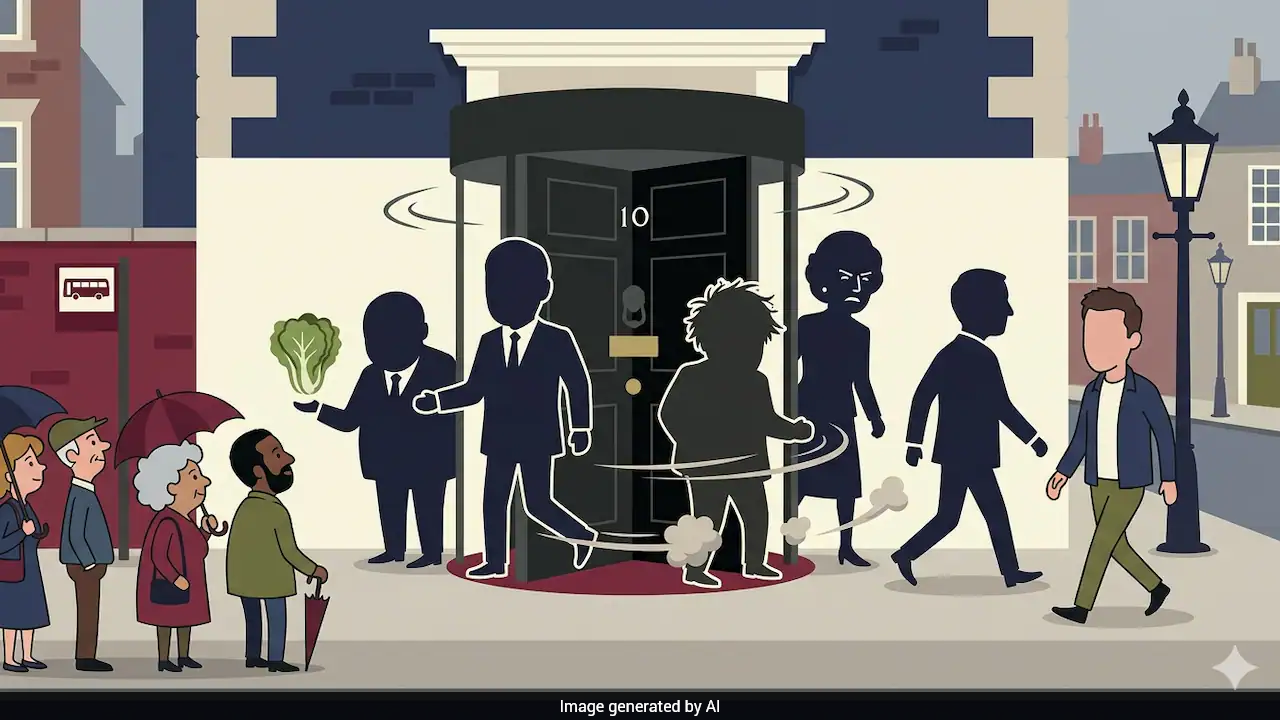
Six Prime Ministers In 10 Years, 44 Days, One Lettuce: The UK's Queue
The UK has seen six prime ministers in ten years - Keir Starmer, the under-fire incumbent, preceeded by Liz Truss, Rishi Sunak, Boris Johnson, Theresa May, and David Cameron.
-
Opinion | Raped At 14, Then Hounded By Perpetrator: The Story Of Shweta And A Failing System
Rahul, 17, was produced before the Juvenile Justice Board and immediately granted bail, returning to the same neighbourhood and harassing the victim. Therein lies the blindspot in India's child justice system.
-
A $14 Billion Market Takes Off As Retirees Aren't Moving To Hometowns Anymore
India's senior living market was valued at $3.55 billion in 2025. It is projected to grow from $4.47 billion in 2026 to $14.14 billion by 2031.
-
Safe...For Now: Rohit Sharma And The Curious Art Of Delaying The Inevitable
By the time Rohit Sharma had walked out to bat in Chennai on Saturday evening, he would have known the conversations about him.
-
Delhi's Dark 'Baby Bazaar': Baby Boys Sold For Rs 8 Lakh, Girls Half The Price
Gang bought infants from underprivileged couples from Rajasthan and Gujarat, and sold them to childless couples