Opinion | The Invisible Import In Every Indian Thali
In 2025-26, India spent over US$ 19 billion on edible oil imports to meet 60% of its demand, making it vulnerable to global price shocks and supply disruption while straining the nation's exchequer of its forex reserves for what it could grow at home
In 2025-26, India spent over US$ 19 billion on edible oil imports to meet 60% of its demand, making it vulnerable to global price shocks and supply disruption while straining the nation's exchequer of its forex reserves for what it could grow at home.
Austerity reached Indian kitchens, when Hon'ble Prime Minister Narendra Modi urged its citizens to reduce edible oil consumption. The per capita consumption of edible oil stood over glaring 17 kg/year in 2024-25 (marketing year). With a large share of this demand unmet domestically, India's dependence on edible oil imports is nothing less than alarming.
The domestic production is mainly concentrated in rapeseed, mustard, and soybean, while the consumption is majorly dominated by palm oil, followed by soybean oil. Since, highly water-intensive palm oil production is not feasible in the short -run, soybean, already produced by Indian farmers across the country should be the focus to bridge this demand-supply gap.India remains the fifth largest producer of soybean oil and the largest importer of soybean oil across the globe. The production of soybean has increased from 85.7 Lakh Tonnes (LT) in 2015-16 to 152.7 LT in 2024-25. While this growth is encouraging, it is not enough for the rapidly expanding consumption demand. India currently imports soybean oil more than 2.5 times of its production, as the existing production only meets around 30% of the domestic consumption. In 2025-26, India witnessed a marked surge in soybean oil imports alongside a decline in domestic production. India primarily imports crude soybean oil from Argentina and Brazil and in just 2025-26 itself, imports increased by 8% and 32%, respectively. Additionally, enabled by duty-free access to Nepal under the SAFTA, India's soybean oil imports from Nepal increased by staggering 147% alone in 2025-26. Further, the domestic outlook is concerning, the second advance estimates released by Department of Agriculture & Farmers Welfare (DA&FW) estimated soybean production to have moderated by 16% to 127.2 LT in 2025-26.
Profitability is the primary driver of declining soybean production in India. The Government guarantees minimum prices for soybean, and the Cabinet has approved Minimum Support Price (MSP) for soybean for 2026-27 well in advance, in May, with an increase of ₹380 over the previous year and 123% over 2013-14 levels. Thus, pricing per se is not the issue. Rather, the concern lies in the relative uncertainty surrounding the procurement process. The domestic market is frequently flooded with duty-free imports of soybean oil, leading to a decline in market prices below the MSP, thereby preventing farmers from realising an effective price for their produce. Further, the intrinsic characteristic of soybean crop is a cause for concern. Its low productivity due lack of quality seeds remains a persistent challenge. According to ICAR's National Soybean Research Institute, India's average yields is stagnant at around 1,100-1,200 kg per hectare, significantly below the global average of over 2,700 kg per hectare, with considerable regional disparities. Additionally, the crop offers limited resilience, as its photoperiod sensitivity makes it vulnerable to unseasonal weather conditions, which are becoming more frequent due to climate change, thereby increasing production risks.The single point focus should now be on increasing per-hectare productivity. India's experience with rice and wheat demonstrates that sustained improvements in productivity can not only ensure self-sufficiency but also enable the country to emerge as a net exporter. India remains wary of the GM seeds due to biosafety and health implications and thus did not replicate such model wholesale. However, now is an opportune time for India to develop its own approach to GM soybean seeds within an appropriate regulatory framework and with necessary safeguards to address productivity challenges. With India becoming the first country in the world to develop genome-edited rice varieties, Government should further accelerate plans for utilising genome editing for soybean seeds through Lab-to-Land approach and develop resistant soybean seed varieties. Global evidence suggests that, with robust safeguards and transparent institutions, GM crops could coexist with food safety, ecological sustainability, and farmer autonomy. Ignoring these technologies comes at a cost of missed yields, rising imports and strategic autonomy.
To address seed quality concerns, a structured national-level soybean seed rolling plan should be developed, supported by institutional mechanisms such as seed hubs/ seed villages. There is a need to address the trade-off between farm-gate and consumer prices in soybean, as higher crop prices directly push up edible oil inflation (with a 2.7% CPI weight), prompting import duty intervention by the government to manage domestic supply-demand imbalances, that often undermine farmer returns in domestic market. This distortion is compounded by tariff asymmetry, wherein oil imports from Nepal enter duty-free, while Indian refiners pay an import duty of 16.5% on crude soybean oil, effectively making domestically processed supplies less competitive. A more coherent alignment between the MSP and the tariff structure would help ensure balanced outcomes for farmers, processors, and consumers.
Another important initiative could be to strengthen value addition in soybean production chain. Promoting diversified uses of soybean by-products can significantly enhance farm-level profitability. Expanding processing capacity particularly for protein-based products such as tofu, soy foods, and animal feed could create sustained demand and better price incentives. Going forward, the oilseed mission must be prioritised through coordinated efforts among farmers, government, researchers, and the private sector. Greater private sector participation could bring in technology, improve processing infrastructure, and enable more efficient value chains. At the same time, institutional models need to be developed to ensure assured procurement and more predictable pricing, which can incentivise farmers to expand soybean cultivation.
It is only a coordinated push that boosts productivity, ensures quality seeds, guarantees price stability with assured procurement, and builds a resilient value chain that will ultimately determine India's ability to achieve Atmanirbharta in edible oil.
(The authors are economists with India Exim Bank. Views expressed are personal)
Disclaimer: These are the personal opinions of the author
-
Gyanesh Kumar Has An Immunity Pin. Why A Petition Says He Can't Use It

The Opposition wants the Chief Election Commissioner prosecuted for alleged manipulation of voter rolls, but a 2023 law stands in the way. A petition in the Supreme Court now says the law has a gap.
-
Opinion | Is The World Staring At A Big Stock Market Crash - And Recession? 5 Uneasy Signs
On Wednesday, the US bond market recorded its worst day since Trump's "Liberation Day" tariffs rattled markets in April 2025. The 30-year US Treasury yield topped 5.43%, putting it on track for its highest close since 2004.
-
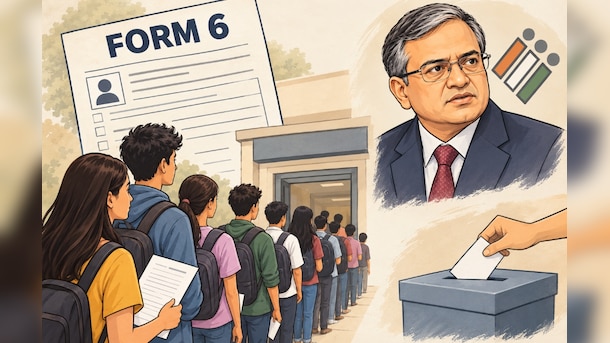
Form 6 For New Voters: When A Small Change Triggered A Big Row
In July 2026, the online version of Form 6 on the ECI's ECINet portal was modified to include a new declaration.
-
Opinion | Saudi Arabia's China Turn Has Begun - After Learning Much The Hard Way
Leaning on China just makes sense for the Saudis right now. The question is, can its other great 'ally' stomach it?
-
Opinion | Bihar Assault, Hisar Marriage Ban: Who'll Stop The Guardians Of Indian 'Culture'?
Why exactly does the sight of a young couple seeking a bit of alone time somewhere tend to particularly provoke a certain kind of Indian men?
-
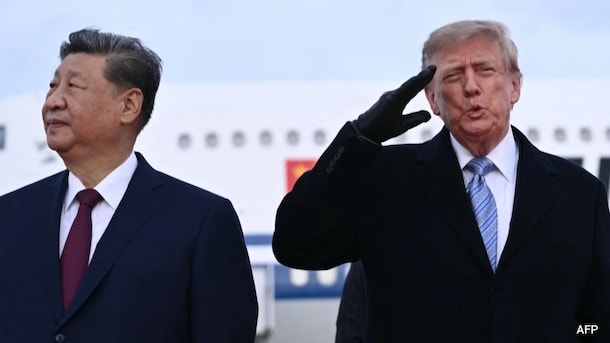
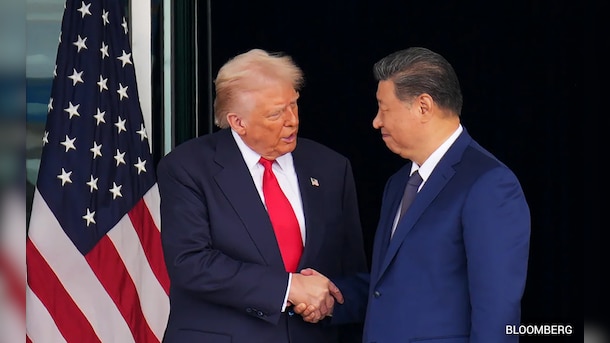
Opinion | The Trump-Xi Summit, And India's Many Worries Of Its Own
Washington and Beijing may have chosen coexistence over confrontation. For India, that could be both a relief and a warning.
-
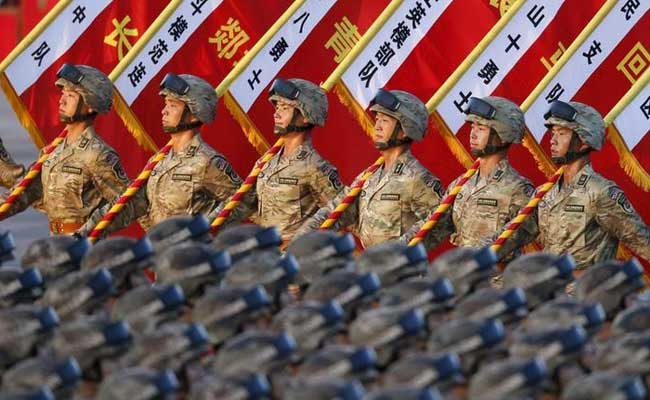
Opinion | China Claims It Has Cut Troops At The Indian Border. But The Math Doesn't Add Up
The reduction likely has more to do with the deployment along the LAC than the total strength active in the region
-
Opinion | China Is No Longer Waiting For Trump To Set The Rules. And He Knows It
America's old diplomatic tricks with China won't work any longer. Because China has changed, and so has its ambitions.
-
Opinion | As UN Interviews Its Next Chief, The Interviewers Have Some Explaining To Do
On the panel sit governments whose wars, vetoes, and unpaid dues have helped make the organisation ineffective.