Opinion | The Great Surrender: Why This Is America's Worst Humiliation In Over 50 Years
There is no precedent in recent US history for an American president accepting such humiliating terms as in the Iran deal.
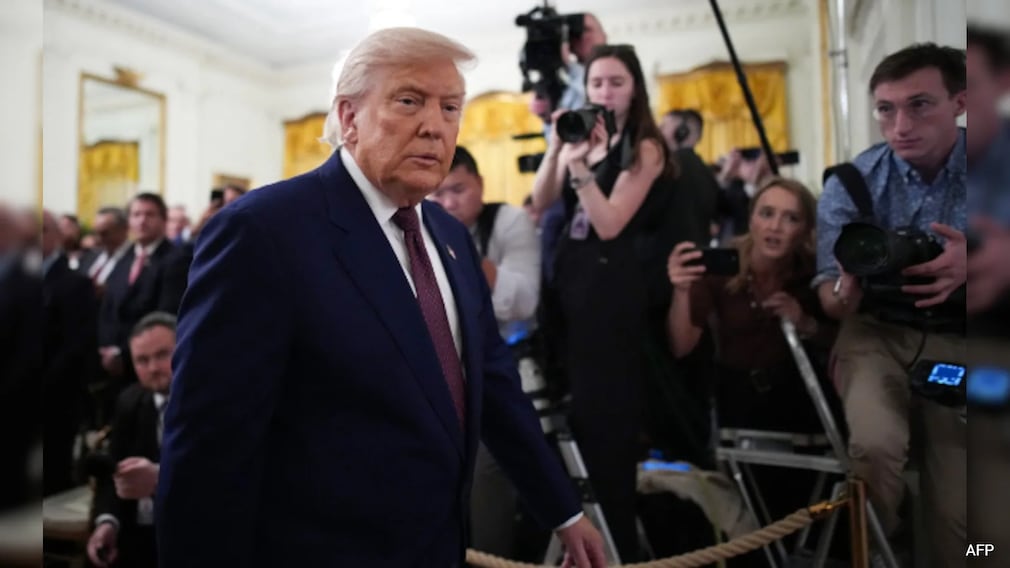
A week after US President Donald Trump signed an agreement with Iran to end the war, the US lifted oil sanctions against the Islamic country for 60 days. Money will start flowing into Iran, and that too in dollars, reversing a decades-old policy of tough sanctions and isolation of Tehran. The US Vice-President, JD Vance, says Iran has agreed to invite nuclear inspectors after talks in Switzerland, from which it briefly pulled out after Trump's expletive-laden attack on its leadership and threats to bomb the country again. Tehran insists it has made no new commitment to the US. On Saturday, it again closed the Strait of Hormuz after Israel's attacks on its proxy, Hezbollah, in Lebanon.
This suggests how much the US and Israel's war has favoured Tehran. The memorandum of understanding that Trump signed in Versailles, France, last week was described by Iran's lead negotiator, Mohammad Bagher Ghalibaf, as "a record of US failure". It has already been condemned by Trump's critics as a 'surrender' document - ironically, for the president who, in March, had demanded "unconditional surrender from Iran". In return for the reopening of the Strait of Hormuz, which had been open before the war, the MoU commits the US to lifting its blockade of Iranian ports, waiving all sanctions and unfreezing assets it held abroad. The 14-point document also includes a $300 billion reconstruction fund for Iran, effectively reparations. The US also agreed to withdraw its forces from the vicinity of Iran within 30 days of the final deal.
Unprecedented Humiliation
There is no precedent in recent US history for an American president accepting such humiliating terms. America's humiliation has been compounded by Trump's defence of allowing Iran to retain its arsenal of ballistic missiles, whose destruction was a key aim of the war. Speaking at the G7 summit last week, Trump said, "I mean, they have to have some, because other people have some. You got to have some." He added, "Am I going to let Saudi Arabia have missiles, but they can't have them?" The Saudis, who have relied on US protection, must be horrified. Iran is only required to maintain a status quo on its nuclear programme until the final deal in 60 days.
In defence, Trump said he wanted to avoid an economic catastrophe that could have ensued had the war continued. He said he didn't want to be compared with Herbert Hoover, who was president during the 1929 market crash that led to the Great Depression. The US conservative website, the Bulwark, argued that Trump had, in effect, acknowledged that "he had to choose between surrender" to Iran and "economic disaster".
This is the second time in five years that an American president has been forced to accept a hasty, inglorious retreat from a foreign war. Joe Biden did so in 2021, withdrawing from Afghanistan and leaving the country in the hands of the brutal Taliban. But Trump's decision is far worse and more humiliating than Biden's and has parallels with the US retreat from Vietnam in 1973.
Iran And Vietnam Wars
Although there is no direct comparison between Trump's Iran war and the Vietnam war, which lasted for decades, cost 58,000 US lives and involved several American presidents, some parallels can be drawn if we compare the final phases of the two conflicts and how they ended. Richard Nixon became the US president in 1969, when the US public was already growing tired of the Vietnam War. Nixon and his formidable national security advisor, Henry Kissinger, didn't want to abandon South Vietnam.
They first tried to increase bombardments of the communist North Vietnam, issued new threats and ultimatums, but that didn't work either, as has been the case with the Iranians. The Soviets relished America's plight, as did the Chinese and Russians during the Iran conflict. Nixon then decided to withdraw American forces from South Vietnam. He reached an agreement with North Vietnam to end the war in 1973. Two years later, North Vietnamese troops marched into Saigon, the capital of South Vietnam, marking the United States' crushing defeat.
Like Nixon, Trump tried to bomb and bully Iran into submission, but that didn't work. Taking a cue from the North Vietnamese approach in 1968, the Iranians employed horizontal escalation, expanding the conflict across the wider Gulf region. That approach, combined with the blockade of the Strait of Hormuz, which controls one-fifth of the world's energy supplies and other vital components of the global economy, compelled Trump to agree to a deal on Iran's terms. As Nixon was forced to leave the vital question of South Vietnam to end the unpopular war, Trump had to leave the issue of Iran's nuclear programme for later negotiations.
Squandering US Leverage
After campaigning against US involvement in foreign conflicts, Trump was lured into launching the disastrous war with Iran by Israel's Prime Minister, Benjamin Netanyahu. The Israeli leader convinced Trump that the Islamic regime was at its weakest point in decades and that a joint US-Israel attack would deliver a quick and total victory, including the overthrow of the Islamic regime. That would have given Netanyahu a huge boost in the October elections and secured Trump's place among the most powerful US leaders in history. But Iran stood firm despite the loss of thousands of lives and severe damage to its military and civilian infrastructure.
Previous US presidents dismissed Netanyahu's arguments for starting a war with Iran. Obama chose a diplomatic solution and signed the multilateral Joint Comprehensive Plan of Action (JCPOA) on Iran's nuclear programme in 2015, which Trump later tore up despite Tehran's compliance. Obama and other presidents kept the threat of force against Iran in reserve but didn't use it because their advisers warned it would be too risky. Trump ignored them all. Once the use of force fails, the threat to repeat it no longer works. That is what has happened with Iran.
Nightmare For Israel
Thanks to Trump's decision to join Israel's war, Iran is now more powerful. It has a more radical and dangerous regime for Israel and its Gulf neighbours. It still holds a large stock of missiles and launchers, according to US intelligence. Trump's deal has given diplomatic cover to Iran's proxy in Lebanon, Hezbollah. Israel is, therefore, less safe, Netanyahu is politically much weaker, and Trump may have recorded his name in history books as a president who capitulated to extricate himself from a misconceived war.
The fear in Israel is that an emboldened Iran will drag the nuclear talks on beyond the 60-day period, as there is no longer the constraint of US sanctions. Many blame Netanyahu for this plight, as it was he who campaigned against the JCPOA and twice started the war with Iran when the talks on the nuclear programme were on. After its victory in the war, Iran can challenge Israel's status as the regional superpower.
No other war since Vietnam has exposed America's helplessness as much as the one with Iran. This is the worst defeat for the superpower since the Vietnam War, another sign of its decline. The second war in Iraq (2003-2011) and the one in Afghanistan left a trail of destruction and were criticised for creating further problems for the region and the countries involved. But the US still retained its image as the world's strongest power, capable of influencing events in its favour. The disaster in Iran has left America diplomatically weaker and militarily exposed. Thanks to Trump, Iran has discovered a new weapon, the Strait of Hormuz, which it can use at will to create economic havoc, and the US can't do much about it.
(Naresh Kaushik is a former editor at the Associated Press and BBC News and is based in London)
Disclaimer: These are the personal opinions of the author
-
Opinion | Why Pakistan Is Becoming Harder To Isolate - Despite India's Push

Pakistan's willingness to sell itself to the highest bidder explains its curious positioning in the world. India's only option now is to get creative as it tries to isolate it globally.
-
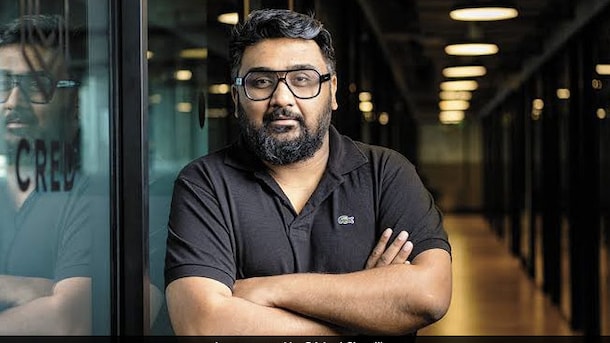
Delivery Boy At 15, He's Now The Global Head Of WhatsApp: Meet Kunal Shah
Once a delivery boy and a data-entry operator, Cred founder Kunal Shah's story is right out of a movie plot. A look at his incredible journey as he takes on the role of WhatsApp's global head.
-
MBBS Student Sejal Pawar Dehumanised Cadavers, Internet Did The Same To Her
Sejal Pawar was rightly criticised for her dehumanising remarks. Her college sent her on a 15-day forced medical leave, and Maharashtra Cyber has registered an FIR naming her. But the faceless trolls did to Pawar what she did to the male cadavers through her words - she was stripped of her dignity.
-
Smartphones, Laptops To Get More Expensive As AI's Latest Victims
AI's latest side effect? More expensive smartphones, laptops and gaming consoles like PlayStation. Read on to know what's driving up these gadget prices.
-
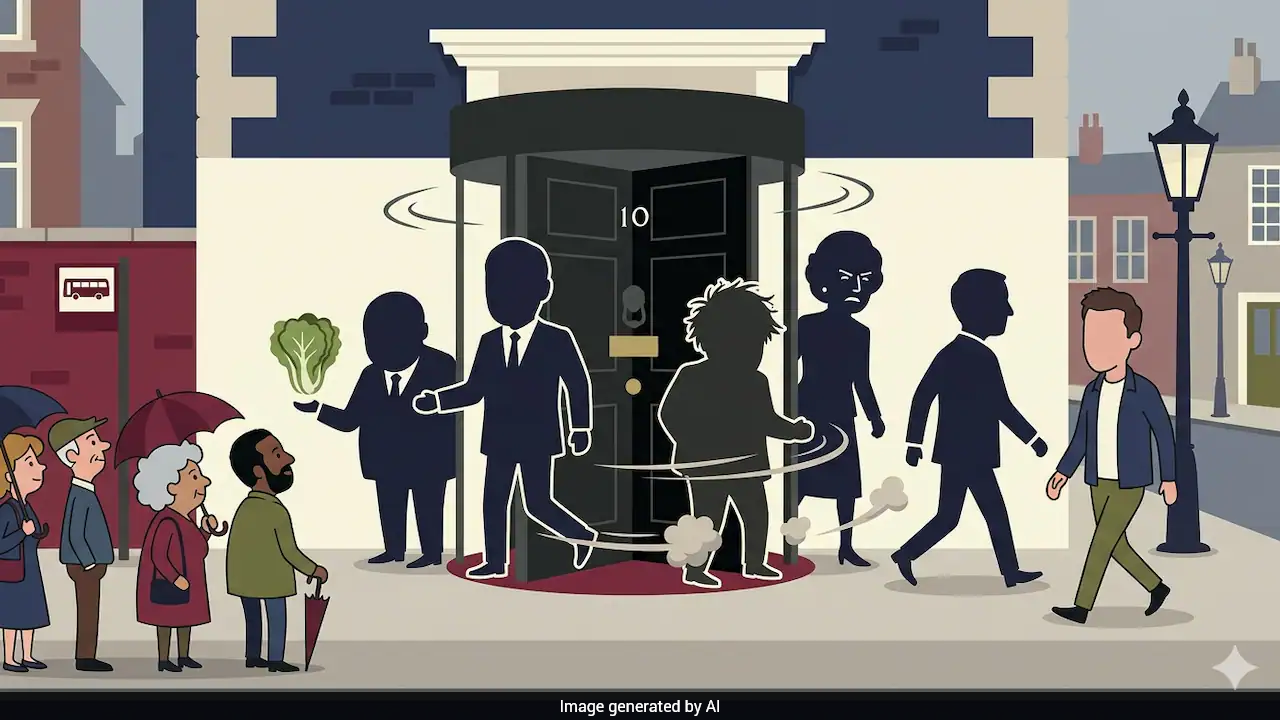
Six Prime Ministers In 10 Years, 44 Days, One Lettuce: The UK's Queue
The UK has seen six prime ministers in ten years - Keir Starmer, the under-fire incumbent, preceeded by Liz Truss, Rishi Sunak, Boris Johnson, Theresa May, and David Cameron.
-
Opinion | Raped At 14, Then Hounded By Perpetrator: The Story Of Shweta And A Failing System
Rahul, 17, was produced before the Juvenile Justice Board and immediately granted bail, returning to the same neighbourhood and harassing the victim. Therein lies the blindspot in India's child justice system.
-
A $14 Billion Market Takes Off As Retirees Aren't Moving To Hometowns Anymore
India's senior living market was valued at $3.55 billion in 2025. It is projected to grow from $4.47 billion in 2026 to $14.14 billion by 2031.
-
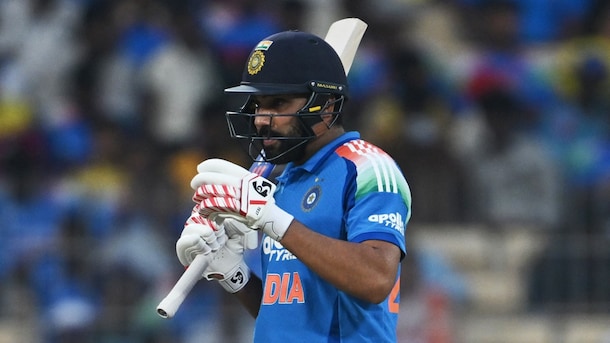
Safe...For Now: Rohit Sharma And The Curious Art Of Delaying The Inevitable
By the time Rohit Sharma had walked out to bat in Chennai on Saturday evening, he would have known the conversations about him.
-
Delhi's Dark 'Baby Bazaar': Baby Boys Sold For Rs 8 Lakh, Girls Half The Price
Gang bought infants from underprivileged couples from Rajasthan and Gujarat, and sold them to childless couples
-
'Foreign Degree Is Rs 1 Crore Debt': Is Studying Abroad Still Worth The Price?
A weaker rupee and rising tuition fees are forcing Indian families to ask a difficult question: does an overseas degree still deliver the returns?