Opinion: The Great North-South Debate, And Prickly Questions About 'Fairness'
A strict population-based delimitation could produce a Lok Sabha in which a handful of large northern Hindi-belt states hold a permanent majority, enabling them to shape national policies even against the preferences of the rest of the country.
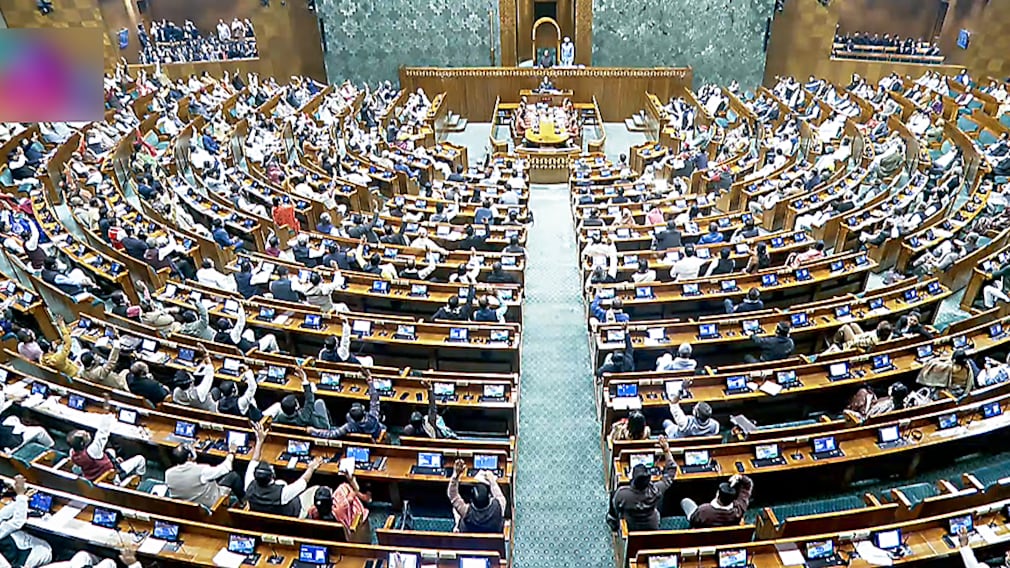
The ongoing debate over delimitation and parliamentary representation, provoked by the government calling a special three-day session of Parliament this week to debate constitutional amendments on the Women's Reservation Bill (but really to alter the delimitation of constituencies in the North's favour before the 2029 elections) has reopened one of India's most sensitive political and constitutional fault-lines.
The core question is: how should a diverse federal union balance the democratic principle of "one person, one vote" with the need to ensure that smaller states or states with slower-growing populations retain a meaningful voice in national decision-making? The issue has acquired renewed urgency as population growth diverges sharply between regions, raising concerns that strict population-based seat allocation could deepen the emerging North-South divide.
This dilemma is not unique to India.
The European Union has grappled with a similar challenge for decades: how to design a representative assembly for a political union in which Germany and Malta, or France and Estonia, must coexist as equal members. The EU's solution - degressive proportionality - offers a useful framework for India's current debate.
Europe balances democracy and federal equity through a clever formula set into law under the Treaty of Lisbon. Under it, the European Parliament is built on three constraints that together preserve both democratic legitimacy and federal balance:
* A minimum threshold: No member state can have fewer than six seats.
* A maximum ceiling: No state can have more than 96 seats.
* An inverse ratio: The larger a state's population, the more citizens each representative must correspond to.
This means that while Germany has far more Members of the European Parliament (MEPs) than Malta, a Maltese MEP represents roughly 80,000 citizens, while a German MEP represents around 850,000. The system ensures that the "Big Four" - Germany, France, Italy, and Spain - cannot dominate the Parliament simply by virtue of population. Smaller states retain a meaningful voice, preserving the federal spirit of the Union.
The EU's approach is not perfect, but it reflects a recognition that pure proportionality can undermine the cohesion of a political union. Representation must reflect population, but not only population: it must also cater to needs of state identities. India, of course, faces a similar challenge.
Since, unlike the EU, we are one country, India's federal structure is more deeply rooted in our constitution and more politically consequential than the EU's. Yet the underlying tension is similar. States that successfully implemented population control - Kerala, Tamil Nadu, Andhra Pradesh, and others - now face the prospect of losing relative political influence if Lok Sabha seats are reallocated strictly on the basis of population. Conversely, states with high population growth - Uttar Pradesh, Bihar, Rajasthan, Madhya Pradesh, all in the Hindi heartland - stand to gain significantly.
This raises a fundamental issue: should states be penalised or rewarded for their demographic behaviour? And should political power shift dramatically in ways that could destabilise the federal compact?
The concern is not merely theoretical. A strict population-based delimitation could produce a Lok Sabha in which a handful of large northern Hindi-belt states hold a permanent majority, enabling them to shape national policies even against the preferences of the rest of the country. This would mirror the very scenario the EU sought to avoid.
The government has cleverly sought to divert the public conversation toward the case for women's representation - an important reform, but one that enjoys broad consensus and does not address the structural challenge at hand. Its real objective is to use women's representation as a "hook" to permit delimitation ahead of the constitutionally-mandated 2027 Census, which would otherwise give us new constituencies only in time for the 2034 elections.
Sensing its own vulnerabilities in 2029, the ruling party wishes to advance that deadline by implementing women's reservation along with an expanded parliament and newly-delimited constituencies in time for the next general elections. Hence the unseemly rush to meet this week, even as election campaigning is going on in Tamil Nadu and Bengal.
The government's cleverness is not just to cloud the issue by presenting it as being about women's representation. It is also by seeming to address the concerns of Southern states by retaining the present proportion of seat differences between them and the North, by the simple expedient of raising all states' seats by 50%. The government argues that this would ensure that ratios between states remain the same: for example, UP's 80 seats would become 120 and Kerala's 20 seats would become 30, but the ratio between them remains 4:1. This masks the fact that the absolute difference in the number of MPs between these states changes from 60 (80 versus 20) to 90 (120 versus 30), giving more UP MPs a say in determining who forms the next government. That, in fact, is really the point of the entire exercise, which is why the Opposition parties have publicly expressed scepticism about it.
If all you want is women's representation, they say, go ahead and reserve one-third of the seats in the present Lok Sabha for women and we will support you. But don't do any delimitation until after the 2027 Census is over and a new Delimitation Commission has done its work while taking all these concerns into account.
For after all, the real debate is not about women's representation. No one opposes that. It's really about how to preserve India's federal equilibrium in the face of demographic divergence.
The question is not whether representation should be democratic. It is how democracy should be structured in a union of unequal populations. And that's where the European idea of Degressive Proportionality could work.
A degressive model for India need not replicate the EU's formula, but it could draw inspiration from its logic. Several principles could guide such a system:
* A floor for small states: States like Goa, Sikkim, or those in the Northeast should not be reduced to symbolic representation. They could all have a minimum number of 2 or 3 MPs, however small their population is, so their views can be heard on national issues.
* A ceiling for the largest states: No single state should be able to dominate the Lok Sabha by sheer demographic weight. So a UP, say, could be capped at 100 seats or less, even if their population keeps increasing.
* A scaling ratio: Instead of a uniform ratio - say, two million citizens per MP - the ratio could increase with population. A state with 200 million people might have one MP per 2.5 million citizens, subject to the ceiling, while a state with 30 million might have one MP per one million citizens.
Economic contribution as a factor: A state's share of national GDP could be considered to avoid penalising states that have invested in human development and economic growth. The State's share in the country's well-being could be factored in when determining the size of its parliamentary delegation.
Such a system would preserve democratic proportionality while ensuring that smaller states, slower-growing states and/or richer states, do not feel disenfranchised.
Doesn't the Rajya Sabha already resolve this problem, as some argue, since it represents States and so ensures the protection of the federal principle? No, because the Rajya Sabha's composition is itself population-linked, and its powers are limited compared to the Lok Sabha.
A degressive model in the lower house would create a "weighted" democratic mandate- one that acknowledges population without allowing it to overwhelm the federal balance.
The north-south divide is not merely a rhetorical construct. It matters for India's national unity because it reflects real differences in development, demography, and economic performance.
Southern states have invested heavily in education, health, and social welfare, resulting in lower fertility rates and higher human development indicators. Northern states, facing different historical and structural challenges, have grown faster demographically.
If delimitation proceeds without addressing these disparities, it risks creating a perception - especially in the south - that success in human development is being punished and failure rewarded. Such a perception would be corrosive for national unity.
Any formula for degressive proportionality would require careful mathematical design and broad political consensus. It cannot be imposed unilaterally. It demands cooperation across party lines and across states; that, in turn, requires the central government to facilitate a transparent, inclusive process, which I call upon the Prime Minister to undertake, instead of rushing a flawed set of amendments through Parliament this week.
The stakes are high. A hasty delimitation that ignores the underlying issues could deepen regional mistrust and weaken the federal fabric. A thoughtful, consultative approach could instead strengthen India's unity by ensuring that every state - large or small, fast-growing or stable - feels respected within the national framework.
India has always balanced democracy with diversity. The challenge now is to update that balance for a new demographic reality. Degressive proportionality is not a magic solution, but it offers a starting point for a conversation India urgently needs to have. This is a moment for thoughtful reform, not political short-termism. The prize is the political unity of our beloved and diverse India.
(Shashi Tharoor has been a Member of Parliament from Thiruvananthapuram, Kerala, since 2009. He is an esteemed author and a former diplomat.)
Disclaimer: These are the personal opinions of the author
-
A Step Behind Neha Bora: What Rahul Gandhi's Gesture Says About Congress' Gen-Z Pitch

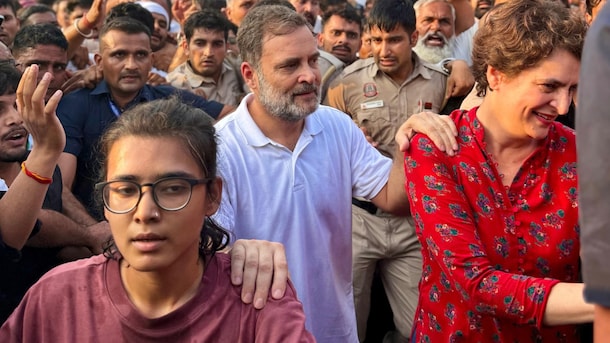
At INDIA bloc's march to Supreme Court, Rahul Gandhi placed himself a step behind two women, hands resting on their shoulders. One was his sister Priyanka. The one on his right was Neha Bora. Here's what the image means for the protest wave now, and for Rahul's politics in general.
-
Opinion | Slurs, Threats, Now A Temple Attack Plot: When Did America Become So Hostile Indians?
The rising tide of anti-India, anti-Hindu, and racist attacks serves as a stark reminder that economic prosperity does not automatically guarantee social immunity from bigotry.
-
Opinion | Imran Khan, And The Perils Of Having An 'Opinion' In Bollywood
The reality of the industry is quite grimy. More often than not, its inhabitants have been fairweather friends, happy to sing the praises of whoever is in a position of authority.
-
Exclusive: India's Food Safety Problem Goes Beyond Just Dirty Kitchens - By Tukaram Mundhe
On World Food Day, Maharashtra's Commissioner of Food Safety explains why instead of taking stopgap measures, the entire supply chain in India needs to be held accountable and made transparent.
-
Opinion | India Has Enough Coal. So Why Are Power Plants Running Short? A 76 Million 'Crunch'
As of October 5, as many as 82 of the 191 thermal plants monitored by the Central Electricity Authority were in the 'critical' category
-
Opinion | Starlink, India, And Why Elon Musk Must Know His Billionaire Tantrums Won't Work
India should neither be intimidated by Musk's global influence nor distracted by his theatrics.
-
Blog | 'Baap Da Brat': Kerala Mini Cooper Crash, And Why 'Daddy' Can't Keep Saving You
There are three things you should never underestimate in India: the power of 'jugaad', the elasticity of the law, and the confidence of a 'Baap da Brat' who believes his Papa Posh can fix absolutely anything.
-
Opinion | 'Say Our Name': Why A Tiny Island Nation Wants The World To Get Its Name Right
Standing before the UN hall of nations, Naoero President David Adeang asked the world to unlearn its comfortable habits and speak a restored truth.
-
TVS Succession Row Explained: Why Venu Srinivasan's Family Is Divided Over Wealth
TVS Family Dispute: TVS Holdings is a key entity because it owns a controlling stake in TVS Motor Company. It owns 50.26% of TVS Motor.
-
Opinion | The US Is Showing India Just How Cheap Its 'Friendship' Is
Can local talent fully replace Indian contribution? Why is the US leading in setting up Global Capability Centres in India - over 60% - and pocketing the IP?