A few weeks ago, a 22-year-old growth marketer who dropped out of his engineering programme went viral on X for claiming he now earns nearly ₹4.86 lakh a month, arguing that an IIT degree is "just a tag".
The post reignited a debate that has been simmering in Indian classrooms and comment sections alike: is a degree - even one from the country's most coveted institutions - still a launchpad, or has it become a legacy people cling to out of habit? While Gen Z's aspirations around work are shifting faster than the job market can keep up with, most discussions tend to look at the employment side of the equation - that is, what happens after the degree.
Advertisement - Scroll to continue
The more uncomfortable question sits one step earlier: what is actually happening with higher education that seems to be setting so many young people up for disappointment.
Advertisement - Scroll to continue
The Expansion Paradox
India's higher education structure has grown at a tremendous pace, which would have seemed quite unimaginable a generation ago. According to the AISHE 2021-22 survey of the Ministry of Education, the total enrolment touched approximately 4.33 crore students in 2021-22, up from a mere 3.42 crore in 2014-15.
A jump of about 91 lakh within a decade. Additionally, the Gross Enrolment Ratio (GER) - which measures the share of the college-going age group in higher education - grew to 28.4% from 23.7%. Even female enrollment has grown at a fast pace. The Gender Parity Index has stayed above 1 for a consecutive five years. This simply means that a higher proportion of young women are enrolling in college than young men, which is remarkable.
On paper, this looks like unambiguous progress. But a closer look will reveal that the composition of that growth is where the trouble begins. Within undergraduate enrolment, Arts remains the single largest stream at 34.2%, followed by Science (14.8%) and Commerce (13.3%), with Engineering and Technology trailing at 11.8%. That is not inherently a problem - a country doesn't need everyone in STEM. But it becomes one when you place it next to what the labour market is actually rewarding. The India Skills Report of 2026 has found that overall graduate employability stands at 55%, but it encompasses a steep gradient by stream. While Computer Science and IT engineering graduates have an employability of 78-80%, for core engineering, it falls to 70%, polytechnic diploma holders are placed at 32.9%, and ITI graduates at under 46%. A more conservative assessment by Mercer-Mettl India Graduate Skill Index of 2025, which tested over a million students across 2,700 campuses, claims that overall employability stands at merely 42.6%, with soft-skill readiness, such as critical thinking and communication, lagging further behind technical readiness.
Even within engineering, the stream everyone sees as "safe", the expansion has outrun demand in a very specific way. While there was an increased intake in Computer Science and AI programmes, this pulled students away from core branches. The AICTE closed 58 engineering and technical colleges in the 2025-26 academic year alone and discontinued more than 950 technical courses. This was largely because these institutions could not attract enough students or retain qualified faculty. This follows an earlier wave in which the Education Ministry told Parliament that 5.62 lakh engineering seats had been cut or surrendered since 2019.
India isn't short of graduates. It is short of graduates whose training matches what a fast-changing, increasingly AI-augmented job market wants - and the system is only now, reactively, beginning to correct a decade of supply built on assumption rather than demand.
When Even the Top of the Pyramid Cracks
If the expansion paradox explains what's happening to the "mass" of Indian higher education, the IIT placement data explains why even the top of the pyramid is starting to feel unstable - and why a post from a college dropout could strike such a nerve.
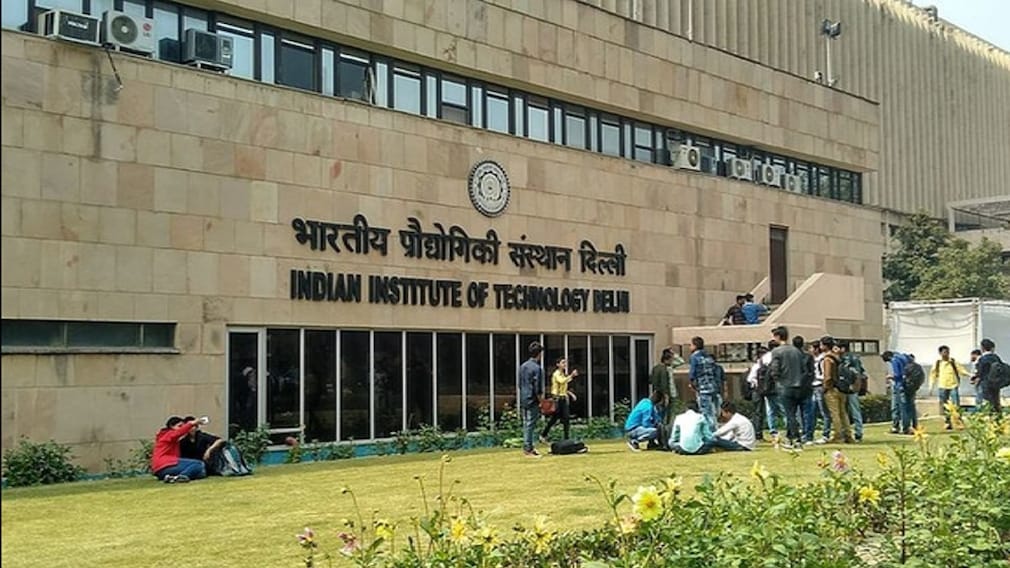
For years, an IIT seat was treated as a guarantee: clear the JEE, and the job (and the salary) would take care of itself. That assumption is fraying. RTI data compiled from multiple IITs paints a consistent picture over the last two placement seasons. At IIT Delhi, only 61% of students had secured jobs as of the 2024-25 cycle, leaving nearly 738 students without offers at that point. At IIT Gandhinagar, 59% of registered students were yet to be placed in the same season, even as average salaries for those who did get placed kept climbing. At IIT Tirupati, the figure was 46% unplaced, and IIT Indore reported 44% still unplaced with salary packages down compared to the year before.
Across several IITs - Dharwad, ISM Dhanbad, Hyderabad, BHU, Ropar, Indore, Kharagpur - roughly 30-40% of registered students had not found jobs by the final weeks of the placement season.
This is not a cyclical blip. The reasons are structural and layered: a global tech hiring slowdown after pandemic-era over-hiring, the entry of generative AI tools into exactly the kind of routine coding and analytical work that used to absorb fresh graduates, and a shift in employer preference away from broad, generalist engineering graduates towards very specific, applied skill sets in AI, data, and automation.
An IIT tag still opens doors that other degrees don't, and the aggregate salary numbers coming out of these campuses remain enviable by any national standard. But the floor has become unpredictable in a way it never used to be, which is precisely what has made "Is the IIT degree still worth it?" a legitimate question.
This is the throughline connecting the two data sets. If a Tier-1 institution with the country's most rigorous entrance filter cannot guarantee outcomes anymore, the problem isn't really about which college a student attends - it's about a certification-heavy system, at every tier, that hasn't rebuilt its relationship with a labour market that has fundamentally changed.
The Way Forward
The instinct in Indian policy conversations has long been to treat rising GER and rising enrolment numbers as the finish line. They aren't. They are the starting point for a much harder conversation about what happens during those four (or five) years.
A few shifts would matter more than any single new scheme.
- Publish outcomes, not just intake: Placement data at most institutions, IITs included, currently reaches the public mainly through RTI requests filed by individual alumni - not proactive disclosure. Additionally, mandatory, standardised, third party-audited placement and higher-study outcome reporting across all AISHE-registered institutions, not just the IITs and IIMs, would let prospective students make decisions based on evidence rather than brand recall.
- Let curriculum follow demand, not vice versa: The AICTE seat-vacancy data shows regulators are already course-correcting reactively after the mismatch has hurt a cohort of students. A tighter feedback loop between AICTE and UGC intake approvals and live employability data could make this correction pre-emptive instead of retrospective.
- Treat skilling as core curriculum, not an add-on: The consistent finding across every employability survey cited here is that technical proficiency is rising faster than soft skills, applied problem-solving and AI-fluency - the very things that separate an "employable" graduate from merely a "certified" one. This is also the stated logic behind the Nandan Nilekani-led task force set up by the government this year after nationwide student protests over exam integrity snowballed into a broader conversation about jobs. The panel's real test will be whether it changes what happens in classrooms, not just in entrance exams.
The viral post that started this conversation was framed as a personal choice - degree versus dropout. But read against the data, and it's really a systemic question in disguise: India built one of the largest higher education systems in the world at extraordinary speed. The next decade has to be about whether that system can convert enrolment into genuine, durable employability - for the student who tops JEE, and for all the others who don't.
[Deepanshu Mohan is Dean and Professor of Economics at O.P. Jindal Global University. Is a Visiting Professor at the London School of Economics (LSE) and a Visiting Research Fellow at University of Oxford. Srisoniya Subramoniam studies Law and is a Research Analyst with CNES]
Disclaimer: These are the personal opinions of the author