Opinion | The Great Chinese 'Miracle' Is Quickly Turning Into A Debt Nightmare
According to some reports, China's total debt-to-GDP ratio has topped a whopping 300%
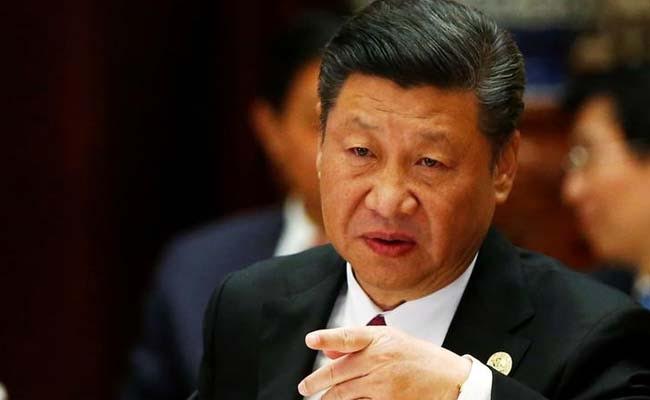
China will overtake the US to become the world's largest economy by 2028, a British think tank predicted in December 2020, after the first Covid wave. The Centre for Economics and Business Research said China's "skilful" management of the pandemic would boost its relative growth compared with the US and Europe in the coming years. Five years later, the think tank said China is unlikely to overtake the US economy for another 15 years. Other analysts doubt that Beijing will ever achieve that, given the structural problems and roadblocks facing its economy.
The latest economic data released in Beijing last week confirms that the world's second-largest economy has lost momentum. Industrial production rose by just 4.1% year-on-year in April, the weakest since mid-2023. Retail sales grew by just 0.2%, the worst since the country's economy reopened after the pandemic in December 2022. Fixed asset investment contracted by 1.6% in the first four months of this year, driven by a 13.7% year on year decline in property development. Property investment in China has nearly halved since its pandemic-era peak in 2021.
The real estate bubble burst soon after the pandemic ended, depleting the savings of millions of ordinary Chinese. This has severely hit demand for consumer products, as people are stuck with loans on flats they can't sell. After buying a house, owning a car used to be another major investment for Chinese people, but most can't afford one now. Earlier in May, China's car makers reported a 25.5% year-on-year decline in passenger car sales, marking the sixth consecutive month of year-on-year declines. China's electric car giant, BYD, has built up a large stock of unsold cars. Its profits in the first quarter of this year were down 55%, to a three-year low.
The Broken Model
China has made significant economic progress and has become a superpower as a result of the reforms initiated by Deng Xiaoping in 1980 and later carried forward by his successors, making the country the world's factory. This helped lift tens of millions of people out of poverty and created millions of jobs. The current leader, Xi Jinping, has focused on self-reliance and innovation in high technology to make China the global leader in many fields, including shipbuilding, solar panels, wind turbines, robotics and electric vehicles. It is also a world leader in AI and semiconductors.
But China's growth story is based on exports, an economic model that now appears broken. Demand for its products at home has shrunk because people can't afford them, even though they're cheap. Domestic consumption drives more than 80% of growth in the US and UK, and about 70% in India. China's share last year was just 52%; this year, it must be even lower. In February, the IMF said that "domestic demand has been subdued, in part because the protracted property slump, combined with a weak social safety net, hurt consumers' willingness to spend".
The IMF cut China's 2026 growth rate to 4.5% from 5% last year. In March, the Chinese government also set its annual growth target to a range of 4.5%-5%, the lowest goal since 1991.
But China is still building new factories and plants for export, continuing to make the world dependent on Chinese products. Last year, its trade deficit hit $1.19 trillion, fuelling more resentment against Beijing and prompting countries around the world to demand that China increase imports. If the war in Iran leads to a global recession, as is likely, demand for Chinese products will fall, hurting its plants and industries. Overcapacity in factories has already caused deflation, where prices continue to drop, discouraging customers from buying in the hope that goods will be even cheaper later.
Time Bomb?
The unsustainable export model is just one indication of the ticking time bomb staring at the Chinese economy. The country also has two other serious issues that are slowly killing its economy: budget deficits and a population crisis. China's official budget deficit is 4% of its GDP. That doesn't look too bad compared to the US, which has a deficit twice as large. But China's complex system has three other national budgets. The Government Funds Budget, the State Capital Operations Budget, and the Social Insurance Fund Budget. An analysis by China Power, a branch of the US-based Centre for Strategic Studies, has found that if all these budgets are also accounted for, China's total deficit climbs to a record-breaking 9.1% of GDP.
China's total debt-to-GDP ratio has topped 300%, according to Mark Williams, Chief Economist at Capital Enterprises, as reported by Fortune earlier this month. If his analysis is correct, it would surpass that of the US, the Eurozone and other major economies. India's debt-to-GDP ratio last year was 82%. China's interest payments on debt have skyrocketed by 341% between 2013 and 2025, outpacing any other major budget category. Private companies are also borrowing heavily. Business debt has doubled since 2019, while revenue growth has been only 30%.
The main driver of any nation's economy is its human capital. But China is increasingly at a disadvantage in this area. A shrinking population of young people and an ever-growing number of elderly people are set to become a major stumbling block. The birth rate has now fallen to the lowest level since 1949, when Mao Zedong came to power after leading the communist revolution. Last year, only 7.92 million new babies were born, a 17% decline from 2024. With the death rate also rising, China will lose nearly 60 million people in the next decade - almost the size of Gujarat. This loss will worsen the crisis of under-consumption.
Iran War Impact
With 1.4 billion barrels of oil reserves, the largest in the world, China is better placed to handle the energy crisis caused by the war in Iran. Its investment in the domestic gas industry over the years and its status as the global leader in renewable energy have insulated it from the worst effects. The war has helped boost exports. According to official figures, China's exports in April rose 14.1%, sharply beating estimates of 7.9% growth - mainly due to surging overseas demand from buyers stockpiling goods after the war.
But this is only one side of the story. Several Chinese toy factories have closed or cut production since the war, owing to rising plastic costs linked to oil and natural gas prices. Many workers have lost their jobs, worsening the already dire unemployment crisis in the country. Chinese factories operate under immense pressure as their margins have narrowed following Trump's tariffs, and they also face competition from other producers within the country. Last month, thousands of toy factory workers staged protests in southern China, a rare development in a highly controlled society.
Not Loved Abroad
China is leading the world in technological innovation, developing products for the future and exporting them to new markets. New demand for renewable energy products arising from the Iran war will also give Beijing an advantage. However, these initiatives still depend on the success of the export-led growth model, and Chinese firms must expand into overseas markets to survive. The problem is that China is not viewed very favourably in many countries. For example, it has invested heavily in Africa, where nearly 10,000 Chinese companies and one million citizens work. Yet, increasingly, it is seen as a new colonial power that has come to Africa to exploit its resources.
Even in ASEAN, China's largest trading partner, its aggressive trade and manufacturing practices have alienated people. Local industries in these countries have taken a serious hit from a flood of underpriced Chinese goods. Most Chinese factories in these countries import their raw materials from home rather than buying locally. The Chinese are also accused of misusing the weaker rule of law in these countries. All this has created resentment.
(Naresh Kaushik is a former editor at the BBC and Associated Press. He is based in London.)
Disclaimer: These are the personal opinions of the author
-
Trump Pushes Middle East Reset, Pak Faces Saudi, Abraham Accords Dilemma

Pakistan faces a dilemma over the Abraham Accords, needing to recognise Israel for economic gains but opposing it without Palestinian statehood.
-
Opinion | A New Sunni Bloc Is Taking Shape, And Pak May Be Its Biggest Winner
The war between Israel-US and Iran has led to the ascendancy of two of India's major adversaries - Pakistan and Turkiye. Already locked in a close embrace militarily, they are now ideologically pushing for an 'Islamic NATO'.
-
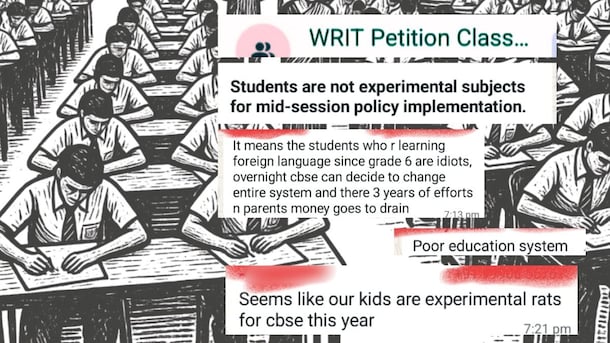
"Kids As Experimental Rats?" CBSE's 3-Language Policy Triggers Debate
The new CBSE policy for Class 9 mandates that students must study three languages (R1, R2, and R3), with at least two being native Indian languages.
-
Blog | My First Lesson In Delhi Came On The Lawns Of Gymkhana: Kiran Bedi Writes
During the years that followed my first visit, I returned often to Delhi for tournaments, playing competitive tennis and steadily improving my national ranking. I played gruelling matches on those courts - won some, lost some, learned from all.
-
Opinion | All Roads Lead To China? Why Xi Hosted Trump And Putin Back-To-Back
China was projecting itself not merely as another great power, but as the indispensable balancing force.
-
Analysis: The 'Good Girl' Trap That Killed Twisha Sharma
In the Twisha Sharma death case - the latest focal point of national media - there were "indications" from the very start that she was in a toxic marriage.
-
How Urban India's Weekend Obsession Became A $50 Million Market
Industry estimates peg India's pickleball market at nearly Rs 750 crore by 2030. Just two years ago, the sport barely existed outside niche circles.
-
After 113 Years Of Power, Privilege, Eviction Notice For Delhi Gymkhana Club
Delhi Gymkhana Club has always been more than just a sports or recreation club. Its membership defined people's status in the Delhi high society.
-
Opinion | Rubio Is In India, But Trump's America Just Launched Its Sharpest Attack On Indian Immigrants
Thousands of Indians who spent years following American laws and paying taxes in the US may now face the prospect of leaving the country during processing with no certainty of return timelines.