Blog | Pranit More To Everyone Else, How Comedy And Its Scandals Continue To Fool Us
The modern comedian doesn't really have an ideology. They have a target market, and jokes that cater to that target market.
Every few months, minus special occasions, India finds itself in the middle of a national emergency, involving a comedian. A statement will be made somewhere in a comedy show, or by a comedian. The clip goes viral, and boom goes the dynamite! Social media erupts with all kinds of opinions from across the spectrum. Primetime debates decide the length and breadth of what should be an acceptable speech. Politicians suddenly discover morality. Everyone has an opinion.
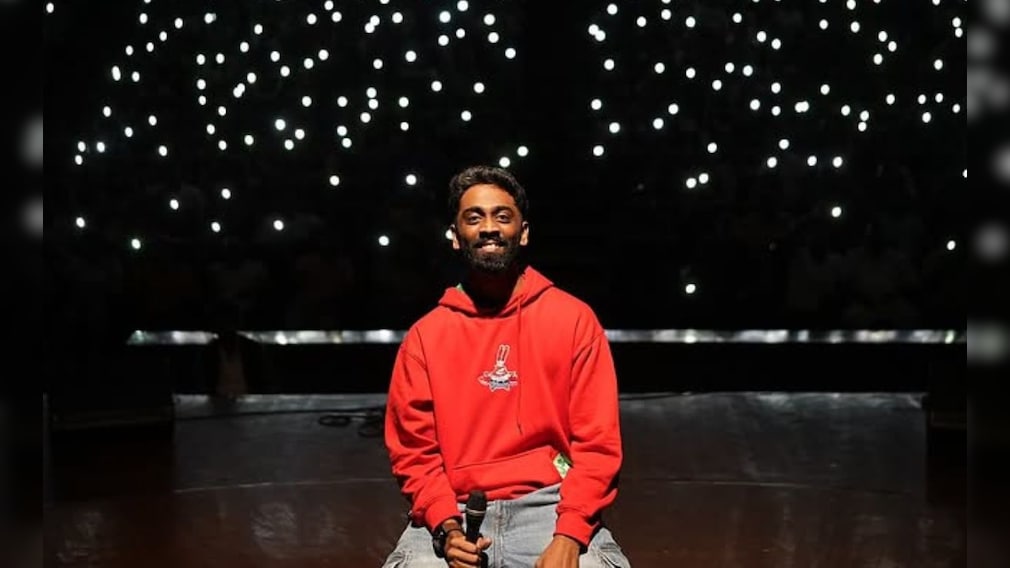
A recent controversy involved an audience member at comedian Pranit More's show, who suggested that because he had spent Rs 370 on a biryani date, he expected sexual access in return. The remark was widely criticised as reflecting entitlement and a disregard for consent. More himself later apologised, admitting he should have challenged the comment instead of laughing along. The man who made the comment, a 22-year-old Himanshu Jangra, also rendered an apology after his comment invited backlash and he was fired from his company.
However, the lore only got bigger. A second clip from the same crowdwork became viral. A doctor in the audience, Dr Sejal, spoke about medical students joking about the private parts of male cadavers during anatomy and post-mortem work, triggering a second wave of criticism, and eventually an apology. The trolling of Dr Sejal started out as many defended Himanshu's comments in a 'tit-for-tat' attitude, but soon it became a larger conversation on ethics of medical professionals. Many (again, rightfully) criticised her stand and her training in general, including her place of profession, which raised concerns.
But the 'ideological' battle remained. Some people have condemned the remarks as vulgar and offensive. Others have defended it in the name of freedom of expression. Such controversies rise and fall in their due time. The country will move on and find something new to outrage over. That is not the point I am trying to make here.
This particular controversy has shed light on comedian Pranit More and how he should have behaved during the remarks. The internet has dubbed Pranit More's response at the time of the '370' statement as encouragement. More deserves his fair share of criticism, and many creators have rightfully called him out for choosing to benefit from it first and being apologetic about it later.
But the voice of reason seemed to have a tiny asterisk mark. The morality clause found itself attached to the same ecosystem that once preached that accountability itself was a 'threat' to comedy. A quick archaeological excavation through stand-up routines from back in the day reveal a graveyard of jokes involving women, minorities, sexuality, religion, body image, stereotypes and every other subject that contemporary sensibilities would regard as problematic. Casual sexism, sexual humour, stereotypes about communities, body-shaming and shock value have been staples of the stand-up routine, even in India. The industry's collective memory appears remarkably short. And the difference is not moral. It is timing.
Lost in the shouting matches is an inconvenient truth: almost every major comedian, given a long enough timeline, has said something they would rather not have clipped and circulated today. This is often described as personal growth. Sometimes it genuinely is. But it is also difficult to ignore how frequently these moral awakenings coincide with changing audience preferences.
And this is where we as the audience must understand, that comedy, despite its lofty self-image, is one of the most market-sensitive professions in existence. For years, shock humour relied on violating social norms. The joke may not be necessarily clever; it was simply unexpected. In moderation, such humour has always existed and occasionally served a purpose. Satire often requires discomfort.
The problem begins when discomfort becomes the entire product.
Today, there are jokes that seem to exist solely because somebody, somewhere, will find them offensive. Their primary function is not humour but circulation. They are designed less for audiences in the room and more for clips on social media. I will even go as far as to argue that the most successful comedians are often those who understand that ideology itself has become content. Political correctness is content. Political incorrectness is content. Being offended is content. Being offended by the offended is content.
In today's day and age, the internet rewards all of it.
However, today, many of the loudest critics of shock comedy belong to a generation of comics who built their own careers on material that would struggle to survive contemporary scrutiny. This is not unique, or even a singularly Indian experience. This is how the 'routine' works across the world.
Stand-up comedy is one of the few professions where success depends almost entirely on understanding what a crowd wants to hear. Comedians must be experts in reading rooms for a living. They must identify the preferences, the areas of anxiety. They will succeed when they learn where applause lives.
This is why contemporary comedy sometimes resembles a political campaign of sorts. Different performers target different constituencies - while some cater to audiences that enjoy provocation and irreverence, others cater to audiences that enjoy societal validation. As audience, we have often heard the phrase - "why did you even go to watch X if you knew his type of comedy?"
While often comedy is seen as a medium to challenge authority - the use of satire to challenge the status quo - on usual days, the comedian is just running a business. And business does not care what's right or wrong, only what works.
This explains why public debates about comedy often feel strangely performative. We speak as though there are clear heroes and villains, as though one side is motivated by principle while the other is motivated by opportunism. Most comedians are neither fearless revolutionaries nor sinister propagandists. They are simply professionals navigating incentives.
The audience, meanwhile, participates enthusiastically in the illusion. We assume that comedians we agree with are brave truth-tellers while comedians we dislike are cynical attention-seekers. Rarely do we consider that both groups might be responding to exactly the same economic logic.
Which brings me back to the latest controversy. The joke may have been tasteless. The outrage may be justified. The criticism may be deserved. But none of these facts change the larger reality. We are witnessing an industry behaving exactly as the internet has trained it to behave. The comedian produces content. The audience produces outrage. The media produces coverage. The platforms produce engagement. Everyone receives what they came for. The only thing that occasionally gets lost in the process is truth.
Perhaps that is the ultimate joke.
(The author is a social media executive at NDTV)
Disclaimer: These are the personal opinions of the author
-
The Name Is Bond. Emo Bond. Robert Pattinson Inherits 007 With Feelings

The internet has already given the new James Bond a nickname. It is a joke, but it touches on the oldest question for the "cool" spy franchise: How much is he allowed to feel?
-
Buying Property For Investment? 6 Factors To Check Beyond Price
For anyone buying property as an investment, the real question is not simply how much the property costs. It is how much money it can generate.
-
Is Buying Home In A Small Town Smarter Than In A Metro? Here's The Math
According to Knight Frank's H1 2026 Affordability Index, the EMI-to-income ratio stood at 69% in Mumbai and 67% in the National Capital Region.
-
Samajwadi Seat Talks: The UP-Size Gap Between Congress' Rhetoric and Reality
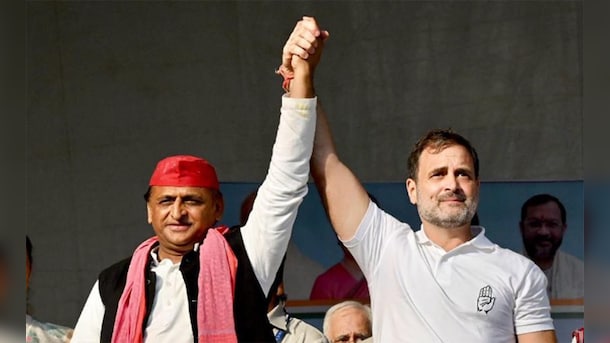
UP Election 2027: Seat-sharing negotiations are rarely easy. More so when they involve a regional force determined to guard its turf and a national party desperate to regain lost ground.
-
Cyber Outages: The Attack That Has No Name
Banks, flights and the world's office mail failed four times in five days, each time without an attacker. The world spends $247 billion a year on locks
-
Buy A Plot Or Flat? What Homebuyers In Tier-2 Cities Should Consider
Plots may offer greater flexibility, but apartments remain a more straightforward route to homeownership for many buyers.
-
Opinion | Sonia Gandhi, And The Weight Of The Things Left Unsaid
"You must know, Sonia beti, that in this country it is not what you are that counts, it is what people think you to be," someone said to Sonia Gandhi when she first arrived in India. Decades later, she tries to bridge the gap between what she is and what people have always thought her to be.
-
Indian Parents Are Spending More On Their Children's Hobbies. Is It Worth It?
Parents are increasingly recognising that academic knowledge alone may not prepare children for everything life throws at them.
-
The Joy Of 'Just Because': Why Indians Are Buying Gifts Beyond Weddings, Birthdays And Festivals
Saying thank you, expressing pride or apologising can sometimes feel difficult. A thoughtful gift can make these moments easier.