Opinion | Slurs, Threats, Now A Temple Attack Plot: When Did America Become So Hostile Indians?
The rising tide of anti-India, anti-Hindu, and racist attacks serves as a stark reminder that economic prosperity does not automatically guarantee social immunity from bigotry.
The United States is witnessing a troubling and significant escalation in xenophobic, anti-India, and anti-Hindu attacks targeting Indian Americans. For decades, the Indian diaspora in the US was heralded as a "model minority" - a community celebrated for its high educational attainment, entrepreneurial success, and seamless integration into the American fabric. However, this glossy narrative has increasingly been pierced by acts of overt violence, online harassment, and systemic prejudice. According to data tracked by the Federal Bureau of Investigation (FBI) and community watchdogs, hate crimes targeting individuals of South Asian and Hindu heritage have steadily climbed, prompting deep concern about the safety, acceptance, and future of Indians in America.
Anti-Indian and anti-Hindu sentiment manifests across a spectrum that ranges from casual, everyday micro-aggressions to severe physical violence and vandalism.
Indian Americans have increasingly found themselves targeted in public spaces. In notable incidents documented across major metropolitan areas, individuals have been accosted with demands to "go back to your country" or accused of "taking American jobs." High-profile assaults, such as the targeting of Indian-American tech workers or students, have underscored a growing vulnerability.
Temples across the United States, from California to New York, have increasingly become targets for hate crimes. Anti-Hindu vandalism frequently involves the defacement of temple walls with derogatory slurs, political graffiti, and threatening messages. These attacks do more than damage property; they violate the psychological safety of families seeking to practice their faith in peace.
The internet has emerged as a major incubator for anti-Indian and anti-Hindu rhetoric. Social media platforms witness a heavy volume of coordinated trolling, where users employ derogatory tropes regarding Indian hygiene, accents, and corporate leadership. Furthermore, political polarisation in South Asia is frequently imported into the U.S. digital landscape, exposing the diaspora to crossfire from multiple ideological factions.
The rise in hostility cannot be attributed to a single source. Rather, it is the product of an intersection between domestic economic anxieties, shifting immigration dynamics, and complex transnational political developments.
The immense professional success of Indian Americans has, ironically, fuelled a modern wave of nativist resentment. With Indian-born executives leading some of the world's most powerful tech conglomerates and occupying prominent roles in medicine and finance, a hostile counter-narrative has emerged. During times of domestic economic instability, corporate layoffs, or housing crunches, the diaspora is frequently scapegoated by individuals who view immigrant success as a zero-sum loss for native-born citizens.
As the Indian-American population expands outside traditional metropolitan hubs into suburban enclaves, cultural visibility has grown. Public celebrations of festivals like Diwali or the construction of traditional architecture for temples have sometimes triggered xenophobic reactions from local communities, resistant to demographic changes. As noted in some reports by independent platforms, when cultural practices become highly visible without simultaneous, proactive community dialogue, friction can manifest among segments of the host population.
In the United States, religious literacy regarding Eastern faiths remains relatively low. Hinduism is frequently viewed through a lens of exoticism or misunderstood through distorted tropes. When geopolitical tensions rise, or when domestic media outlets cover sensitive socio-political issues in India, these complexities are often flattened out. The result is a form of prejudice where individual Hindu Americans are held collectively responsible for foreign political realities, leading to targeted harassment and the defacing of religious institutions.
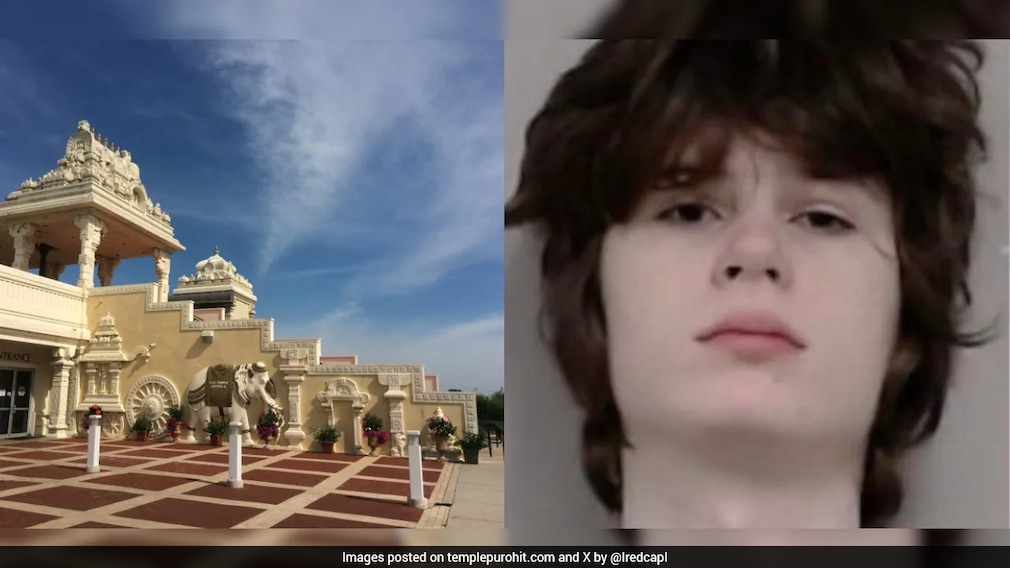
In a recent case, police in the state of Illinois thwarted a potential mass shooting and arrested Alexandros Paporakis, a Taco Bell cashier from the Chicago suburb of Palatine. This 19-year-old American, who expressed white supremacist views, was arrested on the day the United States police believe he tried to attack a Hindu place of worship. Prosecutors say he told colleagues he "couldn't wait" to kill Indian people. The case surfaced amid mounting concern among Indian-Americans about hostility towards their community, fuelled by bitter political fights over immigration and skilled-worker visas.
Over two nights in late June 2025, an estimated 20 to 30 rounds were fired at a Krishna temple in Spanish Fork, Utah, while people were inside. No one was hurt.
Two months later, Illinois Congressman Raja Krishnamoorthi condemned a break-in and vandalism at a Hindu temple in Santa Clara, California, saying incidents targeting Hindu temples across the US "are on the rise". A report by the Centre for the Study of Organised Hate (CSOH) found the monthly volume of hateful posts about South Asians on X more than tripled between January 2024 and June 2026.
Devesh Kapur, a professor of South Asian studies at Johns Hopkins University's School of Advanced International Studies, said the threat is growing. "White supremacist extremism is clearly rising. Hostility towards Indians has particularly increased among the MAGA right in President Trump's second term."
Much of the hostility seems to have been driven by fights over immigration. Trump campaigned on the issue of immigration in the lead-up to the presidential election of 2024, and has launched sweeping restrictions, including "military-style" federal raids on immigrant communities, resulting in the deaths of some activists - since returning to the White House in January 2025. Indians receive more than 70% of H-1B visas, which US employers use to bring skilled foreign workers to the country. Spikes in online hate have followed political rows over the programme.
In July 2025, President Donald Trump criticised US technology companies for outsourcing jobs to India. That September, he imposed a USD 100,000 fee for certain new H-1B petitions. US courts are still deciding on the legality of the fee and have currently blocked the payment requirement. Figures close to Trump have also displayed anti-Indian attitudes. In September 2024, far-right activist Laura Loomer, at one time a close Trump ally, wrote that the White House would "smell like curry" if former Vice President Kamala Harris won the presidency. The White House, then under President Joe Biden, called the remark "repugnant". Incumbent Vice President JD Vance, whose wife is the daughter of Indian immigrants, has himself used "dog whistle" language, calling H-1B visa holders, most of them Indians, "indentured servants".
Government accounts have joined in, too. Last month, a since-deleted Department of Homeland Security post featured a Sikh man identified as "Mr Singh" and told him to "get off our roads". The post came amid a Trump administration campaign to highlight the presence of undocumented immigrants in commercial trucking, particularly Sikhs and Indians.
Researchers also point to the growing prominence of South Asians in US politics, from Kamala Harris to New York Mayor Zohran Mamdani, and to the "Great Replacement" conspiracy theory, which claims white populations are being deliberately replaced.
Mitigating the rise of anti-India and anti-Hindu hate requires a coordinated strategy that bridges grassroots community action, corporate accountability, legislative reform, and diplomatic engagement. It is necessary for the Indian diaspora to transition from economic participation to robust civic leadership. While the community boasts high voter turnout, it historically under-participates in local grassroots advocacy, school boards, and city councils. Moreover, isolating the community's struggles from broader civil rights narratives limits the effectiveness of advocacy. Indian-American organisations need to build active coalitions with other minority groups, including Asian-American, Black, Hispanic, and Jewish advocacy groups.
Indian community leaders should collaborate with local school districts to ensure that curricula accurately and respectfully represent South Asian history and Eastern religions. Open-door initiatives, such as temple tours and cultural exchange programmes, could demystify practices for non-Indian neighbours and dismantle harmful stereotypes.
Given the high concentration of Indian-Americans in the technology sector, tech corporations bear a distinct responsibility to protect their workforce. Furthermore, social media companies must improve their moderation algorithms to detect and penalise targeted xenophobia against South Asians. Human resource departments must explicitly recognise anti-Indian bias and Hinduphobia within their Diversity, Equity, and Inclusion (DEI) training modules, creating safe reporting mechanisms for employees facing workplace micro-aggressions.
The rising tide of anti-India, anti-Hindu, and racist attacks represents a pivotal challenge for the Indian diaspora in the United States. It serves as a stark reminder that economic prosperity does not automatically guarantee social immunity from bigotry. The "model minority" moniker can no longer be used as a shield to ignore the vulnerabilities facing students, working-class families, and religious institutions. Resolving this crisis demands a shift from passive assimilation to active, courageous citizenship. By confronting prejudice head-on, educating the wider public, strengthening legal protections, and building deep alliances with fellow Americans, the Indian community can safeguard its rich heritage.
(Amb. Ashok Sajjanhar was with the IFS for over three decades. He was the ambassador of India to Kazakhstan, Sweden, and Latvia)
Disclaimer: These are the personal opinions of the author
-
Opinion | Imran Khan, And The Perils Of Having An 'Opinion' In Bollywood

The reality of the industry is quite grimy. More often than not, its inhabitants have been fairweather friends, happy to sing the praises of whoever is in a position of authority.
-
Exclusive: India's Food Safety Problem Goes Beyond Just Dirty Kitchens - By Tukaram Mundhe
On World Food Day, Maharashtra's Commissioner of Food Safety explains why instead of taking stopgap measures, the entire supply chain in India needs to be held accountable and made transparent.
-
Opinion | India Has Enough Coal. So Why Are Power Plants Running Short? A 76 Million 'Crunch'
As of October 5, as many as 82 of the 191 thermal plants monitored by the Central Electricity Authority were in the 'critical' category
-
A Step Behind Neha Bora: What Rahul Gandhi's Gesture Says About Congress' Gen-Z Pitch
At INDIA bloc's march to Supreme Court, Rahul Gandhi placed himself a step behind two women, hands resting on their shoulders. One was his sister Priyanka. The one on his right was Neha Bora. Here's what the image means for the protest wave now, and for Rahul's politics in general.
-
Opinion | Starlink, India, And Why Elon Musk Must Know His Billionaire Tantrums Won't Work
India should neither be intimidated by Musk's global influence nor distracted by his theatrics.
-
Blog | 'Baap Da Brat': Kerala Mini Cooper Crash, And Why 'Daddy' Can't Keep Saving You
There are three things you should never underestimate in India: the power of 'jugaad', the elasticity of the law, and the confidence of a 'Baap da Brat' who believes his Papa Posh can fix absolutely anything.
-
Opinion | 'Say Our Name': Why A Tiny Island Nation Wants The World To Get Its Name Right
Standing before the UN hall of nations, Naoero President David Adeang asked the world to unlearn its comfortable habits and speak a restored truth.
-
TVS Succession Row Explained: Why Venu Srinivasan's Family Is Divided Over Wealth
TVS Family Dispute: TVS Holdings is a key entity because it owns a controlling stake in TVS Motor Company. It owns 50.26% of TVS Motor.
-
Opinion | The US Is Showing India Just How Cheap Its 'Friendship' Is
Can local talent fully replace Indian contribution? Why is the US leading in setting up Global Capability Centres in India - over 60% - and pocketing the IP?
-
Jantar Mantar Tells Time. The Clock Just Stopped On Its Time As An Iconic Protest Site
On Monday, October 12, 2026, Delhi Police denotified Jantar Mantar Road as a designated site for demonstrations. The Supreme Court had given it a nudge. Here's how history met politics on that street for decades.