Opinion | Siddaramaiah: The Man Who Has Never Believed In Bowing Out Quietly
Old habits die hard. Siddaramaiah is a grassroots socialist, an anarchist who has always thrived in chaos. Don't expect him to retire to a life of a quiet, elderly statesman - not yet, at least.
In 2013, at the Karnataka Pradesh Congress Committee office, as the election results started pouring in, the answer to who would be Chief Minister was obvious to me. The then Leader of the Opposition, Siddaramaiah, was the socialist import who had taken over the Congress, and his raison d'être was to occupy the top post. He would have broken the party and sparked total anarchy had he been bypassed. That is why even Mallikarjun Kharge, the old warhorse of the Congress, did not stand a chance. Siddaramaiah remained the undisputed Chief Minister and power centre for five years - a rarity in Karnataka, a state that more often than not has seen mid-term replacements and bitter power tussles.
Even in 2018, after leading the Congress to defeat following his five-year term, Siddaramaiah remained belligerent. He had to be coaxed and pressured by the Congress central leadership into accepting an alliance with the Janata Dal (Secular) (JD-S) to install HD Kumaraswamy as Chief Minister, a move aimed solely at keeping the Bharatiya Janata Party (BJP) at bay. He was fundamentally against the arrangement; he had exited the JD(S) in 2005 after a bitter feud with HD Deve Gowda to join the Congress. The moment the 2019 parliamentary elections concluded, Siddaramaiah witnessed - and perhaps helped engineer - the collapse of the alliance. The subsequent mass resignation of Congress and JD(S) MLAs - many of them Siddaramaiah loyalists - who defected to the BJP, paved the way for BS Yediyurappa to take charge as Chief Minister.
The Comeback
Despite that turmoil, he held his ground within the Congress and retained his position as Leader of the Opposition, even amidst the rising prominence of DK Shivakumar, or 'DKS', as the State Congress president. Then, in 2023, when the Congress returned to power with a historic mandate and the tussle for the Chief Minister's post reached a fever pitch, Siddaramaiah prevailed again. It is a rare feat in Karnataka for a defeated Chief Minister to orchestrate such a comeback.
He succeeded because the political logic of 2013 still held true: deny him the post, and he would create chaos. Backed by the majority of MLAs, the high command was forced to relent to avoid a party meltdown. Rahul Gandhi remained a Siddaramaiah backer. However, gradually, DK Shivakumar proved to be the strongest and most persistent challenger Siddaramaiah ever faced within the party. DKS categorically established himself as an alternate power centre and reminded everyone that he was a constant threat to the status quo.
The Congress old guard rallied behind Shivakumar, extracting an agreement from Siddaramaiah for a mid-term leadership transition, and ensuring it was adhered to. From the start of this term, it was clear that Siddaramaiah would not enjoy a free run or absolute control, as he did between 2013 and 2018.
Is It The End Of The Line?
Yet, while he managed to retain the Chief Minister's chair, the last three years have seen the ageing leader lose his grip. His current administration is a far cry from his first term. Corruption allegations, internal power struggles, an insular coterie surrounding the Chief Minister, and general administrative lethargy have dominated public perception, largely neutralising the political goodwill generated by his welfare schemes.
During the 2023 post-poll deliberations, a senior minister and close Siddaramaiah confidante told this author, "He is an extraordinary administrator and a dream for young, performing ministers. Most of us want him as Chief Minister." A few days ago, that same minister lamented, "It's all been downhill since then." Most of Siddaramaiah's admirers have been deeply disappointed by this second term, with many concluding it was finally time for him to step aside.
This sentiment resonated deeply among the MLAs. The Congress high command's decision to finally force Siddaramaiah's hand is a consequence not just of rival power lobbying but of an overwhelming fatigue with his administration. It was no longer politically viable to carry on; a change had to be made.
Ultimately, it became clear, even to Siddaramaiah, that he had to give way. That is the sole reason he resigned; had there been any doubt, he would not have gone down without a fight. This exit comes despite him serving a historic tenure - marking the state's longest cumulative time in office.
Old Habits Die Hard
Siddaramaiah is the last of the enigmatic socialist leaders thrown up by the anti-Congress Janata movement of the 1970s and '80s to have held onto power. He, Nitish Kumar and Lalu Prasad Yadav represent the same political generation. A first-time MLA in 1983 and a state minister in 1985 under Ramakrishna Hegde, Siddaramaiah has consistently refused to bow out quietly, always finding a way back to the centre of power. This was true after his electoral defeats in 1989 and 1999, his expulsion from the JD(S) in 2005, and even when he lost one of his own assembly seats as the incumbent Chief Minister in 2018.
Old habits die hard. As he steps down, few expect him to play the role of a quietly retired elder statesman, despite his age. He remains a rugged, grassroots socialist - arguably an anarchist who does not fear chaos but thrives in it. Siddaramaiah is not a force to manage from the sidelines; he will assert himself rather than fade into the sunset.
The Congress's offer of a Rajya Sabha seat and a national role is a transparent attempt to lure him away from state politics. His continued presence in the legislature and in Bengaluru guarantees friction with the new dispensation and an ongoing power tussle. However, he seems deeply reluctant to take the bait.
A New Chapter For Karnataka
Clearly, a displaced Siddaramaiah will be a volatile force. State power equations will need to be delicately redrawn and rebalanced. This change of guard is about more than just switching Chief Ministers; it is about dismantling and replacing entrenched social coalitions. Beyond his formidable personality, Siddaramaiah remains the preeminent face of the backward classes and has been instrumental in shaping the Congress's electoral arithmetic in Karnataka for two decades. A transition away from him means upending power equations in a state notorious for its "adjustment politics". Conversely, Siddaramaiah could easily become a political liability if he refuses to recede and instead fuels perpetual internal conflict.
Watching Siddaramaiah navigate a life out of power will be just as compelling as watching him fight to retain it. Alongside BS Yediyurappa, Siddaramaiah has scripted Karnataka's political narrative since 2004, with Kumaraswamy playing the perennial third act. As the Congress attempts a structural reset in Karnataka, the state, with the resignation of its last stern socialist, appears headed for a brand-new phase.
(The author is Executive Editor, NDTV)
Disclaimer: These are the personal opinions of the author
-
Blog | 'Baap Da Brat': Kerala Mini Cooper Crash, And Why 'Daddy' Can't Keep Saving You

There are three things you should never underestimate in India: the power of 'jugaad', the elasticity of the law, and the confidence of a 'Baap da Brat' who believes his Papa Posh can fix absolutely anything.
-
Opinion | 'Say Our Name': Why A Tiny Island Nation Wants The World To Get Its Name Right
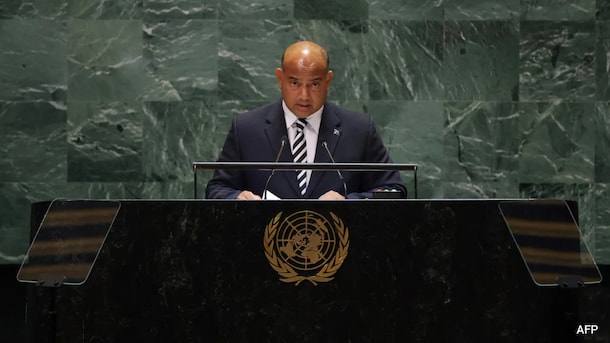
Standing before the UN hall of nations, Naoero President David Adeang asked the world to unlearn its comfortable habits and speak a restored truth.
-
TVS Succession Row Explained: Why Venu Srinivasan's Family Is Divided Over Wealth
TVS Family Dispute: TVS Holdings is a key entity because it owns a controlling stake in TVS Motor Company. It owns 50.26% of TVS Motor.
-
Opinion | The US Is Showing India Just How Cheap Its 'Friendship' Is
Can local talent fully replace Indian contribution? Why is the US leading in setting up Global Capability Centres in India - over 60% - and pocketing the IP?
-
Jantar Mantar Tells Time. The Clock Just Stopped On Its Time As An Iconic Protest Site
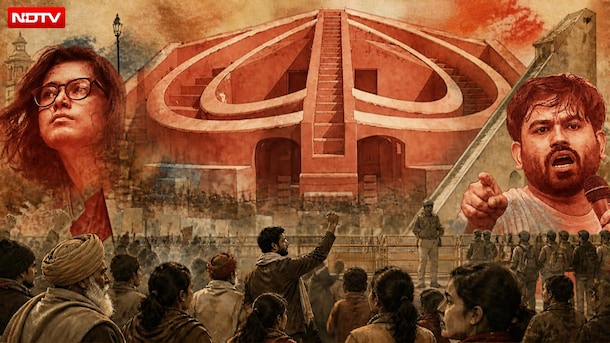
On Monday, October 12, 2026, Delhi Police denotified Jantar Mantar Road as a designated site for demonstrations. The Supreme Court had given it a nudge. Here's how history met politics on that street for decades.
-
Opinion | Saudi Airport Attack, And Why Pakistan Keeps Biting Off More Than It Can Chew
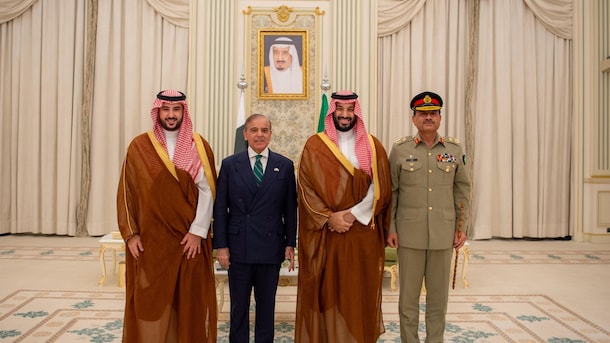
For all those who were envious of Pakistan's 'new status' as "mediator extraordinaire", here is a reality check
-
Opinion | Visa Shocks To Racist Attacks, When Did America Come To Hate Indians So?
Sometimes it is about H-1B visas. Sometimes it is jobs. Sometimes it is "foreigners." Sometimes it is about temples. The language of the attack varies, but the message is consistent
-
How El Nino And Warming Oceans Could Shape Earth's Climate In 2027
From changing ocean currents to extreme weather, scientists are watching a combination of climate signals that could influence temperatures, rainfall and ecosystems in the months ahead.
-
Blog | Nana Patekar, And The Sharp, Lasting Sting Of His 'Plain-Speak'
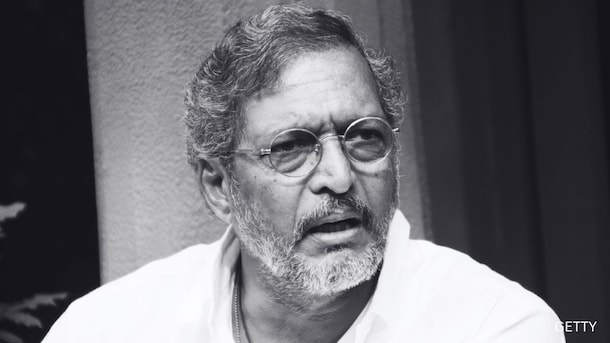
"Subah ghar se niklo, bheed ka hissa bano..." Nana Patekar's characters often spoke with the bluntness of men who had little patience for pretence. Just like Nana himself.