'Say Our Name': Why A Tiny Island Nation Wants The World To Get Its Name Right
Standing before the UN hall of nations, Naoero President David Adeang asked the world to unlearn its comfortable habits and speak a restored truth.
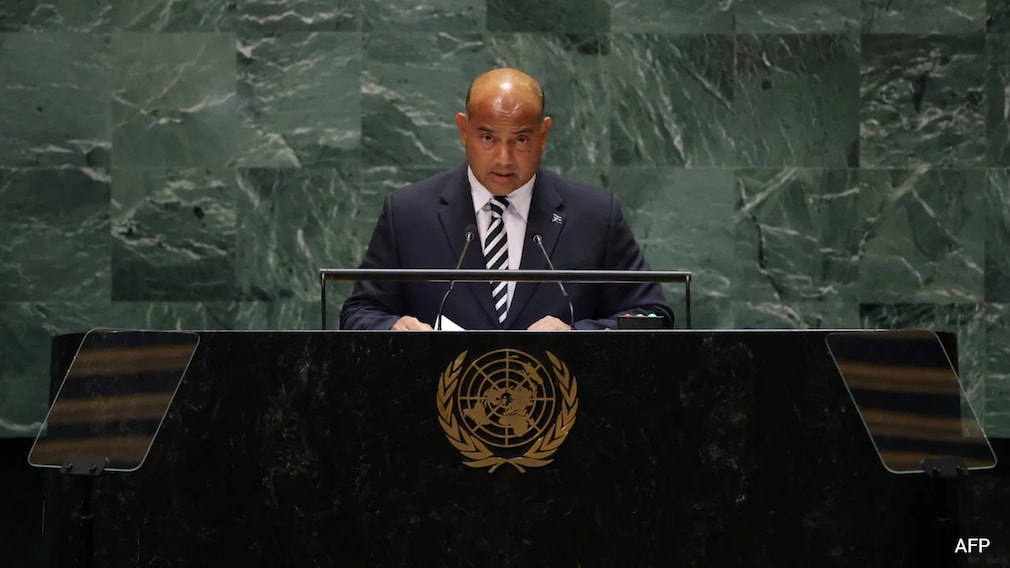
When President David Adeang stepped up to the podium at the United Nations General Assembly, his presence was a quiet rebellion wrapped in an international protocol-sheet. Representing an eight-square-mile dot in the vast expanse of the South Pacific, he spoke not of geopolitical grievances or rising ocean tides, but of something far more fundamental to human dignity: a nation's right to its own name.
For decades, the global community had comfortably referred to his home as Nauru - a clipped, anglicised approximation that was easy on western tongues but ultimately estranged from its native roots. Standing before the hall of nations, Adeang asked the world to unlearn its comfortable habits and speak a restored truth. The island was reclaiming its ancestral name and pronunciation, returning to Naoero, pronounced "na-oh-airo". With three simple words - "Say our name" - he captured the ancient, persistent human longing to be called by the sound we choose for ourselves, rather than the labels thrust upon us by observers, cartographers, and conquerors.
A Lot Is In A Name
Names are the first architecture of identity. Before we possess property, ideology, or social standing, we are given a name, and in that collection of syllables resides a universe of intent. To name a thing is to claim a relationship with it, and to name oneself is the ultimate act of self-determination. When an individual insists on a specific name, a particular spelling, or an authentic pronunciation, it is rarely a matter of mere chauvinism or pedantry. It is an insistence on being perceived accurately, on bridging the gap between who we are inside and how we are registered by the world outside. When we mispronounce someone's name, even inadvertently, we perform a tiny act of erasure, signalling that our ease of speech matters more than their history. It is hardly surprising then that human beings guard their names with fierce devotion, for to lose control of your name is to lose the authority to define your own story.
What is true for the individual vibrates with even greater resonance across the collective consciousness of a nation. Countries, after all, are grand imaginings held together by shared memory, language, and geography. Their names are the shorthand for their culture and soul. When foreign powers draw maps and administer territories, they frequently bestow labels born of ignorance, convenience, or outright arrogance. For centuries, map-makers in distant capitals slapped exonyms onto entire civilisations, flattening intricate linguistic landscapes into easy-to-pronounce colonial cartography. The post-colonial era, therefore, has witnessed an epochal exercise in global renaming - a giant, slow-moving chorus of nations demanding that the world correct its maps and respect their selfhood.
Consider the gentle yet firm correction issued by Côte d'Ivoire. For years, the international community translated the West African nation's name into whatever language suited the speaker: Ivory Coast in English, Elfenbeinküste in German, Costa de Marfil in Spanish. Yet in 1985, the government declared that the country's official name was strictly Côte d'Ivoire in every language, complete with its French accents, refusing to be a linguistic chameleon just to accommodate foreign translators. It was a declaration that a nation's name is a proper noun, fixed and inviolable, not an interchangeable description of a commodity once extracted from its shores.
In a similar vein of linguistic reclamation, Turkey formally requested the international community to adopt its authentic endonym, Turkiye. The shift was partly a practical effort to shed the awkward associations with a festive bird and a colloquial term for a failure, but more profoundly, it was an assertion of cultural self-respect. It was an invitation for the world to pronounce the country as its citizens have pronounced it since the founding of their republic, honouring the phonetic rhythm of their own native tongue rather than accepting an anglicised shortcut with unflattering avian associations.
'Gold Coast' To Ghana, Rhodesia To Zimbabwe
Elsewhere, the act of renaming has served as a dramatic, politically charged rupture with a painful past. When colonial administrative units dissolved, emerging states frequently cast off their bestowed identities in favour of titles that evoked pre-colonial grandeur or revolutionary ideals. The Gold Coast, a label that sounded more like an extractive mining company than a homeland, emerged into the light of independence as Ghana, invoking the legacy of a magnificent ancient West African empire. Dutch Guiana quietly closed the chapter on European merchant dominion to become Suriname. In Southern Africa, the settler-dominated territory of Rhodesia cast off the shadow of British imperialist Cecil Rhodes to become Zimbabwe, deriving its new identity from the Great Zimbabwe stone monuments that stood as enduring testaments to indigenous architectural brilliance.
Sometimes, these renaming of nations reflect deep, tumultuous ideological shifts within a country's political soul. In 1984, the West African nation of Upper Volta (a name as cold and directional as a surveyor's notebook) was rebranded by the revolutionary leader Thomas Sankara as Burkina Faso, a poetic synthesis of native languages meaning "Land of Incorruptible People". In Central Africa, the nation once designated as the Belgian Congo was rechristened Zaire by Mobutu Sese Seko in an aggressive, albeit complex, campaign of African authenticity, but its political associations with his dictatorship meant that his successors reverted to the Democratic Republic of the Congo. Further east, the military junta in Burma renamed the state Myanmar in 1989, arguing that the old title was a relic of British rule that favoured the dominant ethnic majority over the country's diverse minority populations - a change that sparked decades of diplomatic debate over who possesses the legitimate authority to rename a country.
The same logic leads many in our country to demand that the world call us "Bharat" instead of "India". Except that losing the name "India" would not merely reverse a colonial label; it would also forfeit a millennial "brand" of inestimable value, cast into question our status as the principal successor state to the imperial Raj, and make every diplomatic acronym we are involved in unpronounceable! Since English is also an Indian language, it makes sense for us, therefore, to refer to our country as "India" in English and "Bharat" or "Bharatam" when we speak in our native tongues, just as Germans acquiesce in the labels of "Germany" in English and "Allemagne" in French for their homeland, while remaining proudly "Deutschland" in their own language.
The Past And The Future
Whether driven by democratic consensus, anti-colonial pride, or revolutionary fervour, every national name change is an act of reclamation. It is a nation standing before the global assembly and refusing to let its identity be dictated by foreign convenience. When we look at Naoero, we see the distilled essence of this universal impulse. Here is a tiny island that survived decades of foreign exploitation, imperial administration, and ecological plunder. As global warming causes the oceans to rise, the country itself is predicted to disappear under the waters this century, with its population likely relocating to Sydney, Australia. Yet its declaration at the United Nations was not a cosmetic rebranding exercise; it was a profound act of restorative justice. By reclaiming Naoero, its people were reaching back through time to honour the ancestors who walked the island long before colonial powers arrived, while simultaneously offering their children a future grounded in genuine heritage.
In the grand tapestry of human civilisation, names are the threads that hold our identity together. To honour a person's name, or a country's chosen title, is one of the simplest and most profound courtesies we can extend. It costs the listener very little to adjust their tongue, to learn a new spelling, or to abandon an outdated habit, yet it offers the speaker everything: recognition, respect, and sovereignty over their own presence in the world. As the world continues to shrink through connectivity, listening carefully when someone tells us who they are becomes an imperative. When a small island in the Pacific or a vast republic on the Mediterranean asks us to pronounce their truth, our only proper response is to listen, adjust our vocabulary, and yes, say their name.
(Shashi Tharoor has been a Member of Parliament from Thiruvananthapuram, Kerala, since 2009. He is a celebrated author and a former diplomat)
Disclaimer: These are the personal opinions of the author
-
A Step Behind Neha Bora: What Rahul Gandhi's Gesture Says About Congress' Gen-Z Pitch

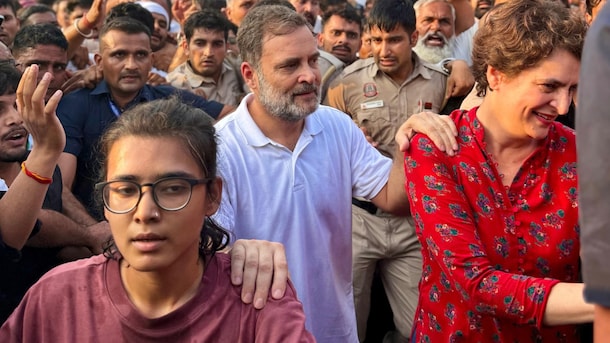
At INDIA bloc's march to Supreme Court, Rahul Gandhi placed himself a step behind two women, hands resting on their shoulders. One was his sister Priyanka. The one on his right was Neha Bora. Here's what the image means for the protest wave now, and for Rahul's politics in general.
-
Opinion | Starlink, India, And Why Elon Musk Must Know His Billionaire Tantrums Won't Work
India should neither be intimidated by Musk's global influence nor distracted by his theatrics.
-
Blog | 'Baap Da Brat': Kerala Mini Cooper Crash, And Why 'Daddy' Can't Keep Saving You
There are three things you should never underestimate in India: the power of 'jugaad', the elasticity of the law, and the confidence of a 'Baap da Brat' who believes his Papa Posh can fix absolutely anything.
-
TVS Succession Row Explained: Why Venu Srinivasan's Family Is Divided Over Wealth
TVS Family Dispute: TVS Holdings is a key entity because it owns a controlling stake in TVS Motor Company. It owns 50.26% of TVS Motor.
-
Opinion | The US Is Showing India Just How Cheap Its 'Friendship' Is
Can local talent fully replace Indian contribution? Why is the US leading in setting up Global Capability Centres in India - over 60% - and pocketing the IP?
-
Jantar Mantar Tells Time. The Clock Just Stopped On Its Time As An Iconic Protest Site
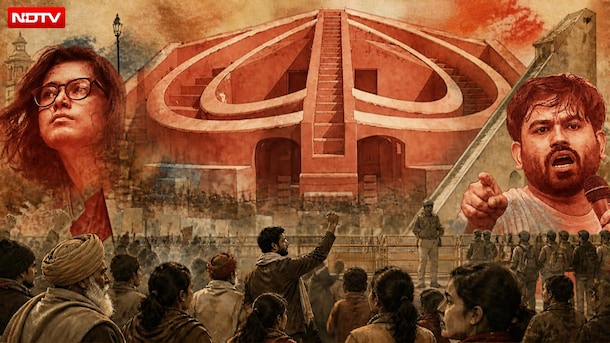
On Monday, October 12, 2026, Delhi Police denotified Jantar Mantar Road as a designated site for demonstrations. The Supreme Court had given it a nudge. Here's how history met politics on that street for decades.
-
Opinion | Saudi Airport Attack, And Why Pakistan Keeps Biting Off More Than It Can Chew
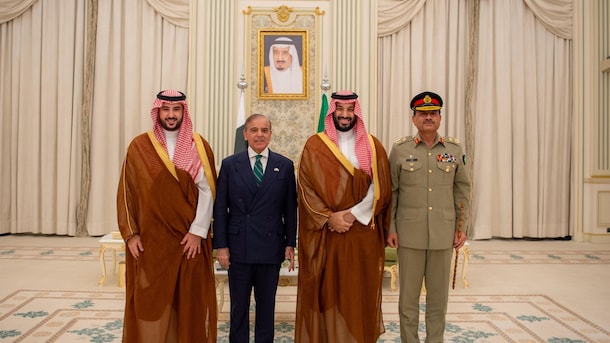
For all those who were envious of Pakistan's 'new status' as "mediator extraordinaire", here is a reality check
-
Opinion | Visa Shocks To Racist Attacks, When Did America Come To Hate Indians So?
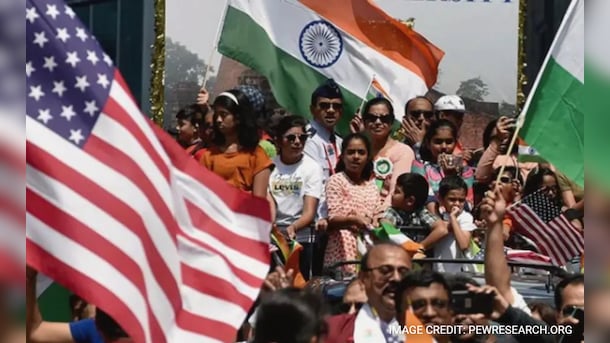
Sometimes it is about H-1B visas. Sometimes it is jobs. Sometimes it is "foreigners." Sometimes it is about temples. The language of the attack varies, but the message is consistent
-
How El Nino And Warming Oceans Could Shape Earth's Climate In 2027
From changing ocean currents to extreme weather, scientists are watching a combination of climate signals that could influence temperatures, rainfall and ecosystems in the months ahead.