Opinion | Saudi Arabia's China Turn Has Begun - After Learning Much The Hard Way
Leaning on China just makes sense for the Saudis right now. The question is, can its other great 'ally' stomach it?
As Houthis intensified their attacks on the Kingdom of Saudi Arabia this month, Saudis turned first to the US, their defence shield for decades, and then, more interestingly, to China. This kind of attack is unprecedented for the Kingdom. These are not attacks launched merely to unmask or to signal Saudi vulnerability. They have impacted the country's economic lifeline by targeting critical energy facilities. The main artery for Saudi oil exports since the closure of the Strait of Hormuz, the East-West Petroline, is now shut. The Houthis have even struck the Saudi capital, Riyadh, in an unprecedented attack. No doubt what further emboldened the Houthis is the knowledge that the decades-long war that Saudi forces waged against the Houthis starting in 2014 ended in a stalemate, requiring the UN to broker a fragile peace in 2022.
Meanwhile, even as the Houthis strike the Saudis, they have continued to gain more Yemeni territory, which includes much of Yemen's Red Sea coast from government-aligned forces. The control of Mocha and other strategic cities gives the group control over the Bab al-Mandab Strait, another key shipping lane through which 10% of all global maritime traffic passes and which has become exponentially important as the Strait of Hormuz remains dysfunctional. The Houthis are now trying to take over the Kaboub mountains, which would give them a strategic vantage point over the Red Sea coast. This advantage in asymmetrical warfare to the group, heavily backed by Iran, gives the latter added leverage in the current war, one of whose initial supporters has been Saudi Arabia.
The Mecca Pact, In Real Time
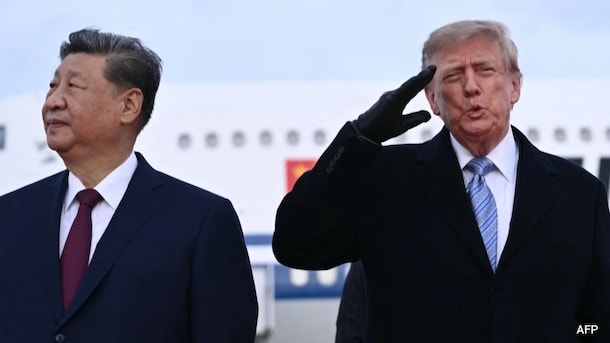
In this scenario, the Mecca Pact that was signed with such flourish in Islam's holiest city, meant to protect the Kingdom from such attacks, has been content only with condemnations of Houthi actions. And US President Donald Trump, after reportedly initially agreeing to strike the Houthis last weekend, dismissed any such action, preferring to enter into talks with the group instead.
The main reason ascribed to his U-turn was that American troops were overstretched with the war in Iran. But it would also make ample sense to squeeze out crude from global markets at such a moment when supply is already strained, leading to both demand and price surges at a time when the US is flush with Venezuelan oil and wants to sell it in global markets. It may also push the Saudis towards Israel, something the Trump administration had been working on for a long time. But the Saudis have so far steered clear of such a course.
Similarly, turning to China would also make sense for the Saudis. This would be a first, an extension of their defence diversification policy that began against the backdrop of the Arab Spring, when Gulf monarchies felt especially threatened by changes sweeping through the region, and when the perceived indifference from the administration of the then US President, Barack Obama, made them rethink their security architecture.
More importantly, China is heavily invested not just in the region but in the Kingdom itself. And this happened following the gradual withdrawal of the US from the Gulf. Over the years, China has invested heavily both in the Saudi infrastructure and energy industry. Today, the bilateral trade turnover between China and Saudi Arabia exceeds USD 108 billion annually, with China emerging as Saudi Arabia's largest trading partner, and Saudi Arabia as China's largest trading partner in the Middle East. The Chinese market remains one of the largest for Saudi crude. Meanwhile, China's total investment in infrastructure projects in Saudi Arabia amounted to USD 53.85 billion, and Beijing began aligning its Belt and Road Initiative (BRI) with Saudi Arabia's Vision 2030.
China Has A Lot To Gain Here
Moreover, having good relations with Saudi Arabia serves another important purpose for China. As the leader of the Muslim world, Saudi support was important for China in Xinjiang and for busting allegations of Chinese violations there, as well as for consolidating Gulf and Muslim support for a one-China policy.
On the other hand, Iran also banks on the Chinese market as the main destination for its sanctioned crude. The official bilateral trade between the two, as reported by Beijing, reached approximately USD 9.96 billion in 2025. But this is believed to omit over USD 31 billion in unreported Iranian crude oil exports. During all the years of sanctions till recently, China was one of the main exporters of goods and consumables to Iran, as well as invested heavily in its infrastructure, with a much-touted agreement for investments estimated at USD 400 billion for Iran.
China-Saudi defence ties have also grown, with joint naval exercises in place since 2019. Saudi Arabia is also reportedly manufacturing ballistic missiles, with US intelligence alleging that Beijing is helping Riyadh in this endeavour.
Heavily invested in both Saudi Arabia and the other Arab Gulf countries on one hand, and Iran on the other, the Chinese wanted to insulate their investments from regional tensions, prompting Beijing to play peacebroker there.
This was the main driver of a China-brokered truce between Saudi Arabia and Iran in 2023, following which both sides reestablished diplomatic ties, which had been ruptured earlier. As a result of that truce, the two nations once again posted ambassadors at their respective embassies.
China's close relations with Iran also helped them escape Houthi attacks on international shipping in the Red Sea in the wake of the Gaza war in 2023.
No doubt the Saudis want to leverage these variables in bringing China into the picture to rein in the Houthis. After all, China had also contributed to the mediation between Iran and the US with a behind-the-scenes role earlier in the war, for which Pakistan claimed credit. In any case, though, this would not be the first time that the Saudis sensed US disinterest in protecting the Kingdom's security. This war has abundantly dispelled the myth of the American guarantee.
More importantly, however, China has also invested heavily in the Yanbu port project on the Red Sea, through which the Saudi Petroline was exporting its oil after the Hormuz closure. Yanbu is the world's third-largest refining hub and has the largest oil shipping port; it also houses a major liquid handling terminal along the Red Sea. China's SINOPEC is a major stakeholder in the Yanbu refinery. Certainly then, the Chinese would be invested in insulating it from the chaos in the region, specifically from Houthi attacks, as it lies within the strike range of Houthi drones and missiles.
A Signal To Someone?
While China will most certainly not intervene militarily, it has leverage over Iran, which the Saudis would wish to exploit. Iranian Foreign Minister Abbas Araghchi's recent visit to Beijing is thought to be an outcome of Saudi appeals to China. Reuters also reported that Beijing has asked Tehran to rein in the Houthis, quoting not Chinese but Iranian sources.
A Chinese Foreign Ministry statement, meanwhile, stated, "China does not wish to see regional tensions further spill over into Yemen and the Red Sea. Escalating regional instability is not in the interests of any party...China calls for an end to actions that further complicate the situation and urges resolving issues through dialogue and negotiation".
Finally, Saudi Arabia would also like to demonstrate that it has options going beyond both the US and the Mecca Pact. Remember the Saudi refusal to renew the half-century-old pact with the US on the petrodollar? Though the Saudis recently withdrew from the mBridge project, launched to explore a cross-border payment system independent of the US dollar, it has already been trading with China in yuan, even going for a currency swap a couple of years ago.
So, while reining in the Houthis is the primary concern currently, it is quite possible that in spite of hefty US arms deals with the Kingdom, we may soon see more Saudi defence deals with China.
(The author is a senior journalist)
Disclaimer: These are the personal opinions of the author
-
Form 6 For New Voters: When A Small Change Triggered A Big Row

In July 2026, the online version of Form 6 on the ECI's ECINet portal was modified to include a new declaration.
-
Opinion | Bihar Assault, Hisar Marriage Ban: Who'll Stop The Guardians Of Indian 'Culture'?
Why exactly does the sight of a young couple seeking a bit of alone time somewhere tend to particularly provoke a certain kind of Indian men?
-
Opinion | The Trump-Xi Summit, And India's Many Worries Of Its Own
Washington and Beijing may have chosen coexistence over confrontation. For India, that could be both a relief and a warning.
-
Opinion | China Claims It Has Cut Troops At The Indian Border. But The Math Doesn't Add Up
The reduction likely has more to do with the deployment along the LAC than the total strength active in the region
-
Opinion | China Is No Longer Waiting For Trump To Set The Rules. And He Knows It
America's old diplomatic tricks with China won't work any longer. Because China has changed, and so has its ambitions.
-
Opinion | As UN Interviews Its Next Chief, The Interviewers Have Some Explaining To Do
On the panel sit governments whose wars, vetoes, and unpaid dues have helped make the organisation ineffective.
-
Opinion | Trump-Xi Meet: What China Can Give America, And What India Could Lose
If Trump can secure some of what he wants directly from Beijing, India's immediate value to Washington could change in particular areas.
-
A New 'Axis'? 87 Years After Pact Of Steel, A New European Far-Right Tie-Up
Nearly nine decades after Nazi Germany and Fascist Italy formalised their alliance, senior figures from Germany and Italy's far-right appeared together at a political rally on Sunday.
-
Opinion | 'Blackmail' Diplomacy: Why India Can't Be A Pawn In US' War On Russia
The new sanctions bill is both blackmail and hypocritical: blackmail because it seeks to change India's principled stand, and hypocritical because the US has provided exemptions to others, and itself.