Sardar Patel, And The Art Of Holding A Nation Together
A true Gandhian, he reminded his countrymen that gaining freedom from foreign rule was merely the first step; true internal Swaraj required much, much more.
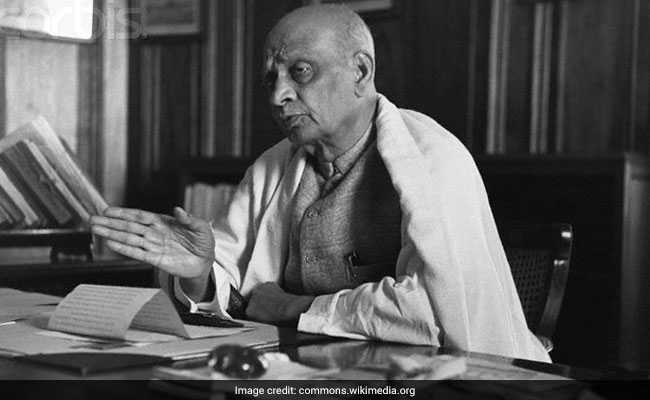
When the legendary jurist Nani Palkhivala delivered the 1992 All-India Radio Patel Memorial Lecture, he made a comparison that cuts straight to the core of modern Indian history: questioning the enduring relevance of Sardar Vallabhbhai Patel to India, he said, is like questioning the relevance of the sun to the solar system. You cannot conceive of a solar system without the sun, and you cannot conceive of modern, unified India without the Iron Man. As the nation marks the 151st birthday of Sardar Patel today (October 31), there can be no more appropriate tribute.
While history often celebrates the visionary idealism of Jawaharlal Nehru and the moral leadership of Mahatma Gandhi, it was Vallabhbhai Patel who possessed the administrative genius, unwavering resolve, and pragmatic courage required to build a functioning, sovereign state out of a fractured subcontinent. Exploring the central pillars of Patel's legacy reveals why his leadership remains the bedrock of Indian statehood.
The Making Of The 'Indian Union'
In August 1947, as the British departed, India faced an existential threat far greater than the challenges faced by any other newly-free nation. The subcontinent was fragmented into British India and over 550 princely states, covering two-thirds of the newly-independent nation's geographical area. Some sovereign rulers harboured ambitions of independence, threatening to turn the country into a chaotic chessboard of warring territories. Sardar Patel, serving as India's first Home Minister and Minister of States, accomplished a political feat unprecedented in human history. Through a masterclass in domestic diplomacy, combining patriotic appeals, patient negotiation, and the firm threat of force (he was noted for his "iron fist in a velvet glove"), Patel integrated 554 princely states into the Indian Union within months. International observers noted that Sardar Patel's unification of India rivalled and likely surpassed Otto von Bismarck's unification of Germany or Mazzini's of Italy. Soviet leader Nikita Khrushchev later expressed astonishment that India had managed to liquidate the princely states without liquidating the princes themselves.
Patel recognised that territorial integration meant little without a strong administrative apparatus to hold the nation together. While many nationalist leaders viewed the British-era Indian Civil Service (ICS) with hostility as an instrument of colonial repression, Patel understood its operational necessity. He conceived and built the modern Indian Administrative Service (IAS) and Indian Police Service (IPS) on the ICS model. Patel famously referred to the permanent civil services as the "steel frame" of India, institutions that would preserve rule of law, administrative continuity, and national stability regardless of political shifts. Crucially, Patel governed his officers with trust and respect. He shielded bureaucrats who acted in good faith from political interference, establishing a precedent that administrative integrity must never be sacrificed at the altar of political convenience.
Patel's political philosophy was rooted in firm, uncompromising pragmatism. He was deeply devoted to national unity and fiercely opposed to religious extremism of any kind. When communal tensions ran high during Partition, Patel took decisive action: he banned the Rashtriya Swayamsevak Sangh (RSS) following Gandhiji's assassination to curb fanatical violence, while simultaneously protecting law-abiding citizens across communities.
The Partition Days
As Home Minister, Patel dealt with the communal disturbances that accompanied Partition firmly and even-handedly. Concerned that the local security forces might be inflamed by the prevailing communal passions, he transferred army units from Poona and Madras to restore order in Delhi. When violence and rioting still broke out against the Muslims in Delhi in 1947, Patel immediately and effectively moved to ensure their protection, herding 10,000 in the most vulnerable areas to the security of the Red Fort. Patel also made it a point to send a reassuring signal to the Muslim community by attending prayers at the famous Nizamuddin Dargah to convey a clear message that Muslims and their faith belonged unquestionably on the soil of India. Patel went to the border town of Amritsar, where there were attacks on Muslims fleeing to the new Islamic state of Pakistan, and pleaded with Hindu and Sikh mobs to stop victimizing Muslim refugees. In each of these cases, Patel succeeded - and there are literally tens of thousands of people who are alive today because of his interventions.
Patel firmly rejected all forms of religious and regional separatism. When factions advocated for sectarian states or separate electorates, Patel warned that dividing the nation along communal lines would transform India into a "Pagalistan", a land of lunatics. Similarly, he strongly opposed the creation of linguistic states during his lifetime, warning that regional chauvinism would erode the shared identity of being, above all else, Indians.
Economics For The People
In economic matters, Patel stood out among his contemporaries for his grounded realism. While the prevailing ideological current leaned toward European-style state socialism and sweeping nationalisation, Patel advocated for productivity and wealth creation first. He famously remarked to a socialist leader seeking the immediate redistribution of wealth that if a tycoon's fortune were split among India's entire population, each citizen would receive just a few coins, an empty gesture that would solve nothing. Patel argued: "The maxim should be: produce and then distribute equitably". Patel understood that state control without capacity breeds inefficiency: “how are we to run nationalised industries”, he asked presciently, “if we cannot run our ordinary administration?". To protect labour rights while safeguarding industrial output, he helped establish the Indian National Trade Union Congress (INTUC), channelling union power into constructive negotiation rather than economically destructive strikes.
For Patel, a government's moral authority rested on its trustworthiness. He believed that a sovereign state must honour its solemn promises. When negotiating the accession of the princely states, he guaranteed privy purses under Article 291 of the Constitution and assured service pensions under Article 314. During the Constituent Assembly debates, Patel passionately defended these guarantees against politicians who wanted to renege on promises once power was consolidated: "Learn to stand upon your plighted word... Have morals no place in a new parliament? Is that how we are going to begin our new freedom?" Though subsequent governments deleted these constitutional articles decades after his death, Patel's defence of legal ethics remains a timeless reminder that constitutionalism demands honour and good faith.
Perhaps the rarest trait Patel possessed was his willingness to tell the public hard truths. He refused to flatter the masses or trade in populist promises. In the final months of his life in 1950, Patel expressed deep disillusionment with the moral decline entering Indian politics, warning that internal jealousy, power-hunting, and factionalism posed a greater threat to India than any external enemy. A true Gandhian, he reminded his countrymen that gaining freedom from foreign rule was merely the first step; true internal Swaraj required self-discipline, social reform, the eradication of untouchability, and a shared moral commitment to the nation.
Sardar Vallabhbhai Patel was that rare historical figure, a revolutionary who transitioned seamlessly into a master statesman. He combined the iron willpower of an organisational commander with the emotional restraint of a true Karma Yogi. Today, as India navigates complex global challenges, Patel's core principles - unwavering national unity, administrative excellence, economic realism, and principled governance - stand as an enduring blueprint for the republic. It is a combination that few political leaders in our land even come close to embodying.
(Shashi Tharoor has been a Member of Parliament from Thiruvananthapuram, Kerala, since 2009. He is a celebrated author and a former diplomat)
Disclaimer: These are the personal opinions of the author
-
BJP Leader's Singer Wife, A Kabir Bhajan Gone Viral, And The 'Jantar Mantar' That Wasn't

A video of Sivasri Skandaprasad's singing performance went viral, interpreted as a dig at protests at Delhi's Jantar Mantar. What she's singing is actually attributed to the saint-poet Kabir, and he did not really mean that particular "jantar mantar". He meant something far more profound.
-
Opinion | How India Is Making Its Stock Market An Expensive Place To Invest
FPIs sold Rs 1.66 lakh crore of Indian equities in 2025 and a record Rs 3.08 lakh crore in 2026 through October 12. Foreign ownership of the Indian market is at a 15-year low
-
Jail Is No Bar: How Gangsters Call The Shots From Inside Prisons
Jail can become a safe haven from enemies, a recruitment ground for fresh gang members and, in some cases, a command centre for criminal operations
-
From King Edward III To Neha Bora, A 1361 Law Lives On In 'Peace Bonds': NDTV Explains
CJP leaders Abhijeet Dipke, Saurav Das, and Ashutosh Ranka signed peace bonds; two of them even faced jail over an alleged breach, while AISA's Neha Bora questioned such a bond's very logic. Here's what a peace bond is, and what the questions are.
-
Air Force Golf Course Near PM House Closed. How This Land Has Seen Many Turns Of History
The Air Force Sports Complex, which includes the golf course, is the latest property near the Prime Minister's residence set to be taken back this year, as the land is owned by ministries.
-
Opinion | How A Poland 'Experiment' Could Change India's Defence Industry
Europe is spending billions on arms in a historic rearmament drive. Indian firms can cash in. But there's a catch
-
Opinion | The Muslim World Is Seeing An Unexpected 'Experiment' - In Kazakhstan
The country has a long history of using mediation to mitigate conflict; now, it has added another, much-wanted dimension to it.
-
"OpenAI Has Been Very Bad For The World": Ex-Google Researcher
Alex Turner, who quit Google DeepMind over its Pentagon deal, says no single lab can fix the AI threats, and that the US and China will have to coordinate.