Opinion | Sajjan Kumar, Congress, And How To Keep Messing Up An 'Apology'
A sitting Congress MP has termed Sajjan Kumar's death an "irreparable loss", calling him a man whose bond with the people of Delhi was "an example". This was a tribute, delivered in full sentences, to a convicted killer of Sikhs.
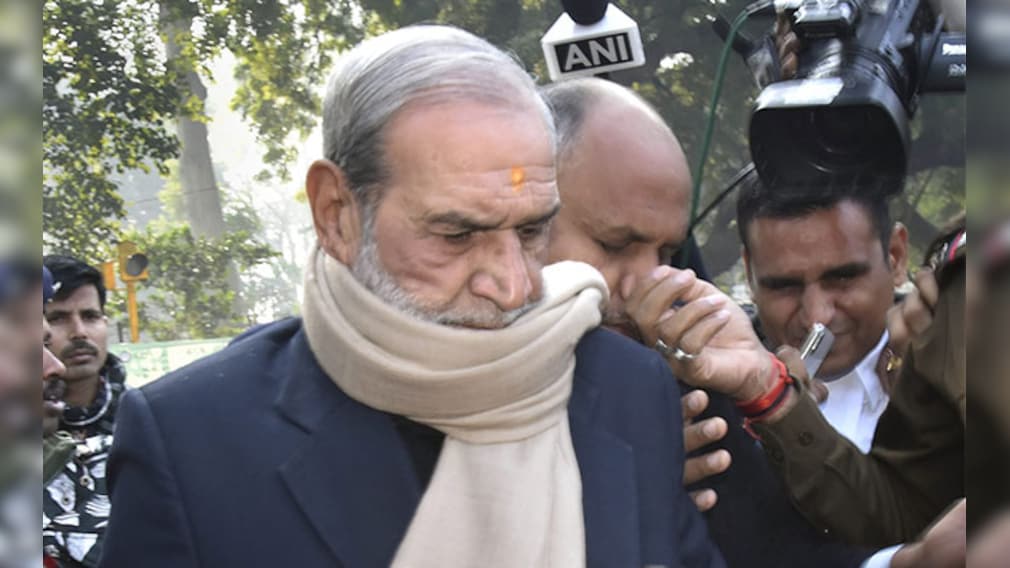
A courtroom in India once wrote something that should have changed the country forever. In December 2018, Justices S Muralidhar and Vinod Goel of the Delhi High Court upheld Sajjan Kumar's conviction for engineering the murder of Sikhs in the aftermath of the assassination of the then Prime Minister, Indira Gandhi, in 1984. Paragraph 367.6 of that order reads like a warning flare shot into the future.
The judges counted 2,733 Sikhs slaughtered in Delhi alone, nearly 3,350 across the country per official data, and named a pattern repeated from Mumbai in 1993 to Gujarat in 2002, Kandhamal in 2008, and Muzaffarnagar in 2013. Dominant political actors organised every mob in that list, the bench wrote, and law enforcement stepped aside every single time. India needed a law against genocide and crimes against humanity urgently, the judges said, or the killers of tomorrow would simply wait out the decades until memory grew tired.
Eight years later, in August 2026, the man that judgment convicted died in prison. A sitting Congress MP, Deepender Hooda, stood at the fresh grave of that verdict and termed Sajjan Kumar's death an "irreparable loss", calling him a man whose bond with the people of Delhi was "an example".
This was a tribute, delivered in full sentences, to a convicted killer of Sikhs. If that wasn't enough, the Delhi Pradesh Congress Committee's official X handle mourned Sajjan Kumar as 'punya atma', or a "noble soul".
वरिष्ठ कांग्रेस नेता एवं पूर्व सांसद श्री सज्जन कुमार जी के निधन का समाचार अत्यंत दुःखद है।
— Delhi Congress (@INCDelhi) August 20, 2026
ईश्वर पुण्यात्मा को अपने श्रीचरणों में स्थान प्रदान करें तथा शोक संतप्त परिवारजनों को इस कठिन घड़ी में धैर्य और संबल प्रदान करें।
भावपूर्ण श्रद्धांजलि। pic.twitter.com/Ngzk9nwdJq
The wall the High Court asked India to build against political forgiveness for mass murder was climbed over by members of the very party that produced the murderer. But the Congress has practised this particular climb for decades. Jagdish Tytler carried similar accusations of leading mobs through the city's neighbourhoods in 1984. He denies wrongdoing, but the accusations eventually produced a CBI chargesheet in 2023.
Congress had named him a permanent invitee to its Delhi Pradesh committee in 2021 anyway, drawing the same charge from opponents that the party was rubbing salt into wounds it claimed to regret.
In 2019, Sam Pitroda, a close aide of the Gandhi family, burned a phrase into the community's memory when he waved away the massacre with three words: "hua to hua" ("it happened, so what").
The political homage to Sajjan Kumar this year completes a set.
Different Situations, 1 Continuous Gesture
Charanjit Singh Channi, Congress's own former Punjab Chief Minister, named the gesture for what it was. In a video that spread through Sikh households like a struck match, he said Sajjan Kumar was "a killer of the Sikh community, a traitor", and that anyone calling him a role model should "mind their tongue".
Serving two life sentences for crimes against the Sikh community, Sajjan Kumar died in prison—a dark reminder of an individual who disgraced humanity and justice. pic.twitter.com/MP6a6x4h7z
— Charanjit Singh Channi (@CHARANJITCHANNI) August 22, 2026
Outside Rahul Gandhi's New Delhi residence, families of the 1984 dead gathered behind police barricades and demanded the party find one voice instead of several. Congress MP Gurjeet Singh Aujla rushed to distance the party from Hooda, who later regretted his remarks on Sajjan Kumar that had triggered a political storm.
The drill was the same. Pitroda, too, had apologised for his infamous "hua to hua" remarks seven years ago. Flashback to 2005, when Manmohan Singh, as Prime Minister, bowed his head in Parliament and confessed that 1984 was "a negation of the concept of nationhood".
What A Real Apology Sounds Like
Compare that with Kevin Rudd's 2008 apology to Australia's aboriginal peoples, delivered as an act of Parliament itself, "we say sorry", spoken in the voice of an entire nation.
Manmohan Singh's apology stayed a lonely "I".
The political establishment in the world's largest democracy has yet to produce a "We" with full intellectual honesty.
And that explains why every few years, someone from the political elite trips over the loose stones of shrines otherwise built in memory of the 1984 dead.
Rahul Gandhi's Golden Temple Visit
Here is the part that complicates the fury into something more human. Three years ago, Rahul Gandhi became the first Gandhi to kneel at Sri Darbar Sahib (Golden Temple) as a sewadar instead of a dignitary or even a visiting devotee.
He arrived with his sleeves rolled up, chopping vegetables in the langar hall, washing the steel utensils of strangers, cleaning the railings with a plain cloth, carrying the palki on his own shoulder.
Photographs of a Gandhi scrubbing dishes at the Golden Temple put a face, and a pair of hands, where there had only been a surname tied to Operation Bluestar. A visible section of urban Sikhs, in Delhi, in Mumbai, in other cities, in the gurdwaras of Punjab, warmed to him.
Part of that warmth is reactive, born of a sense that the Bharatiya Janata Party's (BJP) online ecosystem turned the 2020-21 farm agitation into a season of slurs against ordinary protesting farmers, a taint that the ruling party's own outreach, the state-level commemorations of Sikh religious events, gurdwara visits, ministerial gestures, have struggled to shake off.
The Sajjan Kumar Test
Affection built on symbolism can still crack against substance, and the tribute to Sajjan Kumar is exactly that kind of test. The honest question is whether Sikh warmth for Rahul Gandhi is love earned or love assumed, a blank cheque cashed every election cycle.
The harder question is whether 1984 has turned into political currency, a hashtag summoned on cue, #DoNotForget1984, wielded by activists who rarely put Kanpur's dead in the same sentence as Delhi's, wielded by Congress leaders who apologise loudest when the cameras are already rolling.
Congress won Punjab twice this century, in 2002 and again in 2017, on the strength of the Jat Sikh farmer choosing its symbol with their own hands at the booth. Maybe what actually survives here is stranger than forgiveness and stranger than forgetting, a community capable of voting for a party's candidate on Tuesday and mourning its own dead on Wednesday, the way a mother keeps two photographs on the same shelf, one of a son she lost and one of a son who still calls.
Congress perhaps reads this arithmetic better than the people accusing it. That is the part that should actually detonate. The Sajjan Kumar tribute was a party's oldest habit: wearing the costume of an accident, worn smooth by forty-two years of practice.
Sajjan Kumar is no more. The genocide law the High Court demanded is still a blank page. And the Sikh who forgives Congress at the polling station every few years is the same Sikh the Congress is betting will forgive it one funeral euology at a time, right up until the day that bet finally fails.
(The writer is a career journalist currently serving as Communications and Advocacy Director at UNITED SIKHS in the UK, a charity registered in England and Wales)
Disclaimer: These are the personal opinions of the author
-
How El Nino And Warming Oceans Could Shape Earth's Climate In 2027

From changing ocean currents to extreme weather, scientists are watching a combination of climate signals that could influence temperatures, rainfall and ecosystems in the months ahead.
-
Blog | Nana Patekar, And The Sharp, Lasting Sting Of His 'Plain-Speak'
"Subah ghar se niklo, bheed ka hissa bano..." Nana Patekar's characters often spoke with the bluntness of men who had little patience for pretence. Just like Nana himself.
-
Opinion | Pakistan's Saudi Pact Is Now Entering Dangerous Territory - As Expected
On October 5, the ministers of the pact's member states met in Riyadh for an emergency session and agreed to move to a 'practical implementation' of the defence commitments.
-
Hindu ka khoon-Musalman ka khoon? Nana Patekar's Krantiveer Questions Still Hang
Krantiveer was released in 1994, after the communal violence that had scarred Bombay and other parts of India. Nana's voice carried the pain of every riot, every broken home
-
'SIR' In America Too? India Cue In Trump's Mass Citizenship Check For Voters
Having got the nod from the US Supreme Court, Donald Trump's push for a voter roll "cleanup" puts citizenship at its centre. Arguments for India's Special Intensive Revision (SIR) have also centred on "illegal immigrants". Data remains scarce. Let's map the similarities and the nuance.
-
Opinion | Gyanesh Kumar Row May Be Doing Something Unthinkable For India's 'Lost' Opposition
There seems to be a greater willingness within the Opposition to accept Rahul Gandhi's leadership, at least on the SIR controversy. But the INDIA bloc itself seems to be undergoing a strange renewal.
-
Opinion | flydubai Hijack, And How Syria's Descent Into 'Jihadism' Has Now Become Everyone's Problem
Al Hammimi, the Omani pilot who tried to crash a plane with 175 passengers on September 30, is a symptom of Syria's long-raging sectarian and extremist fire that has now reached far beyond Syria's borders.
-
"Feel Deeply Abandoned By World": Tales Of Loss And Separation From Gaza
For Gazans, who have lived through the horrors of the last three years, life means a continuing encounter with impermanence and the repeated discovery that a home, a friendship, a livelihood, a familiar life and even one's former self can become things that exist only in memory.
-
Opinion | Gurugram Techie Suicide: Why Does A Woman Asking For Alimony Enrage Us So?
Social media, with its spectacular disregard for facts, turns one man's tragedy into an indictment of all women. The recent death of 28-year-old techie has become precisely that.