Opinion | Rubio Is In India, But Trump's America Just Launched Its Sharpest Attack On Indian Immigrants
Thousands of Indians who spent years following American laws and paying taxes in the US may now face the prospect of leaving the country during processing with no certainty of return timelines.
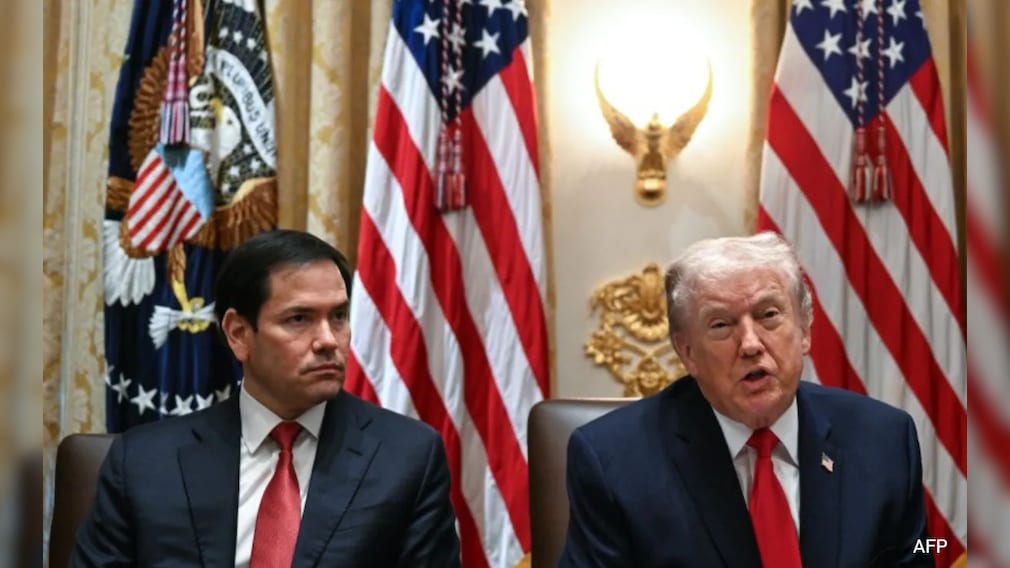
As US Secretary of State Marco Rubio arrives in India for the Quad meeting and strategic consultations, the Trump administration is preparing one of the sharpest reversals of long-standing American immigration policy in decades.
At the centre of this shift is a new USCIS approach that seeks to restrict adjustment of status inside the United States and push many legal immigrants to complete green card processing from abroad. This is not merely an administrative change. It overturns the logic Congress itself built into the American immigration system.
For decades, US law allowed legally admitted migrants to transition from temporary visas to permanent residency while remaining inside the country. Congress deliberately created categories such as the H-1B visa around the idea of "dual intent", where skilled workers could arrive temporarily while eventually seeking permanent settlement.
That framework helped build modern American technological dominance.
Indian engineers, doctors, researchers, entrepreneurs and students became central to the US economy under exactly this system. Silicon Valley, American hospitals, research universities and technology firms absorbed Indian talent at every level.
Now, that same pipeline is being politically targeted.
The implications for Indians are enormous because Indians dominate many high-skilled visa categories and already face massive green card backlogs unique to their nationality. Thousands of Indian professionals who spent years following American laws, paying taxes and building lives in the US may now face the prospect of leaving the country during processing with no certainty of return timelines.
Families could be split across continents. Careers built over decades could collapse overnight. Children raised in the United States may suddenly face instability because their parents entered a system whose rules are now being rewritten midway.
This marks a major transformation in American politics.
The Trump movement no longer limits immigration politics to illegal border crossings. Legal immigration itself is increasingly becoming the target. Student visas, employment-based migration, family sponsorship and status adjustment are now all drawn into the same political battle.
Indians sit directly in the firing line because they represent one of the most visible and successful immigrant communities in America's high-skilled sectors.
The racial undertones have become increasingly difficult to ignore. Across sections of the MAGA ecosystem, Indian professionals are routinely portrayed as people "taking over tech", replacing American workers or changing the cultural balance of the country. Social media platforms are flooded with openly hostile narratives directed specifically at Indian migrants and Indian-Americans. The striking aspect is that many of these migrants represent exactly the profile American conservatives once claimed to support: educated, economically productive, low-crime and legally compliant.
The hostility has, therefore, moved beyond questions of legality. It increasingly reflects demographic anxiety and identity politics.
Bots, outrage algorithms and coordinated information warfare networks amplify this sentiment daily. Immigration outrage generates clicks, political engagement and emotional mobilisation. Complex immigration law gets reduced into viral slogans designed to trigger resentment.
The result is a digital ecosystem where hostility towards Indian professionals has become politically useful.
The political calculation behind this shift is straightforward.
Trump and his allies see immigration as the most emotionally powerful issue available before the midterms. Expanding the target from illegal immigration to legal immigration broadens the culture war and creates a permanent atmosphere of grievance and anger.
The strategy also helps redirect public frustration over inflation, economic uncertainty and governance failures toward immigrants and administrative "loopholes." The distinction between legal and illegal immigration increasingly disappears inside this political messaging.
For India, this is no longer a peripheral American domestic debate.
Millions of Indian families are tied directly to the US educational and professional system. Indian middle-class aspirations, technology networks and global career pathways have long depended on the assumption that the United States remained open to legal skilled migration.
Washington is now signalling something very different.
As Rubio speaks in India about strategic partnership, Indo-Pacific cooperation and shared democratic values, New Delhi faces an uncomfortable reality. Indian talent remains essential to the American economy while Indian migrants increasingly face political hostility inside the United States.
That contradiction now sits at the centre of the India-US relationship.
(
Disclaimer: These are the personal opinions of the author
-
How Urban India's Weekend Obsession Became A $50 Million Market

Industry estimates peg India's pickleball market at nearly Rs 7,500 crore by 2030. Just two years ago, the sport barely existed outside niche circles.
-
Opinion | Degrees, SUVs, Gold: Why India's Most 'Qualified' Men Often Demand The Steepest Dowries
Education, ironically, is more of an enabler of the practice than a hindrance, per a 2023 study quoted by the BBC
-
Strait Of Hormuz Shutdown, Oil Supply Crisis Triggers 'Red Zone' Warning
The IEA has already issued warnings about 'the most severe disruption' ever; in April agency chief Fatih Birol told CNBC: "We are facing the biggest energy security threat in history."
-
Opinion | India's Oil Reserves: How Long Can They Last As Iran War Continues?
It may be recalled that at the start of the war, India had around 74 days of oil reserves. On May 13, after completion of 74 days, India still had 60 days of oil reserves.
-
Opinion: TVK Dismantles Dravidian Stereotypes Without Disturbing Tamil Political Positions
A young Brahmin man, with or without any political background, winning a seat in Tamil Nadu and subsequently becoming a minister, does not fit the established template of Dravidian politics.
-
Opinion | Twisha Sharma And India's Deadly Culture Of 'Adjusting A Little More'
A daughter's desperate cry for help is responded to with "adjust", "compromise", or "save the marriage". Her parents even promise to give more dowry, but refuse to bring her back. Girls are repeatedly sent back into abusive homes till one fine day, they are dead.
-
Opinion | Why India's 'Cockroach' Rebellion Should Terrify The Opposition
The Opposition will make the mistake of thinking that this 'cockroach' moment is about anti-BJP hate. It's not. It's about its own failings.
-
Opinion | Unmarked Vans, 'OMR' Tricks, 'Solver-For-Hires': The Dark Underbelly Of Multi-Crore NEET Scams
Beneath the answer sheets and OMR bubbles, beneath the invigilators and sealed envelopes, lies a system so fragile and so compromised that it has become a multi-crore auction.
-
Opinion | Twisha Sharma And The Case Of The Ever-Innocent Indian Husband
Within 72 hours of Twisha's death, media narrative had run amok: "erratic behaviour", "depression", "drugs". None of it was ever substantiated in a chargesheet. That was never the point.
-
5 Seats, 2 Ministers: Congress' Canny Tamil Nadu Play Snaps 59-Year Drought
The Congress ends its 59-year absence from the Tamil Nadu cabinet after two leaders join Chief Minister Joseph Vijays government. But what led to this moment after the party won just five seats in the April 2026 election?