Opinion | Rs 75-Lakh Bounty, New Jaish Base, And The Case Of Pak's Ever-Missing' Terrorist
Pak's yearly act is back: finding Masood Azhar. But there are other questions FATF must be asking next month as it meets
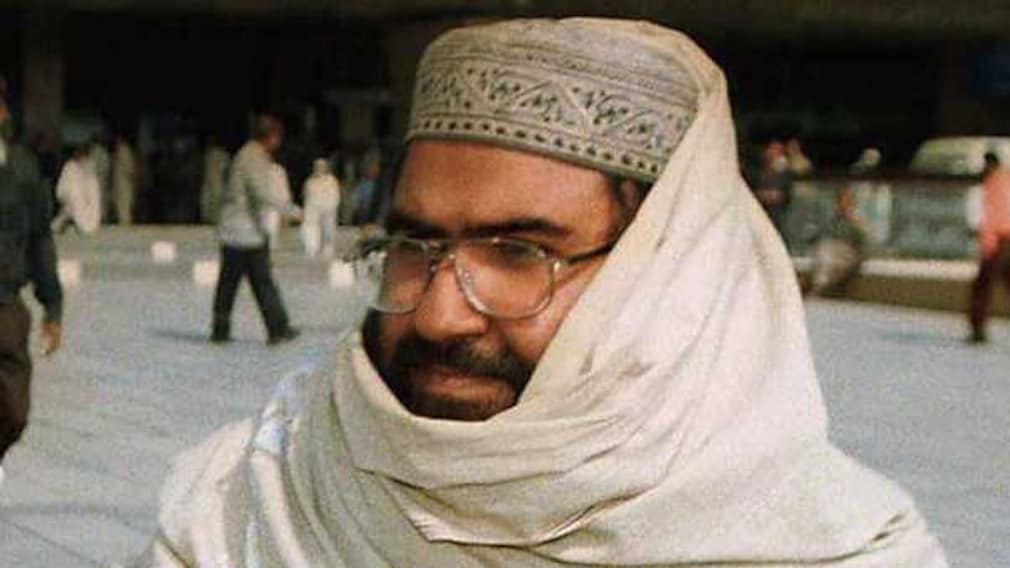
It's all rather hilarious at one level, even while being deadly serious on another. A few days ago, Pakistan published a notification increasing the bounty on Masood Azhar, head of the Jaish-e-Mohammed (JeM), from about PKR 50 lakh to 75 lakh. That's not some inflation-accounting; it comes ahead of a meeting of the Financial Action Task Force (FATF) next month. That international body of 40 members has the power to decide whether the Pakistani financial system has been cleaned up or not. In 2023, it let Rawalpindi off with a slew of actionable points. This time, the idea is to convince them that Rawalpindi is keen to up the ante in its so-called "search" for the elusive Azhar.

(The sprawling Markaz Subhanallah complex, badly damaged in India's precision strikes during Operation Sindoor last year, has now been extensively rebuilt)
The Whole Jaish 'Special'
Much has been written about the 'Red Book' brought out by the Federal Investigative Agency (FIA), which details the various terrorists it supposedly intends to act against, including over 17 people who were involved in the Mumbai terror attack. Pakistan, which was under President Asif Ali Zardari and Prime Minister Youssef Gillani then, did not deny that 'elements' from the country were involved in the heinous Mumbai attacks. In fact, this was confirmed by the government of India at the time. In fact, President Zardari even offered - under strong British pressure - to send the Inter-Services Intelligence (ISI) Chief, Lt Gen Shuja Pasha, to India to help. Pasha himself seemed ready to share intelligence, amid reports of a possible second attack on India. Eventually, however, nothing came of this, and Pasha's visit was turned down by the military (which was under General Ashfaq Parvez Kayani at the time). Shortly thereafter, Zardari himself lost his job.
But here's the curious thing. While India did call out Jaish as one of the planners, Pakistan denied that completely. A rather detailed investigation by a noted police officer, Tariq Khosa, then the Director General of the FIA, highlighted the actions of various persons in Lashkar, but nothing on Jaish. Azhar appeared to have been 'arrested' in Bahawalpur in 2009, but eventually, he seemed to disappear from the investigation entirely, even being dropped from the Indian chargesheet. But then, Azhar had long ago mastered the art of melting away into the darkness, even when he seemed to have friends in the highest places.
The Azhar Story
Consider this: Azhar was first sighted in Kashmir in the early 1990s. Involved in the deadly attacks in the Valley, he was eventually arrested. That stirred a hornet's nest in Pakistan intelligence circles.
In 1995, a huge operation was launched that saw the kidnapping of six foreign tourists. The aim was to free Azhar. Of those six people, only one survived; one was beheaded, and the rest were never seen again. But even these gruesome killings couldn't deliver the Jaish Azhar. So then, there was the Kandahar hijacking three years down the line. That shook the nation, and Azhar walked out. He got a hero's welcome back home and started Jaish-e-Mohammed, with its massive headquarters in Bahawalpur. Every taxi, auto, or grocery guy knew what it was. And so did the then US Ambassador, who, in a November 17, 2006, meeting with Foreign Secretary Riaz Khan, pointed out that the television solicitations of Al Rashid, a Jaish front, for Zakat donations, meat sales, and other public activities for fund-raising had continued despite the group being designated a terrorist organisation after 9/11. He also noted Federal Minister of Information Muhammad Ali Durrani's participation in the activities of yet another front, the Al Akhtar Trust, during a Ramadan event, and a declaration by a Parliamentary Secretary of the Defence Ministry that he was 'proud' to extend support to jihadi organisations.
In other words, the Jaish and the level of support it enjoyed were both common knowledge. Then came a series of attacks by the group, which culminated in the horrific Pulwama suicide attack that killed some 40 Indian paramilitary forces. That led to the Balakote air attack against Pakistan, and, in 2019, the designation of Azhar in the United Nations Security Council - as China withdrew its objections - though with the caveat that the listing had no reference whatsoever to Pulwama.
The listing and the strikes led to a few shifts. First, Azhar again disappeared from sight; second, a number of new 'secular' fronts opened up in Kashmir. For the Jaish, it was the People's Anti-Fascist Front (PAFF), while the Lashkar got its own offshoot, The Resistance Front (TRF). It seemed that Beijing preferred that the terrorists it protected be delinked from religion.
Then came the massacre at Pahalgam, and the retaliation, Operation Sindoor. Records now indicate that the airstrike on Bahawalpur's Markaz Subhanallah killed at least 10 family members of Azhar, including his sister and her husband, his nephew and his wife, another niece, and five children of his family. Masood was clearly alive, while there remains some doubt as to whether his brother was killed. So, when Pakistan now ups the ante on Masood and declares that he has fled to Afghanistan - where the Taliban are highly unlikely to spare him - it is possible that he is either dead or deep in hiding. Alive and kicking, the man would be a political embarrassment to the 'establishment', especially as the FATF meets.
The Jaish Rises From The Ashes - Literally
But as always in Pakistan, nothing is what it seems. While the satellite images released after Operation Sindoor indicated that the Jaish headquarters had been badly hit, it rose again like a malign phoenix. Extensive footage procured by a television network showed the Markaz Subhanallah not just rebuilt, but rebuilt better than ever, with expensive marble work and residential complexes restored to new glory. What was disturbing, though unsurprising, was the allegation that the Pakistani establishment provided PKR 25 crore to JeM through cash instalments. Of that amount, approximately PKR 11 crore was reportedly allocated for rebuilding the central hall.
That, among other things, is what the FATF should examine, keeping in mind that the organisation had put the country off the 'grey list' primarily based on claims of 'significant progress' in implementing 34 action plan items linked to terrorist financing and anti-money laundering clauses, and the assertion that it "demonstrated that terrorist financing investigations and prosecutions target senior leaders and commanders of United Nations' designated terrorist groups. That was 2022-2023. Since then, clearly a lot of water has flown under that bridge.
The Devil In The Details
The forthcoming FATF meet will thus have to mull over not just how this 'Markaz' was built so lavishly, but also how the Jaish had the money to host a huge rally on February 5 last year, which included hundreds of cadres of its own, and some from Hamas as well. That connection goes back at least two years, and Hamas itself is unlikely to align itself with an organisation whose funds have disappeared.
Then there is the fact that the funerals of those killed in the Indian strikes were attended by army and high-level police officials, including a Lieutenant-General and a Major General. True, the FATF doesn't technically look at the terror sponsorship aspect, and its remit will be limited to where terrorist funds are coming from. But if it can be proved that the 'establishment' is indeed paying, even if for just funeral expenses, that matters enough.
For Pakistan, the FATF is crucial. It is not just the precarious nature of its economy - which is almost permanently teetering on the edge of a precipice - it is that a 'grey listing', which only actually means that a group is under scrutiny and isn't barred from carrying out international transactions, will have an inevitable effect on banks overall, particularly the International Monetary Fund (IMF), from whom the next tranche of loan of USD 7 billion is due this month. This when the IMF already has concerns about the ability of the country to generate revenue.
Pakistan may conclude that it has a distinct advantage, in that most countries don't care very much about terrorism for now. That is somewhat true. Given the mayhem and violence of two ongoing wars, a terrorist group's actions may pale in comparison. But here's the thing: the FATF is not really about terrorism. It is about the safety and security of the international financial system, and the deleterious effects of terrorist funding under jihadis or other mala fide actors, such as their patrons. Any threat there, and most major countries will close ranks. That includes China. So yes, Pakistani bankers will be chewing their nails. The Army, perhaps not so much. They've always been the ones that get away.
(Tara Kartha is a former Director, National Security Council Secretariat)
Disclaimer: These are the personal opinions of the author
-
For Years, Saudi Saw Houthis As Yemen's Problem. Then, A Knock On The Door

Actual fighting between the Houthis and Saudi Arabia began late in the overall timeline of the conflict that now involves powerful belligerents
-
Lal Topi, Blue T-Shirt: Akhilesh Yadav's 'PDA' For Blue Has A Coded Message
The message is clear: the Samajwadi Party wants to talk to voters beyond its traditional Yadav-Muslim support base, particularly to Dalits.
-
The Day 600 Men Lay Siege To Islam's Holiest Site And How They Were Gassed Out
Nearly 47 years ago, on November 20, 1979, the Grand Mosque itself was seized by an armed group in one of the most extraordinary episodes in modern Saudi history.
-
New UPI Charges: If Digital Payments Save Money, Why Charge For Them Now?
UPI Payments Free For Years: The government has subsidised UPI adoption for years. Official figures show thousands of crores in payouts over years.
-
Opinion | Sydney Sweeney And The Obsession With Asking Sportswomen To 'Take The Clothes Off'
There is a world of difference between an athlete choosing to be sexy and an advertiser deciding that sex is the most interesting thing about her
-
Opinion | The 'AIPC' Was Once Congress' Boldest Idea. What Happened To It?
Tharoor, to Chakravarti, to Yaskhi now, the fate of a Congress 'experiment' that started in 2017 will tell you a lot
-
Woman Biker Hit, Air Force Veteran Attacked: The Lawlessness In Gurugram
What gives confidence to some elements in Gurugram to break the law again and again in full public view and on camera?
-
Opinion | When The Feed Braves The Flood
NDTV drops the 24x7 and stakes its next chapter on presence as it inaugurates a new identity