Opinion | Why Rahul Gandhi Keeps Making The Same 'Communication' Mistake
The Congress leader suffers from a strange paradox: always heard, but rarely followed.
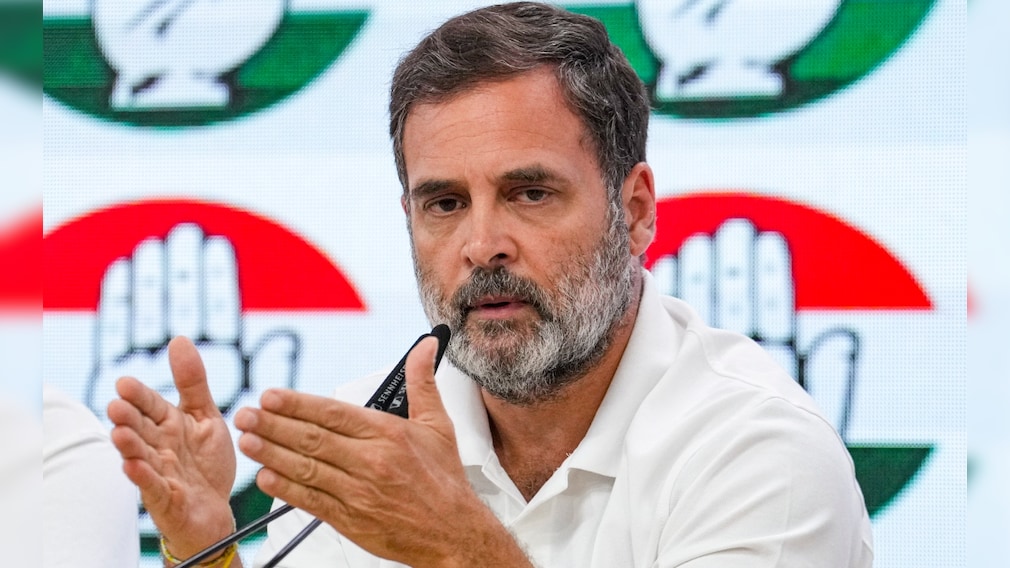
Rahul Gandhi's press conference on July 29 had all the familiar elements. There was a large screen, photographic evidence, an identified opponent, an emphatic conclusion, and a leader of the Opposition pacing through his argument as though presenting the closing submission in a criminal trial.
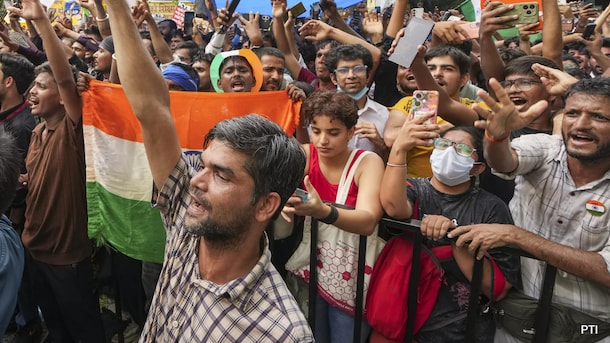
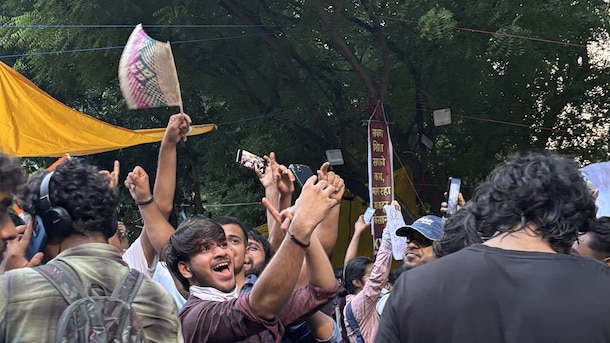
The immediate context was grave. Young protesters associated with the Cockroach Janta Party (CJP) had alleged that excessive force, including pellet guns, lathis, shock batons, and tear gas, was used during the July 20 protests in Delhi. Gandhi said he had wanted to raise the matter fully in Parliament but had been prevented from doing so. He then presented two possibilities: either Home Minister Amit Shah knew what the Delhi Police were doing, in which case he was responsible, or he did not know, in which case he was incompetent.
"In either case, he has to go," Gandhi declared. He added that he was "not going to let him get away with it". Behind him, Shah's photograph filled the screen.
It was vintage Rahul Gandhi: assertive, accusatory, bilingual, unscripted. Yet, it was also a revealing demonstration of why his press conferences attract attention without always expanding his constituency. Gandhi is at his most persuasive when he appears to be asking questions. He is considerably less persuasive when he gives the impression that he has already conducted the investigation, identified the culprit, and pronounced the sentence.
The Moment He Nearly Missed
Gandhi has repeatedly spoken about unemployment, paper leaks, the commercialisation of education, and the anxiety facing young Indians. He held interactions in Kota and Dehradun before the Delhi mobilisation. Yet, when the CJP protests exploded, the Congress found itself following rather than leading.
Nonetheless, the party's subsequent response was energetic. Rahul and Priyanka Gandhi met injured protesters at Ram Manohar Lohia Hospital. Congress volunteers distributed food and water. Its legal team offered assistance to those arrested or detained. Gandhi then led a sit-in near the Prime Minister's residence, where he and other Opposition leaders were removed by the police. The visual was powerful. Gandhi was no longer merely commenting on youth anger from behind a podium. He had placed himself in the path of the state. He deserves credit for that.
But an uncomfortable fact remained. The protests belonged to the students.
When the government eventually entered negotiations, it spoke directly with the CJP. The agitation was withdrawn after Education Minister Dharmendra Pradhan's resignation and assurances on other demands. The Congress celebrated the outcome, but it remained largely outside the negotiating room.
Gandhi told reporters that the outcome was "a victory of the youth" and that the Congress had intended to support the agitation wholeheartedly. It was the correct formulation. Any attempt to appropriate the protest would have alienated precisely the young people he wished to reach.
Yet, the episode exposed a deeper weakness: Rahul Gandhi can recognise a political current and lend it moral force, but he does not always know how to turn that current into a sustained political relationship. The CJP did not need Rahul Gandhi to explain its anger. Rahul Gandhi needed to understand how it had made that anger communicable.
The Prosecutor At The Podium
There is much that works in Gandhi's press conference style. He is prepared to take questions. He often accepts follow-ups. He moves easily between Hindi and English. His body language is animated rather than presidential. He does not appear frightened of departing from a written text. He can be witty, impatient, combative, and occasionally self-deprecating.
In the increasingly controlled world of Indian political communication, these are substantial virtues.
In the case of Rahul Gandhi, his communication frequently suffers from an inflation of stakes. Every allegation becomes a final revelation. Every institutional dispute becomes a battle between absolute truth and absolute falsehood. Every adversary is not merely wrong but frightened, compromised, culpable, or morally fallen.
Sugata Srinivasaraju has argued that Rahul Gandhi repeatedly constructs binaries of courage and fear, love and hate, truth and falsehood, placing himself at the virtuous end of each contest. The danger, in this reading, is that moral conviction hardens into self-righteousness and prevents political issues from being pursued with patience and precision.
Access Is Not The End Of It
Ramachandra Guha's recent criticism of Rahul Gandhi acknowledged that the Bharat Jodo Yatra enhanced his credibility and made him appear closer to ordinary Indians. But Guha accused him of lacking discipline and sustained application, arguing that he often raises a serious issue at an occasional press conference only to allow it to disappear from public attention.
Gandhi's problem is not that he has failed to identify the great questions of the period. He has spoken with considerable consistency about social justice, constitutional institutions, economic concentration, unemployment and the condition of India's young. His problem is conversion.
The CJP agitation demonstrated that young people do not necessarily want to be spoken for. They want the means to speak, organise, create symbols, and exercise political ownership.
The great communicators have understood this difference.
John F. Kennedy transformed the presidential press conference into live political theatre, but his apparent spontaneity rested on intensive preparation. Bill Clinton entered youth culture through MTV forums and town halls in which the concerns of young participants, rather than the grandeur of the presidency, structured the conversation. Barack Obama repeatedly asked young people about their hopes, fears, and experiences. His strength was not merely that he answered questions; he made the questioner feel like a participant in the political story.
Among women leaders, Jacinda Ardern's conversational broadcasts, plain language, and instinctive empathy allowed her to communicate seriousness without appearing remote. Margaret Thatcher represented the opposite register - combative, disciplined, and meticulously prepared - but even her sharpness was usually anchored in a clearly defined argument. Indira Gandhi, too, understood the power of economy and control. She could be aloof, even forbidding, but she rarely appeared to be pleading for approval.
The common lesson is not that Rahul Gandhi should imitate any of them. It is that effective political communication depends on modulation: knowing when to argue, when to explain, when to empathise, and when to let a sentence - or silence - do the work.
Take The Presser Beyond Delhi
The solution is not fewer Rahul Gandhi press conferences. It is more of them, conducted differently and in different places.
The Congress leader should take his press conferences to Kota, Patna, Prayagraj, Ranchi, Guwahati, Hyderabad, Bhopal, and other centres where students spend years preparing for competitive examinations. He should face district reporters, education correspondents, vernacular journalists, and young independent creators who rarely enter the AICC media room.
The opening statement should be brief. The questions should occupy most of the time. Reporters should be allowed to ask about Congress-governed states, local corruption, examination failures, and the performance of the party's own leaders. The Congress could publish answers to unanswered questions, track cases raised by students, return to the same cities six months later, and ask what has changed. Gandhi's national argument would then acquire local memory.
Moreover, the humane stories missing from Gandhi's political communication are already present around him. During the CJP protests, there were injured students in hospital wards, parents waiting outside, aspirants who had lost years of preparation, volunteers distributing meals, lawyers offering assistance, and young people travelling hundreds of kilometres to sit in Delhi's heat.
Gandhi visited some of the injured protesters. But the country heard more about his confrontation with Amit Shah than about the student whose injury had prompted the confrontation. That is a failure of storytelling.
The CJP succeeded because it gave its supporters a language they could reshape. Rahul Gandhi's communication still gives people an argument they are expected to accept. That is the lesson he must draw from the most consequential youth agitation in India in recent years.
Gandhi was right to stand beside the students. But he must learn to lower the temperature without surrendering the issue. He must distinguish a difficult question from a hostile conspiracy. He must leave room for uncertainty, humour, testimony, and human detail.
Above all, he must resist making himself the protagonist of every struggle he joins.
Narendra Modi understands presentation. The CJP understands participation. Rahul Gandhi's opportunity lies in combining democratic openness with the emotional intelligence to know when to argue, when to listen, and when to step aside.
(Rasheed Kidwai is an author, columnist and conversation curator)
Disclaimer: These are the personal opinions of the author
-
Legendary Mountaineer's Voice Message To NDTV's Vishnu Som Hours Before He Vanished

"Hope you guys are well and it's great to be connected. Thank you guys and greetings from Camp 2 on Broad Peak. Ciao Ciao," Nirmal 'Nims' Purja told NDTV's Vishnu Som
-
They Left The City For The Hills. Nature Tested If They Meant It
They chose to be there. They also chose to stay put every year when rain turns livelihoods and Instagram algorithms upside down, and visuals of flash floods and landslides take over news headlines, almost cutting them off from tourists and, for some, from the rest of the country.
-
Opinion | Why China's Latest 'Chip' Breakthrough Is Shaking The World
China was never supposed to get this far, the US tried to ensure that through its sanctions. Beijing, however, had other ideas.
-
Opinion | India's Graduate Nightmare: Why The Brightest Youth Are Now The Most Unemployed
Who can blame Gen Z for their frustrations when over six in 10 youth in India are unemployed? According to data now, the more educated you are, the likelier you are to face joblessness.
-
Opinion | Indian Political Parties Are Now Stuck In An Awkward Gen Z 'Situationship'
For Gen Z to say "Bet" or "No cap", there is a lot of homework ahead for political parties. 'Breadcrumbing' them just won't work.
-
Israel Built A Secret Oil Pipeline With Iran. Saudi Arabia May Need It Most
A secret Israeli-Iranian partnership to build an oil pipeline could be key to Saudi Arabia unloading its crude oil to Europe amid repeated attacks by Houthis on Riyadh's oil infrastructure.
-
Opinion | Gen Z Can Topple A Minister. Why Can't They Enter Parliament?
India's Gen Z can vote at 18, graduate soon afterwards, and even hold bureaucratic positions after 21. What they still can't do is contest elections before they turn 25.
-
Your CTC Is Dead. Your Company Is Calculating You In Tokens Now
AI is turning years of human skill into tokens that companies can price against salaries. As the cost of machine intelligence falls, the real question is no longer whether AI can do your job, but whether HR will decide it can do enough of it for less.
-
Exclusive: Satellites Show At Least 12 Chinese Stealth Jets Facing India. New Delhi's Answer Is Years Away
What makes the deployment of the J-20 significant are its stealth characteristics which enable it to dominate contested airspace
-
'A Breaking Point': An Open Letter To Nandan Nilekani On How To Fix India's Exams
Congress MP Shashi Tharoor offers a radical blueprint to the man leading the Centre's exam reforms task force.