Opinion | Punjab 2027: Why Cash Transfers Alone May Not Be Enough for AAP
Punjab's voters have a history and a habit of doing things different from voters in the Hindi heartland. It is possible that they may react differently to the cash transfer scheme as well.n
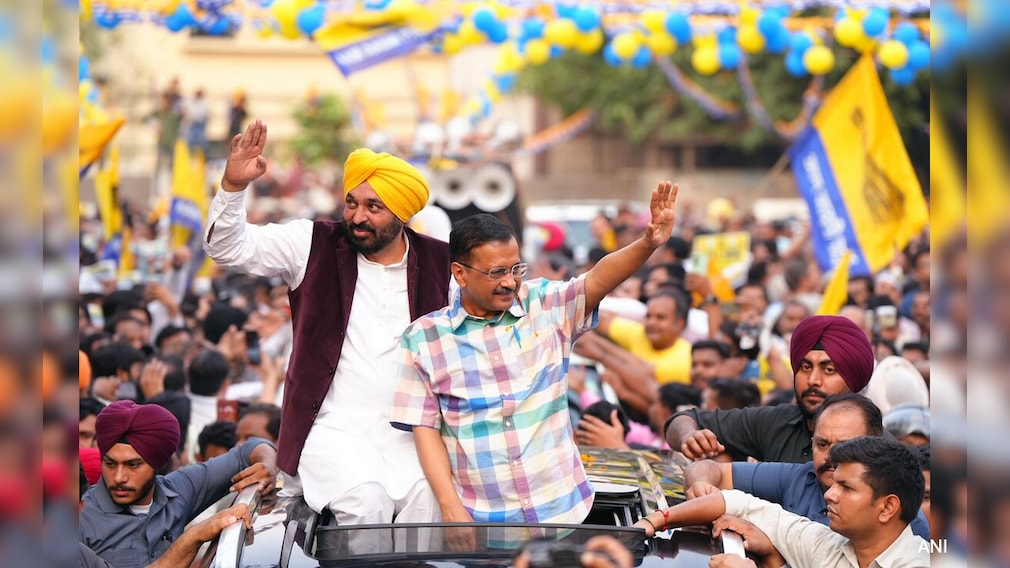
Chief Minister Bhagwant Mann yesterday launched the Brahmastra against anti-incumbency, a cash transfer scheme for women. Under the Mawan Dhiyan Satkar Yojana, 36 lakh women beneficiaries received the first of a monthly instalment of Rs 1,000, and another Rs 500 if they were Dalit.
We have seen cash transfers to women wipe out anti-incumbency overnight in many states. Similar schemes have helped incumbents in Assam, West Bengal, Madhya Pradesh and Maharashtra. Punjab's per capita income is less than Rs 20,000 per month and a lot of poor families would be earning much less than that. This scheme is like earning a 5-15% raise. Why would they not vote for AAP?
In Karnataka in 2023 I had persuaded the Congress to include cash transfers as one of their guarantees. Working on the Nationalist Congress Party campaign in Maharashtra in 2024, helping the late Ajit Pawar convert this scheme into votes, I saw the joy on women's faces over having autonomy over free money.
Ultimately the benefit goes to the entire household and helps get some of the male vote too. In Punjab as in many other states, the scheme will help over 50% of the state's 65 lakh households.
In theory, the scheme could over-ride the growing anti-incumbency against the AAP over various issues, from drugs and crime to its crisis with the Akal Takht, from the unpopularity of its MLAs to a general sense that they haven't lived up to the high expectations people had for a system-changing new setup in a state badly in need of an economic revival.
In practice, the AAP cannot presume the election is over. As of today, the Punjab 2027 election is still open and could go anyway. A week is a long time in politics; there are still eight months to go.
Exceptions to the rule
Firstly, it is not true that cash transfers always win elections. There are some exceptions. People remember that Akhilesh Yadav lost UP in 2017 despite a free laptop scheme for students, but they forget that he even had a Rs 500 cash transfer scheme for 50 lakh women. He had a bunch of other welfare measures too.
In 2024, the YSR Jagan Mohan Reddy saw a decisive defeat despite aggressive welfare schemes including several targeted direct benefit transfer programmes. Every section of society got something or the other. Similarly, the KCR Government in Telangana lost the 2023 elections - welfare and cash transfer schemes worked for them in 2018 but not in 2023.
Revolutionary sentiment
There are other reasons why AAP can't bank on this scheme alone.
Punjab's voters have a history and a habit of doing things different from voters in the Hindi heartland. It is possible that they may react differently to the cash transfer scheme as well.
Since the re-organisation of Punjab in 1966, it is on only one occasion that a sitting government repeated itself, and that was the Akali Dal in 2012. What sets Punjab apart from other states is a strong revolutionary sentiment among the people. This revolutionary sentiment means that the people love to create new heroes and then make them fall. Thereafter, they might forgive you the worst and make you a hero again.
The Aam Aadmi Party was built up as a heroic messiah by the people of Punjab, starting in 2014. It is inevitable that the Aam Aadmi Party will go through a cycle where the same voters will bring it down, just like they have done to Congress and the Akali Dal in the past. Punjab does not have standard anti-incumbency like other states. It swings between extreme love and extreme hate.
In other words, anti-incumbency could become too pronounced for even a tried-and-tested cash transfer scheme to beat. This is especially possible since the scheme has been launched nine months before the polls - enough time for it to become routine and for the opposition to make the public want change despite it. This will depend entirely on how hard the opposition can work. A fragmented opposition gives an opportunity to all 3 parties - INC, BJP, SAD - to rise up with clever campaigns and become principal challengers to the AAP on grounds of governance, despite the welfarism.
A class divide
The anti-incumbency sentiment in Punjab today is louder than it actually exists, because vocal and dominant sections of society are voicing it. Those who tend to keep silent - the poor, Dalits and women - are much less unhappy with the AAP. The party may be achieving the 'Delhi model' in at least this respect, by creating a class divide. Just like other states with cash transfer schemes, the AAP could ride a silent wave, with the results surprising anyone. Or so it would hope.
Punjab's history shows that no party wins a majority without getting a substantial vote from the three big voting blocks each - Hindus, Dalits and Sikhs. The complex stratification within these segments allows all parties to win at least some votes from all three segments. A class divide alone may not achieve these. Unlike other states, the AAP may not be able to bank on the poor alone. In fact even in Delhi, the AAP lost the 2025 election by losing their middle class support. The 40% vote share they won came mostly from the poor, who have come to see the AAP as their own party.
This is not an election prediction, just a humble note to election pundits that the battle for Punjab 2027 isn't over. It's only just begun.
(Naresh Arora is Co-founder of DesignBoxed and an accomplished political strategist. He has worked for NCP in Maharashtra and the Congress party for Karnataka, Rajasthan, Chhattisgarh, Himachal Pradesh, and Haryana Assembly elections)
Disclaimer: These are the personal opinions of the author
-
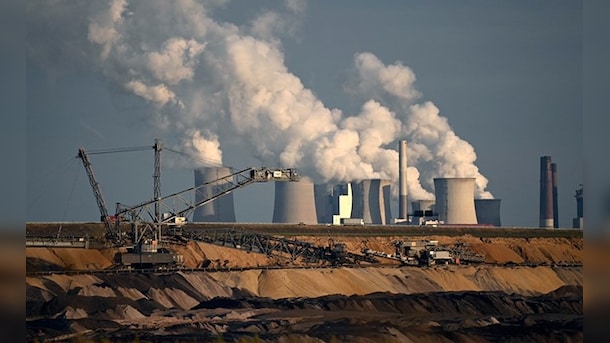
Opinion | India Has Enough Coal. So Why Are Power Plants Running Short? A 76 Million 'Crunch'

As of October 5, as many as 82 of the 191 thermal plants monitored by the Central Electricity Authority were in the 'critical' category
-
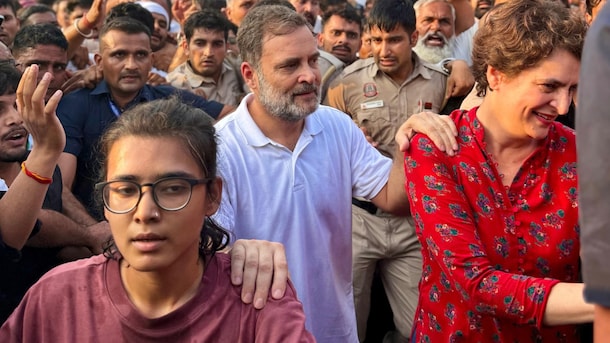
A Step Behind Neha Bora: What Rahul Gandhi's Gesture Says About Congress' Gen-Z Pitch
At INDIA bloc's march to Supreme Court, Rahul Gandhi placed himself a step behind two women, hands resting on their shoulders. One was his sister Priyanka. The one on his right was Neha Bora. Here's what the image means for the protest wave now, and for Rahul's politics in general.
-
Opinion | Starlink, India, And Why Elon Musk Must Know His Billionaire Tantrums Won't Work
India should neither be intimidated by Musk's global influence nor distracted by his theatrics.
-
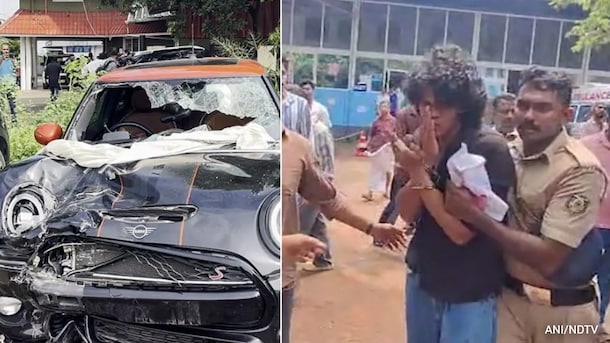
Blog | 'Baap Da Brat': Kerala Mini Cooper Crash, And Why 'Daddy' Can't Keep Saving You
There are three things you should never underestimate in India: the power of 'jugaad', the elasticity of the law, and the confidence of a 'Baap da Brat' who believes his Papa Posh can fix absolutely anything.
-
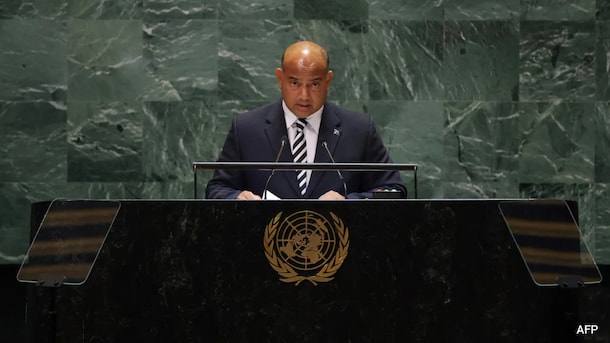
Opinion | 'Say Our Name': Why A Tiny Island Nation Wants The World To Get Its Name Right
Standing before the UN hall of nations, Naoero President David Adeang asked the world to unlearn its comfortable habits and speak a restored truth.
-
TVS Succession Row Explained: Why Venu Srinivasan's Family Is Divided Over Wealth
TVS Family Dispute: TVS Holdings is a key entity because it owns a controlling stake in TVS Motor Company. It owns 50.26% of TVS Motor.
-
Opinion | The US Is Showing India Just How Cheap Its 'Friendship' Is
Can local talent fully replace Indian contribution? Why is the US leading in setting up Global Capability Centres in India - over 60% - and pocketing the IP?
-
Jantar Mantar Tells Time. The Clock Just Stopped On Its Time As An Iconic Protest Site
On Monday, October 12, 2026, Delhi Police denotified Jantar Mantar Road as a designated site for demonstrations. The Supreme Court had given it a nudge. Here's how history met politics on that street for decades.
-
Opinion | Saudi Airport Attack, And Why Pakistan Keeps Biting Off More Than It Can Chew
For all those who were envious of Pakistan's 'new status' as "mediator extraordinaire", here is a reality check
-
Opinion | Visa Shocks To Racist Attacks, When Did America Come To Hate Indians So?
Sometimes it is about H-1B visas. Sometimes it is jobs. Sometimes it is "foreigners." Sometimes it is about temples. The language of the attack varies, but the message is consistent