Pak's 'Global Power' Act Is Fooling No One - Least Of All Its Gulf 'Creditors'
Dubious oil claims to failed 'mediation' attempts and the UAE and Saudi now apparently asking for repayment of their loans, Pakistan's repeated attempts to project itself as a 'global player' must be taken with a grain of salt.
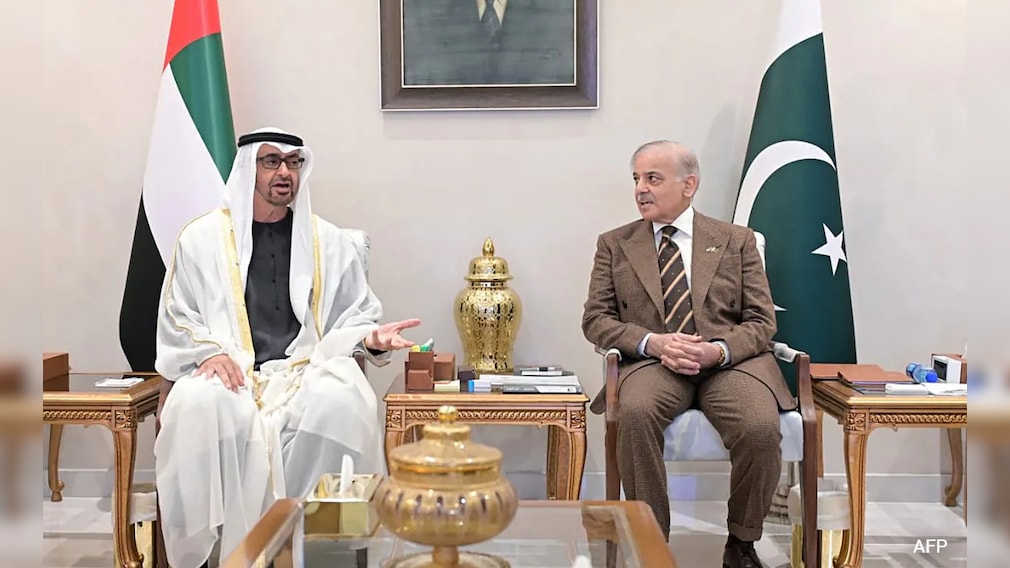
Pakistan's repeated attempts to project itself as a rising global power continue to collapse under scrutiny, revealing a stark gap between narrative and reality. Structural constraints - economic dependence, geopolitical limitations, and strategic inconsistencies - puncture Islamabad's grand narrative that it is emerging as a significant player on the global stage. This narrative has been amplified through sections of international media, projecting Pakistan as a hub of global diplomacy, capable even of mediating complex conflicts such as the ongoing US-Israel-Iran war.
While Islamabad did attempt to position itself in such a role by proposing a ceasefire framework and engaging in diplomatic outreach, these efforts have quickly unravelled. Crucially, the initiative lacked meaningful participation from key stakeholders: Iran showed little willingness to engage on Pakistan's terms, and no direct negotiations between Washington and Tehran materialised. As a result, the much-publicised diplomatic push failed to gain traction, producing neither a concrete agreement nor a credible roadmap for conflict resolution. The meeting in Islamabad with Egypt, Saudi Arabia and Turkey aimed at de-escalating the crisis, thus amounted to little more than a symbolic exercise, underscoring Pakistan's limited capacity to influence outcomes in high-stakes geopolitical crises.
An Old Pattern
This is not a new phenomenon. Previously, a similar narrative was aggressively promoted - that Pakistan's JF-17 fighter jets were experiencing a surge in global demand; in fact, Pakistan's Defence Minister Khawaja Asif went so far as to assert that the country would no longer require IMF loans or external borrowing, confidently stating that "we may not need IMF loans in the next six months" based on anticipated revenues from defence exports, particularly the Chinese-origin JF-17 aircraft. This assertion, like others before it, proved hollow.
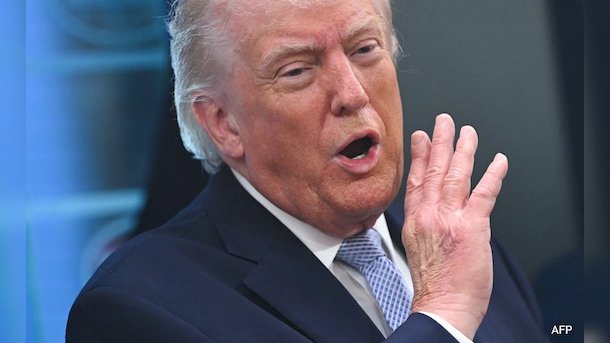
Before that, there was yet another claim: that Pakistan had discovered massive oil reserves in the Arabian Sea. That, too, proved to be misleading. Even Donald Trump, while recently backing this narrative, remarked that Pakistan has "massive oil reserves" and that it could one day even "sell oil to India".
Debt Comes Calling
Time and again, such narratives are floated to project Pakistan as an emerging power, but within days, they collapse under scrutiny. The pattern reflects a deeper issue. There has been a consistent habit of manufacturing exaggerated claims about Pakistan's global standing, when the fact remains that the country is structurally, economically, and geopolitically constrained. Its decision-making is not entirely autonomous and is shaped and influenced by external actors, such as Washington, Beijing, Riyadh, Abu Dhabi, and institutions like the IMF, on which it remains heavily dependent. A country that survives on loans and IMF bailout packages cannot claim complete strategic independence.
There were also claims that Pakistan is performing a "master balancing act" in West Asia - that it is maintaining close ties with all sides amid ongoing regional conflicts. Surprisingly, some voices in India even suggested that India should learn from Pakistan's approach. But recent developments expose the ground reality. Reports indicate that the UAE has demanded repayment of around $3.5 billion, a clear sign of deep frustration with Pakistan's stance during the ongoing regional tensions. The UAE reportedly believes that at a time when it has faced severe challenges in the Middle East crisis - including being among the hardest hit by Iranian missile and drone strikes - its ally Pakistan has failed to extend even basic support and has instead chosen to remain diplomatically evasive toward Iran. Pakistan has now reportedly decided to repay its entire $3.5 billion debt to the UAE by the end of April.
Similarly, Saudi Arabia is also reportedly seeking repayment of its financial support and has asked Islamabad to immediately repay a $6.3 billion loan, signalling deep frustration in a relationship long portrayed as ironclad. This is particularly significant in light of a mutual defence understanding between the two countries, under which an attack on one is effectively treated as an attack on both. Contrary to that commitment, Pakistan, instead of standing firmly with Riyadh during the Iran crisis, has chosen to project itself as a 'mediator'.
China's Concerns
China, often described as Pakistan's "all-weather friend", has also begun to display some unease. During a recent visit to China, Ishaq Dar, Pakistan's Foreign Minister, sought Beijing's backing for Islamabad's self-styled mediation efforts. To this, according to some Pakistani analysts, Pakistan was advised by Chinese officials to first resolve contradictions in its own regional policies - particularly its actions in Afghanistan. Beijing is reportedly concerned that Pakistan's contradictory approach jeopardises China's strategic interests in Afghanistan, including security concerns in Xinjiang, access to Afghanistan's mineral resources, and broader economic and connectivity ambitions under the Belt and Road Initiative.
China is also displeased that Pakistan is attempting to weaken the Taliban - such actions threaten stability in a country where Beijing has made substantial strategic and diplomatic investments and recently undertaken massive projects. Further, Beijing worries that Pakistan may be advancing Washington's agenda in Afghanistan to secure access to Bagram military bases, potentially undermining China's long-term interests.
These concerns prompted China to arrange a meeting between Taliban and Pakistani representatives in Ürümqi to resolve differences - a process that remains ongoing. At the same time, there are clear signs that Chinese financial enthusiasm for major initiatives like the China-Pakistan Economic Corridor (CPEC) has waned.
All of this points to a simple reality: a country cannot simultaneously try to align with everyone without facing consequences. Foreign policy is not about short-term optics or daily narratives; it must be assessed over the long term. Pakistan's repeated attempts to project itself as a decisive global player must be seen in this context. Until structural constraints - economic dependence, geopolitical limitations, and strategic inconsistencies - are addressed, such claims will continue to surface, and, just as quickly, disappear.
(The author is an Associate Research Fellow at the International Centre for Peace Studies, New Delhi)
Disclaimer: These are the personal opinions of the author
-
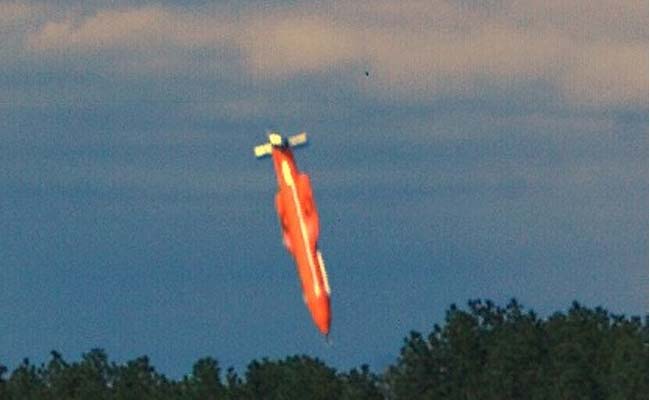
Opinion | The Last Bet? What Trump's 'Mother Of All Bombs' Could Actually Do To Iran

Can an MOAB deliver a decisive blow to Iran that may force it to surrender immediately, as Japan did after Hiroshima and Nagasaki in World War 2?
-
Hit Songs, Empty Pockets: The Hidden Math Behind India's Viral Music Boom
Over 80,000 brands and five lakh creators in India make branded content. The opportunity is worth around Rs 1,500 crore.
-
Opinion | Great 'Exceptions': How The Oil India Was Attacked For Is The Oil Trump Now Seeks
A law written to punish the buyers of Russian oil was suspended by the US to protect a purchase of Russian oil. India spent fourteen months being lectured for less.
-
Opinion | Louis Vuitton Loot, Torched Cars: France Protests Have An Unlikely Beneficiary
It's an unbelievable moment. Crowds looting the most exclusive stores in Paris, including the famed Luis Vuitton. But what's behind this meltdown?
-
Blog: Kolkata Didn't Learn From 2015. Eleven Years Later, It Proved To Be Fatal
The City of Joy isn't a stranger to crowd control. Be it during Pujo or Christmas at Park Street, Eden Gardens cricket matches, or Derbies between Mohun Bagan and East Bengal. But during Pujo, the entire city is on alert.
-
Opinion | Slurs, Threats, Now A Temple Attack Plot: When Did America Become So Hostile To Indians?
The rising tide of anti-India, anti-Hindu, and racist attacks serves as a stark reminder that economic prosperity does not automatically guarantee social immunity from bigotry.
-
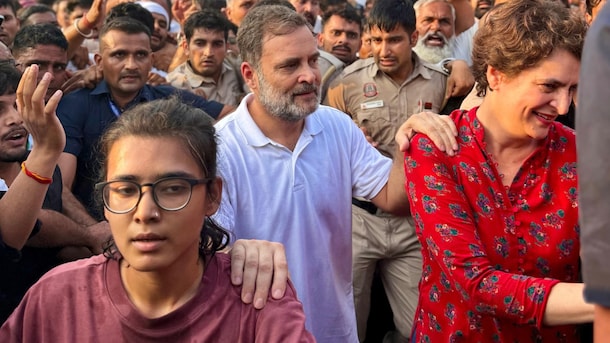
A Step Behind Neha Bora: What Rahul Gandhi's Gesture Says About Congress' Gen-Z Pitch
At INDIA bloc's march to Supreme Court, Rahul Gandhi placed himself a step behind two women, hands resting on their shoulders. One was his sister Priyanka. The one on his right was Neha Bora. Here's what the image means for the protest wave now, and for Rahul's politics in general.
-
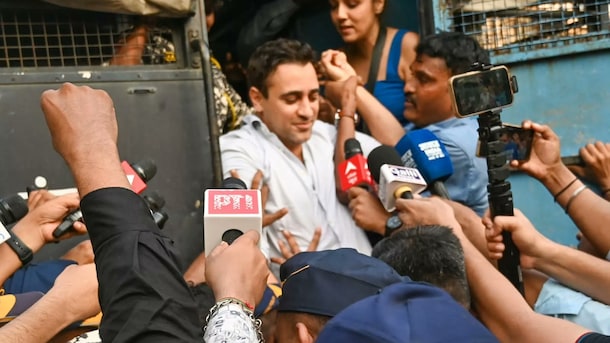
Opinion | Imran Khan, And The Perils Of Having An 'Opinion' In Bollywood
The reality of the industry is quite grimy. More often than not, its inhabitants have been fairweather friends, happy to sing the praises of whoever is in a position of authority.
-
Exclusive: India's Food Safety Problem Goes Beyond Just Dirty Kitchens - By Tukaram Mundhe
On World Food Day, Maharashtra's Commissioner of Food Safety explains why instead of taking stopgap measures, the entire supply chain in India needs to be held accountable and made transparent.
-
Opinion | India Has Enough Coal. So Why Are Power Plants Running Short? A 76 Million 'Crunch'
As of October 5, as many as 82 of the 191 thermal plants monitored by the Central Electricity Authority were in the 'critical' category