Opinion | Trump's Quiet Turkey 'U-Turn' Has Loud Consequences For India
In a stunning policy reversal, Trump has decided to sell America's F-35 jets to Turkey, a staunch Pakistan ally and its closest defence supplier
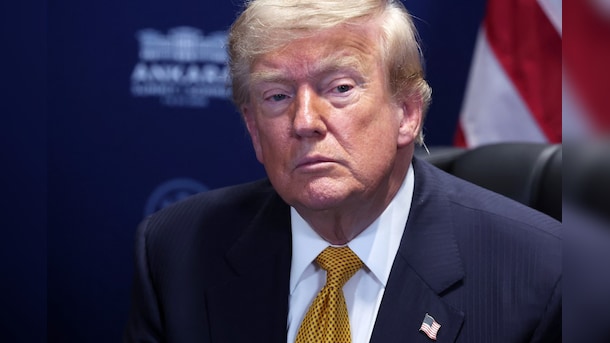
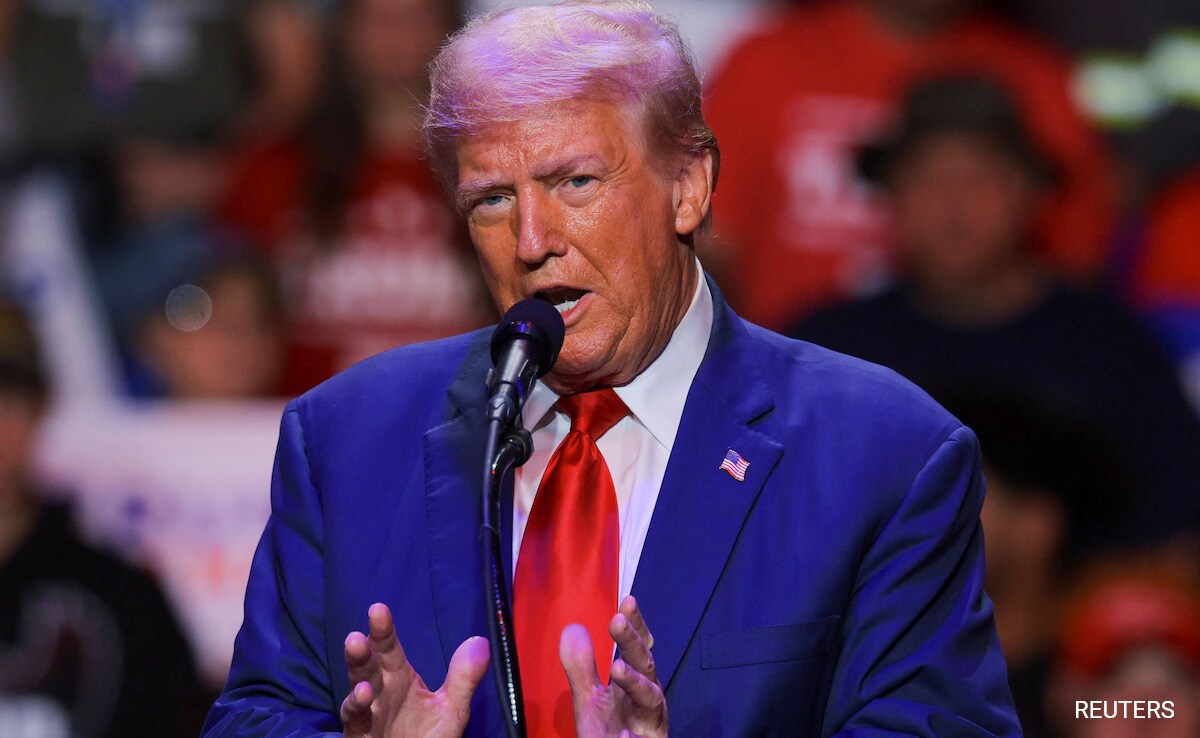
US President Donald Trump recently announced the lifting of sanctions on Turkey and signalled openness to restoring Ankara's access to the top-end American fifth-generation F-35 fighter jets. They had been denied to Turkey for years after the latter acquired the Russian S-400 air defence system. The US may also provide engines for Turkey's homegrown KAAN fighter aircraft. Turkey is reportedly seeking an initial delivery of six jets. The policy pivot was announced alongside Turkish President Recep Tayyip Erdoğan at a NATO summit in Ankara on July 8, 2026. However, Trump is expected to face heavy opposition in Congress for this change in policy.
The high-stakes geopolitical nature of the statement has not gone down well with Israel and Greece. Israeli Prime Minister Benjamin Netanyahu strongly opposed the potential sale, including the engines, and is actively lobbying against the deal, warning that providing F-35s to Turkey will "destroy the balance of power in the Middle East". Similarly, Athens vehemently opposes the move, expressing alarm that advanced stealth fighters in the hands of Turkey could alter the military balance in the Eastern Mediterranean. The deal would have implications for India as well, as Turkey openly supports Pakistan with military hardware and had delivered cargo aircraft loads during Operation Sindoor. This when President Trump has already picked Pakistan as a key interlocutor in the back-channel talks and negotiations with Iran, praised its mediation efforts as "fantastic", and displayed a strong personal rapport with Pakistani Prime Minister Shehbaz Sharif and Field Marshal Asim Munir.
The Best In Class
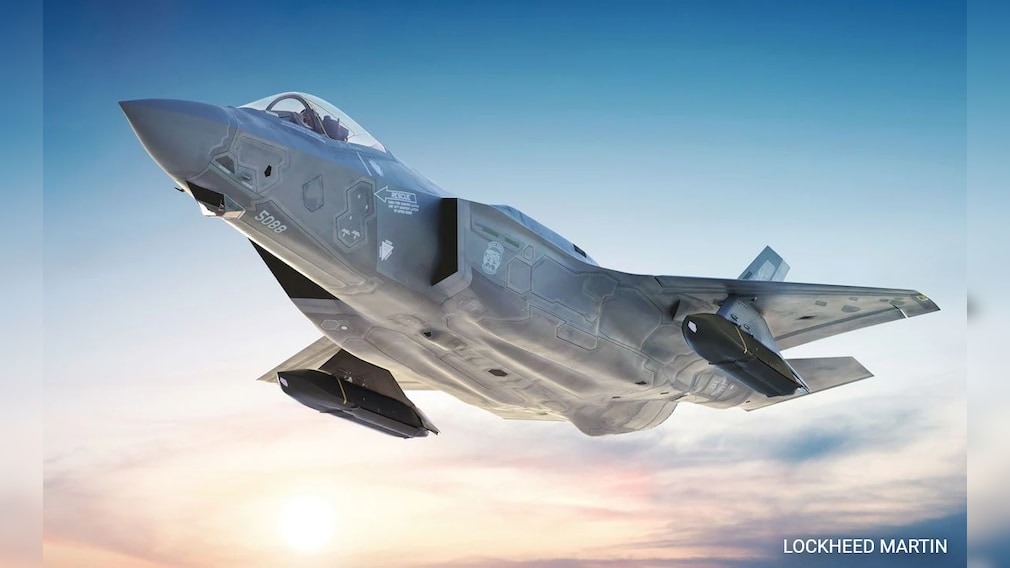
The Lockheed Martin F-35 Lightning II is widely considered the best overall 5th-generation fighter jet in service due to its unmatched multirole versatility, advanced sensor fusion, and active global production pipeline. The F-35's avionics compile data from 360-degree cameras, radar, and electronic warfare suites to give the pilot a complete, real-time picture of the battlefield without breaking stealth. Featuring a tiny radar cross-section (often compared in size to a golf ball), it allows pilots to penetrate dangerous airspace and strike targets while remaining functionally invisible to advanced enemy radars. F-35 aircraft operational campaigns have included crucial roles in suppressing enemy air defences, eliminating hostile drones, and conducting penetrating strategic strikes across the Middle East, Europe, and the Mediterranean.
To date, the US has built and delivered over 1,340 F-35 variants globally. Ten countries already operate the jet, while another 11 nations have placed orders and are awaiting deliveries. The average annual production is 156 aircraft, but last year, a record 191 jets were delivered. This surge effectively cleared backlogs that had accumulated due to previous software and hardware upgrade delays. The main assembly plant is in Fort Worth, Texas, alongside secondary final assembly locations in Italy and Japan. There are three variants of the jet: F-35A (Conventional Takeoff and Landing), F-35B (Short Takeoff and Vertical Landing), and the F-35C (Carrier-Based Variant).
While the F-35 dominates in networking and multirole capabilities, there are other 5th-gen fighters too. There is the larger and older F-22 Raptor, which is still widely regarded as the better air-superiority and dogfighting aircraft due to its thrust-vectoring manoeuvrability and twin engines. China's Chengdu J-20 "Mighty Dragon" heavy stealth fighter is designed primarily for long-range interception and strike missions, but its true combat capabilities remain closely guarded. The People's Liberation Army Air Force (PLAAF) has inducted over 300 J-20 fighters. The Russian Sukhoi Su-57 5th-generation aircraft is also highly agile and cost-effective, but experts generally agree its stealth and avionics fall short of Western F-35 standards. Russia has built approximately 44 Su-57s as of mid-2026.
Meanwhile, China's Shenyang J-35 fifth-generation fighter has entered serial production and is currently in active service with both the PLAAF and the PLA Navy (PLAN). Pakistan has already signed an initial collaborative agreement to acquire up to 40 J-35AE export variants.
Why The Change Of Heart In Washington
The F-35s had been denied to Turkey initially because Ankara had purchased and integrated the Russian S-400 surface-to-air missile system. Washington argued that operating this Russian system alongside the F-35 could expose the stealth jets' classified capabilities to Moscow, resulting in Turkey's removal from the Joint Strike Fighter programme in 2019. Congress later reinforced this position by making any F-35 transfer contingent on Turkey no longer possessing the S-400. Even so, Ankara has done nothing meaningful since 2019 to meet that condition.
On the other hand, in fact, Turkey has escalated its rhetoric against Israel, threatened Greek sovereignty, entrenched its military presence in occupied northern Cyprus, and sought leverage over Europe through coercive regional behaviour. Turkey also continues to deepen its exposure to China in strategic sectors, including telecommunications. This matters because it was Washington's concerns over Huawei and Chinese 5G infrastructure in part that had once derailed the UAE's pursuit of the F-35. The same standard should apply to Turkey.
Erdogan wanted a formal public reversal in Ankara. He did not get that. The question now is whether Washington can resist the next round of Turkish pressure. Any decision will be conditioned on a proposed roadmap to transfer Turkey's Russian-made S-400 defence systems to a third country.
India's Headache
The Turkey-Pakistan military aviation nexus has rapidly evolved into a major strategic alliance. Centred on joint development and technology-sharing, the partnership features collaboration on Turkey's KAAN stealth fighter, the induction of Bayraktar TB2 drones, and the joint production of Anka unmanned aerial vehicles. Pakistani engineers are also actively involved in the development of Turkish Aerospace Industries' (TAI) KAAN programme, gaining access to next-generation aerospace design. Pakistan has heavily integrated Turkish-made UAVs into its arsenal. Agreements between TAI and Pakistan's National Engineering and Science Commission (NESCOM) focus on the joint production of Medium Altitude Long Endurance (MALE) platforms like the Anka drone. Turkish-manufactured munitions, such as the Kemankes cruise missiles, have been procured by Pakistan to upgrade the operational capabilities of its Air Force (PAF). High-level leadership meetings between the PAF and the Turkish Air Force routinely reaffirm a shared commitment to joint training, aerospace innovation, and emerging technologies.
The nexus significantly alters the regional security dynamic, providing Pakistan with critical non-Western technology to modernise its aerial and drone capabilities. Military experts and geopolitical analysts have highlighted the strategic implications of this growing axis, particularly regarding its effect on regional stability. Turkey's drone know-how plus China's sensor suites could accelerate Pakistan's C4ISR edge. Lastly, both countries have grown even closer militarily owing to the security situation around their neighbours, as well as instability in ties with the US in recent years.
During Operation Sindoor last year, Turkey provided significant military and diplomatic support to Pakistan. The military hardware flown in included over 350 drones, comprising Bayraktar TB2, YIHA, and Songar armed drone systems. These were used for target designation, border strikes, and threats to forward supply convoys. Two Turkish military operatives and advisors were deployed to Pakistan to help operate and coordinate drone strikes against Indian targets. Turkey, in fact, was one of the few nations to explicitly back Pakistan and condemn Operation Sindoor on the international stage.
Greece, Israel Troubled Too
Greece strongly opposes the FR-35 transfer to Turkey, warning it will alter the regional balance. The two NATO allies have persistent disputes regarding territorial waters, airspace, and the militarisation of Aegean islands, occasionally escalating into open threats. Greece's Hellenic Air Force ordered 20 F-35As in July 2024. Deliveries are expected to begin by late 2028. Greek officials warn that arming Turkey with the F-35 undermines stability in the Eastern Mediterranean and may start an intense regional arms race. Greece has fortified its own air force by procuring Rafale jets and pressing forward with its F-35 acquisitions to offset Turkey's indigenous fighter programmes.
For Israel, too, a potential US-Turkey arms deal signals a shift in Washington's approach to preserving Israel's air superiority in the Middle East. The sale extends far beyond defence procurement and into the broader balance of power in the Middle East. Israel's core security priority is to maintain a qualitative military edge in the region. Prime Minister Netanyahu underscored those concerns in an interview with CNN, warning that Turkey is not a model US ally. He cited Ankara's ties to Hamas and the Muslim Brotherhood. When some reiterate that Turkey was an original partner in the F-35 programme, Israel counters that Turkey's approach in the region has become more anti-Israel now. Opposition to this sale is an openly declared policy at the highest political levels. Although Washington has yet to make a final decision, the debate in Israel has already expanded beyond the question of the F-35 itself. It has become part of a broader discussion about the future of US-Turkish relations and whether a shift in that relationship could force Israel to reassess its security and strategic calculations across the region.
The Turkey-Pakistan Nexus
A stronger, more assertive Turkey presents both geopolitical challenges and economic opportunities for India. New Delhi is closely monitoring Ankara's expanding geopolitical reach, particularly its strong defence-industrial partnership with Pakistan and its broader strategic ambitions in the Middle East and the Horn of Africa.
The growing relationship has several key implications for India. Turkey remains one of Pakistan's most important defence suppliers. Greater joint collaborations involving aerospace, drone technology, and naval corvettes directly impact India's regional security calculus. Turkey is also extremely vocal in its support for Pakistan on Kashmir.
To counter its alliance with Pakistan and Azerbaijan, India has significantly deepened its defence and strategic ties with Ankara's regional rivals. India has elevated its strategic partnership with Cyprus and supplies extensive military hardware (such as the Pinaka rocket systems) to Armenia. In fact, Armenia officially was the first international buyer of the Indian-made Akash surface-to-air missile (SAM) system, signing a deal in 2022 for 15 systems.
India has also expanded its naval presence and diplomatic engagements in the Eastern Mediterranean, a region where Turkey seeks to assert maritime dominance. India's backing of the India-Middle East Economic Corridor (IMEC) intentionally bypasses Turkey in favour of trans-Arabian routes. President Erdoğan's emphasis on global Islamic solidarity and his government's criticism of India's domestic policies consistently strain bilateral diplomatic trust.
In recent years, India has strengthened ties with countries such as Greece, Cyprus, and Israel, nations that have their own strategic disagreements with Turkey. It conducts extensive military training and defence exercises with both Greece and Israel, focusing on air combat, naval interoperability, and Special Forces operations. The "Pakistan factor" remains the biggest impediment. Israel is a great partner in India's military aviation defence production ecosystem.
The F-35 decision, if implemented, could reshape the security balance in West Asia and also undermine Israel's military edge. It will also make Erdoğan more arrogant and aggressive in his South Asia approach, all of which raises fresh questions for India amid Turkey's growing defence partnership with Pakistan. A China, Pakistan, and Turkey nexus, combining Chinese hard power and technology, Turkish drone capabilities and diplomatic support, and Pakistani operational readiness to challenge India's regional influence, is already a concern for India.
India not only must build its own military strength as deterrence but also strengthen partnerships in West Asia and Eastern Mediterranean - and, wait for Trump's idiosyncrasies to pass.
(The author is a retired Air Marshal)
Disclaimer: These are the personal opinions of the author
-
Blog: Your SUV's Most-Used Feature Is Now The Brake Pedal

The growing menace of traffic begs a question: Is buying a car slowly becoming one of the worst financial decisions for people living in large cities?
-
Opinion | US-Iran MoU Collapse: Why The Strait Of Hormuz Is Back On The Brink
Why did the ceasefire fail? Could it have been prevented? The answer to many of these questions lies in the framing of the 14-Point MoU and the uneven playfield that it created.
-
NDTV Investigation: No Single Cause Or Common Pattern In Bikaner's Maternal Health Crisis
Part 3 of NDTV's investigation into the series of maternal deaths and severe post-delivery complications examines a different pattern emerging at Bikaner's PBM Hospital
-
Blog | Amaira, And The Daily Goodbye Every Parent Takes For Granted
I kept thinking about that moment every parent knows so well. The one where you watch your child disappear through the school gate, believing they will come home.
-
Opinion | By Trump, For Trump: Inside The Murky Election Crisis America Is Sleepwalking Into
Trump has learnt that overturning an election after losing is extraordinarily difficult. This time, he is shaping the battlefield before America votes.
-
Opinion | Satluj To Santosh To Padmaavat, How Getting Offended Became India's Favourite Hobby
There are three reasons why films based on real incidents or beloved myths depart from the truth
-
NDTV Investigation: Why Did 8 New Mothers Suddenly Fall Ill At A Jodhpur Hospital?
Part 2 of NDTV's investigation into the series of maternal deaths and severe post-delivery complications reported across government hospitals in Rajasthan focuses on Jodhpur.
-
Opinion | Thanks To Trump, Saving The US-Iran Islamabad Deal Is Now Harder Than Ever
Neither side wants more war. But neither side seems able to stop itself from marching towards one.