Opinion | Pakistan's Iran Problem Isn't Going Anywhere
Despite its glowing successes, and for all its mediation efforts, Pakistan's toughest audience may be in Iran itself
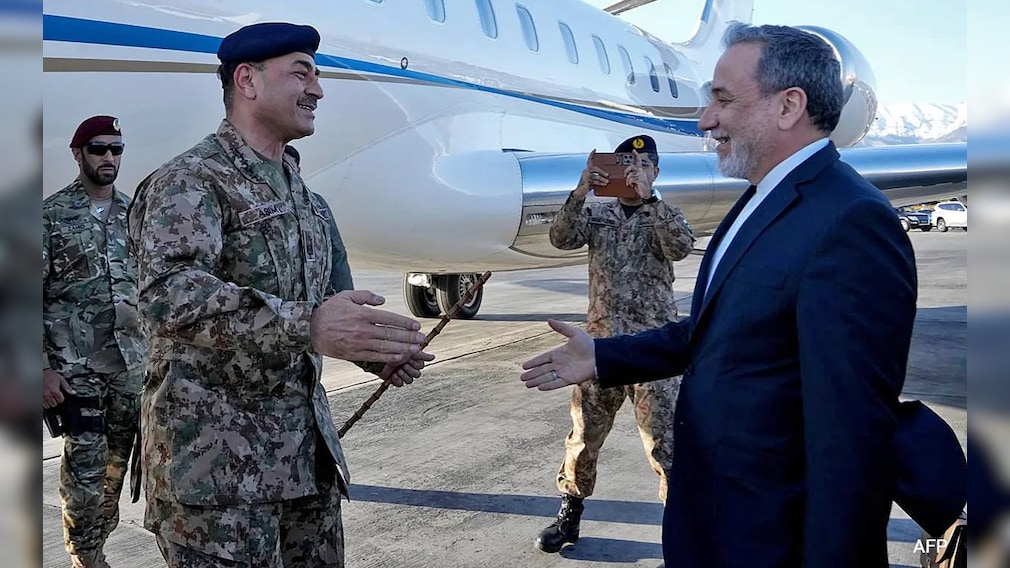
As fighting between the US and Iran returns to March 2026 levels, the Islamabad MoU that both sides signed on June 17-18 is under severe strain. Barring the possibility of ground operations in Iran by the US and its allies, both Washington and Tehran will inevitably return to the negotiating table, given the pressures on the global energy economy. While it remains to be seen how much the current fighting will force Washington to comply with the MoU's terms (especially vis-à-vis Hormuz), the MoU itself has a principal third signatory - the Prime Minister of Pakistan. This article does not debate the degree to which Pakistan has succeeded or failed at "mediating" the conflict between the US and Iran. Rather, it explores a crucial secondary question: what has Pakistan's unanticipated diplomatic blitz meant for the Iran-Pakistan relationship? The two states, which were once staunch but competitive allies within America's Cold War security architecture, have remained fundamentally at odds since the 1979 Islamic Revolution in Iran. Pakistan's role in the current conflict does not necessarily generate long-term strategic trust between the two, but rather entrenches the complicated outlook that these two Islamic Republics have long adopted towards each other.
Not Your Typical Mediator
At the outset, it is important to recognise that Pakistan has not acted as a traditional mediator in the current conflict. It is not like the Middle East's traditional mediators, such as Oman, which has deep institutional memory and the credentials to act as an objective third-party actor bringing good faith between disputing parties. In fact, Islamabad's call-up to the mediating role was the result of a new and personal rapprochement between key figures from the Trump administration (and family) and the Pakistani administration, led de facto by Pakistan's Chief of Defence Forces, Asim Munir, and de jure by Prime Minister Shahbaz Sharif. Catalysed by a crypto deal (signed with much ceremony in Islamabad) in January 2026, US-Pakistan ties had already evolved sufficiently enough since mid-2025, when President Trump hosted an unprecedented lunch meeting with Munir at the White House in June that year. This coincided with the 12-day war that saw Israel striking Iranian military and nuclear facilities. The relationship was nourished further as Trump's own appreciation of Munir grew, and, finally, matured as Islamabad became the site of talks to end the March war.
For Tehran, this arguably meant little, until Pakistan emerged as the US's preferred mediator - especially over Oman, which had publicly expressed frustration with America's negotiating methods. However, given its 'overtly' positive ties with Islamabad, and with Washington conceding on the Iranian demand to have the US Vice-President himself as lead negotiator, Tehran had little reason to deny Pakistan the role.
Where Pak's Influence Really Lies
For Pakistan, the benefits it sought and still seeks to accrue from its mediatory role are actually rooted in its relationship with Washington, not Tehran. The instrumental element for Pakistan is the degree to which it can persuade Iran to make concessions. For that, it naturally needed to gain Iran's good faith. For this, it went beyond the traditional ambit of a mediator-at-the-table by influencing the facts on the ground. For instance, across April, it enabled the transshipment of Iranian oil through Pakistani ports, helping Tehran bypass the American blockade of Iranian ports. That this did not fatally degrade Washington's trust in Islamabad proved the resilience of the new US-Pakistan ties. It also proved that Islamabad's actions were meant to reinforce its value in Tehran; they also cushion the fallout from Pakistan's advocacy of Washington's demands during negotiations - something that was explicitly mentioned by Iranian MP and National Security and Foreign Policy Commission Spokesperson, Ebrahim Rezaei.
The Afghanistan Chapter
The question of whether mediation of this nature generates long-term trust between Pakistan and Iran is answered by Pakistan's own precedents in Afghanistan. Despite having initially supported Taliban's guerilla action against US/NATO troops in Afghanistan (both during and after Pakistan's overt role as Washington's principal regional partner in the Afghanistan theatre of the Global War on Terror), the ties between Pakistan and Taliban are now at an all-time low, with Pakistan accusing the latter of orchestrating separatist/militant attacks on its territory.
While the Iran-Pakistan relationship is fundamentally different, the Afghanistan-Pakistan experience shows that playing a brokering role does not inherently generate long-term strategic benefits with either party. In the case of Afghanistan, the US ultimately pivoted away from Afghanistan to focus on the Indo-Pacific, while the Taliban sought a more equitable relationship with Islamabad and is still asserting itself to that end.
In the Pakistan-Iran case, apart from Iran's dissatisfaction with Pakistan over not curbing anti-Iran terror groups within its territory, it is Tehran's vastly different outlooks towards both the United States and Afghanistan that form the basis of the differences with Pakistan. Note that while Iran helped organise Pakistan-based Shia volunteers during the fight against the Islamic State in Syria (the Zainabiyoun Brigade, which Pakistan designated as a terror group in 2024), sectarian differences have often contributed to an undercurrent of bilateral mistrust.
A Complicated Past
In 1979, as Iran ushered in an Islamic Revolution built around Shia Islam and it became clearer that it was going from being Washington's principal Gulf ally to its principal foe, Pakistan naturally found itself in an awkward position. On one hand, Zia-ul-Haq had embarked on a Sunni Islamisation of the Pakistani state (in contrast to Iran's Shia revolution), while on the other hand, Pakistan was on the road to becoming a more entrenched US ally due to its inextricable role in facilitating the Afghan jihad against the 1979 Soviet invasion of Afghanistan (while Iran moved as far away from Washington as possible). Consequently, while Islamabad pushed for overt cooperation with Tehran (with Zia even publicly celebrating it as a grand Islamic victory), it recognized the long-term Iranian threat to Pakistan due to strong geopolitical divergence. The coming period of cold ties was a sharp contrast to the heady years of deep Iran-Pakistan cooperation under the Shah; "Pakistan's security is Iran's security," Reza Pahlavi had once purportedly said to Gen Yahya Khan amidst the staunch Iranian support for Pakistan's wars against India.
While the Iran-Iraq war years kept Tehran's focus away, the 1989-2000 period revealed the complicated nature of this bilateral relationship. Despite being an entrenched US security ally, Pakistan pushed for deeper ties with Tehran, an effort with roots in Zia's last years and advanced by Gen Mirza Aslam Beg. But, this push was also driven by Washington's fresh antipathy towards Islamabad for its undisclosed nuclear programme and allegations of the AQ Khan network's subversive activities (unreported publicly at the time). Iran, if it ever sees a chance to wean away a US ally (even if not a natural partner to Iran), has always treated such an opportunity as more important than bilateral concerns. This was just as evident in that era as it is now in Iran's persistent calls to "brotherly" Arab countries to leave the US-led security architecture.
Yet, despite this opportunity, the 1990s were volatile years for both states, given the civil war in Afghanistan, where Iran (with India) and Pakistan backed opposing factions - the Northern Alliance and the Taliban, respectively. Though the Taliban emerged sufficiently strong to form the government, Iran's backing of the Northern Alliance was so deep that it even cooperated with the United States in the immediate wake of 9/11 and offered information on Talibani targets as US action in Afghanistan began. In return, US forces helped Iran identify al Qaeda cells in the country.
However, the George Bush administration's infamous inclusion of Iran in the 'Axis of Evil', its invasion of Iraq, and its even newer partnership with Pakistan, all collectively complicated the relationship between Iran and Pakistan. Note that even as Saddam Hussein's removal and US ignorance of Iraq's socio-political landscape helped Iran gain strategic depth in Iraq, Iran viewed itself as being progressively surrounded by US forces to both its East and West. In this context, Pakistan emerged as a US ally that Iran could not really shun (given the shared 909-km border between Pakistan and Iran), and for which a proactive outreach was needed to prevent overt hostility. However, this needed to be combined with a willingness to reinforce Iran's red lines to Pakistan.
A Tense Border
This friction manifested in the constant clashes between Iran's Revolutionary Guards and the Pakistan military at the Pakistan-Iran border over the presence of militant groups in either state - clashes that have included abductions, temporary seizures of border patches, artillery duels, small arms exchanges, missile strikes, as well as airstrikes (the latest being in January 2024). Both states' warm reassertions of "brotherly" ties in the wake of the 2024 strike exchanges represented another complication of Iran's ties with Pakistan. As Alex Vatanka highlighted in his 2015 thesis on the Iran-Pakistan relationship, these oft-stated expressions of "brotherly" ties are removed from reality, given deep and persistent contradictions in their geopolitical outlook. Essentially, this is a relationship where amicable rhetoric and antagonistic realities have co-existed comfortably.
In Afghanistan, Iran has cultivated its own ties with the Taliban to hedge its position - an effort that has borne fruit since the Taliban's return to power in August 2021. True, the Taliban has had grievances with Tehran as it has with Islamabad, over issues such as the forced repatriation of Afghan refugees. However, the Iran-Afghanistan relationship has not deteriorated to the extent that Pakistan-Afghanistan ties have. In fact, Tehran's ties with Kabul have remained quiet and stable, while Islamabad's relationship with Kabul now operates under conditions of "open war", as Pakistan Defence Minister Khwaja Asif asserted in February 2026.
Road To Nowhere
Now, Pakistan's emergence as Saudi Arabia's mutual defence partner, its new partnership with the United States, as well as its expanding geopolitical footprint in North Africa and the Caucasus apart from West Asia is occurring alongside Iran's denial of a military victory to Washington, its unprecedented leverage over the global energy economy through control of the Strait of Hormuz, and its strategic influence over the region's long-term security. It is in this context, along with the traditional nature of Iran-Pakistan ties, that Pakistan's mediation should be assessed. In Iran's view, Pakistan's mediatory position is a result of its successful geopolitical maneuvering. But this position cannot be allowed to weaken or undermine Iran's own war gains. Arguably, Iran's reminder of the need for equitable positions was evident in FM Abbas Araghchi's April offer to mediate between Afghanistan and Pakistan, in the middle of Pakistan's mediation between the US and Iran. Essentially, both states have gained their own forms of geopolitical leverage, which boosts their bargaining positions vis-à-vis the other. In the short term, an additional Pakistan-linked threat to Iran results from the US focus on fostering instability in Western Iran through more concentrated airstrikes. Greater instability in Iran's Sistan-Balochistan province creates space for Baloch anti-Iran groups that usually seek refuge across the border in Pakistan's Balochistan province (Iran targeted these same groups in 2024).
In the long term, Iran's search for geopolitical dominance in the Persian Gulf will naturally have to account for Pakistan's deepened integration with the Gulf Arab states' security architecture, especially since September 2025. Since Tehran frames its own role as a 'stabilising' actor - in contrast to the US/Israel's 'destabilising' role - its public posture towards Pakistan will have to be pragmatic. This, in turn, will require Iran to ensure that even though the two maintain an overtly positive relationship, Pakistan does not gain any exploitative anti-Iran geopolitical advantage in either West or Central Asia. Hence, rather than generating fresh strategic trust with Iran, Pakistan's mediation compounds the traditional dynamic of the relationship as geopolitical mistrust co-exists with friendly bilateral ties.
(Bashir Ali Abbas is a Senior Research Associate at the Council for Strategic and Defense Research, New Delhi. Views are strictly personal.)
Disclaimer: These are the personal opinions of the author
-
Satyagraha, Pyre On River: Tribals' Unique Protest To Save Their Homes

As the Ken-Betwa river-linking project advances, thousands in Madhya Pradesh's Chattarpur say they face displacement, lost livelihoods and inadequate rehabilitation, and are mounting Gandhian-style protests.
-
Opinion | Why Britain Is Finding It So Hard To Deport A Pakistani 'Grooming Gang' Leader
Shabir Ahmed, a UK-Pakistan dual national, lost his British citizenship after his conviction more than two decades ago. Now, Pakistan is refusing to take him back.
-
Beyond Low Cost: Why Foreigners Choose India's Healthcare Over The West
India's medical tourism industry is estimated to be worth $12.32 billion in 2026. It is growing much faster than the country's overall tourism sector.
-
Opinion | Is Saudi Arabia Now Quietly Switching Sides In US-Iran War?
The Saudi presence at the Ayatollah's funeral as well as its refusal to join America's 'Project Freedom' points to a quiet shift away from its ally, the US.
-
Opinion | China Now Has 7 Of The World's 10 Biggest Banks, And That Should Worry India
Seven of the world's ten largest banks are now headquartered in China. Twenty-two Chinese banks figure in the top 100. No Indian bank comes anywhere close.
-
Delhi's New Policy Paves Way For High-Rises. Architects Flag One Big Risk
Without parallel investments in roads and urban design, higher density could simply place more pressure on already strained neighbourhoods.
-
Opinion | A Quiet Indo-Pacific Revolution Is Underway, And India Is At Its Centre
America's unpredictability has finally done what the China threat never could for the Indo-Pacific
-
Opinion | Trump's Quiet Turkey 'U-Turn' Has Loud Consequences For India
In a stunning policy reversal, Trump has decided to sell America's F-35 jets to Turkey, a staunch Pakistan ally and its closest defence supplier
-
Rs 1,160 Crore Rice 'Scam' Widens: 56 Mills, 22 Ethanol Plants Under Scanner
Investigators are trying to establish how much of the nearly 5 lakh metric tonnes of government rice allocated for ethanol production was actually converted into ethanol, and how much may have been diverted through private mills before returning to government warehouses.