Opinion | Pakistan Might Just Be Getting A Bit Too Confident - This Time, With Afghanistan
For Islamabad, its successes at mediation notwithstanding, toppling the Taliban may turn out to be a far more humbling experience. But then Pakistan, strangely, is known to be suicidal in some ways.
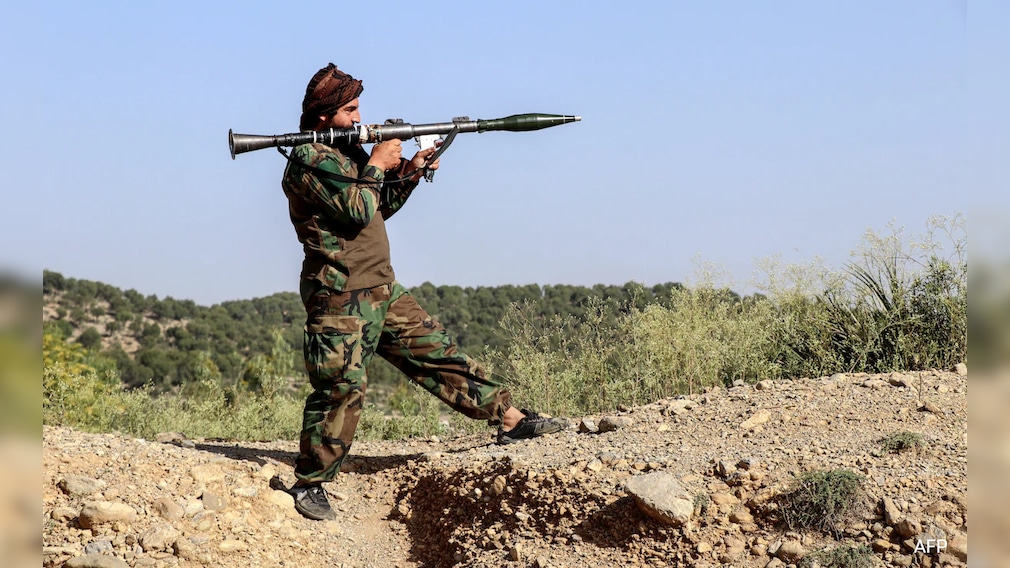
Last night, Afghanistan struck alleged ISIS strongholds in Balochistan and Khyber-Pakhtunkhwa provinces in Pakistan. The Taliban Ministry of Defense posted on X that the Afghan air force had carried out strikes on a joint ISIS and "mischief and corruption" centre in the Saranan area of Pishin District, Balochistan". The facility, the post said, "had been used to organise sabotage operations and attacks inside Afghanistan" and "also served as a coordination center for the bombardments in which Afghan civilians were targeted". It further said that the air force had also "struck an ISIS centre in the Qamber Khel area of Khyber Pakhtunkhwa, as well as another joint ISIS and "mischief and corruption" centre in the Garm Chashma area of the Shah Salim Valley in Chitral". These sites "were likewise being used to plan sabotage operations and attacks against civilians", the post said, adding, "the Afghan Air Defence Forces will continue to target any location used to threaten Afghanistan's security, Insha'Allah".
One can only guess who the words "mischief and corruption centre" alluded to, but on Sunday, Pakistan had carried out strikes in the Afghan provinces of Paktia, Paktika, and Kunar. It confirmed the operation, with Information Minister Attaullah Tarar describing it as an "intelligence-based" and "precise" strike targeting hideouts of Tehrik-e-Taliban Pakistan (TTP) militants and its breakaway faction Jamaat-ul-Ahrar. He said 25 militants were killed and large quantities of weapons and ammunition destroyed in response to recent terrorist attacks inside Pakistan, including a deadly assault in Karachi on Saturday.
A Bloody, Invisible War
Pakistan's attacks were strongly condemned by international organisations. The Taliban said the attacks had, instead, struck civilian homes, killing 36 people and injuring another 163.The UN mission in Afghanistan (UNAMA) confirmed at least 28 civilians were killed and 49 wounded in Pakistan's strikes. UN Special Rapporteur on human rights in Afghanistan Richard Bennett expressed concern over the casualties. "Disturbed by civilian casualties, including women and children, in Pakistan's airstrikes in Paktia, Paktika & Kunar provinces in Afghanistan," he said on X. UNICEF said it was deeply alarmed that children were among those killed and injured.
Away from the eyes of the world, currently focused on the Middle East, a war is being waged in India's neighborhood, which is getting vicious with each escalation. The immediate trigger for Pakistan's strikes was the deadly attack in Karachi last week on the paramilitary Pakistani Ranger's headquarters, which killed three Rangers and wounded four others.The militant group Jamaat-ul-Ahrar, a breakaway faction of the Pakistani Taliban, had claimed the attack. Pakistan had vowed to avenge the attacks.
However, since October last year, Pakistan has been waging a low kinetic war on Afghanistan, repeatedly attacking its border provinces, but also beyond. In February the vicious bombing of a drug rehabilitation centre in Kabul had killed hundreds of inmates. Pakistan's longtime allegations have been that the Taliban were sheltering the Pakistani Taliban (TTP) leaders and militants, who, it says, use Afghan territory to plan and launch attacks inside Pakistan. The Taliban has repeatedly denied these charges.The border crossings between the two neighbors have remained largely closed since October, disrupting trade, cross-border travel, and humanitarian operations that rely on access through Pakistan.
'Proxy Policies'
Following Sunday's strikes, the Taliban's Foreign Ministry, announced that they were a clear violation of Afghanistan's airspace and a crime against humanity. It released a statement where it warned Islamabad to address its own internal problems instead of pursuing what it called "proxy policies". It added that this was not the first time the Pakistani military regime had blamed Afghanistan for incidents that occurred in heavily secured cities and areas hundreds of kilometres from the Afghan border, without presenting "credible evidence".
Taliban sources have often said that Pakistan attributes bombings and attacks inside its territory to Afghanistan to conceal and divert attention from its security and political failures. Yet, it has shunned the Taliban 's offers for joint investigation into these attacks. This is a policy pursued by Pakistan that we in India are all too familiar with. Now, this policy is being directed against Pakistan's western neighbor, where ironically it's enemy now was once its protege.
India has strongly condemned Sunday's attacks by Pakistan. Interestingly, however, India alone has criticised the attacks. None of the Taliban's other friends have done so. Pakistan also blames India for these attacks, alleging that New Delhi aids the Taliban. Accusations against India have swung wildly, from arming the Taliban to sending drones packaged as humanitarian aid. Following the attack on the Rangers headquarters, Pakistan's presidential spokesman, Murtaza Solangi, said the "illegitimate Afghan Taliban regime" is trying to damage Pakistan's image as a supporter of global peace by backing terrorism from its territory to win the favour of India and Israel.
A Confused Nation
This reveals the confusion in Pakistan's thinking. Are the Taliban to blame or India? Perhaps, because Pakistan once used the Taliban against India, it believes that India may be paying back in the same currency. In any case, Pakistan began launching attacks on Afghanistan around the same time as India 's ties with the Taliban deepened and a number of Taliban ministers visited Delhi. India has continued to dispatch humanitarian aid to Afghanistan; in fact, it continued to do so even before ties with the Taliban had warmed. As Pakistan weaponised trade and borders with Pakistan, India stepped in filling the gap by sending essential commodities. But nothing had forced Pakistan to cede such space to India.
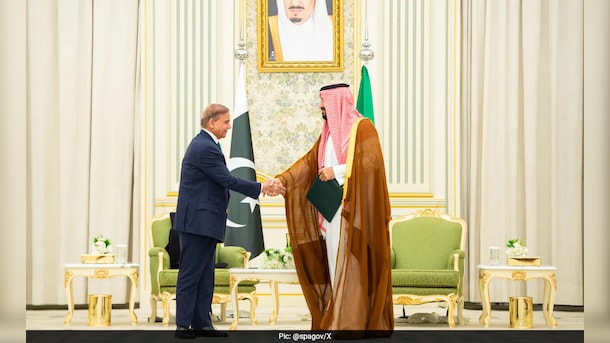
From its vantage point now, Pakistan, which is currently the world's favourite as peacemaker in the Middle East, being courted by the US and stitching up partnerships and alliances, may think that it can easily manage the Taliban and act with impunity against its population. The silence of the world over Sunday's brutality certainly shores up this perception. Yet, Pakistan is finding itself increasingly at odds with the regional consensus that has been built up to accept Taliban as the legitimate rulers in Kabul.
China was the first country technically to recognise the legitimacy of the Taliban rule in Afghanistan. Russia became the first officially to recognise the Taliban government. While China has been active in Afghanistan's mining sector, Russia has been supplying much-needed food and energy products to it. More recently, Russia also finalised a defence agreement with the Taliban. While not much is known about it, one aspect of it is crucial - it will help repair and restore Afghanistan's Russian-made military equipment, which includes battered helicopters. Eventually, this can lead to a wider defence partnership. Military superiority over Afghanistan, especially in air power, has emboldened Pakistan in its conflict with Afghanistan.
Alone In The Fight
Four rounds of talks in Turkey and Qatar have not yielded any results. Pakistan believes it can dislodge the regime in Kabul. Yet, other regional powers have been building partnerships with the Taliban. Recently, Kazakhstan sent a large business delegation to Kabul headed by none other than the country's Deputy Prime Minister and Minister of National Economy, Serik Zhumangarin. A large number of business deals spanning multiple sectors were signed, to take bilateral trade up to $3 billion dollars. Others like Uzbekistan and Kyrgyzstan opened up their markets for Afghan exports as Pakistan closed its own. Uzbekistan has launched the construction of the trans-Afghan railways, vital to reach South Asia and the warm waters of the Arabian Sea. Even Iran is strengthening economic and security cooperation with Kabul.
The reasons are simple: Afghanistan is sitting on trillion-dollar resources; major powers like Russia, Iran, and China do not wish to see a return of the US to this region. For others, especially landlocked states, Afghanistan is a vital node for their connectivity imperatives. None of them want any further destabilisation of Afghanistan, which has largely held to its commitment to not let its territory be used for attacks on other states.
For Pakistan, its successes at mediation notwithstanding, toppling the Taliban may turn out to be a far more humbling experience. But then Pakistan, strangely, is known to be suicidal sometimes.
(The author is a senior journalist)
Disclaimer: These are the personal opinions of the author
-
Satellite Pics: China Steps Up Road Works In Arunachal Area It Controls Since 1959

The bulk of the new habitation lies in uncontested Chinese territory, narrowly across India's official boundary line showing Arunachal Pradesh
-
Opinion | The Jewar Effect: How Noida International Airport Is Reshaping NCR's Real Estate Map
Airports not only generate passenger traffic but also build economic ecosystems. Jewar is now at the beginning of that curve.
-
Big Wins, Bigger Losses: Trump's Dramatic Day At The Supreme Court
The US Supreme Court's rulings on birthright citizenship, immigration, and presidential power matter for Indian students, professionals and diaspora families in the US, bringing relief on citizenship but also signalling a stronger White House.
-
Blog | Pranit More To Everyone Else, How Comedy And Its Scandals Continue To Fool Us
The modern comedian doesn't really have an ideology. They have a target market, and jokes that cater to that target market.
-
Opinion | US' Scott Bessent Has A New 'Doctrine', And It Leaves India With Hard Choices
Scott Bessent in a recent WSJ opinion piece has explained the so-called American economic 'statecraft'. The doctrine should raise concerns in India.
-
Opinion | China's New AI Surveillance System Has A Chilling New Mission
A new legislation in China, which takes effect tomorrow, isn't just another security law. It reaches across borders - and into the future.
-
How One Morning In Siberia Changed What Humanity Knows About Space
Around 7:15 am on June 30 in 1908, during the reign of Tsar Nicholas II, an object from space entered Earth's atmosphere over Siberia. And it changed science forever.
-
How Delhi Built Its Most Beloved Hubs On A Fire Trap
Delhi fire: Since 2019, 543 people have lost their lives in the city due to fire tragedies. Tracing back to 2016, the figure rises to more than 800, according to Delhi government data. In the first half of 2026 alone, 65 deaths in fire accidents have been reported.
-
Opinion | The Post-War Middle East May Already Be Splitting Into Two New 'Camps'
We may see a closer Qatar-Oman-Iran trilateral partnership emerging in the coming days, while another grouping already in the making is of Saudi Arabia, Pakistan and Egypt.