Opinion | Amir Hamza Attack Was A Symptom. A Deadlier Storm Is Brewing Within Lashkar
There is an ongoing power struggle within Lashkar for the top spot, which may lead to new terrorists wanting to 'prove' themselves. The obvious means? India.
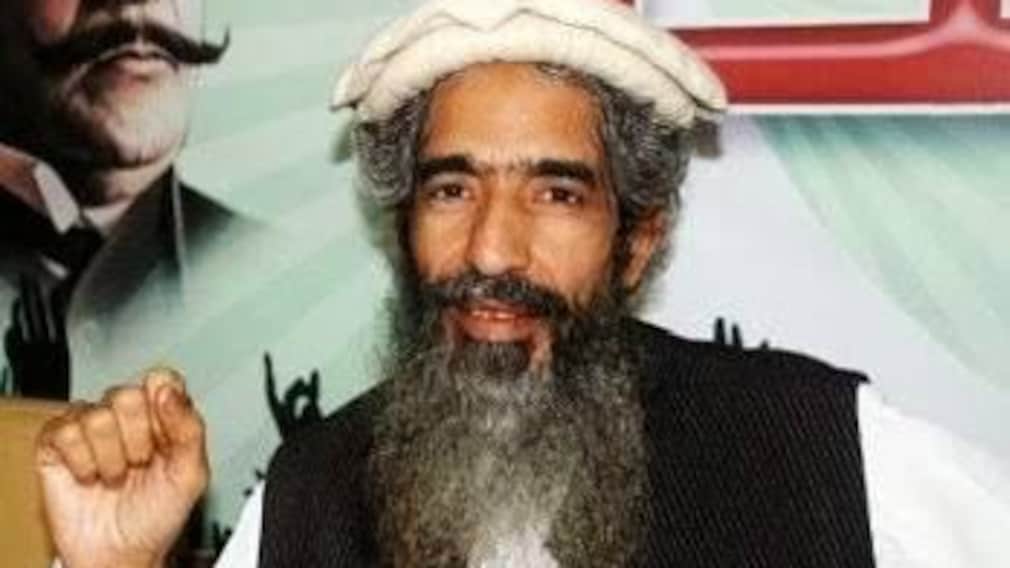
In the midst of the Iran war and its threatened re-emergence in an even fiercer avatar, some welcome news. Hamza, a founding member of Lashkar-e-Taiba (LeT), was shot by unknown gunmen in Lahore and is said to be currently in critical condition.
The elimination of any terrorist anywhere is to be greeted with a sigh of relief. But the Lashkar is in a category of its own. As American negotiators label Iran as the worst terrorist state in the world, nothing Tehran has in its armoury can match what Pakistan has in its quiver of terrorist groups.
Amir Hamza As A 'Day 1' Node
Available reports say unidentified attackers opened fire on Hamza outside a news channel office in Lahore while he was walking on the streets. Hamza is no ordinary terrorist. A fiery speaker and writer, he was picked up by Zaki Ur Rehman Lakhvi in 1985, when he was a student at a madrassa in Punjab. This was long before the LeT was even formed. He was taken to meet Hafeez Saeed at his residence, and as a result of these and other meetings, the first 'institution' of the Lashkar, the Markaz Da'wa-al-Irshad (MDI), was established. Its publications division was headed by the enthusiastic Hamza, then in his early 20s. He also edited the monthly magazine Mujallah Ad-Dawah and the Al Jarar, the inflammatory rhetoric of both of which directly led to an increase in the membership of the organisation to more than 10,000 in less than three years. The tenor of these and other publications reveals some interesting aspects other than 'jihad' - primarily against India and then the US - and the whole 'heaven' rewards belief. It specifically endorses the Pakistan Army as the 'Army of Islam', contrasting it with corrupt politicians and civilians, and thereby justifying its every action. Hamza's position was that every Pakistani should be a 'symbolic Minister of Defence'. Another recent one was this: "When their combined fist of self-defence lands on the terrorists, we could see Modi falling flat on his face". All this was bolstered by references from the Quran and Sunna, providing a solid base for the Army, particularly the Chiefs whom Hamza eulogised to the hilt.
But Hamza is not just talk. He went to the then Soviet Union to tie up with Salafist groups, and later to Iran to bolster Sunni resistance to the Shia majority. He was also at the core of the Afghan jihad, and, therefore, is well-linked with members of the original Taliban and the mujahideen. He was also a fundraiser of note, and, all in all, is a central figure of the Lashkar, embodying their absolute hatred for India and the US.
What His Loss Means
He's the historical memory of the group, and losing him would hit LeT leaders hard. The organisation, however, will survive, and perhaps even thrive as younger and even more radical leaders come up.
That's the core of the issue. Lashkar has never been without its internal feuds. For instance, a major fissure was reported following the second marriage of Hafiz Saeed to a much younger woman, which, together with operational reasons, led to the estrangement between him and the operational chief Zaki-ur-Rehman. Following the 26/11 attack in Mumbai, Pakistan faced immense pressure to clean up its act, and several Lashkar leaders were 'arrested' and given showpiece sentences. Hamza, however, seems to have got away, and, in fact, seems to have been given yet another group to head: the Jaish-e-Manqafa. This helped the LeT raise financial resources, even as known fronts like the Falah-e-Insaniyat were shut down. That this was done with the full knowledge of the Pakistan 'establishment' is without doubt.
Lashkar-e-Taiba 'Regrouping'
Hamza seemed to have seven lives. Even as Operation Sindoor devastated the Lashkar headquarters at Muridke and eight other camps, killing several hundred cadres of both Lashkar and Jaish, Hamza disappeared, even as most leaders remained dormant for a while. Rumours arose of them being shifted out to Afghanistan and the border areas to prop up the Pakistan army's ongoing fight with the Tehreek-e-Taliban.
The first to resurface again and threaten India with 'maritime terrorism' was Lashkar leader Saifullah Kasuri, who was seen in several videos addressing crowds, with armed men in the background. While this alarmed Indian agencies, speculation was also rife that Saifullah may have been making a bid for leadership in the aftermath of the death of several leaders. This gained currency when another leader, Bilal Arif Sarafi, was killed a month later at Muridke, amid rumours of infighting between groups. It would seem then that the Hamza attack is another instance of infighting at a time when the group is under stress and leadership hierarchies have been disrupted. All this would be great news for the Indian intelligence community, except that in recent weeks, in particular, a series of modules have been interdicted across the country, which indicates that the threat is extremely high. It's only worse that it is backed by rabid politicians.
The 'High Threat' In India
In April alone, India shut down at least three major terror modules. One was in Amritsar, and another in Kashmir, which had specific Lashkar Pakistani connections, with investigations ongoing across more than 10 states. A few days back, a key operative, Shabir Ahmed Lone, was nabbed on the Bangladesh border, with his arrest unveiling networks across the country, including in Tamil Nadu, and plans to attack major temples, including Kalkaji and the Lotus temple in the national capital. A number of drones were intercepted in Tarn Taran in the same month. Around the same time, Pakistan's Defence Minister, Khawaja Asif, was threatening to attack Kolkata, clearly indicating a foot in the door in Bangladesh. Days later, a major Lashkar operative was claiming that it was the Pahalgam attack that led to Pakistan's enhanced status in the US-Iran talks and its growing proximity with the US.
Clearly, terror networks are as much under stress as the Pakistani establishment is 'running with the hare and hunting with the hounds' in its mediation exercise. It is trying to keep the Saudis happy by deploying its aircraft and a large troop presence, even while the country's Field Marshal, Asim Munir, disembarks in Iran to mollify Tehran. In all this, Pakistan has the explicit support of US President Donald Trump. Surely, there could be no better time for Pakistan and its terrorist networks to set their terrorist plans against India in motion, and then appeal to the US for help when India inevitably retaliates. The churn within terrorist circles for the top spot, in what is, after all, an extremely wealthy organisation, may well lead to new terrorist leaders wanting to prove themselves, the most obvious means being an audacious attack on India. Hamza may be incapacitated, injured, or dead, but there are far worse and more vicious leaders vying to take his place.
Brace yourself. Munir's next logical move would be to get the country's top post: the President. And he doesn't like to stop till he reaches the top.
(Tara Kartha is a former Director, National Security Council Secretariat)
Disclaimer: These are the personal opinions of the author
-
Opinion | Great 'Exceptions': How The Oil India Was Attacked For Is The Oil Trump Now Seeks

A law written to punish the buyers of Russian oil was suspended by the US to protect a purchase of Russian oil. India spent fourteen months being lectured for less.
-
Opinion | Louis Vuitton Loot, Torched Cars: France Protests Have An Unlikely Beneficiary
It's an unbelievable moment. Crowds looting the most exclusive stores in Paris, including the famed Luis Vuitton. But what's behind this meltdown?
-
Blog: Kolkata Didn't Learn From 2015. Eleven Years Later, It Proved To Be Fatal
The City of Joy isn't a stranger to crowd control. Be it during Pujo or Christmas at Park Street, Eden Gardens cricket matches, or Derbies between Mohun Bagan and East Bengal. But during Pujo, the entire city is on alert.
-
Opinion | Slurs, Threats, Now A Temple Attack Plot: When Did America Become So Hostile To Indians?
The rising tide of anti-India, anti-Hindu, and racist attacks serves as a stark reminder that economic prosperity does not automatically guarantee social immunity from bigotry.
-
A Step Behind Neha Bora: What Rahul Gandhi's Gesture Says About Congress' Gen-Z Pitch
At INDIA bloc's march to Supreme Court, Rahul Gandhi placed himself a step behind two women, hands resting on their shoulders. One was his sister Priyanka. The one on his right was Neha Bora. Here's what the image means for the protest wave now, and for Rahul's politics in general.
-
Opinion | Imran Khan, And The Perils Of Having An 'Opinion' In Bollywood
The reality of the industry is quite grimy. More often than not, its inhabitants have been fairweather friends, happy to sing the praises of whoever is in a position of authority.
-
Exclusive: India's Food Safety Problem Goes Beyond Just Dirty Kitchens - By Tukaram Mundhe
On World Food Day, Maharashtra's Commissioner of Food Safety explains why instead of taking stopgap measures, the entire supply chain in India needs to be held accountable and made transparent.
-
Opinion | India Has Enough Coal. So Why Are Power Plants Running Short? A 76 Million 'Crunch'
As of October 5, as many as 82 of the 191 thermal plants monitored by the Central Electricity Authority were in the 'critical' category
-
Opinion | Starlink, India, And Why Elon Musk Must Know His Billionaire Tantrums Won't Work
India should neither be intimidated by Musk's global influence nor distracted by his theatrics.
-
Blog | 'Baap Da Brat': Kerala Mini Cooper Crash, And Why 'Daddy' Can't Keep Saving You
There are three things you should never underestimate in India: the power of 'jugaad', the elasticity of the law, and the confidence of a 'Baap da Brat' who believes his Papa Posh can fix absolutely anything.