Opinion | Pakistan Has Already Got Its 'Prize', Even If The US-Iran Talks Collapsed
For all the brand packaging Pakistan has done in the last few days on the international stage, the backstage scenario remains pretty dangerous.
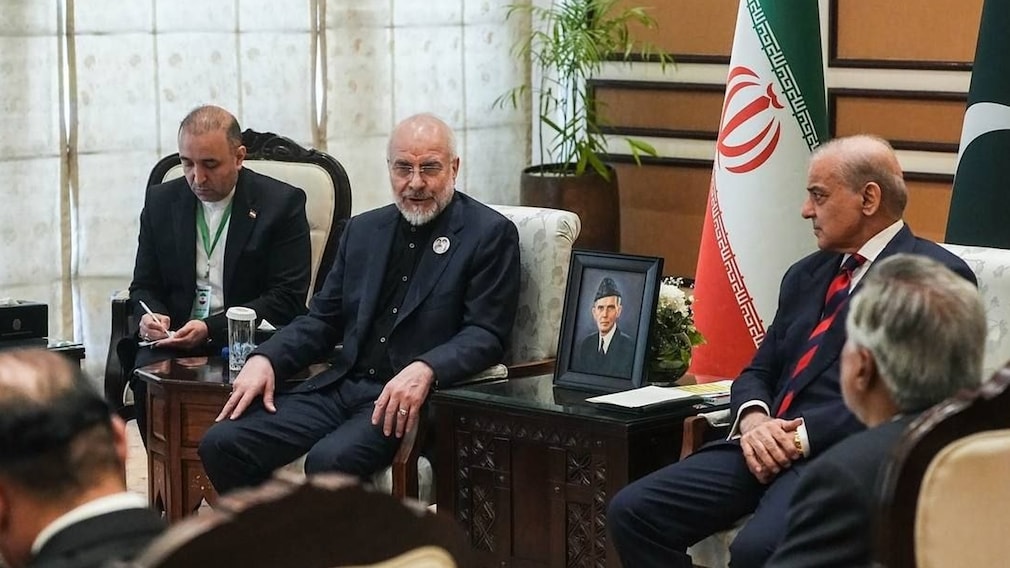
Only the eternal optimist or someone completely detached from reality could have expected the Islamabad talks between the US and Iran to lead to an actual peace deal. That the talks collapsed after marathon discussions doesn't come as a surprise. Even the 'event manager' - Pakistan - which was basking in its newfound glory as the global peacemaker, the saviour of the world, and centre of international diplomacy, had started to dampen its expectations. Mouthpieces of the regime had started spinning stories about how Pakistan had fulfilled its duty to the world by organising the talks between the two belligerents. They, however, insisted that the outcome of the parleys depended on the protagonists and not on Pakistan. Of course, had the talks succeeded, Pakistan would have taken the credit.
A Pros And Cons List
As far as Islamabad is concerned, it has already milked the event for whatever it was worth and did all the virtue-signalling possible to burnish its image in the comity of nations. It will now take stock of all its gains and the possible losses it might incur in the coming days, weeks and months because of the role it played as a broker.
On the plus side of Pakistan's balance sheet is the profile it believes it has built up for itself as the venue of the talks. While talks between the US and Iran have been held earlier in various cities - Geneva, Muscat, Doha - Pakistan presented the Islamabad talks as something epochal. The hype within Pakistan and its military - and state-controlled private media - was bigger than anything in the international media. The global media mentioned Pakistan, in most part, only as the location of the parleys. The stream of phone calls between Pakistan's (nominal) Prime Minister and global leaders was nothing extraordinary and was part and parcel of the kind of international diplomacy practised in fraught times. It in no way signified Pakistan's centrality to any peace deal. Even so, Islamabad was satisfied that after decades, the country's name was not being taken in a negative context - war, terrorism, double-dealing, instability, insolvency, military rule, stolen elections ... Well, it's a long list.
The Real 'Medal Of Honour'
Pakistan can also claim to have won the goodwill of the Trump administration. After all, it went out of its way in trying to bail out Trump by pushing for a ceasefire. Not only did the Pakistanis copy-paste messages handed down to them from Americans, but they also tried to align Türkey, Egypt and even Saudi Arabia behind its efforts to push for peace talks. This drew appreciation from the US Vice-President, who thanked them quite profusely. For the Pakistanis, who have done everything possible to woo Trump & Co - from nominating him for the Nobel Peace Prize to signing crypto and mining deals with his buddies, and even entering into an agreement on the Roosevelt hotel in New York City - getting a pat on the head from the Americans will be worn as a medal of honour.
More substantively, the Pakistanis seem to have managed the Saudis rather well. Not only did they avoid jumping into the fray against Iran in defence of Riyadh, but they also managed to convince the Saudis that they were doing this to protect the interests of the Kingdom. In doing so, they even managed to ingratiate themselves with the Saudis to a point that there were reports that Pakistan would be given a deposit of $5 billion by the Kingdom to build up its foreign exchange reserves, which were depleted after the UAE asked them to pay back their money. There are also reports that Qatar will aid Pakistan financially and that the Saudis could make some big investments in Pakistan.
A Bigger Role In Middle East?
In other words, the Pakistanis believe that, in tangible terms, they have managed to make some much-needed money by playing peacemaker. There is also an expectation that Pakistan has positioned itself to play a significant role as a net security provider and security guarantor in the Middle East. This would open up enormous diplomatic, political, economic and strategic opportunities for the country.
Domestically, the regime has cemented its position by creating an impression that the opposition can forget about any pressure from outside over the incarcerated Imran Khan.
The 'Peacemaker's' Perils
There is, however, also a downside to the role Pakistan has played, especially since the talks collapsed and there is a real possibility of hostilities restarting. Worse, the second round of war could be far more destructive and could pull Pakistan into the vortex. Under its mutual defence agreement with the Saudis, Pakistan is reported to have dispatched thousands of soldiers and some fighter aircraft to the Kingdom, presumably to support it against Iranian attacks if hostilities resume. If Pakistan gets dragged into the war, then Iran could be forced to target infrastructure in Pakistan. The damage to Pakistan's economy, in such a case, would be crippling. And the Middle East's regional instability will also spill into Pakistan.
For all the brand packaging Pakistan has done in the last few days on the international stage, the backstage scenario remains pretty dangerous. If anything, Pakistan itself is in a very precarious state - its economy is on the brink of collapse, poverty, unemployment, inflation are rising, growth is anaemic, industry is collapsing, two provinces are in the throes of full-blown insurgency, the eastern and western borders are active, and internal political divisions have left the regime with very little political capital. In such a situation, few can think about investing in the country, given especially the spectre of instability looming over the region. Of note is the fact that the governance record of Pakistan's unelected regime has received a thumbs-down from even benefactors like the Saudis, who have complained that the country failed to come up with any bankable projects to invest in the country.
Diplomatic Limits
Pakistan's vulnerabilities will not end because it played event manager. If the Saudis pump money into Pakistan, they will expect it to deliver its side of the bargain. One consequence of this will be the severe constriction of Pakistan's ability to resist political, military or even diplomatic demands made on it by external donor countries. Already, Islamabad appears to have attracted the ire of countries like the UAE and a few other Gulf states, which are incensed at what they see as Pakistan's efforts to bail out Iran. As for Iran, which has quite cleverly played along with Pakistan's diplomatic efforts, it could have a falling out if the latter is pushed into opening up a front against it. Over the last 40 days, Iran has been successful in stringing Pakistan along. Upon Islamabad's request, it agreed to limit attacks on Saudis, lauded Pakistan's peace efforts, and responded positively to Pakistan's diplomatic efforts. All that is not out of conviction, but convenience and cunning. Iran wants to ensure that Pakistan remains focused on diplomacy and stays away from making any military moves.
There is also a rather awkward scenario. What happens if the Gulf states develop their relations with Israel to build a common front against a common enemy? Such an eventuality could complicate matters for Pakistan, which does not even recognise Israel.
While there is some concern within Pakistan over the fallout of the failed peace talks in Islamabad, by and large, the regime and the people are, for now, revelling in their fifteen minutes of fame. In a country where the future is always at a discount, it is the present that counts. The possibility that their expectations might come crashing down in the not-too-distant future is simply an afterthought. At least for now.
(The author is a Senior Fellow at ORF)
Disclaimer: These are the personal opinions of the author
-
Opinion | Slurs, Threats, Now A Temple Attack Plot: When Did America Become So Hostile To Indians?

The rising tide of anti-India, anti-Hindu, and racist attacks serves as a stark reminder that economic prosperity does not automatically guarantee social immunity from bigotry.
-
A Step Behind Neha Bora: What Rahul Gandhi's Gesture Says About Congress' Gen-Z Pitch
At INDIA bloc's march to Supreme Court, Rahul Gandhi placed himself a step behind two women, hands resting on their shoulders. One was his sister Priyanka. The one on his right was Neha Bora. Here's what the image means for the protest wave now, and for Rahul's politics in general.
-
Opinion | Imran Khan, And The Perils Of Having An 'Opinion' In Bollywood
The reality of the industry is quite grimy. More often than not, its inhabitants have been fairweather friends, happy to sing the praises of whoever is in a position of authority.
-
Exclusive: India's Food Safety Problem Goes Beyond Just Dirty Kitchens - By Tukaram Mundhe
On World Food Day, Maharashtra's Commissioner of Food Safety explains why instead of taking stopgap measures, the entire supply chain in India needs to be held accountable and made transparent.
-
Opinion | India Has Enough Coal. So Why Are Power Plants Running Short? A 76 Million 'Crunch'
As of October 5, as many as 82 of the 191 thermal plants monitored by the Central Electricity Authority were in the 'critical' category
-
Opinion | Starlink, India, And Why Elon Musk Must Know His Billionaire Tantrums Won't Work
India should neither be intimidated by Musk's global influence nor distracted by his theatrics.
-
Blog | 'Baap Da Brat': Kerala Mini Cooper Crash, And Why 'Daddy' Can't Keep Saving You
There are three things you should never underestimate in India: the power of 'jugaad', the elasticity of the law, and the confidence of a 'Baap da Brat' who believes his Papa Posh can fix absolutely anything.
-
Opinion | 'Say Our Name': Why A Tiny Island Nation Wants The World To Get Its Name Right
Standing before the UN hall of nations, Naoero President David Adeang asked the world to unlearn its comfortable habits and speak a restored truth.
-
TVS Succession Row Explained: Why Venu Srinivasan's Family Is Divided Over Wealth
TVS Family Dispute: TVS Holdings is a key entity because it owns a controlling stake in TVS Motor Company. It owns 50.26% of TVS Motor.
-
Opinion | The US Is Showing India Just How Cheap Its 'Friendship' Is
Can local talent fully replace Indian contribution? Why is the US leading in setting up Global Capability Centres in India - over 60% - and pocketing the IP?