Inside Pak's New Law That Has One Man Written All Over It: Asim Munir
With a new act, Munir has truly reached the apex. At least most politicians in Pakistan will hope so.
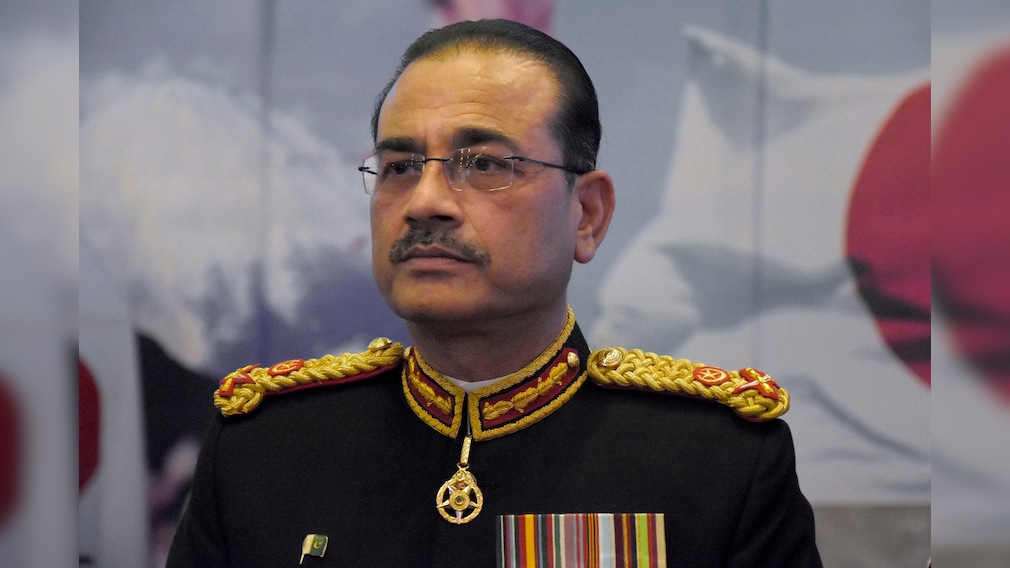
One has to hand it to the Pakistan Field Marshal, Asim Munir. He never stops his climb to power. A pause here and a pause there, but that's it. Consider the latest legislation, the Defence Forces of Pakistan Act 2026, passed within hours of the members of the Upper House receiving a copy. The unseemly haste may have its reasons, which is what should worry us. Or it could be a result of the absolute contempt for the House, in which case, it should worry the Pakistanis.
The 'Defence Forces of Pakistan Act'
With this Act, Munir has truly reached the apex. At least most politicians in Pakistan will hope so, though no one will rule out a grab for the Presidency down the road.
Consider his phenomenal progress. Munir had come to notice, at least in Delhi, when he was a Major-General and headed the FCNA (Force Commander Northern Areas) between 2014 and 2016. That was a period when terrorism in India climbed significantly, rising from some 200-odd infiltration attempts to more than 371 by the end of his tenure. It's with such credentials that he came to a leadership position eventually, making it to being the head of Pakistan's military intelligence first, and then the Inter-Services Intelligence (ISI) chief. That's rare in itself. But it stopped there.
Imran Khan disliked the pious, straight General, and he was out in eight months, to be replaced by the flamboyant Faiz Hameed. That was a humiliation that could possibly cost both Imran and Faiz their lives. Eventually, Munir managed to send both to jail, and while Imran is still a cause celebre, nobody really knows what has become of Faiz.
Thereafter, it was like he was rocket-powered. A short step to Army Chief, and then to Field Marshal - for life - and then Pakistan's very first Chief of Defence Forces. Now, with the new legislation, he's also Principal Advisor to the Prime Minister. As of today, he holds all three posts concurrently. That's unprecedented. But apparently, not enough, as the legislation indicates.
It's Not Just About Munir
The new act gives Munir total power over all other services. All pretence at service independence had anyway ended when the post of Chairman of the Joint Chiefs of Staff Committee was done away with. An amendment removed that post from the National Command Authority, which has (or 'had') the ultimate control over nuclear weapons. A new National Strategic Command was also created, with the first appointee, Gen Aamer Raza, appointed last month. He was commissioned just two years after Munir but is five years junior at the Officers Training School. In other words, the same breed, unlike another Lt Gen, Nauman Zakaria, from the prestigious Pakistan Military Academy, who was passed over for Reza. He, however, heads the Army Rocket Forces Command.
In effect, a number of Generals are accommodated in the command structure. Not a sign of any senior Air Force or Navy officer. That is further codified in the new legislation, where the Chief of Defence Forces (CDF) would handle operational command and control of the armed forces and the powers necessary for multi-domain integration, operational coordination, liaison, and the joint conduct and oversight of matters relating to the armed forces. In fact, the whole caboodle.
The CDF would also have powers under relevant laws to retire, release, or dismiss personnel, barring appointments like the Service Chiefs. But don't assume this is all merely about Munir. A further aspect of the new act establishes the Defence Headquarters, "which shall be the Headquarters of the Armed Forces". That's a unified command for real. India, in the meanwhile, shillyshallied around the idea with such structures as the Chief of Defence Staff, and an order for theatrisation that is now more than seven years old. The difference? The whole thing is still under the CDF. That means the Pakistani Army runs the show, and the rest have to learn to live with it. Not the best possible model.
What All Of This Means
Going forward, therefore, three things are clear. Pakistan is gearing up to 'win' the next conflict with the use of long- and short-range conventional missiles, precision or not, in much the same way that Iran or Israel are fighting their wars. Pakistan believes that the separation of nuclear and conventional forces makes this possible. Earlier, even the use of a single short-range missile would have invited a full-scale reaction from India, possibly even nuclear, since Delhi would have no idea whether an incoming missile was nuclear or not. Now, that bar seems to have been removed.
The second aspect is financial. Given Pakistan's 'zero-range' deterrence policy, even short-range missiles, like Abdali, are, according to Rawalpindi's doctrine, nuclear-capable. Actual separation on the ground is going to be expensive, with not just more missiles but also the systems that come with them adding up to the costs. With a recorded PKR 83 trillion debt, which doesn't include funds from international lenders and 'certain' friends, this is likely going to be difficult, but not impossible. The military, after all, has the first crack at all resources of the country - whether by fair means or foul. That includes, it appears, the selling of Pakistan's critical minerals, where the lack of transparency has been Opposition criticism. Third, and finally, India needs to not just streamline its own resources but also clear its command for not just extremely quick reaction but also the political sanction to do so. That's tricky. The present political set-up has earned itself a reputation for toughness and a no-nonsense approach. More may be needed in terms of clarity, that any attack on our cities using missiles from the so-called Army Rocket Force, or anyone else, will be met with a reaction ten times stronger, within minutes. While we continue arguing over theaterisation, this message has to go, and go quickly. That's the bottom line. Munir may now be the god of all he surveys, but a message outlining some clear red lines, which can be studied in a unified manner by his all-powerful command, is the need of the hour. Good luck with that.
Disclaimer: These are the personal opinions of the author
-
Explained: Why Tamil Nadu Dropped 2nd Airport Near Chennai

While the government stands firm with the protesting residents, Chief Minister Vijay assured that Chennai's aviation needs will not be ignored. The state will soon announce a detailed plan for a new airport at an alternative site, he said.
-
Behind Sugar Shock: Not Ethanol, But Over-Estimation Led To 16% Price Rise
In November 2025, the government allowed sugar mills to export 15 lakh tonnes. Now, India has allowed 10 lakh tonnes of raw sugar to enter duty-free.
-
3 Minutes, 6 Stanzas, Century-Old Debate: The Many Turns In Vande Mataram's Journey
PM Narendra Modi launched a year-long commemoration of the song's 150th anniversary on November 7, 2025. In December, both Houses held special discussions on it, during which the 1937 Congress decision was scrutinised.
-
Indian Family Wipeout Over iPhone: The Dangerous Lure Of Consumer Tech Debt
Young buyers walk into physical retail stores, hand over basic identity documents and walk out with a consumer electronic device that costs more than their entire family's monthly take-home income
-
China Outspends India In Space, But New Delhi Holds The Trust Card
The US remains the undisputed leader in the global space race. But it's realistic for India to aim for the third place, says Bellatrix Aerospace COO.
-
It's About The Provenance: Head Of Strategy Koreel Lahiri Decodes One Identity Of NDTV
We at NDTV consciously recognise the fact that the same consumer inhabits several screens during the course of a day.
-
Opinion | India's UPI Miracle Has Created A Difficult, Rs 20,000-Crore Question
UPI's whole magic was the Rs 30 payment it charged nothing for. But how long can it stay free?
-
Opinion | Manmohan Singh, Bachchans, And Other Secrets Of 10 Janpath: The Sonia Gandhi Story
She entered politics reluctantly, mastered its power games, chose Prime Ministers, and managed betrayals. Congress's most powerful woman finally tells the world how.
-
Opinion | Why The Congress-Samajwadi 'Merger' Fantasy Could Be Opposition's Biggest Self-Goal
Rahul Gandhi and Akhilesh Yadav do not need to become one another. They need to become better at being themselves, together.