Opinion | Marco Rubio Has Come Selling 'Oil' To India - But With Strings Attached
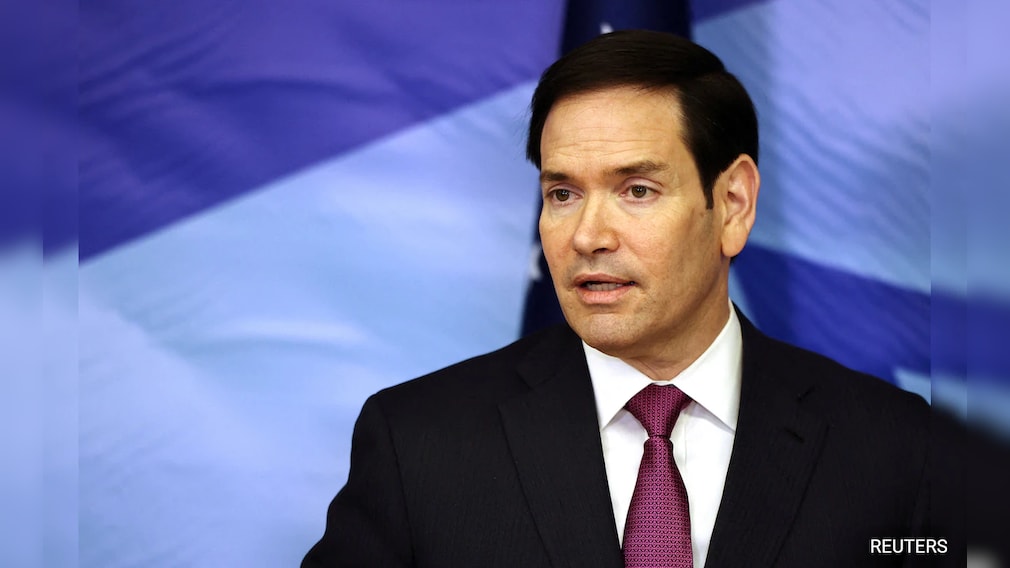
US Secretary of State Marco Rubio's visit to India this week underscores a critical reality in contemporary geopolitics: energy is no longer merely an economic commodity but an instrument of strategic influence. Against the backdrop of persistent trade tensions, differences over India's purchases of Russian oil, and Washington's evolving engagement with Islamabad, the visit highlights the growing centrality of energy security to the broader India-US partnership. Rubio's visit to Jamnagar, Gujarat, is particularly significant in this regard. It reflects Washington's recognition that India's expanding refining capacity and enormous energy demand make it an indispensable actor in the global energy market.
For India, the energy challenge is fundamentally one of balancing economic imperatives with geopolitical pressures. With more than 85% of its crude oil requirements met through imports, India remains acutely exposed to fluctuations in global prices, supply disruptions, and the strategic calculations of major producers. Affordable and reliable energy supplies are essential to sustaining economic growth, industrial expansion, and the country's wider developmental ambitions. New Delhi's decision to procure discounted Russian crude following the war in Ukraine was thus driven by economic pragmatism, even as it generated considerable friction with Washington. The episode illustrates a recurring feature of Indian foreign policy: strategic partnerships cannot come at the expense of core national economic interests.
Washington, however, increasingly views energy trade through the prism of strategic competition and supply-chain resilience. The Trump administration's efforts to encourage India to diversify its energy purchases away from Russia reflect an attempt to align commercial opportunities with broader geopolitical objectives. Rubio's emphasis on expanding American energy exports signals that the United States sees India not simply as a major consumer but as a potentially transformative market for its energy producers. Greater supplies of American crude, liquefied natural gas, and other energy products could deepen commercial interdependence while providing India with additional options in an increasingly uncertain global market.
Yet, the scope for diversification should not be confused with the possibility of an abrupt realignment. Energy markets are shaped by infrastructure, transportation costs, refinery configurations, and price competitiveness, not merely diplomatic preferences. India's engagement with Russia cannot be understood independently of these commercial realities. Rubio's acknowledgement that substantial progress has been made, while recognising that diversification cannot happen overnight, suggests a degree of pragmatism in Washington's approach. The reported US waiver relating to potential punitive tariffs connected to Russian energy purchases could further create space for a more constructive conversation. Ultimately, a sustainable energy partnership will depend on whether American supplies can compete on price, reliability, and long-term commercial terms.
It is in this context that Jamnagar assumes particular importance. Its refinery complex, among the largest of its kind in the world, represents the scale and sophistication of India's downstream energy infrastructure. India is not merely an importer of crude oil; it is also a major refining hub with the capacity to process diverse grades of crude and supply petroleum products to international markets. This creates an important strategic opportunity. By leveraging its refining capabilities, India can diversify its crude basket, strengthen its position in global energy value chains, and improve its resilience to disruptions in individual supply corridors.
Rubio's interest in Venezuelan crude adds another dimension to this emerging energy diplomacy. India's refining capabilities make it a potentially important destination for heavier grades of crude, including supplies whose availability depends on evolving sanctions arrangements and commercial concessions. Encouraging Indian refiners to process additional Venezuelan oil could, under the appropriate legal and commercial conditions, widen the pool of available supplies and contribute to easing price pressures. But this opportunity also highlights a central paradox of energy geopolitics: the United States is seeking to influence the composition of India's energy imports even as the viability of alternative supplies remains contingent on American sanctions policy. For New Delhi, the lesson is clear. Diversification is valuable precisely because it reduces dependence on any single supplier or political decision-maker.
The wider strategic significance of the visit lies in the intersection of energy, trade, and technology. Rubio's assessment that a bilateral trade agreement is close to completion offers a potentially positive signal after months of friction over tariffs and market access. Energy cooperation could form part of a broader commercial bargain, creating opportunities for American producers and investors while helping India secure additional supplies and technology. Nevertheless, the relationship will require careful management. Linking energy purchases too closely to trade concessions could complicate India's efforts to preserve commercial flexibility and strategic autonomy. A durable agreement should instead build incentives for diversified trade and investment without turning individual procurement decisions into tests of political alignment.
The regional context further reinforces the importance of energy security. Developments in the Middle East, the economic consequences of the war in Ukraine, and the vulnerability of global food, fuel, and fertilizer markets demonstrate how disruptions in one theatre can generate repercussions across the international economy. Discussions involving India, the United States, and the United Arab Emirates on regional energy security are thus significant beyond their immediate diplomatic setting. They point towards the possibility of a broader conversation on supply resilience, investment, infrastructure, and the stability of critical energy corridors.
For India, the objective should be to translate this diplomatic engagement into tangible gains: more competitive supplies, a wider range of crude and gas sources, investment in energy infrastructure, access to relevant technologies, and greater insulation from geopolitical shocks. Cooperation with the United States can advance these priorities, but it should complement rather than constrain India's wider network of energy partnerships. Strategic autonomy in the energy domain is not synonymous with equidistance between competing powers; it is the capacity to make choices based on national interests without becoming excessively vulnerable to any one external actor.
The significance of Rubio's visit should not be measured solely by the number of announcements. The Jamnagar stop reflects an emerging recognition that India's energy market and industrial capabilities are central to the future of bilateral economic relations. The challenge for both countries is to convert this recognition into a commercially viable framework that reconciles American export ambitions with India's developmental and energy-security requirements.
Ultimately, the future of the India-US partnership will depend not simply on shared strategic assessments but on the ability to manage differences over trade, sanctions, and energy procurement. Energy offers an opportunity to build a more resilient and mutually beneficial relationship, provided cooperation is grounded in market realities rather than geopolitical compulsion. For New Delhi, the priority remains clear: secure the energy needed to sustain growth, expand the range of available suppliers, and preserve the freedom to navigate an increasingly contested international order. For Washington, a more secure and prosperous India is a strategic asset. Aligning these interests through pragmatic energy cooperation could give the bilateral partnership a stronger and more durable economic foundation.
(Harsh V Pant is Vice President for Studies at Observer Research Foundation, New Delhi)
Disclaimer: These are the personal opinions of the author
-
BJP Leader's Singer Wife, A Kabir Bhajan, And Some 'Jantar Mantar': How 15th Century Saint Entered 2026 Row

A video of Sivasri Skandaprasad's singing performance went viral, interpreted as a dig at protests at Delhi's Jantar Mantar. What she's singing is actually attributed to the saint-poet Kabir, and he did not really mean that particular "jantar mantar". He meant something far more profound.
-
Opinion | Sardar Patel, And The Art Of Holding A Nation Together
A true Gandhian, he reminded his countrymen that gaining freedom from foreign rule was merely the first step; true internal Swaraj required much, much more.
-
Opinion | How India Is Making Its Stock Market An Expensive Place To Invest
FPIs sold Rs 1.66 lakh crore of Indian equities in 2025 and a record Rs 3.08 lakh crore in 2026 through October 12. Foreign ownership of the Indian market is at a 15-year low
-
Jail Is No Bar: How Gangsters Call The Shots From Inside Prisons
Jail can become a safe haven from enemies, a recruitment ground for fresh gang members and, in some cases, a command centre for criminal operations
-
From King Edward III To Neha Bora, A 1361 Law Lives On In 'Peace Bonds': NDTV Explains
CJP leaders Abhijeet Dipke, Saurav Das, and Ashutosh Ranka signed peace bonds; two of them even faced jail over an alleged breach, while AISA's Neha Bora questioned such a bond's very logic. Here's what a peace bond is, and what the questions are.
-
Air Force Golf Course Near PM House Closed. How This Land Has Seen Many Turns Of History
The Air Force Sports Complex, which includes the golf course, is the latest property near the Prime Minister's residence set to be taken back this year, as the land is owned by ministries.
-
Opinion | How A Poland 'Experiment' Could Change India's Defence Industry
Europe is spending billions on arms in a historic rearmament drive. Indian firms can cash in. But there's a catch
-
Opinion | The Muslim World Is Seeing An Unexpected 'Experiment' - In Kazakhstan
The country has a long history of using mediation to mitigate conflict; now, it has added another, much-wanted dimension to it.