It's About The Provenance: Head Of Strategy Koreel Lahiri Decodes One Identity Of NDTV
We at NDTV consciously recognise the fact that the same consumer inhabits several screens during the course of a day.
The evolution of NDTV 24x7 to NDTV is more than a change in nomenclature: it represents a fundamental shift in how media organisations must perceive themselves. When the channel was launched, the suffix meant something because round-the-clock television news was a novelty. However, a few decades on, device and form factor are no longer limitations. Audiences are not defining their experiences by the device but by the authenticity of what they are consuming. And that authenticity is what defines us.
For much of the past decade, conversations about the future of media have been framed as a series of substitutions. Digital would replace television, streaming would replace linear broadcasting, mobile would replace the large screen and social media would replace the homepage. India is turning out to be considerably more complicated than that. Add to that mix the fact that Print is yet to die despite many such prognostications in the past, and individual creators are gaining traction as pockets of trust in a sea of information.
The evidence of this complexity lies in the fact that even as Digital Media crossed Rs 1 trillion in revenues in 2025, the Connected TV wave keeps television strongly in fray. According to a report by WPP & The Trade Desk, CTV has a reach of 207 million across 62-65 million households. This growth is largely coming from smaller towns, suggesting increasing mass adoption. It also signals huge incidence of dual-screen behaviour, especially among GenZ, with both CTV and mobile devices being central to it.
All of this matters profoundly because the old vocabulary created by media companies themselves is fast disappearing.
Is somebody watching a YouTube interview on a 65-inch television watching television or consuming digital video? Is somebody watching the same live news stream through an app on a Connected TV a television viewer, an OTT viewer or a digital user? Traditionally, media companies tend to classify these as television audiences, digital audiences, social audiences, and video audiences because that is how our organisations, measurement systems and revenue teams have historically been structured. But, the consumer does not make those distinctions.
We at NDTV consciously recognise the fact that the same consumer inhabits several screens during the course of a day. Someone might discover a breaking story through WhatsApp, follow it on television, search for more information on Google, watch an interview on YouTube and encounter subsequent developments through Instagram. During a major election, war, sporting event, or financial announcement, that journey could happen several times within a few hours.
They are simply choosing NDTV, or for that matter any brand that they trust, at different moments and on different screens. What matters is the content, the experience, and crucially, who it comes from.
There is evidence of this approach working in our favour in some sense. The Reuters Institute's Digital News Report 2026 places NDTV first among the news brands it measures in India for weekly reach both offline and online. What's interesting is not the rank, but the consistency on both offline & online.
Therefore, if consumers increasingly recognise and choose NDTV across platforms and form factors, why should we continue defining the brand through the lens of one particular medium?
In fact in today's world of fragmented distribution and near Google-zero, it is the brand and its promise that stands out. At first glance it seems that algorithmic interference will keep making media brands less relevant. But I think the opposite will happen. Because the hard question facing all of us is: "Who do I trust to tell me what actually matters?" Therefore, fragmented distribution will reinforce the need for a coherent brand identity. In such an environment, provenance is our most valuable currency. It is our unassailable army of journalistic talent that supports each and every piece of information.
The name NDTV is much more than a logo in the corner of the screen. It is a shorthand for this provenance, editorial standards, accountability, and trust. The One identity of NDTV also means the same promise expressed through all our products, whether it is a television bulletin, a podcast, an article, a reel, or our interactions with our community. Economically and commercially, that trust travels through a whole range of opportunities around memberships, events, specialist information products, expert marketplaces, affiliate commerce and other forms of utility that not only monetises attention but also utility.
Perhaps this is ultimately the most important reason for thinking about NDTV as one identity. Platforms will change, formats will evolve and devices that seem dominant today may become irrelevant surprisingly quickly. NDTV will continue to describe who we are and our relationship with our community of audiences, when it really matters.
(The article was originally published in Adgully)
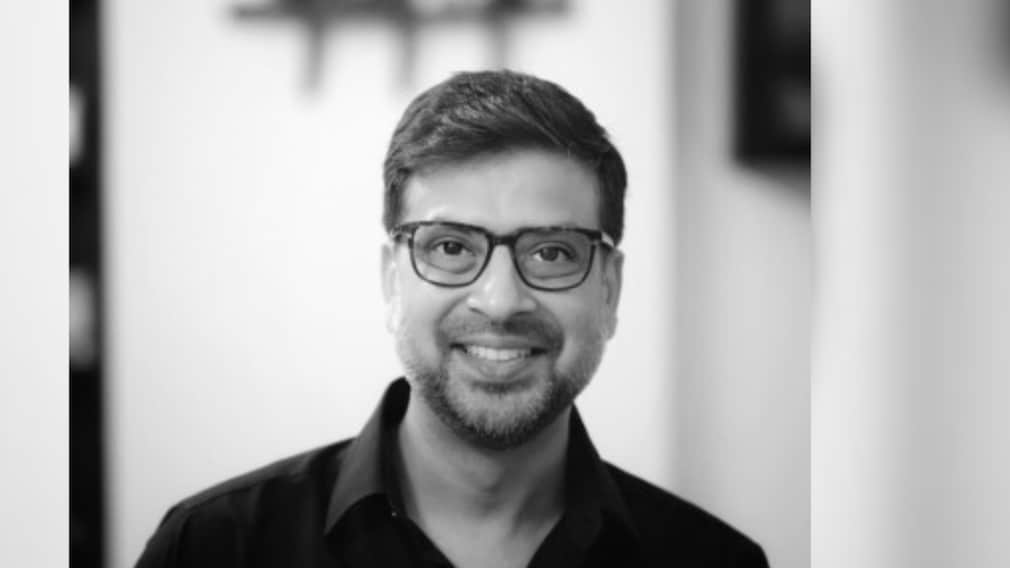
(Koreel Lahiri is the Head of Strategy & Innovation at NDTV)
-
Opinion | The Last Bet? What Trump's 'Mother Of All Bombs' Could Actually Do To Iran

Can an MOAB deliver a decisive blow to Iran that may force it to surrender immediately, as Japan did after Hiroshima and Nagasaki in World War 2?
-
Hit Songs, Empty Pockets: The Hidden Math Behind India's Viral Music Boom
Over 80,000 brands and five lakh creators in India make branded content. The opportunity is worth around Rs 1,500 crore.
-
Opinion | Great 'Exceptions': How The Oil India Was Attacked For Is The Oil Trump Now Seeks
A law written to punish the buyers of Russian oil was suspended by the US to protect a purchase of Russian oil. India spent fourteen months being lectured for less.
-
Opinion | Louis Vuitton Loot, Torched Cars: France Protests Have An Unlikely Beneficiary
It's an unbelievable moment. Crowds looting the most exclusive stores in Paris, including the famed Luis Vuitton. But what's behind this meltdown?
-
Blog: Kolkata Didn't Learn From 2015. Eleven Years Later, It Proved To Be Fatal
The City of Joy isn't a stranger to crowd control. Be it during Pujo or Christmas at Park Street, Eden Gardens cricket matches, or Derbies between Mohun Bagan and East Bengal. But during Pujo, the entire city is on alert.
-
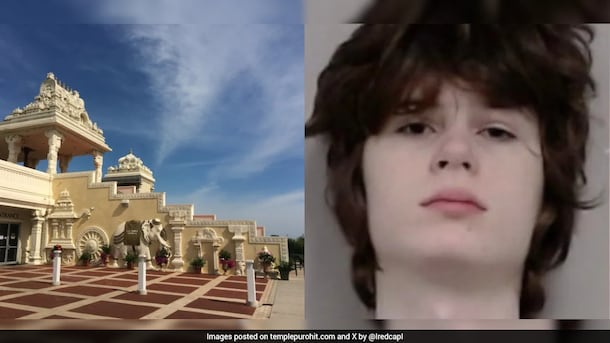
Opinion | Slurs, Threats, Now A Temple Attack Plot: When Did America Become So Hostile To Indians?
The rising tide of anti-India, anti-Hindu, and racist attacks serves as a stark reminder that economic prosperity does not automatically guarantee social immunity from bigotry.
-
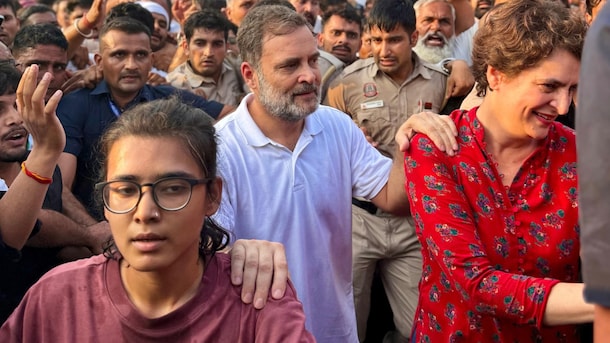
A Step Behind Neha Bora: What Rahul Gandhi's Gesture Says About Congress' Gen-Z Pitch
At INDIA bloc's march to Supreme Court, Rahul Gandhi placed himself a step behind two women, hands resting on their shoulders. One was his sister Priyanka. The one on his right was Neha Bora. Here's what the image means for the protest wave now, and for Rahul's politics in general.
-
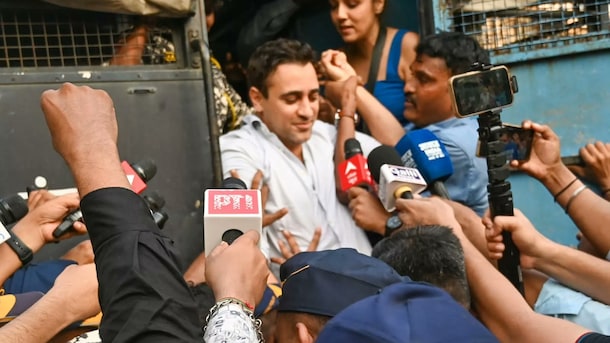
Opinion | Imran Khan, And The Perils Of Having An 'Opinion' In Bollywood
The reality of the industry is quite grimy. More often than not, its inhabitants have been fairweather friends, happy to sing the praises of whoever is in a position of authority.
-
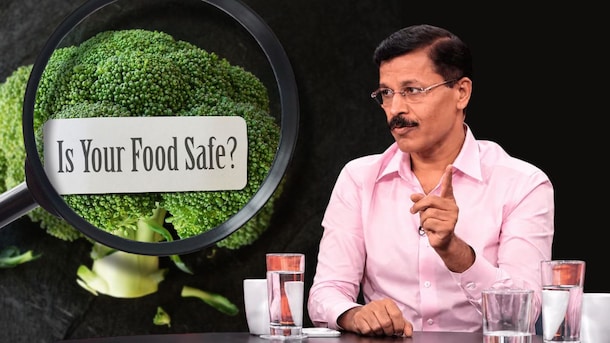
Exclusive: India's Food Safety Problem Goes Beyond Just Dirty Kitchens - By Tukaram Mundhe
On World Food Day, Maharashtra's Commissioner of Food Safety explains why instead of taking stopgap measures, the entire supply chain in India needs to be held accountable and made transparent.
-
Opinion | India Has Enough Coal. So Why Are Power Plants Running Short? A 76 Million 'Crunch'
As of October 5, as many as 82 of the 191 thermal plants monitored by the Central Electricity Authority were in the 'critical' category