Opinion | Israel's Arab Parties Have Never Had This Much Power. And Netanyahu Isn't Liking It
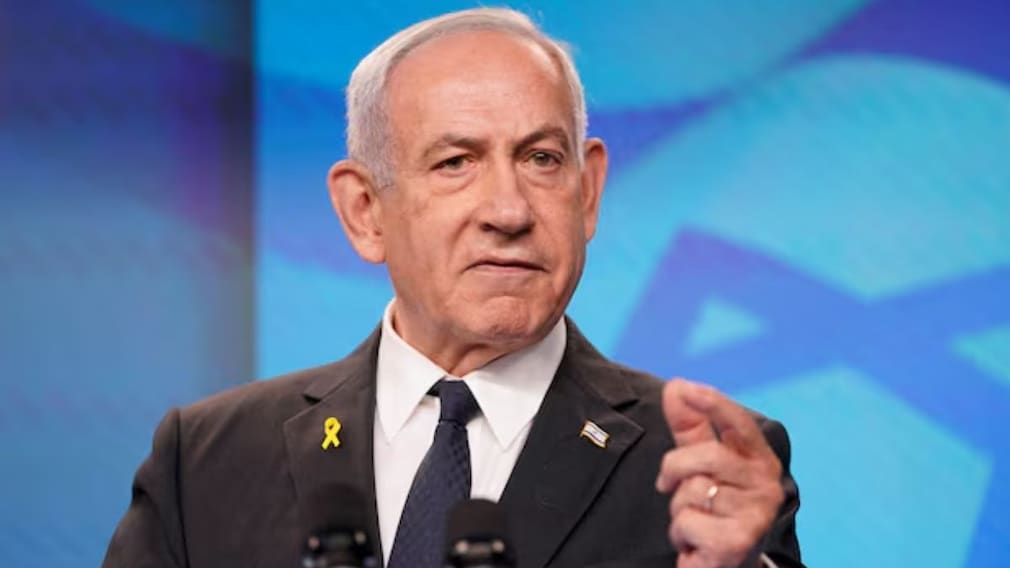
In the just-concluded historic Israeli Knesset elections, allegations of 'vote theft' against Israeli Arab parties and interference by foreign countries are growing louder, even though the evidence is thin.
Israel's two main Arab-led political groups registered an unprecedented victory in the elections with 19 seats between them, thus nearly doubling their combined tally from the 2022 elections. They are now being seen as potential kingmakers. With their support, either of the two main political blocs could potentially form the next government. But will Israel's political establishment let them wield power? The reluctance of both major political camps to work with them reveals a deeper contradiction in Israeli democracy.
First, let's see what the allegations are: 1)PM Benjamin Netanyahu and his Likud Party's claims that the election was stolen and that Arab parties should consequently be excluded from government formation; 2) they alleged that Arab parties benefited from illegal foreign funding and 3) Arab Party leaders should be arrested
So, instead of focusing on how to accommodate this new parliamentary reality, the political debate in Israel shifted towards questioning the legitimacy of the Arab-led parties' electoral success.
The 'Foreign Funds' Allegations
The election committee has denied the allegations, saying it found no evidence of vote theft or foreign funding. Now, Israel's security agencies have stepped in by launching an investigation. But despite Benjamin Netanyahu amplifying the vote theft theory, the scope of the investigation only includes allegations of foreign funding. The Shin Bet and Mossad opened the inquiry after Central Elections Committee chairman, Supreme Court Justice Noam Sohlberg, asked it to examine allegations of improper influence by foreign entities. Qatar is a central focus of the suspicion, and it has outrightly rejected the allegations.
The separate police case involving three Ra'am activists arrested on suspicion of election bribery is unconnected to the wider foreign-interference investigation, with investigators finding no evidence of a vote-buying scheme, let alone proof that the election was stolen. They have subsequently been released and put under house arrest
So, it may be disappointing for Mr Netanyahu that the foreign funding will only examine if foreign funds influenced the mobilisation of voters, not the voting itself. It must be made clear here that no public evidence has established that any foreign government succeeded in changing votes or the election outcome. The election committee and security agencies have clearly indicated that the investigation will not affect the certified declared results, which are due to be presented to President Isaac Herzog on November 4.
The harsh reality appears to be that Israel's Arab citizens (just over 20% of the population) have delivered their strongest electoral performance in history. Winning 19 seats in the 120-member Knesset has catapulted them to a position where they could decide the fate of Mr Netanyahu. Former military chief Gadi Eisenkot could become the next Israeli Prime Minister if he reverses his pre-election decision not to form a government with the help of the Arab-led parties.
A quick reminder of the tally: the final result released by the Central Elections Committee on Friday gives Netanyahu's bloc 53 seats, against 48 for the opposition. The Arab-led Joint List has secured 11 seats and the United Arab List, known as Ra'am, eight. Neither of the two main camps is anywhere close to the 61 seats required for a parliamentary majority.
The Four Scenarios
The Arab parties, which faced unsuccessful attempts to be banned from taking part in the elections, now hold the key to the formation of Israel's next government. Netanyahu's bloc is eight seats short of a majority, while the opposition needs 13 more. The first possibility is an opposition government led by Gadi Eisenkot, with the Joint List and Ra'am providing parliamentary support from outside the coalition. In return, they would seek commitments on housing, infrastructure, public security, and other issues affecting Arab communities. A second possibility is a narrower arrangement with Mansour Abbas's Ra'am, which has previously joined a Jewish-led coalition. Its more pragmatic approach could make it a relatively easy partner, although Eisenkot and Naftali Bennett have resisted formally including Arab parties in their government.
A third possibility is a political deadlock, forcing another election if neither bloc can secure the 61 seats needed for a majority. This is highly undesirable for all parties concerned, as well as for Israel's economy, which is reeling from wars on various fronts. A fourth, less discussed scenario is Netanyahu dropping his far-right partners, particularly Itamar Ben-Gvir and Bezalel Smotrich, and attempting to form a broader coalition with centrist and moderate right-wing parties, potentially with Ra'am's support. This would require additional parliamentary partners and mark a major political reversal for Netanyahu, who has repeatedly opposed Arab parties influencing government formation. Even if they remain outside the government, Arab lawmakers could still play a kingmaking role by influencing the election of the Knesset speaker, parliamentary committees, and legislation. Ultimately, the question is whether Israel's political establishment is prepared to turn its unprecedented electoral strength into meaningful political power.
What Arab Parties Stand For
Israel's Arab citizens, who make up over 20% of the population, are largely descendants of Palestinians who remained within Israel after its establishment in 1948 and the mass displacement that followed the war. Unlike Palestinians living under Israeli occupation in the West Bank and Gaza, Israeli Arabs hold Israeli citizenship, can vote and contest elections, and have representatives in the Knesset. They are mostly Muslims, but have substantial numbers of Christians and Druze.
The 19 seats won by Arab parties are divided between two distinct political groups with different visions. The Joint List, with 11 seats, brings together Hadash, Ta'al and Balad. Hadash supports social equality, Palestinian rights and Jewish-Arab cooperation, and includes both Jewish and Arab members. Ta'al, led by Ahmad Tibi, takes a more pragmatic approach to parliamentary politics. Balad has a stronger Palestinian nationalist identity and wants Israel to become a state of all its citizens. The other group, Ra'am, led by Mansour Abbas, has an Islamist identity but follows a more pragmatic approach, focusing on housing, infrastructure, public security and better services for Arab communities. Unlike the Joint List's more nationalist elements, Ra'am has shown a willingness to work with Jewish parties, including those on the right, if it can secure concrete benefits for its voters.
Israel is officially both a Jewish state and a democracy, a contradiction that is central to its identity, and non-negotiable. Many Arab parties whose members are native citizens of Israel argue that if the country is democratic, it should be a state where all citizens enjoy equal status, regardless of religion or ethnicity. Of course this challenges the very idea of Israel as the homeland of the Jewish people. The October 7, 2023, Hamas attack and the subsequent war have deepened mistrust among many Jewish Israelis towards Palestinian political movements. Opposition leaders, meanwhile, fear that working with Arab parties could alienate right-wing Jewish voters and cost them support.
But cooperation is not without precedent. In 2021, Mansour Abbas's Ra'am party joined the coalition government led by Naftali Bennett and Yair Lapid, becoming the first independent Arab party to do so. It did not receive ministerial positions, but its support helped bring an end to Benjamin Netanyahu's 12 consecutive years in power. Although the government collapsed in 2022, it demonstrated that an Arab party could play a decisive role in forming an Israeli government.
The Attempt To Keep Them Out
One of the most revealing aspects of this election was the attempt to prevent the Arab-led parties from contesting it in the first place. On September 23, Israel's Central Elections Committee voted 18-5 to disqualify both Ra'am and the Joint List. The petitions, backed by right-wing political forces, alleged that the parties and some of their candidates had violated election laws concerning support for armed struggle against the state. The parties appealed to the Supreme Court, which overturned the decision and allowed them to contest the October 27 election.
Disqualifying both Arab-led parties would have denied a substantial section of Israel's population its preferred political representation. During the campaign, Netanyahu and his allies warned Jewish voters about rising Arab turnout. He highlighted queues at Arab polling stations and suggested that Israel could end up with a government dependent on Arab politicians. Arab leaders described the messaging as racist and an attempt to intimidate voters. The election results, however, showed that Arab citizens were increasingly willing to use the ballot box to influence Israel's political direction.
Israelis may still be arguing about the legitimacy of the Arab-led parties' electoral victory at the ballot box, the country's political establishment quickly needs to decide if it wants another protracted political drama or embrace their elected Arab representatives as legitimate partners in government.
(Syed Zubair Ahmed is a London-based senior Indian journalist with three decades of experience with the Western media)
Disclaimer: These are the personal opinions of the author
-
Opinion | The Great AI Rift: Why Meta, Palantir Are Fighting Against OpenAI, Anthropic, Google

On July 24, 25 companies, among them Nvidia, Microsoft, Meta, IBM, and Palantir, signed an open letter to Washington. Google, OpenAI, and Anthropic weren't part of it.
-
Rs 200-Crore Wedding That Unravelled Rs 90,000-Crore Mahadev Betting Empire
Saurabh Chandrakar was taken into custody by the Royal Oman Police after Interpol issued a 'Red Corner Notice'.
-
Opinion | US Has No 'Election Commission'. Trump Is Testing What That Can Mean
America does not have a central election authority that centrally undertakes these critical functions. Each of the 50 states sets its own election laws.
-
India's New Real Estate Luxury Isn't A Bigger House. It's More Bathrooms
The growing demand for additional bathrooms creates a new challenge: how do developers accommodate them without making the bedrooms smaller?
-
BJP Leader's Singer Wife, A Kabir Bhajan, And Some 'Jantar Mantar': How 15th Century Saint Entered 2026 Row
A video of Sivasri Skandaprasad's singing performance went viral, interpreted as a dig at protests at Delhi's Jantar Mantar. What she's singing is actually attributed to the saint-poet Kabir, and he did not really mean that particular "jantar mantar". He meant something far more profound.
-
Opinion | Sardar Patel, And The Art Of Holding A Nation Together
A true Gandhian, he reminded his countrymen that gaining freedom from foreign rule was merely the first step; true internal Swaraj required much, much more.
-
Opinion | How India Is Making Its Stock Market An Expensive Place To Invest
FPIs sold Rs 1.66 lakh crore of Indian equities in 2025 and a record Rs 3.08 lakh crore in 2026 through October 12. Foreign ownership of the Indian market is at a 15-year low