Opinion | Iran To Saudi, Pakistan Is Now Fast Running Out Of Sides To Play
Pakistan's long history of playing all parties to its own benefit may have reached the end of its road.
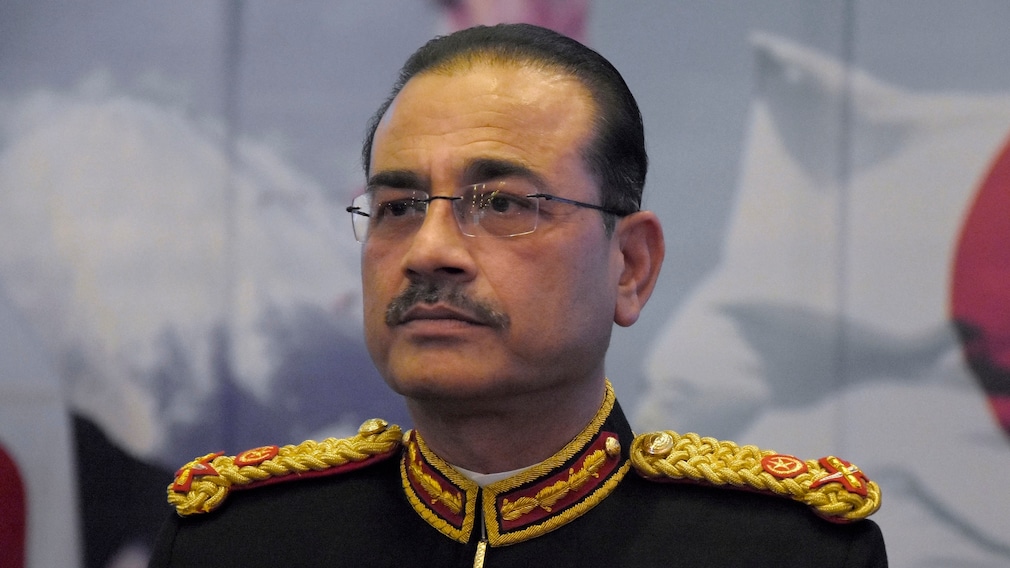
Pakistan is a country of the most interesting contradictions. Recently, authorities appointed a retired general as the head of the newly created Mecca security pact, created to protect Saudi Arabia against primarily Iranian attacks. The same day, reports indicated that Pakistan had received vital LNG cargo from Qatar using Iranian unofficial contacts. Prime Minister Shahbaz Sharif promises to stand ‘shoulder-to-shoulder' with Riyadh, while his armed forces are unsurprisingly fighting shy of taking on the Iran-backed Houthis. Meanwhile, they seem to be fine with bombing and strafing Afghanistan in an operation that is likely to prove hugely disastrous for internal security. All reports indicate that Pakistan's terrorism story has reached a climax. The long history of playing all parties to its own benefit may have reached the end of its shelf life. Things have just got too complicated.
The Alliance Gets Its Act Together
First, with regard to the Mecca alliance. A lot seems to be happening in terms of meetings and appointments and setting up a structure of sorts even as the Houthis continue their attacks. Even as files were being passed around from capital to capital, France promised to send “soldiers, radar systems and defence systems” to protect Yanbu. President Macron did say that this was not to ‘get involved' in conflicts but for protection of a vital node. Still, that's something.
Pakistan, meanwhile, appointed Lieutenant-General (Retired) Nauman Mahmood as the first secretary general of the Mecca Defence Alliance, who will lead the Secretariat that is being established in Riyadh. Foreign Ministers of respective countries met in New York and issued expected statements of ‘condemnation' and about Saudi Arabia's right to defend itself under Article 51 of the UN Charter. More importantly, they announced an urgent meeting of their chiefs of staff to discuss ways to support the Kingdom under the Mecca Joint Defence agreement. Apparently, there is now some realisation that something concrete will have to be done other than talk of ‘strong support' for the Saudis.
Houthis vs Saudis vs Iran, And A Little Help From Friends
All that involves some kind of attack against the Houthis, a prospect that will hardly be viewed with gratification in Iran. The Houthis are not quite Iranian ‘toys'. Still, their formidable arsenal owes much to Iran, which seems to retain a war-waging capability despite the current conflict and decades of sanctions. It's a strange war, since Iran certainly gets considerable assistance from Russia and China across the board, including in satellite intelligence, which allows high accuracy in its strikes. Wires are increasingly getting crossed since China also supports the Saudis, with most recently Beijing responding to Riyadh's appeals by pressing Iran to stop the Houthis in what seemed to have been a very private message.
In short, a lot of wires are getting crossed, but the strangest one yet was this. Caught in a serious energy bind and attendant internal crisis - just days ago, huge protests against fuel costs had politicians riding donkeys to the Sindh Assembly as a mark of protest - Pakistan turned to Iran for help. The latter obliged. At least two shipments of LNG crossed the Strait of Hormuz to Port Qasim with the 'assistance' of Iranian officials. Now try and square that circle.
The General Has A Job
The retired General soon to take up the mantle of the ‘Secretary General' of the Mecca alliance has to take all this into account. No easy task, not even with his formidable profile. A Baloch Regiment officer, he was commissioned into the Pakistan Army in September 1987. He ticked all the right boxes, including a master's degree in War Studies, not to mention a spell at the ISI, notably as Director-General of the Analysis Directorate at Inter-Services Intelligence (ISI). That would have involved strong external assessment capabilities, from a national security perspective, and strong contacts with foreign intelligence agencies. He was a contender for the Army Chiefs post in 2022 but lost out to the present - and probably ever-lasting now - incumbent General Asim Munir.
More notably, he was in command of XI Corps based in Peshawar, at a time when the US was pulling out and matters were getting hot on the border. He would also have great contacts with the Taliban leadership. If he has to do his magic in Riyadh, none would know better that it would be vital to get a reasonable peace on the Afghan border. It is not just the fighting and the bombing and maiming innocent lives across the border. It's the end effect back home. Pakistan may be in the bottom tier in terms of its economy, but is at the very top in terrorism according to the Global Terrorism Index. You cannot fight a war on foreign shores when your own country is burning.
A Study In Scarlet
In sum, Pakistan's policy moves are a case study in contradictions, some of it no doubt admirably crafted to deliver the most urgent requirement of the moment. If it's oil with Iranian help at one moment, it's setting up a very slow architecture for the Mecca Pact at another. Add to all this the inevitable reaction from Shias on any action against Iran, and the political backlash in fighting the Houthis. Don't forget the 2015 chaos when Parliament barred the deployment of troops for support of Riyadh, despite the fact that Saudi Arabia had, in meetings with the Pakistani leadership, conveyed a request for fighter jets, ground troops and naval warships to be contributed to its Operation Decisive Storm.
Pakistan has also been involved with Turkey in bringing an end to the conflict, and a flurry of diplomatic activity ensued, with the then Iranian Foreign Minister Mohammad Javad Zarif arriving in Islamabad, which in turn followed then Prime Minister Nawaz Sharif's meeting with Turkish leadership on the issue. In the end, Parliament voted only to stand ‘shoulder to shoulder', and nothing else. The fear of sectarian warfare inside the country was as real then as it is now.
Pakistan's decadal policy of running with the hare and hunting with the hounds seems to have come full circle. A mediation exercise has brought it media glory, but in reality, it's a diplomatic nightmare. It is simply not possible to please everyone involved in this complex exercise.
All this while not just terrorism but internal chaos is growing as the Pakistan Tehreek-e-Insaaf plans a march to Islamabad in its attempt to free the jailed former Prime Minister, Imran Khan. Islamabad has turned into a fortress, though the military regime may yet succeed in frustrating PTI plans. After all, almost all of its top tier leaders are in jail. Notice that no one, absolutely no one, is calling for his release, or talking of human rights or any other rights at all. Ultimately, this may be the biggest benefit for a military with a country attached to it. It can do anything at all to keep itself in power, and nobody cares as long as the cards are dealt fast and furiously. That's not a bad plan. Let the games continue.
(Tara Kartha is a former Director, National Security Council Secretariat)
Disclaimer: These are the personal opinions of the author
-
Gyanesh Kumar Has An Immunity Pin. Why A Petition Says He Can't Use It

The Opposition wants the Chief Election Commissioner prosecuted for alleged manipulation of voter rolls, but a 2023 law stands in the way. A petition in the Supreme Court now says the law has a gap.
-
Opinion | Is The World Staring At A Big Stock Market Crash - And Recession? 5 Uneasy Signs
On Wednesday, the US bond market recorded its worst day since Trump's "Liberation Day" tariffs rattled markets in April 2025. The 30-year US Treasury yield topped 5.43%, putting it on track for its highest close since 2004.
-
Form 6 For New Voters: When A Small Change Triggered A Big Row
In July 2026, the online version of Form 6 on the ECI's ECINet portal was modified to include a new declaration.
-
Opinion | Saudi Arabia's China Turn Has Begun - After Learning Much The Hard Way
Leaning on China just makes sense for the Saudis right now. The question is, can its other great 'ally' stomach it?
-
Opinion | Bihar Assault, Hisar Marriage Ban: Who'll Stop The Guardians Of Indian 'Culture'?
Why exactly does the sight of a young couple seeking a bit of alone time somewhere tend to particularly provoke a certain kind of Indian men?
-
Opinion | The Trump-Xi Summit, And India's Many Worries Of Its Own
Washington and Beijing may have chosen coexistence over confrontation. For India, that could be both a relief and a warning.
-
Opinion | China Claims It Has Cut Troops At The Indian Border. But The Math Doesn't Add Up
The reduction likely has more to do with the deployment along the LAC than the total strength active in the region
-
Opinion | China Is No Longer Waiting For Trump To Set The Rules. And He Knows It
America's old diplomatic tricks with China won't work any longer. Because China has changed, and so has its ambitions.
-
Opinion | As UN Interviews Its Next Chief, The Interviewers Have Some Explaining To Do
On the panel sit governments whose wars, vetoes, and unpaid dues have helped make the organisation ineffective.