Opinion | India's Solar Dreams Have A Big China Problem
The entire edifice of Indian solar, the panels, the parks, the rooftop schemes, the 500 GW of non-fossil capacity promised by 2030, rests, at its base, on a single supply line that runs across a contested border.
In April 1933, John Maynard Keynes took the boat to Dublin to deliver the first Finlay Lecture at University College. He was by then the most famous economist alive, and what he said, in "National Self-Sufficiency", printed soon after in the Yale Review, caused a small, genteel scandal. Here was the man every undergraduate filed under free markets and open exchange, calmly taking apart a faith he had once held without question. "I was brought up, like most Englishmen, to respect free trade not only as an economic doctrine which a rational and instructed person could not doubt, but almost as a part of the moral law." Having confessed the creed, he proceeded to renounce a good part of it.
I thought of that lecture while reading a notification issued by the Ministry of New and Renewable Energy on March 18, 2026.
The notification extends something called the Approved List of Models and Manufacturers, ALMM in the acronym-strewn manner of Indian administration, to solar ingots and wafers, with effect from June 1, 2028. ALMM began life as an order in 2019. List-I, for solar modules, became enforceable in 2021; List-II, for cells, from June 1, 2026; and now List-III, for the wafers and ingots that sit further upstream still. The mechanism is simple. Only manufacturers on the list may supply projects awarded under Section 63 of the Electricity Act, 2003, and net-metering and open-access projects besides. Chinese firms are, in practice, kept off it. ALMM is a non-tariff barrier dressed in the language of quality assurance.
Let nobody pretend otherwise. David Ricardo settled the matter in 1817, and two centuries of Lancashire and Manchester and the repeal of the Corn Laws settled it again. If China makes a wafer more cheaply than India can, the gains from buying it are real and the buyer, here, ultimately, the household paying an electricity bill, is the beneficiary. Every rupee of protection is a tax that someone pays, usually the person least able to see that he is paying it. Industry's own estimates suggest the cell mandate alone could raise project costs by three to five per cent, with sharper spikes when supply is short. This is trite, and it is true.
And yet, this is precisely where Keynes is useful, because he was not a protectionist crank reaching for tariffs to please a constituency. He had arrived, reluctantly, at a more uncomfortable position, that the case for free trade had been oversold as a moral absolute when it was only ever a contingent argument. "I sympathise, therefore ... with those who would minimise, rather than with those who would maximise, economic entanglement between nations." Ideas, knowledge, art, hospitality, travel, these should be international by their nature. "But let goods be homespun whenever it is reasonably and conveniently possible; and, above all, let finance be primarily national." The phrase to dwell on is reasonably and conveniently possible. Keynes was not abolishing trade. He was denying it the status of scripture.
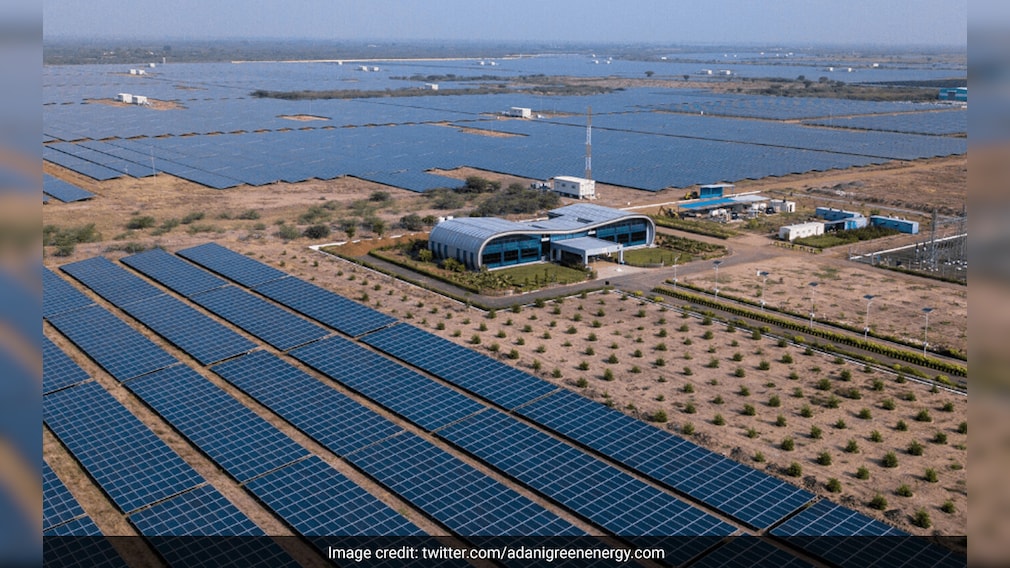
The argument for domestic capacity, capacity, note, not autarky, rests on a narrow ground, and the narrowness is the whole point. Some goods are not like other goods. Wine and toys and television sets can come from wherever they are cheapest, and if a supplier turns difficult, one shrugs and buys elsewhere. A handful of goods are different, because the world makes them in only one place. China produced roughly 91% of the world's polysilicon and over 97% of its ingots and wafers in 2023-24. A supplier with that share of a market is not, in any meaningful sense, a market at all. It is a chokepoint. India, against some 172 GW of listed module capacity, has perhaps 2 GW of ingot-and-wafer capacity. The entire edifice of Indian solar, the panels, the parks, the rooftop schemes, the 500 GW of non-fossil capacity promised by 2030, rests, at its base, on a single supply line that runs across a contested border.
Anyone who watched Galwan in 2020, or the pandemic's scramble for ventilators and active pharmaceutical ingredients, or Europe's sudden education in the price of Russian gas, has learnt the same lesson by now. Supply chains can be weaponised. A dependence that is purely commercial in peacetime becomes a lever in any other weather. Electricity is not a discretionary import. To build the grid of the next half-century on a thread held in one foreign hand is to mistake cheapness for security, and the two are not the same thing. Renewable energy is, in my view, exactly the sort of area Keynes had in mind, where homespun is worth a premium, because the alternative is not a higher bill but a hostage.
That is the case for ALMM, honestly stated. But the caveat matters more than the case, and here I would not be a cheerleader. Strategic is the most elastic word in the entire lexicon of protection. It is the Humpty Dumpty word. It means whatever the minister chooses it to mean, neither more nor less. India has heard it before. The two decades after 1956 were one long festival of import substitution, in which every industry from scooters to soda ash discovered that it was infant, or strategic, or both, and deserving of a wall. The infants were still infants thirty years later, fat and querulous behind their tariffs, and it took the crisis of 1991 to wean them. The danger is not that the renewable-energy argument is wrong. The danger is that it is right, and that its rightness becomes a licence for every other claimant to dress in the same clothes.
ALMM's own short history is the warning written in advance. The module mandate was kept in abeyance for 2023-24 and reinstated in April 2024, and in the interregnum imports surged, module imports rose some 360% year on year as developers stocked up on the very Chinese panels the policy existed to displace. The mandate, in other words, ran ahead of the capacity it presumed. To their credit, the framers of List-III seem to have absorbed this. The wafer list issues only when at least three independent units totalling 15 GW exist, and projects already in the pipeline are grandfathered. The test of a good protective measure is whether it contains, from the start, the conditions of its own removal. ALMM now gestures at this. Whether the gesture survives contact with the lobbies it will create is another matter.
The deeper point is the one Keynes reached in Dublin and India learnt the hard way through Lancashire cloth and the broken handloom. Free trade was never quite the moral law its evangelists proclaimed, and self-sufficiency was never quite the folly its critics alleged. Both are instruments, to be used where they fit and abandoned where they do not. The question is never whether to protect, but where, how narrowly, and, the part always forgotten, for how long.
Keynes ended his lecture by warning against the fanatic of self-sufficiency quite as sternly as against the fanatic of free trade. It is sensible advice for a country about to build a great deal behind a wall. The sun, at least, levies no customs duty. The wafer that captures it should not need a permit forever.
(The author was with the Economic Advisory Council to the Prime Minister)
Disclaimer: These are the personal opinions of the author
-
FIFA Let Politics Win Over Football, Iran Paid The Price For Political Hypocrisy

Football's governing body has long sold itself as apolitical - like the IOC - an organisation above borders, above diplomacy, above conflict. But this World Cup has challenged that idea and changed perceptions about FIFA.
-
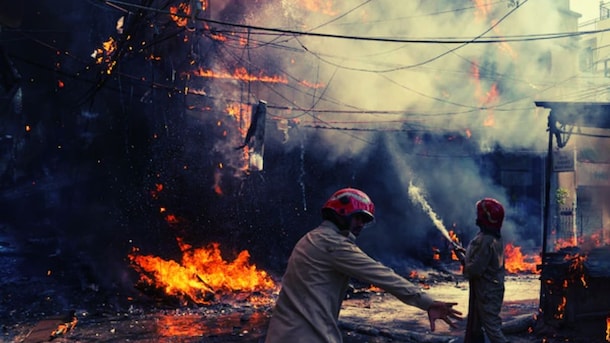
How Delhi Built Its Most Beloved Hubs On A Fire Trap
Delhi fire: Since 2019, 543 people have lost their lives in the city due to fire tragedies. Tracing back to 2016, the figure rises to more than 800, according to Delhi government data. In the first half of 2026 alone, 65 deaths in fire accidents have been reported.
-
An Indian Explosives Company Faces Questions From A War Half A World Away
An explosives manufacturer from India suddenly found itself named alongside Sudanese military-linked companies, Egyptian suppliers and international recruitment networks accused of prolonging a civil war that has devastated an entire nation.
-
Opinion | For The Great Passport Debate, A 'Common-Sense' Cure - By Shashi Tharoor
There is a gap between legal theory and the practical realities of a passport. But an easy fix can resolve this manufactured crisis.
-
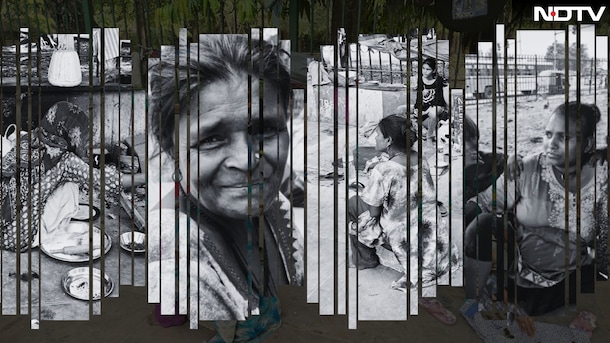
"There's Nothing We Can Do": Inside Lives Of Delhi's Pavement Dwellers
A 10-year-old girl sleeping with her family on a pavement was allegedly kidnapped, raped and murdered in Delhi.
-
Exclusive: A Massacre In Waiting, And A World That Chooses Silence
In Sudan, Rapid Support Forces (RSF) militants are closing in on the strategic city of El Obeid. Experts and rights groups have warned of a "genocide-like" event, similar to what unfolded in El Fasher.
-
Opinion | The Invisible Import In Every Indian Thali
In 2025-26, India spent over US$ 19 billion on edible oil imports to meet 60% of its demand, making it vulnerable to global price shocks and supply disruption while straining the nation's exchequer of its forex reserves for what it could grow at home
-
After Sex, Drugs, Alcohol Rehab, Now There's De-Addiction For AI
AI addiction and dependence is reportedly on the rise. There are now support groups similar to Alcoholics Anonymous that can help those in need recover.
-
Opinion | Pune Fort Murder, And The One Word That Could've Stopped It All
The gruesome killing of Ketan Agarwal and the death of Twisha Sharma last month raise questions about the rigid culture surrounding marriages in India
-
Opinion | The War On London: How Lies And Bots Are Targeting The City
Research shows that hostile social media narratives describing London as dangerous or in decline have increased by between 150 and 200 per cent over the past two years.