The recent surge in foreign currency deposits into Indian banks was, by most measures, a policy success. India has spent much of the past decade building a larger external buffer against the volatility that periodically unsettles emerging markets, including sudden capital outflows, a weakening currency, and deteriorating global risk appetite. The mobilisation of non-resident deposits was intended to add another layer to that protection.
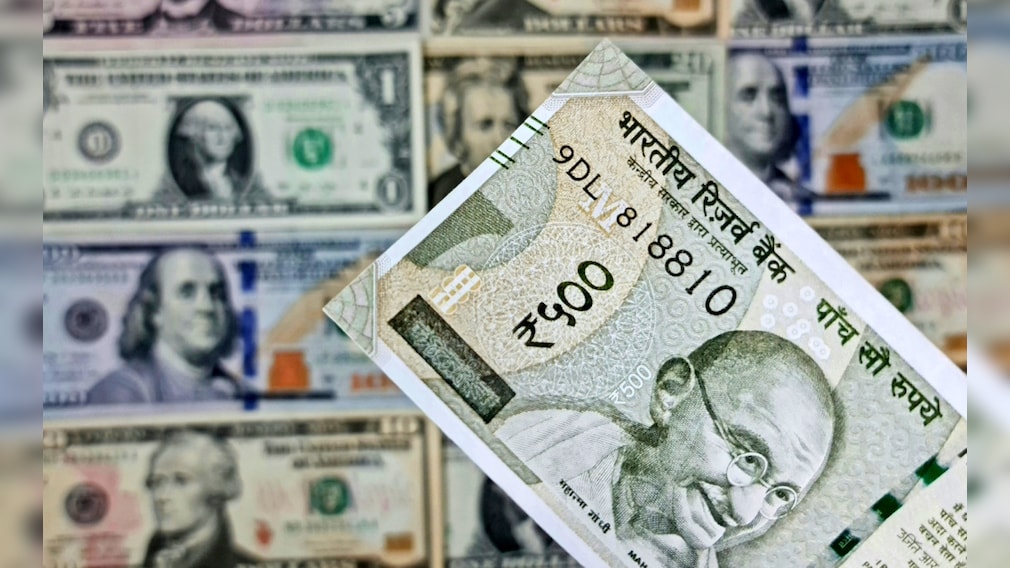
It worked rather well. Banks raised roughly USD 128 billion through overseas deposits, far exceeding initial expectations. Much of this foreign currency was subsequently swapped with the Reserve Bank of India for rupees. The arrangement strengthened the country's forex position and allowed banks to access domestic currency without having to source it elsewhere.
Advertisement - Scroll to continue
But central-bank balance sheets have a habit of ensuring that every successful intervention has a second-order consequence.
The dollars can now be safely parked in India's external financial architecture. The rupees issued against them, however, are in circulation in the domestic banking system. The core liquidity surplus is estimated at Rs 14-15 trillion, which is sufficient to affect the conditions in the money markets and is no longer a normal fluctuation.
The Other Side Of Dollar Windfall
The RBI's recent 30-day variable rate reverse repo (VRRR) operation to absorb Rs 7 trillion was a foretaste of the challenge. The banking system is widely touted as being flush with liquidity, but bids from banks came in for just about Rs 2.59 trillion. This was especially remarkable, given the banking industry's call for more flexibility in longer-term liquidity absorption operations, such as early withdrawals.
Advertisement - Scroll to continue
The RBI seems to have catered to some of those concerns. Demand remained weak.
Aggregate surplus liquidity and an individual bank's willingness to surrender liquidity for a certain time are not exactly identical. Bank treasuries deal with the day-to-day payment needs, government cash flows, tax-related outflows, and changing funding needs. This uncertainty has been compounded by the 24X7 payment system.
It is debatable whether these factors really make a 30-day liquidity forecast impossible. However, the love for optionality is economically explainable. In a surplus system, cash in is flexible, especially if money-market conditions and the interest-rate cycle are still volatile.
This explains why an early-withdrawal option did not materially improve participation. The issue was perhaps never simply the maturity of the VRRR. Banks were reluctant to commit substantial balances when the future path of liquidity, rates, and market opportunities remained uncertain.
Dollar-Rupee Sell-Buy Swaps
The next stage of the RBI's response is beginning to emerge through market activity, although the limits of what is publicly known are worth noting. RBI was likely conducting dollar-rupee sell-buy swaps around September and possibly October maturities, as per reports.
The mechanics of such a swap are straightforward. The RBI sells dollars in the spot market in exchange for rupees, thereby absorbing domestic liquidity, while agreeing to reverse the transaction at maturity.
For the RBI, the appeal is evident. A sell-buy swap absorbs rupee liquidity without requiring the central bank to immediately sell government securities into the bond market. It can therefore avoid adding pressure to yields and could also help manage the RBI's sizeable forward foreign exchange position.
The more important question concerns duration.
Foreign currency deposits that contributed to the present liquidity overhang are not overnight funds. Many are maturing well beyond the short-term operations that are being used to neutralise their domestic effects. Sell-buy swaps withdraw rupees from the banking system for a short period of time. Those rupees come back at maturity unless the RBI rolls over the operation or takes the liquidity via another instrument.
This doesn't take away from the value of swaps. However, when the source of liquidity is ongoing, repeated temporary operations have more significant consequences. The fine-tuning can slowly turn into an ongoing process of managing liquidity.
Choices With RBI
A higher cash reserve ratio would bind up liquidity for longer, but at the expense of bank balance sheets. Open market sales may permanently remove liquidity, while large-scale sales may exert upward pressure on sovereign yields and make the government's borrowing programme more difficult.
The Market Stabilisation Scheme may be the most tailor-made scheme for a scenario like this. But it involves the sovereign directly and involves an interest cost on the public balance sheet. Meanwhile, VRRR operations pass on a portion of the cost to the RBI, which pays banks to park liquidity.
The distribution of these costs varies with FX swaps. They maintain bank flexibility and do not put immediate strain on the bond market, but they affect forward-market pricing and result in transactions that will ultimately need to be rolled over, offset, or matured.
This is the deeper issue emerging from India's Rs 15 trillion liquidity surplus. The RBI's challenge is not the absence of instruments. It is the distribution of the economic cost associated with using them.
For now, temporary liquidity management operations may be sufficient if the surplus begins to normalise as government spending, currency demand, and broader banking flows adjust. But the situation will look different if Rs 14-15 trillion of surplus liquidity begins to persist.
First The Dollar Deluge, Then The Rupee Flood
Persistent surplus liquidity can weaken monetary transmission by pulling money-market rates towards the lower end of the policy corridor. Financial conditions may become easier than the policy stance alone would suggest. Excess liquidity can also find its way into credit expansion, non-bank lending, and asset markets before its consequences become visible in conventional inflation measures.
This does not mean every rupee of surplus liquidity translates directly into inflation. But with price pressures already an important consideration, the RBI will eventually have to decide how much of the current overhang it is comfortable managing through temporary operations.
India's foreign exchange position is unquestionably stronger for the deposits it has mobilised. The resulting domestic liquidity surplus is the price of that success.
The next stage of the RBI's response will reveal something important about modern central banking in India. It will show not only which instruments the central bank prefers, but also which balance sheet it is ultimately willing to use to restore monetary equilibrium.
(Deepanshu Mohan is Dean and Professor of Economics, OP Jindal Global University, Visiting Professor at the London School of Economics (LSE), and Visiting Research Fellow at the University of Oxford. Ankur Singh studies Economics and is a Research Analyst with Jindal University's Centre for New Economics Studies)
Disclaimer: These are the personal opinions of the author