Opinion | India's Bond Market Is Bleeding, And The 'Savers' Are Losing
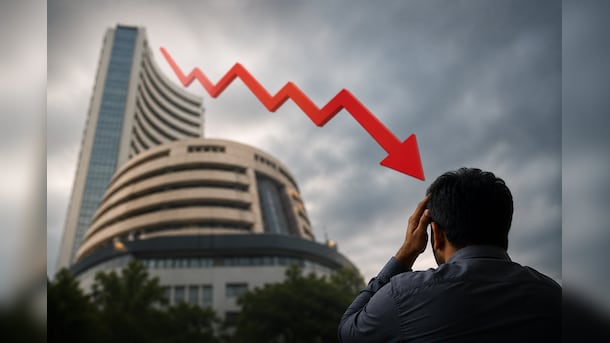
Oil, war, and a hawkish central bank have made Indian government bonds cheaper than at any point since early 2023. The damage to existing holders is real. So is the opportunity for new ones.
The 10-year yield, which ended 2025 below 6.6%, touched about 7.46% on October 23. The Reserve Bank of India raised the repo rate to 5.50% on October 7, its first increase since February 2023, and moved its stance from neutral to "calibrated tightening". Minutes of that meeting hinted at more to come. Retail inflation reached 5.54% in September, while wholesale inflation hit 11.39%, the highest in the current series. Several gilt funds recorded their worst twelve-month returns since at least 2014 in the year to May.
In the United States, where the 10-year Treasury yield reached 5.3% this month for the first time since 2007, a growing view holds that rising yields lay the groundwork for better returns. The argument applies to India too, though local conditions shape who benefits.
Start with the arithmetic. A bond's yield acts as a buffer against price losses. The benchmark 10-year paper has a modified duration of close to seven years, so a one percentage point rise in yields cuts its price by about 7%. At today's yield, rates would have to rise by about 1.2 percentage points in the next twelve months before a buyer ended the year with a loss. For a five-year government bond yielding above 7%, the buffer is closer to 1.7 points. In 2021, when the 10-year hovered around 6.2%, it was nearer to 0.9 point.
Bank deposits tell a different story. Bond prices adjust within minutes of a policy surprise, while deposit rates lag by months. SBI's highest fixed deposit rate is 6.40%. The five-year government bond yields more than 7%, and 10-year AAA corporate bonds were near 7.8% at the end of September. SBI's chairman said this month that banks may not raise deposit rates for two to three months, citing ample liquidity.
Banks park much of their deposits in government securities that now yield above what they pay savers. Through RBI Retail Direct, gilt funds or target maturity funds, a household can earn that difference for itself. The cost falls hardest on rural India, where September inflation was 6.08% against 4.88% in cities, and households rely on bank deposits.
Gains on debt mutual funds bought since April 2023 are taxed at slab rates without indexation, the same as FD interest. One advantage remains. FD interest is taxed every year as it accrues, while fund gains are taxed only when units are sold. That deferral compounds over time.
The bigger force on Indian bonds this year has been oil. India imports close to 90% of the crude oil it uses. After US and Israeli strikes on Iran on February 28 disrupted shipping through the Strait of Hormuz, the Indian crude basket rose from $69 to $117 a barrel within weeks. Brent was above $113 on October 22 after Houthi attacks on Saudi Arabia.
Most of this year's rise in yields traces back to crude. Expensive oil lifts inflation and pushes the RBI towards higher rates. It swells the import bill and weakens the rupee, and defending the currency drains cash from the banking system. The RBI has added to the squeeze by selling bonds and raising banks' daily cash reserve maintenance requirement to 99% from 90%.
A lasting settlement that brought oil down would run the chain in reverse. A long-dated gilt fund offers the retail investor one of the simplest ways to position for peace in the Gulf without recourse to derivatives.
The exposure carries a cost. This week, a stock market selloff in America sent investors into Treasuries and pushed the US 10-year back below 5%. Over the same days, Indian yields rose because oil climbed. An oil shock hurts Indian bonds and Indian stocks together. Gilt funds may steady a portfolio through a growth slowdown, but they offer little shelter from a supply shock.
India also feels the Federal Reserve more than it once did. In December 2013, India's 10-year yield was more than six percentage points above the US's 10-year. Today, the gap is about two and a half. JP Morgan began adding Indian government bonds to its emerging market index in June 2024, and tax incentives this year drew record foreign buying, which ties Indian gilts more closely to Washington. A narrow gap also limits how far the RBI can cut once oil eases, so the eventual rally in bond prices may be smaller than in earlier cycles.
Yields may well go higher first. Nomura and SBI Research expect another RBI hike in December, and the October minutes leaned the same way. If Brent stays above $110 and more of it reaches pump prices, the 10-year could climb well past its current level before it turns.
This is where the starting yield matters. With the 10-year near 7.5%, yields can rise by roughly another percentage point over twelve months before a buyer is out of pocket. Timing the peak becomes far less important.
For most savers, the sensible core is three- to five-year government and AAA bonds, where the yield is high, and the buffer is wide. Long duration belongs in a smaller slice of money that will not be needed for at least five years, held as a bet that oil prices normalise. AA bonds deserve caution. They pay about 0.75 percentage point more than AAA paper, and defaults in a high-rate, slowing economy can cost far more than that extra yield.
High yields burden borrowers and reward patience. Indian savers currently enjoy an additional edge, since deposit rates have yet to catch up with the bond market. Such gaps seldom persist beyond a few quarters.
(Deepanshu Mohan is Dean and Professor of Economics, O.P. Jindal Global University. He is a Visiting Professor at the London School of Economics and a Visiting Research Fellow at the University of Oxford)
Disclaimer: These are the personal opinions of the author
-
BJP Leader's Singer Wife, A Kabir Bhajan, And Some 'Jantar Mantar': How 15th Century Saint Entered 2026 Row

A video of Sivasri Skandaprasad's singing performance went viral, interpreted as a dig at protests at Delhi's Jantar Mantar. What she's singing is actually attributed to the saint-poet Kabir, and he did not really mean that particular "jantar mantar". He meant something far more profound.
-
Opinion | Sardar Patel, And The Art Of Holding A Nation Together
A true Gandhian, he reminded his countrymen that gaining freedom from foreign rule was merely the first step; true internal Swaraj required much, much more.
-
Opinion | How India Is Making Its Stock Market An Expensive Place To Invest
FPIs sold Rs 1.66 lakh crore of Indian equities in 2025 and a record Rs 3.08 lakh crore in 2026 through October 12. Foreign ownership of the Indian market is at a 15-year low
-
Jail Is No Bar: How Gangsters Call The Shots From Inside Prisons
Jail can become a safe haven from enemies, a recruitment ground for fresh gang members and, in some cases, a command centre for criminal operations
-
From King Edward III To Neha Bora, A 1361 Law Lives On In 'Peace Bonds': NDTV Explains
CJP leaders Abhijeet Dipke, Saurav Das, and Ashutosh Ranka signed peace bonds; two of them even faced jail over an alleged breach, while AISA's Neha Bora questioned such a bond's very logic. Here's what a peace bond is, and what the questions are.
-
Air Force Golf Course Near PM House Closed. How This Land Has Seen Many Turns Of History
The Air Force Sports Complex, which includes the golf course, is the latest property near the Prime Minister's residence set to be taken back this year, as the land is owned by ministries.
-
Opinion | How A Poland 'Experiment' Could Change India's Defence Industry
Europe is spending billions on arms in a historic rearmament drive. Indian firms can cash in. But there's a catch
-
Opinion | The Muslim World Is Seeing An Unexpected 'Experiment' - In Kazakhstan
The country has a long history of using mediation to mitigate conflict; now, it has added another, much-wanted dimension to it.