Opinion | IIT Suicide Case, And Why India's Brightest Students Feel So Trapped
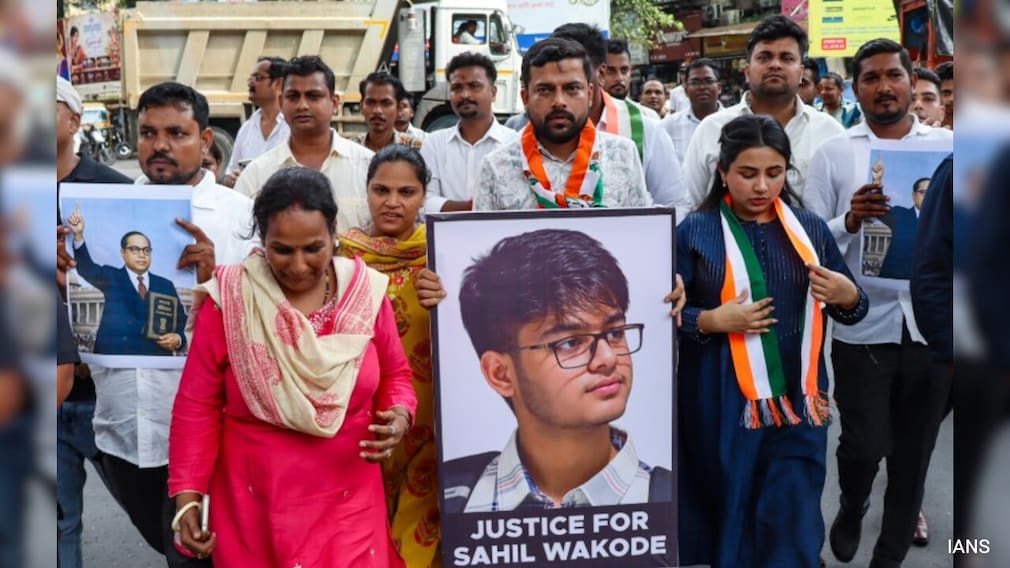
Every tragedy produces an instinct to act, and the quickest action is almost always the most visible one. When a young person dies on a campus, administrators reach for what can be removed, locked or punished. Fixtures come out of hostel rooms. Terraces are sealed. Disciplinary committees convene. These steps answer the question of how a student died. They leave untouched the only question that matters: why a gifted young person, who cleared one of the most competitive examinations on earth, came to believe that living was no longer possible.
The latest death at IIT Bombay, the third on that campus in seven months, has revived the debate. But to treat it as a Powai problem, or even an IIT problem, is to miss its meaning. It is a symptom of something far larger in the way India educates, measures and values its young.
A Pattern, Not an Accident
An RTI-based compilation counts at least 171 IIT students who died by suicide or other unnatural causes between 2006 and September 2026. The first decade accounted for 51 of those deaths; the second, 120. Beyond the IITs, the National Crime Records Bureau recorded over 13,000 student suicides in 2022 alone, and student suicides have been rising faster than suicides in the general population. Coaching hubs, medical colleges, NITs, central universities and residential schools all appear in this grim ledger.
A pattern this persistent, across institutions this varied, cannot be explained by individual weakness or bad luck. It is the output of a system. And systems can be redesigned.
The Roots of the Crisis
The tyranny of rank. Most students who reach an elite institution have been the brightest person in every room for a decade. Many spent their adolescence in coaching factories where every week ended in a published rank. Their sense of self rests on a single attribute. Within weeks of arrival, half of them discover they are below average in their new cohort. For someone whose worth has only ever been counted in marks, a poor grade is not a setback. It feels like the erasure of identity.
Shame without a way back. Failure is survivable; public shame often is not. An academic lapse, a disciplinary hearing, a backlog, a lost placement: each carries the fear of how peers, teachers and family will see the student afterwards. Institutions tend to focus on the formal consequence of an incident and badly underestimate the social one. Where there is no visible path to redemption, a young mind can conclude there is no path at all.
The burden of belonging. Students from Dalit, Adivasi, rural and non-English-medium backgrounds repeatedly describe being made to feel they do not belong: questions about their entrance rank, social isolation in hostels, dismissive treatment in classrooms. Discrimination need not be dramatic to be corrosive. The steady signal that one is an outsider wears down even the most resilient.
The unspoken family contract. Many students carry the economic hopes of an entire household, sometimes the loans that paid for years of coaching. Admitting "I am struggling" feels like betrayal of that sacrifice. So they tell no one, and the silence deepens until it becomes unbearable.
An environment that grinds. Relative grading, continuous evaluation with no fallow weeks, abrupt administrative decisions, poor hostel conditions and a placement culture that ranks human beings by salary combine into an atmosphere of permanent threat. None of these alone causes a death. Together they remove the margins in which a struggling student might recover.
Support built for a smaller problem. The Supreme Court's National Task Force gathered over 16 lakh survey responses and found that roughly 65 per cent of institutions surveyed had no access to mental health professionals, and nearly three-quarters had no full-time counsellor. Where counselling exists, students often describe long waits, doubts about confidentiality, and counsellors who cannot relate to their backgrounds. A single cell with a waiting list cannot hold a campus of ten thousand.
What Works: Practices That Save Lives
The evidence from India and abroad points to a coherent, layered approach. No single measure is sufficient; together they change the culture.
Lower the stakes of the first year. Some leading universities abroad grade first-semester courses on a pass/no-record basis so that students can adjust without a permanent scar on their transcript. Flexible course loads, easy deferment and the freedom to repeat without stigma serve the same purpose.
Make mental health policy enforceable. The Supreme Court's July 2025 guidelines require every institution to adopt and publish a mental health policy, review it annually, and engage qualified counsellors. In January 2026 the Court went further, forbidding institutions from removing students from hostels, classes or examinations when scholarships are delayed. Compliance must be audited, not assumed.
Train gatekeepers, not just counsellors. Wardens, faculty advisors, mess and security staff and senior students notice withdrawal first. Structured training in recognising warning signs and making a warm referral is among the most cost-effective interventions known.
Make help easy and free of stigma. Anonymous booking, late-evening walk-in hours, trained peer-support networks, and counsellors who reflect the linguistic and social diversity of students all lower the threshold for seeking help.
Treat every disciplinary moment as a welfare moment. Any academic-integrity or disciplinary conversation should include a counsellor check-in and a follow-up within 24 hours, with confidentiality that is real rather than nominal.
Confront discrimination directly. Functioning SC/ST cells, independent grievance mechanisms, bridge programmes for students from non-English-medium schools, and sustained faculty sensitisation are suicide prevention, not diversity decoration.
Restrict means, but never stop there. Limiting access to lethal means demonstrably saves lives and belongs in any strategy. Without the cultural changes above, however, it only relocates the risk.
Respond well after a loss. Structured postvention, meaning grief support for friends and hostel-mates, careful public communication and avoidance of sensational detail, reduces the risk of further deaths in the same community.
Bring parents inside the circle. Orientation for families on the academic transition, early-alert systems with consent, and honest conversation about the limits of ranks help dissolve the silent contract that isolates students.
Beyond Policy: Restoring the Purpose of Education
The Indian tradition offers a definition of learning that we have quietly abandoned: sa vidya ya vimuktaye, that is knowledge which liberates. Education was meant to free the mind, not imprison it inside a scorecard. Somewhere between the coaching centre and the placement cell, we replaced the student with the rank.
No counselling cell can repair what an entire culture reinforces every day. Parents, coaching institutes, schools, universities and employers share responsibility for teaching young people that their worth is larger than their grade point average, and that failure is a chapter, not a verdict.
Removing a fan is an act of administration. Building a campus where no student feels that death is the only exit is an act of education. Our finest institutions must choose the harder task.
(The writer is a noted educationist, psychologist, and author)
Disclaimer: These are the personal opinions of the author
-
Opinion | Bihar Assault, Hisar Marriage Ban: Who'll Stop The Guardians Of Indian 'Culture'?

Why exactly does the sight of a young couple seeking a bit of alone time somewhere tend to particularly provoke a certain kind of Indian men?
-
Opinion | The Trump-Xi Summit, And India's Many Worries Of Its Own
Washington and Beijing may have chosen coexistence over confrontation. For India, that could be both a relief and a warning.
-
Opinion | China Claims It Has Cut Troops At The Indian Border. But The Math Doesn't Add Up
The reduction likely has more to do with the deployment along the LAC than the total strength active in the region
-
Opinion | China Is No Longer Waiting For Trump To Set The Rules. And He Knows It
America's old diplomatic tricks with China won't work any longer. Because China has changed, and so has its ambitions.
-
Opinion | As UN Interviews Its Next Chief, The Interviewers Have Some Explaining To Do
On the panel sit governments whose wars, vetoes, and unpaid dues have helped make the organisation ineffective.
-
Opinion | Trump-Xi Meet: What China Can Give America, And What India Could Lose
If Trump can secure some of what he wants directly from Beijing, India's immediate value to Washington could change in particular areas.
-
A New 'Axis'? 87 Years After Pact Of Steel, A New European Far-Right Tie-Up
Nearly nine decades after Nazi Germany and Fascist Italy formalised their alliance, senior figures from Germany and Italy's far-right appeared together at a political rally on Sunday.
-
Opinion | 'Blackmail' Diplomacy: Why India Can't Be A Pawn In US' War On Russia
The new sanctions bill is both blackmail and hypocritical: blackmail because it seeks to change India's principled stand, and hypocritical because the US has provided exemptions to others, and itself.
-
Blog | Katrina Kaif, And The Very Indian Problem Of Too Much 'Audacity'
The remarkable thing about many Indian trolls is not that they have opinions, but that they expect - get this, Katrina Kaif, no less - to care about them.
-
Mamata Banerjee Drew Her Party's Symbol By Hand. It's Now Tied To An Indira Gandhi Case
The Election Commission's method for settling such disputes became central in the seminal Congress split of 1969, when Indira Gandhi fought the old guard. The poll body weighed three tests then.