Opinion | The Kashmir Protest Pakistan Cannot Blame On India
Islamabad has long viewed political mobilisation in PoK through an external lens of alleged Indian 'interference'. But the recent uprisings in the region lays bare the limits of its own policy.
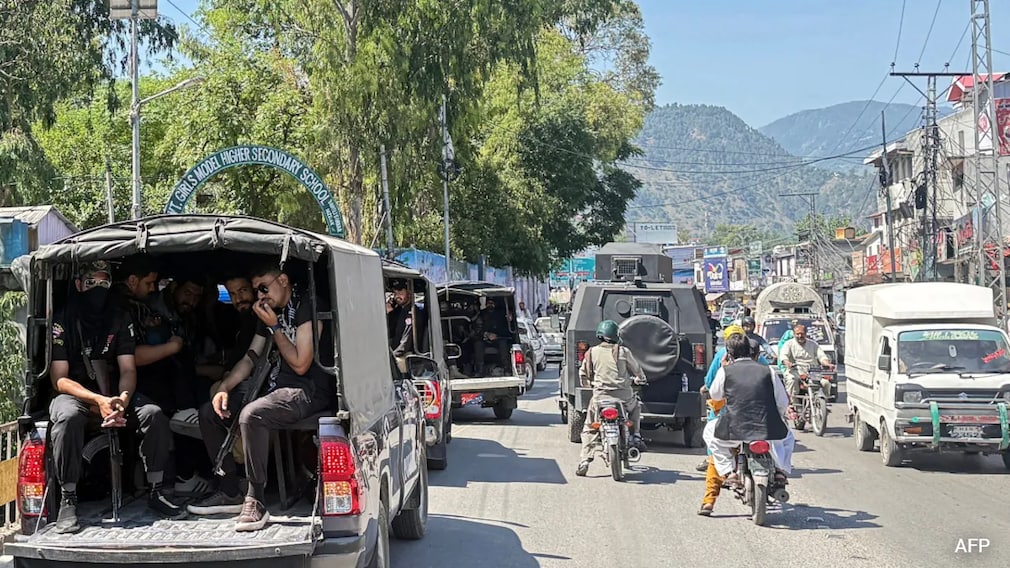
Historically, a common narrative regarding Kashmir administered on both sides of the Line of Control (LoC) has rested on the assumption that violence in these regions can only be understood through the lens of India-Pakistan rivalry. The ongoing anti-establishment uprising in Rawalakot, Muzaffarabad, and Mirpur, in Pakistan-occupied Kashmir (PoK), challenges that assumption, given its origins in Pakistan's own political history and deep-rooted grievances between the federal government and peripheral regions.
Islamabad has long viewed political mobilisation in PoK through an external lens of alleged Indian interference, so-called foreign conspiracies, and opposition party machinations. A closer examination shows the grievances driving the Joint Awami Action Committee (JAAC) movement remain localised, with serious concerns over electricity pricing, fiscal extraction, political representation, broken agreements, and the denial of meaningful local autonomy.
To put this in the context of Pakistan's political history, since its partition from India in 1947, Pakistan has found it challenging to reconcile a highly centralised federal state structure with the demands of its ethnically diverse regions. The federal framework has operated less as a mechanism for power-sharing and more as an instrument of the federal administration's overreaching authority. Similar grievances have echoed across Pakistan's peripheries - from Balochistan's demands for greater control over natural resources, to Sindh's concerns about federal encroachment, and Pashtun calls for political accountability in Khyber Pakhtunkhwa. In each case, political activism has centred on discontent over resource distribution, political representation, and provincial rights.
At the core of this recent uprising are 12 seats in the 49-member Legislative Assembly of PoK reserved for refugees from India's Jammu, after their migration to mainland Pakistan post-Partition. Despite settling in Pakistan's Sindh and Punjab provinces, these communities and individuals participate in PoK's electoral practices. The Joint Awami Action Committee (JAAC), a cross-party coalition of traders, lawyers, students, and civil society groups formed in 2023, argues that this arrangement has diluted local representation and undermined federal accountability. Tensions flared up when the Supreme Court of Pakistan ruled in June that the refugee seats had constitutional cover. The verdict represented a rejection of the movement's key political demands, leading to region-wide protests. Consequently, the Pakistani government banned JAAC, and used force against protesters by opening fire. In 2023, the dispute over rising electricity prices propelled the JAAC movement, indicating a new chapter involving diverse sectors and civil society members in the longstanding story of state neglect.
While the territory is administered by Pakistan, it remains outside the country's constitutional framework. As such, Islamabad views the reserved seats as sustaining its position of representing all of the former princely state of Jammu and Kashmir. However, the local grievances perceive this mechanism as a tool to dilute local participation, thereby reflecting the competing political logics of this region. It is in this context that this issue also separates itself from an externalized lens of the broader India-Pakistan conflict. The mobilisation has remained devoid of cross-border issues.
For Pakistan, the issue of refugee seats remains critical to its international claims on Kashmir. The existence of these seats bolsters Pakistan's legal position at the UN to project the representation of all of Kashmir - including Indian territory. Should Islamabad give up on these seats, it seemingly concedes that the territory is a settled part of Pakistan instead of a disputed region awaiting a plebiscite. In similar symbolism, New Delhi has kept parliamentary seats vacant to represent the entire former princely state, parts of which are controlled by Islamabad.
These protests reemphasise the brazen contradiction of Pakistan's Kashmir policy, which centres on self-determination. This gap between global posture and domestic conduct has long existed, despite little international attention.
The protests, however, will not have a direct impact on the Kashmir Valley. While the two territories share a dispute, their ethnic identity, language, and even political movements remain distinct. The native residents of PoK, predominantly Pahari, Gujari, and Punjabi-speaking are technically distinct from the Kashmiri-speaking population in the Valley. There remains no shared political structure or common leadership between JAAC and any Jammu & Kashmir political formation. While the optics of Pakistan deploying federal paramilitary forces and imposing an internet and communication blackout will temporarily weaken Pakistan's credibility and talking points in global forums on the Kashmir issue, the reputational costs are unlikely to last much longer in the transactional nature of international relations.
In the coming period, the suppression of JAAC and the Supreme Court verdict will continue to inflame anti-government discontent. With PoK elections scheduled for July 27, Islamabad will face difficult choices - either to hold elections in the territory under heavy security deployment or postpone the elections and compound the legitimacy questions.
(Aishwaria Sonavane is a research analyst at the Takshashila Institution)
Disclaimer: These are the personal opinions of the author
-
Opinion | How A Tiny 0.4% UPI Fee Could Change How India Pays

The introduction of a fee can have a psychological effect beyond its immediate financial cost. Businesses that have come to view digital payments as free may begin to look for alternative - split payments, cash, and so on
-
Opinion | Rs 75-Lakh Bounty, New Jaish Base, And The Case Of Pak's Ever-Missing' Terrorist
Pak's yearly act is back: finding Masood Azhar. But there are other questions FATF must be asking next month as it meets
-
For Years, Saudi Saw Houthis As Yemen's Problem. Then, A Knock On The Door
Actual fighting between the Houthis and Saudi Arabia began late in the overall timeline of the conflict that now involves powerful belligerents
-
Lal Topi, Blue T-Shirt: Akhilesh Yadav's 'PDA' For Blue Has A Coded Message
The message is clear: the Samajwadi Party wants to talk to voters beyond its traditional Yadav-Muslim support base, particularly to Dalits.
-
The Day 600 Men Lay Siege To Islam's Holiest Site And How They Were Gassed Out
Nearly 47 years ago, on November 20, 1979, the Grand Mosque itself was seized by an armed group in one of the most extraordinary episodes in modern Saudi history.
-
New UPI Charges: If Digital Payments Save Money, Why Charge For Them Now?
UPI Payments Free For Years: The government has subsidised UPI adoption for years. Official figures show thousands of crores in payouts over years.
-
Opinion | Sydney Sweeney And The Obsession With Asking Sportswomen To 'Take The Clothes Off'
There is a world of difference between an athlete choosing to be sexy and an advertiser deciding that sex is the most interesting thing about her
-
Opinion | The 'AIPC' Was Once Congress' Boldest Idea. What Happened To It?
Tharoor, to Chakravarti, to Yaskhi now, the fate of a Congress 'experiment' that started in 2017 will tell you a lot
-
Woman Biker Hit, Air Force Veteran Attacked: The Lawlessness In Gurugram
What gives confidence to some elements in Gurugram to break the law again and again in full public view and on camera?